
Main Courses
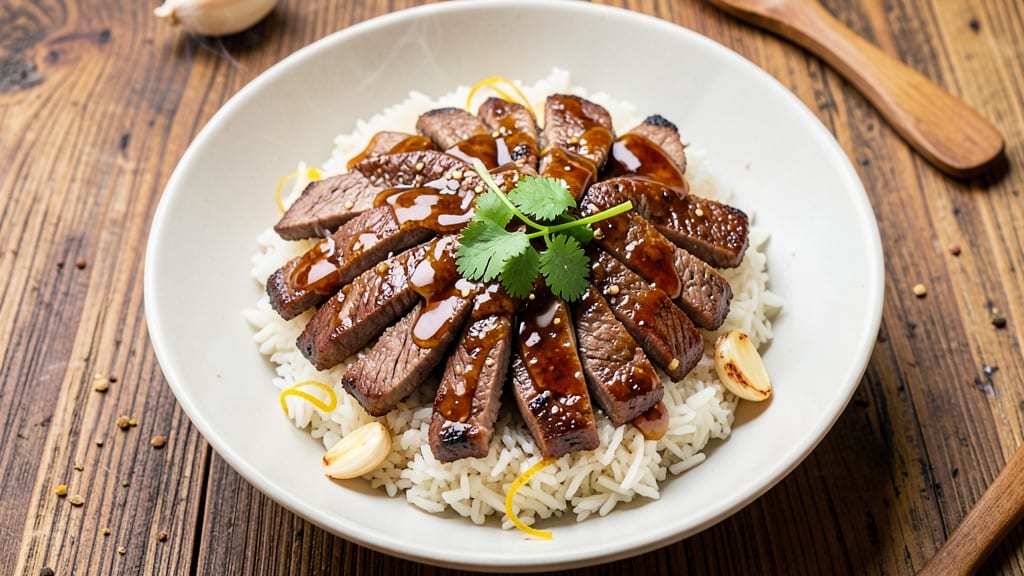
This Asian beef and rice bowl recipe delivers restaurant-quality flavors with silky soy-glazed beef over fragrant jasmine rice—perfect for a satisfying weeknight dinner. The secret lies in balancing sweet, savory, and umami notes through a simple marinade and quick stir-fry, ensuring tender beef with a glossy glaze.
Every bite combines perfectly textured rice, richly seasoned meat, and fresh complementary sides for a harmonious meal.
The recipe begins with flavor-packed jasmine rice, cooked to ideal tenderness, then pairs with beef marinated in soy sauce, garlic, and ginger for depth. Stir-frying the beef at high heat creates that signature wok hei aroma while keeping the meat juicy.
Toppings like quick-pickled cucumbers or sesame seeds add brightness and texture, elevating the dish beyond ordinary takeout.
What makes this bowl exceptional is its versatility—swap in broccoli for greens, swap jasmine rice for basmati, or drizzle with a spicy chili oil for heat. The technique is straightforward yet delivers professional results, with minimal prep and active cooking time.
This is comfort food with global flair, designed to impress without requiring advanced skills.
Once assembled, the bowl becomes a textural and flavor masterpiece: tender rice, caramelized beef, crisp vegetables, and a tangy sauce tie everything together. Perfect for meal prep or a spontaneous dinner, this recipe proves Asian-inspired meals can be both quick and deeply satisfying.
Let’s build this bowl step by step.
Ingredients for asian beef and rice bowl
Flavor-packed jasmine rice meets silky soy-glazed beef in this harmonious Asian-inspired bowl.
| Ingredient | Amount | Notes |
|---|---|---|
| Jasmine Rice 🍚 | 1 ½ cups | Uncooked, long-grain preferred |
| Flank Steak 🥩 | 1 lb | Thinly sliced against grain |
| Low-Sodium Soy Sauce 🍶 | ½ cup | Kikkoman or similar brand |
| Honey 🍯 | 2 tbsp | Wildflower or clover variety |
| Sesame Oil 🫒 | 1 tbsp | Toasted, not flavored |
| Garlic Cloves 🧄 | 6 cloves | Minced, fresh preferred |
| Fresh Ginger 🌿 | 2 tbsp | Grated, peeled |
| Neutral Oil 🫒 | 2 tbsp | Avocado or vegetable oil |
| Green Onions 🧅 | 4 whole | Thinly sliced, white and green |
| Sesame Seeds 🌾 | 2 tbsp | Toasted for garnish |
| Lime Wedges 🍋 | 2 whole | For serving |
| Diamond Crystal Kosher Salt 🧂 | 1 tsp | For seasoning |
| Ground Black Pepper 🌶️ | ½ tsp | Freshly ground |
| Red Bell Pepper 🍅 | 1 whole | Sliced into strips |
| Carrot 🥕 | 1 whole | Julienned or matchstick cut |
The jasmine rice is the foundation—look for long-grain varieties at Whole Foods or Trader Joe's for optimal fragrance. Day-old rice works best for bowls, so cook slightly more than needed. For the beef, flank steak delivers ideal tenderness when sliced thinly against the grain. Costco or local butchers often carry high-quality cuts at competitive prices. If using pre-sliced beef, ensure it's thinly cut—thicker slices won't caramelize properly during stir-frying. The low-sodium soy sauce is critical here; regular soy sauce will overpower the delicate balance of flavors.
No flank steak? Sirloin or ribeye work as substitutes, but slice them thinly against the grain for tenderness. Running short on sesame oil? Toasted sesame seeds can be ground with a pinch of oil as a makeshift replacement. The honey should be wildflower or clover—avoid artificial blends that lack depth. For the vegetables, frozen stir-fry mix is a convenient shortcut, but fresh red bell peppers and carrots add vibrant texture. Diamond Crystal kosher salt is preferred here due to its coarse texture, which dissolves more evenly. If you're short on time, pre-minced garlic and ginger from the store work fine, though freshly grated adds complexity.
The jasmine rice keeps for 3-4 days in an airtight container, making this an ideal meal-prep dish. Marinate the beef for at least 30 minutes (or overnight for deeper flavor), then store in the fridge until ready to cook. Toasted sesame seeds should be stored in a cool, dark place to preserve freshness for up to 6 months. The stir-fried beef reheats beautifully—simply warm in a skillet with a splash of water for 2-3 minutes. For batch cooking, double the recipe and freeze portions in single-serving containers for up to 3 months. Always serve with lime wedges on the side to brighten each bite.
Why You'll Love This Recipe
- One-Pan Magic: Honestly, I swear by this—just sear the steak, toss in the rice, and let the soy and honey work their magic together. No chopping, no fuss, and the sesame oil finishes it all with that golden aroma.
- Umami Bomb: That combo of low-sodium soy and honey? It’s like a flavor explosion in your mouth—sweet, salty, and just a little smoky from the steak. The jasmine rice soaks it up perfectly, and the sesame oil ties it all together with a nutty kick.
- Lunchbox Hero: Between us, this is my go-to for meal prep. Cook a big batch of rice, slice the steak thin, and assemble bowls in minutes. Pack them for work or school—warm, satisfying, and no one ever complains about leftovers.
- Budget Powerhouse: Flank steak is affordable, and a single pound stretches across multiple bowls. Plus, the rice and pantry staples (soy, honey, sesame oil) mean you’re not breaking the bank. My wallet and my family’s taste buds both win.
Step-by-step instructions for Asian beef and rice bowl
This method delivers perfectly tender beef with a glossy soy glaze and fragrant jasmine rice every time.
🍳 Step 1: Prepare the Soy-Glazed Beef
Slice the 1 lb flank steak thinly against the grain into ¼-inch strips—this ensures maximum tenderness. In a small bowl, whisk together the 0.5 cup low-sodium soy sauce, 2 tbsp honey, 1 tbsp sesame oil, 6 cloves minced garlic, and 2 tbsp grated fresh ginger. Add the sliced beef to the marinade and toss to coat evenly. Let it marinate for at least 15 minutes (up to 30 minutes) at room temperature.
Heat 2 tbsp neutral oil in a large skillet over medium-high heat. Add the marinated beef in a single layer and cook undisturbed for 2-3 minutes until the edges begin to brown. Stir and continue cooking for another 1-2 minutes until fully cooked through and caramelized. Remove from heat and set aside, reserving the pan drippings.
🍚 Step 2: Cook the Jasmine Rice
Rinse the 1.5 cups jasmine rice under cold water until the water runs clear, then drain well. In a medium saucepan, combine the rice with 2 cups water and bring to a boil. Add 1 tsp Diamond Crystal kosher salt and 0.5 tsp ground black pepper, then reduce heat to low, cover, and simmer for 15 minutes. Remove from heat and let it steam, covered, for an additional 10 minutes. Fluff with a fork and keep warm.
Here's the thing—don't peek while the rice cooks. Every time you lift the lid, you release steam and disrupt the cooking process. The rice should be tender and slightly sticky when done, with no hard grains remaining.
🥘 Step 3: Assemble the Vegetable Medley
While the rice cooks, prepare the vegetables. Slice the 1 whole red bell pepper into thin strips and julienne the 1 whole carrot into matchstick cuts. Heat 1 tbsp neutral oil in a separate skillet over medium heat and sauté the bell pepper and carrot for 4-5 minutes until they soften but retain a slight crunch. Season lightly with ½ tsp Diamond Crystal kosher salt and ¼ tsp ground black pepper. Remove from heat and set aside.
Thinly slice the 4 whole green onions, separating the white and green parts. Toast the 2 tbsp sesame seeds in a dry skillet over low heat for 1-2 minutes until fragrant and golden. Keep both aside for garnishing.
🥟 Step 4: Build the Beef and Rice Bowls
Divide the cooked jasmine rice evenly among 4 bowls. Spoon the soy-glazed beef over the rice, distributing it evenly. Top each bowl with the sautéed bell pepper and carrot medley. Drizzle lightly with any remaining pan drippings from the beef.
Garnish each bowl with the white parts of the sliced green onions, the toasted sesame seeds, and the green parts of the green onions. Serve immediately with 2 whole lime wedges on the side for squeezing over each bowl.
🍽️ Step 5: Serve with Confidence
The finished bowl should showcase perfectly tender beef with a glossy sheen from the soy glaze, fragrant jasmine rice, and vibrant, crisp vegetables. The lime wedges add a bright acidity that cuts through the richness of the dish. Each bite should deliver a balance of sweet, savory, and umami flavors with every forkful.
For optimal presentation, arrange the components neatly in each bowl. The contrast of colors—deep red from the bell pepper, bright orange from the carrot, and creamy white from the rice—makes this dish as visually appealing as it is delicious.
Pro Tips For Making Asian Beef And Rice Bowl
- Slice Against the Grain: Flank steak’s tough fibers run diagonal—cutting perpendicular to them turns chewy bites into tender, fork-friendly strips. I used to fight this and end up with rubbery results. Grab a sharp knife and slice after resting, not before.
- Marinate for 2 Hours (Not 20 Minutes): The soy sauce and honey need real time to penetrate that dense flank steak. I learned this the hard way—rushing it left me with flavor only on the surface. Cover and refrigerate; your patience will pay off when every bite tastes like the glaze.
- Use a Splatter Screen: Honey and sesame oil don’t play nice when they hit a hot pan. After burning my kitchen twice, I invested in a cheap stainless-steel screen. Place it over the steak during searing—it catches the splatter while letting the meat brown properly.
- Toast the Sesame Oil: Cold sesame oil just sits there. Heat it lightly in the pan for 30 seconds until it smells nutty—this unlocks its flavor. Drizzle it over the finished bowl, not the raw meat, or you’ll mute its aroma. (Yes, even if you’re impatient like me.)
Regional styles of this dish
Japanese Teriyaki Style
For a Japanese-inspired twist, replace the soy-honey glaze with a teriyaki-style marinade using 0.3 cup mirin, 0.2 cup sake, and 0.2 cup low-sodium soy sauce. Marinate the beef for at least 30 minutes, then stir-fry as directed.
Serve over short-grain Japanese rice and top with pickled ginger for a traditional touch. The mirin adds natural sweetness while sake deepens the umami profile. 🍶
Korean Bulgogi Twist
Transform this bowl into a Korean bulgogi-inspired dish by adding 1 tbsp gochujang (Korean chili paste) and 1 tbsp brown sugar to the marinade. Use ribeye steak instead of flank steak for richer flavor, and serve with kimchi on the side.
Garnish with sesame seeds and thinly sliced green onions for an authentic finish. The gochujang brings a subtle heat that pairs beautifully with the sweet glaze. 🌶️
Thai Basil Beef
Give it a Thai-inspired makeover by adding 2 tbsp fish sauce, 1 tbsp oyster sauce, and 1 tbsp brown sugar to the marinade. Stir-fry the beef with ¼ cup fresh Thai basil leaves and finish with 1 tbsp lime juice and 1 tsp chili flakes.
Serve over jasmine rice with a side of cucumber salad (thinly sliced cucumbers tossed with lime juice and salt). The basil adds a fragrant, aromatic depth that’s quintessentially Thai. 🌿
Vietnamese Caramelized Beef
For a Vietnamese-inspired version, swap the honey for 2 tbsp coconut sugar and add 1 tbsp fish sauce and 1 tsp black pepper to the marinade. Stir-fry the beef with 1 tbsp fish sauce and 1 tsp sugar until deeply caramelized.
Serve over jasmine rice with quick-pickled daikon radish (thinly sliced radish tossed with rice vinegar and sugar) and fresh mint leaves. The caramelized beef has a sticky, sweet-savory profile that’s pure Vietnamese comfort food. 🍯
Chinese Five-Spice Beef
Add a Chinese five-spice element by incorporating ½ tsp Chinese five-spice powder into the marinade along with the soy sauce and honey. Use sirloin steak for a slightly leaner cut, and stir-fry with 1 tbsp Shaoxing wine for depth.
Serve over jasmine rice with steamed bok choy and a drizzle of hoisin sauce. The five-spice blend adds warmth and complexity, making this bowl feel like a true Chinese restaurant classic. 🌟
Nutrition facts
Frequently asked questions
Can I use ground beef instead of flank steak?
Yes, but the texture will differ! Ground beef works well for a heartier version—just brown it first in the skillet before adding to the marinade. Use 80/20 lean-to-fat ratio for juiciness, and reduce cooking time to 3-4 minutes total to avoid overcooking. The result will be more like a beefy rice bowl than a delicate stir-fry.
How do I prevent the rice from getting mushy?
Rinse the jasmine rice 3-4 times until the water runs clear to remove excess starch. Use a 1:1 rice-to-water ratio (1.5 cups rice to 1.5 cups water) and cook on low heat after boiling. Most importantly, don't peek or stir while cooking—just let it steam undisturbed for 25 minutes total.
What if I don't have sesame oil?
You can substitute with 1 tsp neutral oil plus ½ tsp toasted sesame seeds mixed into the marinade. For extra depth, add ½ tsp toasted sesame paste (available in Asian markets) to the glaze. The flavor won't be identical, but it'll still add nutty aroma—just skip the final sesame seed garnish if using paste.
How can I make this meal ahead of time?
Cook the rice and beef separately, then store components in airtight containers for up to 3 days in the fridge. Reheat the beef in a skillet with 1 tsp water for 1-2 minutes to restore moisture. Reheat rice in the microwave with a damp paper towel over it for 1 minute. Assemble fresh to maintain texture contrast.
What's the best way to slice flank steak thinly?
Freeze the steak for 30 minutes first to firm up, then slice against the grain at a 45-degree angle using a sharp knife. For even thinner slices, partially freeze and slice in two directions. Always slice perpendicular to the muscle fibers—this ensures tender bites. A meat slicer works best for perfect uniformity.