
Soups & Stews
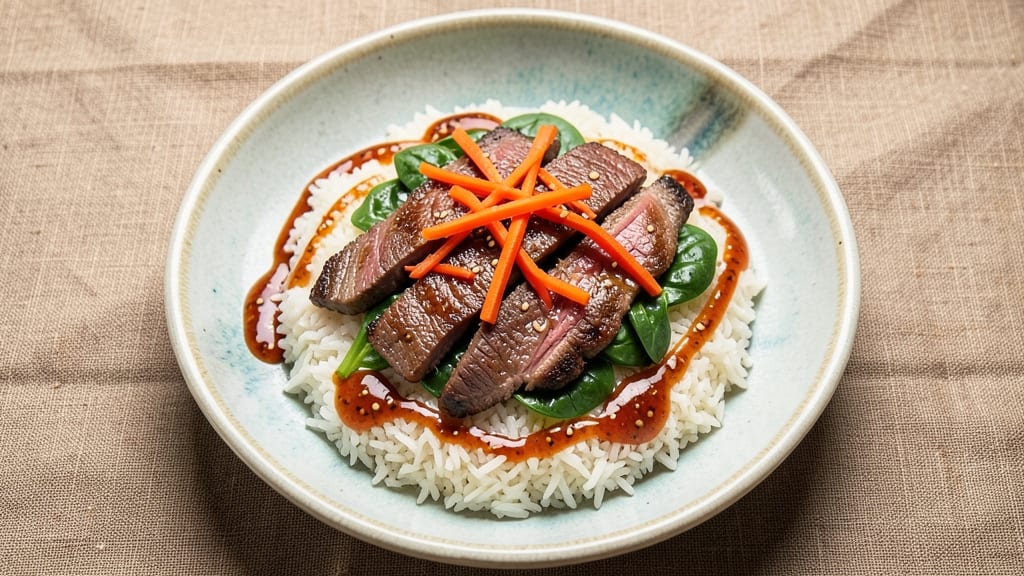
This beef bibimbap bowl recipe delivers restaurant-quality Korean comfort food with perfectly wok-seared beef, fragrant jasmine rice, and vibrant sautéed vegetables all tied together with a bold gochujang sauce.
The key lies in high-heat searing for tender yet caramelized beef strips, while the vegetables maintain their crisp texture through quick stir-frying. What makes this version special is balancing traditional techniques with modern convenience—no special equipment needed beyond a wok or large skillet.
The foundation begins with fragrant jasmine rice cooked to ideal consistency, then topped with thinly sliced beef marinated in sesame oil and soy sauce before wok-searing. Each vegetable—spinach, carrots, zucchini—receives individual attention to preserve color and texture, while the gochujang sauce adds depth without overpowering.
The final assembly creates a visually stunning dish where every component maintains its integrity yet comes together in perfect harmony.
By the time you're done, you'll have a bowl that's both restaurant-worthy and deeply satisfying—each bite offering tender beef, crisp vegetables, and creamy rice all unified by the rich, slightly spicy gochujang sauce.
The dish serves as a complete meal with balanced flavors and textures that keep every mouthful exciting. This is bibimbap that feels indulgent yet remains approachable for home cooks.
The beauty of this recipe lies in its versatility—easily scaled for one or many, and adaptable to seasonal vegetables while maintaining authentic Korean flavors. The technique ensures each component shines individually while contributing to the whole, proving that homemade can rival any restaurant version. Let's get cooking!
Ingredients for beef bibimbap bowl
Fragrant jasmine rice, wok-seared beef, and vibrant vegetables unite in this restaurant-worthy bibimbap bowl.
| Ingredient | Amount | Notes |
|---|---|---|
| Jasmine Rice 🍚 | 1 ½ cups | Uncooked, long-grain preferred |
| Ribeye Steak 🥩 | 1 lb | Thinly sliced against grain |
| Sesame Oil 🫒 | 2 tbsp | For marinade and drizzling |
| Soy Sauce 🥄 | ½ cup | Low-sodium preferred |
| Gochujang Sauce 🌶️ | ¼ cup | Korean fermented chili paste |
| Carrots 🥕 | 1 lb | Julienned into thin strips |
| Zucchini 🥒 | 1 lb | Thinly sliced lengthwise |
| Baby Spinach 🌿 | 5 oz | Fresh, crisp leaves |
| Green Onions 🧅 | ¼ cup | Thinly sliced, white/green parts |
| Sesame Seeds 🌾 | 1 tbsp | Toasted for garnish |
| Vegetable Oil 🫒 | ½ cup | High smoke point preferred |
| Garlic Cloves 🧄 | 4 cloves | Minced for marinade |
| Salt 🧂 | 1 tsp | Diamond Crystal preferred |
| Black Pepper 🌶️ | ½ tsp | Freshly ground preferred |
| Honey 🍯 | 1 tbsp | For balancing gochujang |
The ribeye steak is non-negotiable for authentic texture—look for well-marbled cuts at Whole Foods or your local butcher. Pre-sliced beef from the Asian market section saves time, but thinly slicing against the grain yourself ensures maximum tenderness. For the gochujang, Maesil or Dongwon brands deliver authentic depth, though any quality Korean market option works. The jasmine rice should be long-grain and fragrant—Lundberg or Koda Farms are reliable choices. If your carrots are thick, julienne them into even 1/8-inch strips for perfect texture.
No sesame oil? Avocado oil at half the amount works in a pinch, though it lacks the nutty aroma. Substituting zucchini? Yellow squash or bell peppers maintain the dish's balance. Fresh spinach is essential—frozen loses its crisp texture, but if necessary, thaw and drain thoroughly. The honey balances the gochujang's heat; agave nectar works in a 1:1 ratio if preferred. For extra umami, add 1 tsp fish sauce to the beef marinade, though this makes it non-vegetarian. The green onions should be both white and green parts—discard any wilted sections.
Store prepped vegetables in airtight containers with paper towels to absorb moisture, keeping them crisp for up to 3 days. The cooked rice reheats beautifully—just add a splash of water and microwave. For longer storage, freeze the beef and vegetables separately for up to 3 months. Assemble bowls fresh for best texture, but the sauce can be made ahead and stored for 2 weeks. The dish tastes even better the next day as flavors meld—ideal for meal prep.
Why You'll Love This Recipe
- No-Chop Nightmare: I swear by this when I’m too tired to julienne veggies—just stir-fry whatever’s in the fridge (spinach, carrots, zucchini) and toss it in. The rice and steak carry the whole bowl, so even if your knife skills are rusty, it still hits.
- Steakhouse Bite for Less: That ribeye? You’re getting the good cut without the restaurant price tag. A quick sear in a hot pan with sesame oil gives it that buttery crust, and the gochujang glaze turns it into something fancy—no fancy skills needed.
- Leftovers That Don’t Suck: Honestly, this meal improves the next day. The rice stays fluffy, the steak gets more tender, and you can just reheat everything together. Pack it for lunch or freeze portions—no sad, dry leftovers here.
- Weeknight Crowd-Pleaser: Bring it to potlucks, date nights, or when your roommate’s “vegan friend” shows up. The spicy-sweet gochujang sauce balances the richness of the steak, and everyone can customize their bowl. (Yes, even the picky eater.)
Step-by-step instructions for beef bibimbap bowl
Master this Korean classic with restaurant-quality wok-seared beef and vibrant vegetable medleys.
🍳 Step 1: Prepare the Fragrant Rice Base
Rinse the 1.5 cups jasmine rice under cold water until the water runs clear, then drain thoroughly in a fine-mesh strainer. This removes excess starch that can make the rice gummy. Transfer the rice to a pot and add 3 cups water (maintain a 1:2 rice-to-water ratio). Bring to a boil over high heat, then reduce to a simmer, cover tightly, and cook for 15 minutes. Remove from heat and let steam for 10 minutes before fluffing with a fork. The rice should be tender with a slight bite—this prevents mushiness when assembling the bowl.
While the rice cooks, toast the 1 tbsp sesame seeds in a dry skillet over medium heat for 1-2 minutes until fragrant. Set aside for garnish. The nutty aroma will elevate the final dish, so don't skip this step. If you're using a rice cooker, follow the manufacturer's instructions for perfect texture.
🔥 Step 2: Marinate and Wok-Sear the Beef
In a bowl, combine the 1 lb ribeye steak (sliced thinly against the grain), 0.5 cup soy sauce, 0.25 cup gochujang sauce, 1 tbsp honey, 4 minced garlic cloves, 1 tsp salt, and 0.5 tsp black pepper. Mix well to coat the beef evenly. Let it marinate for at least 30 minutes—this ensures deep flavor penetration. For best results, marinate up to 4 hours in the refrigerator.
Heat 0.5 cup vegetable oil in a wok or large skillet over high heat until shimmering. Add the marinated beef in a single layer and sear for 1-2 minutes per side until deeply browned and cooked to 145°F internally. The high heat creates a caramelized crust while keeping the beef tender. Remove the beef and set aside, reserving the browned bits in the pan.
👨🍳 Step 3: Cook the Vegetable Medley
In the same wok, add 0.5 cup vegetable oil and swirl to coat. Add the 1 lb julienned carrots and 1 lb thinly sliced zucchini, cooking for 3-4 minutes until the carrots soften slightly but retain their crunch. Stir in the 5 oz baby spinach and cook for 1 minute until just wilted. The vegetables should retain their vibrant colors and slight texture—overcooking will turn them mushy.
Push the vegetables to one side of the wok and add 2 tbsp sesame oil. Sauté the 0.25 cup sliced green onions for 30 seconds until fragrant. Toss everything together and remove from heat. The vegetables should be hot but still crisp, providing the perfect textural contrast to the tender beef and rice.
🥘 Step 4: Assemble the Bibimbap Bowls
Divide the cooked jasmine rice evenly among 4 bowls, mounding it slightly in the center. Arrange the wok-seared beef, carrot-zucchini medley, and spinach in neat sections around the rice. Drizzle each bowl with 1 tsp sesame oil and sprinkle with 0.25 tbsp toasted sesame seeds. The visual presentation is just as important as the taste—aim for balanced, colorful layers.
To serve, bring a small bowl of gochujang sauce to the table for dipping. The spicy-sweet sauce should coat the back of a spoon and cling to the rice and beef. Garnish with additional green onions for brightness. Each bite should deliver a harmonious blend of textures—crisp vegetables, tender beef, fragrant rice, and a hint of heat from the gochujang.
Pro Tips For Making Beef Bibimbap Bowl
- SEAR THE STEAK FAST: High heat for 2-3 minutes per side on ribeye—don’t skimp. The crust locks in flavor and makes the slices hold up better when you toss them into the bowl later. I used to drag it out, thinking it’d cook more evenly, but it just turns tough.
- DRY THE RICE BEFORE MIXING: Spread your cooked jasmine rice on a tray and let it cool uncovered for 10 minutes. Cold, dry rice absorbs the gochujang and sesame oil better, so every bite gets that rich, sticky texture instead of turning mushy.
- SALT THE RIBEYE BEFORE SEARING: Season the steak generously with salt and pepper at least 30 minutes before cooking—ideally overnight. The salt penetrates deeper, and the crust forms faster on the hot pan, giving you that perfect balance of seasoning without overpowering the other flavors.
- STORE GOCHUJANG IN FRIDGE: Keep your gochujang sauce refrigerated after opening, even if the jar says otherwise. The heat from your pantry can turn it too runny, and you’ll end up with a gloppy sauce instead of that thick, vibrant swirl you want in bibimbap. Trust me, this small step makes a real difference.
Essential equipment for beef bibimbap bowl
Wok Essentials
A carbon steel wok is my go-to for this recipe—it heats up quickly and distributes heat evenly for that perfect sear. Look for a 14-inch diameter wok with a flat bottom if you're new to wok cooking.
I love the De Buyer 14-inch carbon steel wok because it's durable and develops a natural non-stick patina over time. For budget-friendly options, a stainless steel wok like the Tramontina works well, though it requires slightly more oil.
If you don't have a wok, a large cast-iron skillet (like a Lodge 12-inch) is an excellent substitute. Just make sure it has a flat surface for even cooking. Avoid non-stick pans—they can't handle the high heat needed for proper searing.
Preheat your wok or skillet over high heat for 3-5 minutes before adding oil to ensure everything cooks evenly and develops that beautiful caramelized crust. 🔥
Rice Cooker
For perfect jasmine rice every time, a dedicated rice cooker is a game-changer. I use the Cuisinart Premium 6-Cup—it consistently delivers fluffy, fragrant rice with minimal effort. If you're cooking for more than 4 people, consider a 9-cup model like the Zojirushi NS-L16 for larger batches.
These appliances handle the rice-to-water ratio automatically, reducing the risk of undercooked or mushy rice.
No rice cooker? No problem. A heavy-bottomed pot with a tight-fitting lid works just fine. Just
Knife Skills
Precision cutting is crucial for this dish. Invest in a sharp chef's knife (I recommend the Wüsthof Classic 8-inch) and a mandoline for even julienne strips. For the beef, slice against the grain into ¼-inch thick strips—this ensures tenderness. Carrots should be julienned into 1/8-inch strips for that perfect crunch, while zucchini needs ¼-inch thick half-moons to hold their shape.
If you're not comfortable with a mandoline, use a sharp vegetable peeler to create thin strips. Practice makes perfect—start with a small piece of carrot to test your technique. The goal is even thickness so all the vegetables cook uniformly.
A cutting board with a non-slip mat (like the OXO Good Grips) helps prevent accidents while slicing. ✨
Marinating Tools
A glass or ceramic bowl is ideal for marinating the beef—it won't absorb flavors and is easy to clean. I use a large rectangular dish from Pyrex that fits perfectly in my fridge. For the marinade, a small whisk or fork works great to combine all the ingredients thoroughly.
The beef should be fully coated to develop maximum flavor during the 30-minute to 4-hour marinating time.
If you're short on time, a ziplock bag works in a pinch—just remove as much air as possible before sealing to prevent the beef from turning gray. For extra flavor, I like to add 1 teaspoon of grated ginger to the beef marinade, though it's not in the original recipe.
The ginger adds a nice brightness that complements the soy and gochujang beautifully. 🌶️
Garnish Essentials
Toasted sesame seeds are a must for that final touch of texture and aroma. I use a small dry skillet to toast 1 tablespoon of sesame seeds over medium heat for 1-2 minutes until golden and fragrant.
Keep them close to the table so you can sprinkle them fresh on each bowl just before serving. For extra presentation, I like to use edible flowers (like nasturtiums) as a garnish—they add a pop of color that makes the dish look restaurant-worthy.
Don't overlook fresh green onions for that final brightness. Thinly slice both the white and green parts separately—this way, you can arrange them artistically on top of the bowl.
A pair of kitchen shears makes quick work of slicing green onions, and they stay crisp even after being cooked briefly in the wok. The contrast of raw green onions against the warm, cooked components is what makes bibimbap so visually stunning. 🌿
Nutrition facts
Frequently asked questions
Can I substitute the ribeye steak with another cut of beef?
Yes, but choose a tender cut that benefits from quick cooking. Flank steak or sirloin work well—slice them ¼-inch thick against the grain for maximum tenderness. Avoid tough cuts like chuck, as they won't sear properly in 1-2 minutes. For extra flavor, try Korean bulgogi beef from the Asian market section.
How do I make the gochujang sauce less spicy?
Reduce the heat by adding 1 tbsp honey or 1 tsp sugar to balance the spice. You can also mix in 1 tsp rice vinegar for tanginess. For a milder version, use half the gochujang called for in the recipe and replace it with ½ cup soy sauce instead.
Can I prepare bibimbap ahead of time?
Cook the rice and beef, then store them separately in airtight containers for up to 3 days. Reheat the beef in a skillet over medium heat and microwave the rice with a splash of water. Keep the sauce separate until serving. For best texture, assemble bowls fresh—this ensures crisp vegetables and warm components.
What vegetables can I swap in for the carrots or zucchini?
Try bell peppers (red, yellow, or green) for color, shredded cabbage for crunch, or mushrooms for umami. For heartier options, use broccoli florets or snap peas. Just adjust cooking times—harder veggies like broccoli need 2-3 minutes longer. Keep portions balanced for the perfect bite.
Why did my beef turn out tough instead of tender?
This usually happens from overcooking or slicing with the grain. Always sear beef over high heat for just 1-2 minutes per side until 145°F internally. Slice against the grain (perpendicular to muscle fibers) for tenderness. If using pre-sliced beef, check for thinness—it should be ¼-inch or less. Marinating for at least 30 minutes also helps.