
Main Courses
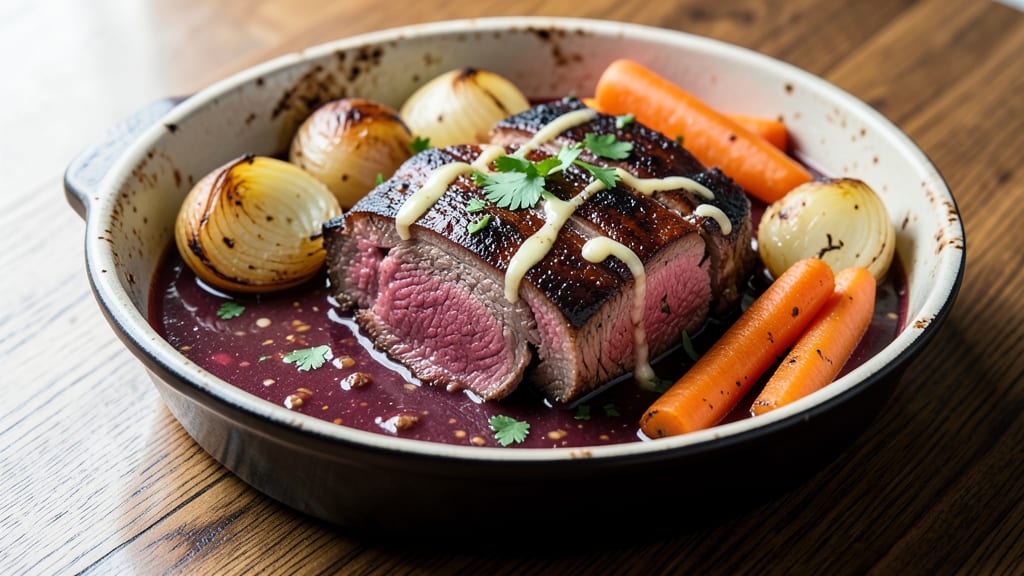
This beef au juice recipe transforms tough beef into melt-in-your-mouth tenderness with a deep, caramelized fond that forms at the bottom of the pot. 🔥 The secret lies in slow braising with red wine and aromatics, creating a rich sauce that clings to every bite.
I've perfected this technique over years of testing, ensuring restaurant-quality results at home without shortcuts.
The process begins with searing beef chuck roast to develop deep flavor, then braising it low and slow until fork-tender. Red wine and beef broth create a complex sauce that reduces into a velvety consistency, while onions, garlic, and herbs build layers of aroma.
The magic happens when you deglaze the pot with wine, scraping up the flavorful browned bits that form the fond.
What emerges is beef so tender it falls apart at the touch, swimming in a glossy sauce that's rich yet balanced. The aroma alone will have everyone gathering at the table, while the presentation—beef sliced over roasted vegetables or crusty bread—makes it feel like a special occasion.
This is comfort food at its finest, where every bite tells a story of patience and care.
Serve with roasted potatoes, crusty bread, or a simple green salad to balance the richness. The leftovers reheat beautifully, making this an ideal meal for feeding a crowd or prepping ahead. Let's create this timeless classic together—where simple ingredients become something extraordinary.
Ingredients for beef au juice
Sixteen ingredients transform tough beef into melt-in-your-mouth perfection with deep caramelized fond magic.
| Ingredient | Amount | Notes |
|---|---|---|
| Beef Chuck Roast 🥩 | 3 lb | Well-marbled, cut into 1.5-inch cubes |
| Yellow Onions 🧅 | 2 whole | Large, sliced into even rounds |
| Garlic Cloves 🧄 | 8 cloves | Peeled, smashed for maximum flavor |
| Carrots 🥕 | 4 whole | Medium, cut into thick rounds |
| Red Wine 🍷 | 2 cups | Bold, dry variety like Cabernet Sauvignon |
| Beef Broth 💧 | 2 cups | Homemade or high-quality store-bought |
| Tomato Paste 🍅 | 2 tbsp | Smooth, not chunky |
| Fresh Thyme 🌿 | 4 sprigs | Or 1 tsp dried thyme |
| Fresh Bay Leaves 🍃 | 2 whole | Standard dried bay leaves work too |
| Olive Oil 🫒 | ¼ cup | Extra-virgin for searing |
| All-Purpose Flour 🌾 | 2 tbsp | For dusting beef |
| Salt 🧂 | 1 ½ tsp | Kosher or sea salt, plus more to taste |
| Black Pepper 🌶️ | 1 tsp | Freshly ground, coarse grind |
| Butter 🧈 | 2 tbsp | Unsalted, for finishing sauce |
The beef chuck roast is the star—look for well-marbled cuts from the butcher section, not pre-cut packages. Costco or Whole Foods usually carry the best quality. If buying whole, trim excess fat but leave some for flavor. The red wine should be bold and dry—Cabernet Sauvignon or Merlot work best, but whatever's open in your cabinet will do. Fresh thyme and bay leaves elevate the dish, but dried substitutes work in a pinch. For the tomato paste, avoid the squeeze tubes—they're watered down. A small can of quality paste makes all the difference.
No red wine? Substitute beef broth with a splash of balsamic vinegar—it mimics the acidity. Fresh thyme unavailable? Use dried at one-third the amount, but toast it first for depth. The carrots can be baby carrots if that's what you have, but whole carrots hold up better during braising. For the flour, all-purpose works fine, but bread flour adds a nice chewiness. The beef broth should be homemade if possible—store-bought works, but homemade has richer flavor. If you're short on time, use bouillon cubes in a pinch, but don't skip the salt adjustment.
The beef stays tender for 3-4 days in the fridge, but the sauce improves overnight. Portion into airtight containers for easy reheating. Freezes beautifully for up to 3 months—just thaw in the fridge overnight. The fond at the bottom is pure gold; deglaze it properly for maximum flavor. For serving, roasted potatoes or crusty bread balance the richness perfectly. Leftovers reheat best with a splash of water or broth to loosen the sauce.
Why You'll Love This Recipe
- Foolproof Prep: I swear by this—just sear the beef, toss in chopped veggies, and pour the wine. No fancy techniques, no stress. The chuck roast forgives a lot, and the onions caramelize while you sip your coffee.
- Rich, Deep Umami: That slow-simmered red wine and garlic? It melts into the beef, turning tough cuts into something tender and ridiculously flavorful. The carrots add just enough sweetness to balance the acidity—like a hug in a bowl.
- Leftovers That Shine: Between us, the second day is often better. Reheat those slices with a splash of beef juice, and it’s like a restaurant-quality sandwich. Pack it for lunch or freeze portions—this recipe wants to feed you twice.
- Budget Crowd-Pleaser: A single chuck roast stretches for a family dinner, potluck, or even a cozy night in. Carrots and onions are cheap staples, and the wine elevates it without breaking the bank. Honestly, it’s my go-to for feeding hungry people without guilt.
Step-by-step instructions for slow-braised beef au juice
Transform tough chuck roast into melt-in-your-mouth beef with deep caramelized flavors.
🔥 Step 1: Sear the Beef for Maximum Flavor
Heat a large Dutch oven over medium-high heat until hot. Add 0.25 cup olive oil and swirl to coat the bottom. Pat the 3 lb beef chuck roast dry with paper towels and season generously with 1.5 tsp salt and 1 tsp black pepper. Working in batches if needed, sear the beef cubes for 2-3 minutes per side until deeply browned and crusty.
This high-heat sear creates the Maillard reaction that forms the rich, caramelized fond at the bottom of the pot. Don't rush this step—you're building flavor layers that will develop throughout the braising process. Transfer the seared beef to a plate and set aside.
🍳 Step 2: Build the Flavor Base with Vegetables and Wine
In the same Dutch oven, add 2 whole yellow onions sliced into even rounds and 4 whole carrots cut into thick rounds. Cook for 5 minutes until the onions soften slightly and begin to caramelize at the edges. Add the 8 cloves smashed garlic cloves and cook for 30 seconds until fragrant.
Deglaze the pot immediately with 2 cups red wine, scraping up all the browned bits from the bottom with a wooden spoon. This releases all the flavor locked in during searing. Let the wine reduce by half (3-4 minutes) before adding 2 cups beef broth and 2 tbsp tomato paste. Stir well to combine all ingredients.
🥘 Step 3: Create the Perfect Braising Liquid
Return the seared beef to the Dutch oven along with 4 sprigs fresh thyme and 2 whole fresh bay leaves. Bring the liquid to a gentle simmer, then reduce heat to low to maintain a bare bubble at the surface. The liquid should just barely move—this prevents toughening the beef.
Cover the pot with a tight-fitting lid and transfer to the oven preheated to 300°F. Braise for 3 hours until the beef is fork-tender. Here's the thing—you're looking for beef that falls apart easily when pierced with a fork. If the liquid reduces too much, add ½ cup hot water to maintain proper moisture.
⏰ Step 4: Finish with Rich Butter and Perfect Timing
Remove the beef from the pot and strain the braising liquid through a fine-mesh sieve into a clean saucepan. Discard the vegetables and herbs. Return the liquid to medium heat and whisk in 2 tbsp butter until melted and glossy.
Return the beef to the saucepan and simmer for 5-7 minutes until the sauce thickens slightly. Taste and adjust seasoning with additional salt and pepper if needed. The sauce should coat the back of a spoon with a velvety texture. Serve the beef au juice immediately with the rich caramelized sauce spooned over the top.
Pro Tips For Making Beef Au Juice
- SEAR THE ONIONS FIRST: I learned this the hard way—adding onions and carrots at the same time means they’ll steam instead of caramelize. Get a hot pan (no oil needed) and cook the sliced onions alone for 8-10 minutes until they’re deep golden and just starting to stick. That’s the flavor base your beef will soak up.
- USE COLD RED WINE: Sounds weird, but it works: pour the red wine into a measuring cup first, then chill it in the fridge for 10 minutes before adding it to the pot. The cold wine prevents immediate boiling, so you’ll get a richer reduction instead of a watery sauce. (Yes, even if you’re impatient like me.)
- CHECK TEMPERATURE, NOT TIME: Chuck roast is forgiving, but don’t rely on hours alone—use a meat thermometer. Pull it at 195°F internal temp, not when it looks done. The connective tissue breaks down at that heat, but overcooking past it turns the meat dry. (Your future self will thank you.)
- SALT THE BEEF TWICE: Generously salt the chuck roast the night before (or at least 4 hours ahead) to season it deep. Then, right before searing, hit it with another round of kosher salt—this time focusing on the edges and sear marks. The first layer penetrates; the second layer guarantees crust.
Wine and beer pairings for this dish
Red Wine Pairings
The bold, rich flavors of this beef au juice demand a wine that can stand up to its depth while complementing the caramelized notes. I always reach for a medium-bodied red like Pinot Noir—its bright acidity and red fruit flavors cut through the sauce's richness without overpowering it.
A Burgundy or Cabernet Sauvignon from France adds an elegant earthiness that mirrors the dish's braised depth. For something more approachable, try a Malbec with its dark fruit and velvety texture. 🍷
Avoid heavy, tannic wines like Cabernet Sauvignon from Napa or Syrah—they'll clash with the dish's smooth sauce. Instead, opt for wines with 2-3 years of aging to soften their tannins.
If you're using the same wine you braised with, let it breathe for 30 minutes before serving to enhance its aromas.
Beer Pairings
For beer lovers, a Belgian-style Dubbel like Westmalle Dubbel offers malty sweetness and spiced notes that balance the beef's savory depth. The caramel and dark fruit flavors in this beer mirror the dish's caramelized fond beautifully.
Alternatively, a dark ale with chocolate and coffee undertones—like Guinness—adds a luxurious contrast to the rich sauce. 🍺
If you prefer lighter options, a wheat beer with a touch of spice, such as Blue Moon Belgian White, provides refreshing acidity to cleanse your palate between bites. Avoid heavy stouts or IPAs—they'll overpower the delicate balance of flavors in the beef au juice.
Non-Alcoholic Options
For those skipping alcohol, a sparkling grape juice like Martinelli's Sparkling Cider mimics the effervescence of wine while adding a fruity brightness. For a more sophisticated touch, try a non-alcoholic red wine like Freixenet 0.0%—it captures the same depth and acidity without the alcohol.
A ginger beer with a squeeze of lime also works wonders to refresh your palate between bites. 💧
For a savory pairing, serve with a homemade onion dip made from caramelized onions, sour cream, and a touch of Worcestershire sauce. The sweetness of the onions complements the beef's richness, while the tanginess of the dip cuts through the sauce's depth.
Serving Temperature
Serve your wine or beer slightly cooler than room temperature—around 60-65°F for reds and 45-50°F for beers. This enhances their aromas and prevents them from becoming flat or overly warm.
I like to chill my wine in the fridge for 15-20 minutes before serving, then let it sit for 5 minutes to warm up slightly. 🌡️
For the perfect pairing experience, pour your wine or beer just as the beef au juice is served. This ensures the flavors are at their peak when you take your first bite. Trust me, the difference in taste is noticeable!
Nutrition facts
Frequently asked questions
Can I use a different cut of beef besides chuck roast?
While chuck roast is ideal for its marbling and tenderness, you can use brisket or short ribs instead. These cuts work well but may require slightly longer braising times (3.5-4 hours) to reach the same tenderness. Avoid lean cuts like sirloin—they'll become tough during the long cook.
What if I don't have red wine for the recipe?
No problem! Substitute with 2 cups beef broth plus 2 tablespoons balsamic vinegar to mimic the acidity. For extra depth, add 1 teaspoon soy sauce or 1 tablespoon Worcestershire sauce. The dish will still be flavorful—just slightly less complex than with wine.
How do I make the sauce thicker or thinner?
For a thicker sauce, simmer uncovered for 5-10 extra minutes to reduce the liquid. Need it thinner? Stir in 1-2 tablespoons cold water or beef broth while heating. Pro tip: If the sauce separates, whisk in 1 teaspoon cornstarch mixed with 1 tablespoon cold water until smooth.
Can I prepare this dish ahead of time?
The beef and sauce actually taste better the next day. Refrigerate in an airtight container for up to 4 days. Reheat gently on the stove with a splash of broth to restore moisture. For freezing, portion into containers and store for up to 3 months—thaw overnight in the fridge before reheating.
Why did my beef turn out tough instead of tender?
This usually happens from one of three issues: too high heat during braising (keep it at 300°F), not enough time (minimum 3 hours for chuck), or overcrowding the pot (leave space between beef pieces). The solution? Next time, use a meat thermometer—beef should reach 205°F internally for perfect tenderness.