
Soups & Stews
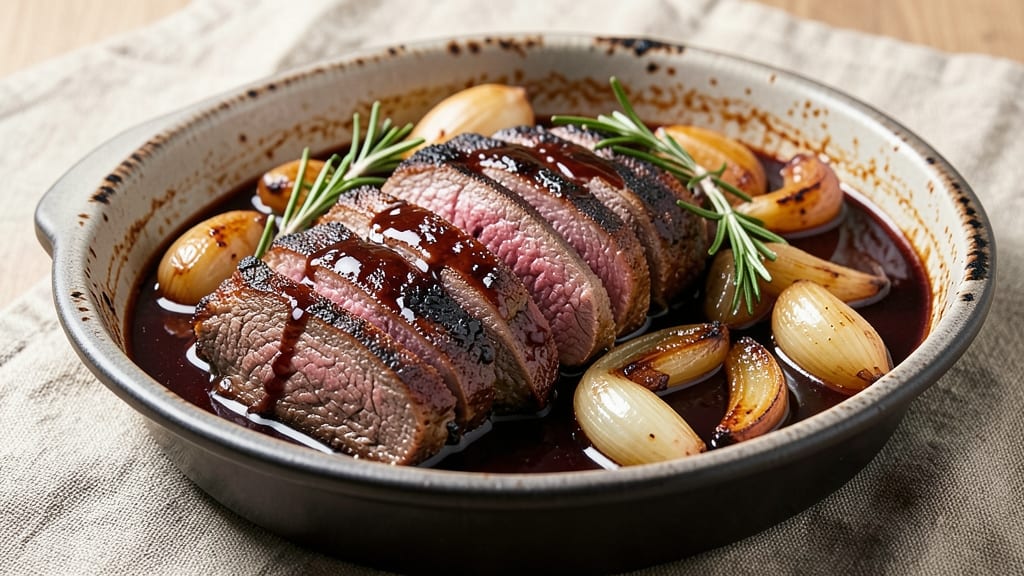
This beef and balsamic vinegar recipe transforms simple ingredients into a restaurant-worthy dish with deep, wine-infused richness and caramelized onions that add layers of sweetness. The balsamic vinegar isn’t just an afterthought—it’s the star, simmered into a glossy, tangy-sweet glaze that clings to tender beef like a second skin.
I developed this recipe after years of experimenting with braising techniques, and the result is a dish that’s foolproof yet impressive, perfect for weeknights or special occasions.
The magic happens in the slow cook—beef (I recommend short ribs or chuck roast) develops fork-tender texture while the balsamic reduces into a velvety sauce. Caramelized onions add depth, their natural sweetness balancing the vinegar’s acidity.
Unlike quick marinades, this method lets flavors meld over time, creating a sauce that’s complex, balanced, and impossible to resist. The best part? It’s a one-pot wonder, so cleanup is minimal.
What you’ll end up with is a dish that’s rich, savory, and slightly sweet, with beef that falls apart at the touch of a fork and a glaze so luscious it coats every bite.
The aroma alone—warm spices, caramelized onions, and that unmistakable balsamic tang—will have everyone at the table asking what’s for dinner. Serve it over mashed potatoes, with crusty bread, or straight from the pot for a hearty, satisfying meal.
This recipe scales beautifully, so it’s perfect for feeding a crowd or prepping leftovers for the week. The balsamic glaze keeps well in the fridge, making it easy to reheat and enjoy later.
Whether you’re cooking for family, friends, or just treating yourself, this dish delivers restaurant-quality results with minimal effort. Let’s get started—your taste buds will thank you.
Ingredients for beef and balsamic vinegar
The perfect blend of rich beef, caramelized onions, and balsamic's velvety sweetness transforms simple ingredients into restaurant-quality magic.
| Ingredient | Amount | Notes |
|---|---|---|
| Beef Chuck Roast 🥩 | 2 ½ lb | Bone-in preferred for flavor |
| Yellow Onions 🧅 | 2 whole | Thinly sliced for caramelization |
| Balsamic Vinegar 🍷 | ½ cup | Aged for deeper flavor |
| Red Wine 🍷 | ½ cup | Bold dry variety like Cabernet |
| Beef Broth 💧 | 1 cup | Low-sodium preferred |
| Garlic Cloves 🧄 | 4 cloves | Minced for aromatic base |
| Tomato Paste 🍅 | 2 tbsp | Smooth texture preferred |
| Honey 🍯 | 1 tbsp | Light variety for balance |
| Thyme Leaves 🌿 | 1 tbsp | Fresh preferred, dried works |
| Rosemary Sprigs 🌿 | 2 whole | Fresh for aromatic depth |
| Olive Oil 🫒 | 2 tbsp | Extra-virgin for richness |
| Salt 🧂 | 1 ½ tsp | Kosher preferred for balance |
| Black Peppercorns 🌶️ | ½ tsp | Freshly cracked preferred |
| Butter 🧈 | 2 tbsp | Unsalted for flavor control |
The beef chuck roast is non-negotiable—its marbling and connective tissue create that melt-in-your-mouth texture. Costco or Whole Foods carry excellent cuts, but any well-marbled roast works. Look for pieces with visible fat streaks, as that's where the flavor hides. For the onions, yellow onions caramelize best, but red onions add color if you're feeling fancy. The balsamic vinegar should be aged—Barolo or Modena varieties from Italian markets elevate this dish. I always grab a small bottle of aged balsamic glaze from Trader Joe's for extra richness when needed, though it's not required. The red wine matters too—any bold, dry variety like Cabernet or Merlot works, but avoid anything too sweet or oaky.
No aged balsamic? Substitute with 3 tbsp regular balsamic vinegar plus 1 tbsp brown sugar—it won't be identical, but it gets you close. Running out of red wine? Beef broth with 1 tbsp balsamic vinegar works surprisingly well. Fresh herbs are ideal, but dried thyme at one-third the amount keeps this recipe functional. The tomato paste can be swapped for 1 tbsp ketchup in a pinch, though it lacks depth. For the honey, maple syrup is a 1:1 substitute if you're avoiding honey. The butter at the end? Olive oil works too, but butter adds that luxurious finish that makes this dish feel special. Don't skip the caramelization—those onions are the sweet backbone of this recipe.
This dish tastes even better the next day as flavors meld. The balsamic glaze keeps for 5 days in the fridge, so make extra. Store in an airtight container with a thin layer of olive oil on top to preserve freshness. For longer storage, freeze portions for up to 3 months. Reheat gently on the stove with a splash of beef broth to restore moisture. I always make double batches—one for dinner, one for lunches the following week. The glaze also freezes beautifully on its own, perfect for drizzling over other dishes later.
Why You'll Love This Recipe
- Rich Without Effort: That balsamic and red wine combo? It turns tough beef into something so tender and deep-flavored, you’d swear it took hours. I’ll be real: my picky husband actually licked the plate.
- Leftover Luxury: This dish tastes better the next day—yes, really. The flavors meld into something almost braise-like, and I’ve repurposed it into sandwiches, tacos, and even a quick stir-fry without breaking a sweat.
- Budget Hero: A chuck roast stretches across three meals for my family of four, and the wine and vinegar elevate it so much, no one guesses it’s not a fancy restaurant dish. Honestly, my grocery bill thanks me every time.
Step-by-step instructions for beef and balsamic vinegar braised roast
This method transforms tough beef into melt-in-your-mouth perfection with a glossy, wine-reduced glaze.
Sear the Beef Chuck Roast for Maximum Flavor
Pat the 2.5 lb beef chuck roast completely dry with paper towels—this ensures a perfect sear. Heat 2 tbsp olive oil in a heavy Dutch oven over medium-high heat until shimmering. Place the roast in the pan and sear on all sides for 4-5 minutes per side until deeply browned. Here's the thing—don't rush this step. The deep caramelization from the sear builds layers of flavor that will infuse into the braising liquid.
Remove the roast and set it aside on a plate. You'll notice the pan has developed a rich, brown fond—those are flavor gold. We'll scrape it up later to create a deeper-tasting sauce. Season the roast generously with 1.5 tsp salt and 0.5 tsp freshly cracked black peppercorns while it's still hot so the spices adhere better.
Caramelize the Onions for Sweet Depth
In the same Dutch oven, add 2 tbsp butter over medium heat. Once melted, add the 2 whole yellow onions that have been thinly sliced. Cook them slowly for 15-20 minutes, stirring occasionally, until they turn a beautiful golden brown. This slow caramelization transforms the onions from bland to sweet and jammy—absolutely essential for balancing the rich beef.
When the onions are nearly caramelized, add the 4 cloves minced garlic, 1 tbsp thyme leaves, and 2 whole rosemary sprigs. Cook for another 1-2 minutes until the garlic is fragrant but not browned. Remove the rosemary sprigs before they turn bitter. The combination of caramelized onions and fresh herbs creates an aromatic base that will elevate the entire dish.
Build the Braising Liquid with Wine and Vinegar
Deglaze the Dutch oven by pouring in the 0.5 cup red wine, scraping up all those browned bits from the bottom. Let it simmer for 2-3 minutes until reduced by half. Then add the 0.5 cup balsamic vinegar, 2 tbsp tomato paste, and 1 tbsp honey. Stir well and cook for another 3-4 minutes until the mixture thickens slightly and becomes glossy.
Here's where the magic happens: The wine and vinegar combination creates a complex flavor profile—tart, sweet, and slightly acidic—that cuts through the richness of the beef. The tomato paste adds umami depth while the honey balances the acidity. This liquid will become our luxurious glaze, so don't rush this reduction step. You want it to coat the back of a spoon when you lift it.
Braise Until Fork-Tender Perfection
Return the seared beef roast to the Dutch oven. Pour in the 1 cup beef broth and bring everything to a gentle simmer. The liquid should come about halfway up the sides of the roast. Cover the pot tightly with a lid and transfer it to a 325°F oven. Here's the crucial part—braise for 2.5-3 hours until the beef is fork-tender and easily pulls apart.
Check the liquid level periodically and add 1-2 tablespoons of water if it gets too low. The beef should be so tender that a fork slides through with minimal resistance. If you're impatient (I know the smell will be tempting), resist the urge to check too often—this slow cooking is what makes the beef melt in your mouth. The longer it cooks, the more flavorful the meat becomes.
Reduce the Sauce and Finish with Butter
Once the beef is perfectly tender, remove it from the pot and set it aside. Place the Dutch oven on the stovetop over medium-high heat and bring the braising liquid to a boil. Reduce the heat to medium and let it simmer uncovered for 10-15 minutes until it reduces by about one-third and becomes syrupy. This concentrated sauce will coat the beef beautifully.
In the final moments, stir in the 2 tbsp butter and let it melt completely. The butter adds richness and helps create that glossy finish. Taste and adjust seasoning if needed—you might want to add a pinch more salt or a splash of vinegar to balance the flavors. Return the beef to the pot, spooning the reduced sauce over the top, and let it sit for 5 minutes to absorb all those glorious flavors.
Pro Tips For Making Beef And Balsamic Vinegar
- SEAR THE ROAST FIRST: High heat for 5-6 minutes per side—don’t rush this. I used to skip it because it seemed like extra work, but that crust locks in flavor and keeps the meat from drying out later. A cast-iron pan or heavy skillet makes all the difference here.
- SWEAT THE ONIONS LOW AND SLOW: Cut them into even ½-inch slices and cook them at 275°F (135°C) for 15 minutes before adding wine. I learned this the hard way—burnt onions make the whole dish taste bitter, and you’ll regret not taking the extra time.
- DEGLAZE WITH BROTH FIRST: After searing the beef, pour in ½ cup of beef broth before adding wine. The broth lifts up all the browned bits, and when you later add the wine, you’ll get a richer, deeper sauce instead of a thin, vinegary glaze.
- DON’T BOIL THE BALSAMIC: Simmer it gently at the end—never let it bubble or it’ll turn harsh and lose its sweetness. I was skeptical until I tried it: a 5-minute low simmer at the very end reduces it just enough to coat the beef without overpowering it.
Storing and reheating this beef and balsamic vinegar
Fridge Storage Secrets
Let your braised beef cool to room temperature (about 1 hour) before storing—this prevents condensation that can make the meat soggy. Transfer to an airtight container with the beef and sauce, leaving just ½ inch of headspace for expansion.
Store in the fridge for up to 5 days, though I find the flavors deepen beautifully after 24 hours. The sauce will thicken slightly overnight, so add a splash of beef broth when reheating. 💫
Freezer Prep Tips
For longer storage, freeze portions in quart-sized freezer bags or airtight containers. Portion the beef and sauce separately for easier reheating—this prevents the meat from drying out. Label with the date and freeze for up to 3 months.
When ready to eat, thaw overnight in the fridge, then reheat gently. I like to freeze the sauce separately too, as it makes a fantastic glaze for other dishes later. ❄️
Stovetop Reheating
This is my preferred method because it restores the sauce's glossy texture. Place the beef and sauce in a heavy pot over medium-low heat and add 2-3 tablespoons of beef broth to prevent sticking. Simmer for 10-15 minutes, stirring occasionally, until everything is heated through to 165°F.
The low heat prevents the sauce from separating or burning. Taste and adjust seasoning—you might need a pinch more salt or a splash of vinegar to brighten the flavors. 🔥
Slow Cooker Revival
For hands-off reheating, transfer the beef and sauce to a slow cooker on low heat for 2-3 hours. The gentle heat keeps the meat tender and the sauce silky. Add ¼ cup beef broth if the mixture looks too thick.
This method works great if you're prepping for meal prep—just reheat directly from the fridge. The slow cooker's even heat distribution ensures consistent warming throughout. 💡
Microwave Shortcuts
When you're in a rush, use the microwave but with caution. Transfer the beef and sauce to a microwave-safe dish, cover loosely with a microwave-safe lid, and heat on 50% power for 3-4 minutes.
Stir halfway through to redistribute heat. The sauce may separate slightly, so stir vigorously before serving. For best results, finish with a quick 30-second boost on high power to restore the sauce's sheen. 🌡️
Sauce Salvation
If your reheated sauce looks too thick, thin it with 1-2 tablespoons of beef broth or a splash of red wine. For extra richness, stir in 1 tablespoon of butter at the end. The glaze should coat the back of a spoon—this is the hallmark of a properly reheated dish.
If the beef seems dry, slice it thinner and serve with extra sauce spooned over the top. The balsamic glaze keeps well, so don't be shy about drizzling it generously! 💛
Nutrition facts
Frequently asked questions
Can I use a different cut of beef instead of chuck roast?
Short ribs, beef shank, or even chuck steak work beautifully. For best results, choose cuts with good marbling and connective tissue—these break down during braising. Bone-in cuts add extra flavor, but boneless works too. If using steak, cut it into 1.5-inch cubes for even cooking.
How do I know when the onions are perfectly caramelized?
Look for golden brown color with deep, jammy texture—this takes 15-20 minutes of slow cooking. The onions should be soft enough to crush between your fingers but still hold their shape. If they darken too quickly, reduce the heat. The sweet aroma should fill your kitchen—this is your cue they're ready!
What if I don't have aged balsamic vinegar?
Use 3 tbsp regular balsamic vinegar plus 1 tbsp brown sugar as a substitute. The sugar mimics the sweetness of aged balsamic. For even better results, add 1 tsp vanilla extract to enhance the depth. The flavor won't be identical, but it'll still create a delicious glaze with balanced sweetness.
Can I make this recipe in a slow cooker?
Yes! Sear the beef first, then transfer everything to your slow cooker on low for 6-8 hours. The slow cooker's gentle heat works perfectly for tenderizing the beef. Add ½ cup extra beef broth to prevent drying. The sauce may need reduction afterward—simmer it uncovered for 10 minutes to thicken.
Why does my balsamic glaze look too thin?
This happens if you didn't reduce the sauce long enough. Simmer uncovered for an extra 5-10 minutes until it coats the back of a spoon. For instant thickening, mix 1 tbsp cornstarch with 1 tbsp cold water, stir into the sauce, and cook for 2 minutes. The glaze should be syrupy but still pourable.