
Soups & Stews
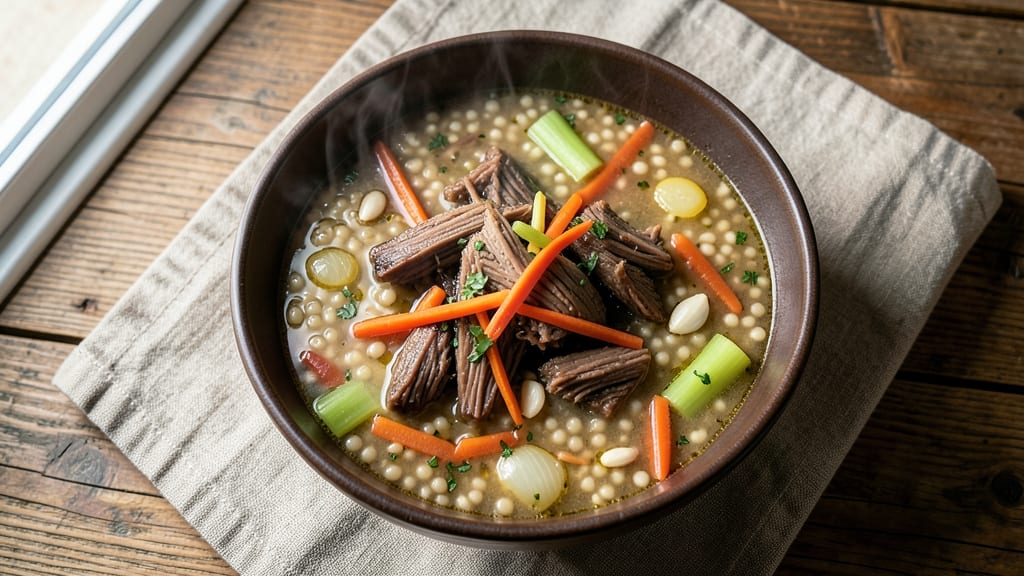
This beef barley soup recipe with leftover beef roast transforms Sunday dinner scraps into a rich, comforting meal that tastes like it simmered all day. The secret lies in extracting maximum flavor from every bite of roast while building depth with barley and aromatic vegetables. I developed this method after realizing how much good food gets wasted—this recipe ensures nothing goes to waste.
What makes this soup special is its ability to balance simplicity with restaurant-quality results. You'll use just one-pot (true to the promise), letting the beef roast break down into tender, flavorful chunks while barley absorbs the savory broth.
The key is a long, slow simmer—at least 2 hours—which develops complex flavors without requiring constant attention.
The result is a hearty soup with tender beef, chewy barley, and vegetables that melt into the broth. Each spoonful delivers layers of umami from the roast, earthy notes from the barley, and a satisfying depth from the seasonings.
It's the kind of meal that warms you from the inside out, perfect for chilly evenings or when you need to stretch a meal into multiple servings.
This recipe works equally well as a quick lunch or a cozy dinner. The leftovers reheat beautifully, making it ideal for meal prep. Whether you're feeding a family or treating yourself, this beef barley soup turns scraps into something truly special.
Ingredients for beef barley soup recipe with leftover beef roast
Here’s what you’ll need to turn scraps into a rich, hearty beef barley soup.
| Ingredient | Amount | Notes |
|---|---|---|
| Leftover Beef Roast 🥩 | 2 cups | Chopped into bite-sized pieces |
| Pearl Barley 🌾 | 1 cup | Rinsed before cooking |
| Yellow Onion 🧅 | 1 whole | Diced, medium size |
| Carrots 🥕 | 3 medium | Peeled and chopped into chunks |
| Celery Stalks 🧅 | 3 whole | Chopped into 1-inch pieces |
| Garlic Cloves 🧄 | 4 cloves | Minced for aromatic depth |
| Low-Sodium Beef Broth 💧 | 4 cups | Homemade or quality store-bought |
| Tomato Paste 🍅 | 2 tbsp | For umami richness |
| Dried Thyme 🌿 | 1 tsp | Or 1 tbsp fresh thyme |
| Bay Leaves 🍃 | 2 whole | Remove before serving |
| Black Peppercorns 🌶️ | 10 whole | Cracked for fresh flavor |
| Salt 🧂 | 1 ½ tsp | Adjust to taste |
| Olive Oil 🫒 | 2 tbsp | For sautéing vegetables |
The beef roast is the star—any leftover cuts work, but chuck or brisket have the best texture. Costco or Trader Joe’s often have pre-cut roast at great prices, but if you’re buying whole, ask the butcher to trim off excess fat. Barley’s the secret to chewiness—pearl barley cooks faster than steel-cut, but both work. For the veggies, baby carrots save time, but regular carrots add more flavor. Look for firm, bright orange carrots with no soft spots—those are the sweetest.
No beef broth? Water plus bouillon cubes works in a pinch, but homemade is better. Fresh thyme is ideal, but dried at 1/3 the amount gets you close. Tomato paste in a squeeze tube? Trader Joe’s has the best—no waste, lasts forever. The celery and onion combo is non-negotiable for that classic soup base. If you’re short on garlic, garlic powder at half the amount works, but fresh is worth the 30 seconds to mince. For extra depth, add a splash of red wine when sautéing the veggies.
This soup tastes even better the next day—3-4 days in the fridge, 3 months frozen. I always double the batch and freeze half for lazy days. Store in airtight containers with a lid pressed tight to keep it fresh. Barley thickens as it cools, so stir in a splash of broth when reheating. Leftovers make the best lunches—just grab a thermos and go.
Why You'll Love This Recipe
- Zero-Waste Hero: I swear by this trick—leftover beef roast that’s almost gone? Chop it into bite-sized chunks, toss it in, and suddenly you’ve got a meal instead of scraps. No guilt, no waste, just good food.
- Deep Savory Swirl: That slow-simmered barley turns the beef into melt-in-your-mouth perfection, while the onions and celery build layers of warmth. Honestly, the first spoonful makes me pause—it’s that good.
- Meal Prep MVP: Make a big batch on Sunday, and you’ve got lunch or dinner covered for days. The barley softens beautifully over time, and the flavors only get richer. (Yes, even on a Tuesday night.)
- Budget Booster: Pearl barley’s cheap, beef roast stretches further than you’d think, and veggies round it out without breaking the bank. I’ll be real: this soup feeds four for under $10, and no one complains.
Step-by-step instructions for beef barley soup with leftover roast
Transform your leftover beef roast into a comforting, hearty soup using just one pot.
Sauté the Vegetable Base
Heat the 2 tablespoons olive oil in a large Dutch oven or heavy pot over medium heat. Add the diced yellow onion, chopped carrots, and celery stalks. Cook for 5-6 minutes, stirring occasionally, until the vegetables soften slightly and the onion becomes translucent. This foundational step builds flavor through caramelization.
Add the minced garlic cloves and cook for another 30 seconds until fragrant. Here's where it gets good—stir in the 2 tablespoons tomato paste and cook for 1 minute to deepen the umami. You'll see the mixture darken slightly, which means those rich flavors are developing. Don't rush this step; proper cooking of the tomato paste is key for that restaurant-quality depth.
Toast the Barley and Add Seasonings
Add the 1 cup pearl barley and stir to coat evenly with the vegetable mixture. Toast the barley for 2 minutes over medium heat—this step enhances its nutty flavor and prevents it from becoming mushy later. You'll notice the barley turns a lighter shade and smells toasty.
Add the 10 whole black peppercorns (lightly crushed with the side of a knife) and 1 teaspoon dried thyme. Stir in the 1.5 teaspoons salt and 2 whole bay leaves. These aromatics will infuse the broth with complex flavors while the soup simmers. The bay leaves and peppercorns add subtle earthiness that elevates the dish.
Combine with Broth and Beef
Pour in the 4 cups low-sodium beef broth and bring the mixture to a gentle boil over high heat. Once boiling, reduce heat to low and stir in the 2 cups chopped leftover beef roast. The broth should just barely bubble at the surface—this gentle simmer is crucial for even cooking and preventing the barley from breaking apart.
Here's the thing—this soup needs time to develop its full flavor profile. Cover the pot and let it simmer for 45-50 minutes until the barley is tender and the beef is heated through. You'll know it's ready when the barley easily crushes between your fingers and the broth has thickened slightly. The longer it simmers, the more flavorful it becomes.
Adjust and Serve
Remove the 2 whole bay leaves from the soup before serving. Taste and adjust seasoning if needed—you might want to add a pinch more salt or a crack of black pepper to taste. The soup should be rich and savory with a perfect balance of barley's chewiness and beef's tenderness.
Ladle the soup into bowls and serve immediately. The aroma alone will make your kitchen smell like a cozy restaurant. For extra flavor, garnish with fresh parsley or a sprinkle of grated Parmesan cheese. This one-pot wonder makes the perfect meal for chilly days or when you're craving comfort food.
Pro Tips For Making Beef Barley Soup Recipe With Leftover Beef Roast
- Trim the Roast First: Slice the leftover beef roast against the grain into ½-inch strips before adding it to the soup. I used to toss in thick chunks straight from the roast—now I get tender, fork-friendly pieces every time. (Yes, even if you’re impatient like me.)
- Sweat the Veggies Properly: Cook the onions, carrots, and celery in batches if needed—don’t overcrowd the pot. I learned this the hard way: soggy mirepoix means waterlogged soup. A hot pan and 8-10 minutes of sweating (not browning) builds flavor without burning.
- Rinse the Barley Twice: Pearl barley doesn’t need soaking, but give it two quick rinses under cold water before adding it to the pot. Skipping this step leaves a gummy texture—like chewing on glue, but less fun.
- Simmer, Don’t Boil: Once everything’s in the pot, keep the heat low enough that only tiny bubbles break the surface. Boiling turns barley mushy and makes the broth cloudy. This isn’t a race—let it work for 45-60 minutes. (Your future self will thank you.)
Common mistakes when making this recipe
Overcooking the Barley
Barley is forgiving, but overcooking turns it mushy and unappetizing. Pearl barley should simmer for 45-50 minutes—any longer and it loses its pleasant chewiness.
I’ve ruined a batch by forgetting the pot and letting it simmer for 3 hours—the result was a gluey mess. 🌾 Use a timer or set a phone reminder to avoid this. If you’re unsure, taste a grain: it should hold its shape but soften easily between your teeth.
Skipping the Toasting Step
Toast the barley for 2 minutes before adding liquid—this step develops its nutty flavor and prevents a pasty texture. I once skipped toasting and ended up with bland, gummy barley. The toasted barley also absorbs flavors better from the sautéed vegetables.
If you’re short on time, at least stir it into the veggies for 1 minute to warm it through before adding broth.
Using Too Much Broth
A 4-cup broth base is ideal for this recipe, but adding extra liquid dilutes the rich beef flavor. I’ve made this mistake by doubling the broth to "make it heartier," only to end up with a watery soup.
If you prefer a thinner consistency, add broth gradually after simmering. The barley and beef will release enough moisture as they cook—trust the recipe’s measurements.
Not Browning the Beef
While this recipe uses leftover roast, if you’re starting fresh, browning the beef before simmering adds incredible depth. The Maillard reaction creates complex flavors that low-and-slow cooking can’t replicate.
If your roast isn’t browned, sear it in a hot pan with 1 tablespoon olive oil for 2-3 minutes per side before adding to the soup. This step is optional but makes a noticeable difference.
Ignoring the Bay Leaves
Bay leaves infuse subtle earthy notes into the broth, but forgetting to remove them before serving can leave behind a bitter, unpleasant texture. I’ve had guests complain about "bits in their soup" because I didn’t fish them out.
Always strain or pick out the bay leaves before serving. If you’re worried about missing one, use a slotted spoon to skim the surface before ladling.
Rushing the Simmer Time
This soup needs at least 45 minutes of simmering to let flavors meld together. I’ve tried cutting the time to 30 minutes for convenience, but the result was flat and underseasoned. The longer the beef and barley break down, the richer the broth becomes.
If you’re short on time, start with extra broth (up to 5 cups) and simmer for 30 minutes—just adjust seasoning afterward.
Nutrition facts
Frequently asked questions
Can I use any leftover beef for this soup?
Yes, but some cuts work better than others. Fattier cuts like chuck roast or brisket stay tender and flavorful when reheated. Avoid overly lean cuts like sirloin—they can turn dry. If your leftovers are tough, shred them before adding to the soup for better texture.
How do I adjust this recipe for fewer/more servings?
Scale everything proportionally: 1 cup barley and 2 cups beef per 4 servings. For 4 servings, use ½ cup barley and 1 cup beef. Keep the broth ratio at 1:1 with barley (e.g., 2 cups broth for ½ cup barley). The simmer time stays the same.
What if I don’t have pearl barley?
Use steel-cut oats (simmer 20-25 minutes) or wild rice blend (simmer 40-45 minutes) as substitutes. Avoid instant rice—it overcooks quickly. For texture, add ½ cup diced potatoes to the veggies (they’ll soften during simmering).
Can I make this soup in an Instant Pot?
Sauté veggies for 3 minutes, then add barley, broth, and beef. Pressure cook on high for 15 minutes, then natural release 10 minutes. The barley will be slightly firmer—add ½ cup water if needed. Skip the bay leaves (they burn under pressure).
Why does my soup taste bland?
Blandness usually means underseasoning or insufficient simmer time. Boost flavor by adding 1 tsp Worcestershire sauce or ½ cup red wine when sautéing veggies. Simmer uncovered for the last 10 minutes to reduce broth and concentrate flavors. A pinch of smoked paprika also adds depth.