
Soups & Stews
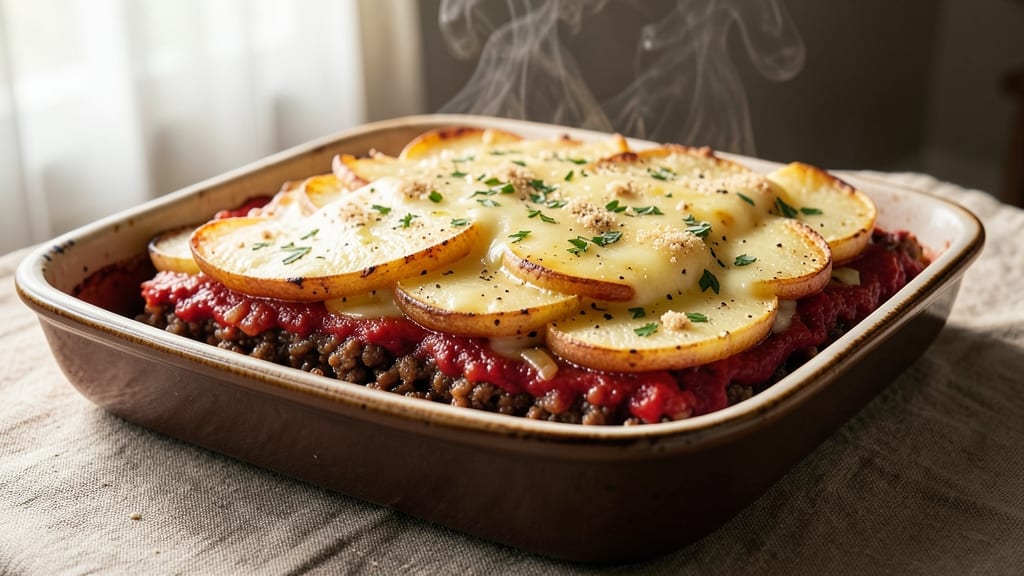
This beef and potato moussaka recipe transforms a simple casserole into a restaurant-worthy masterpiece with its crispy golden top and rich, layered flavors. The secret lies in perfectly sautéed onions, tender ground beef, and a velvety béchamel that binds everything together. I've refined this version to deliver that signature crispy crust while keeping the interior layers moist and flavorful—just like my grandmother's, but with modern shortcuts.
The beauty of this dish is in its layers: a spiced beef mixture with potatoes, topped with a silky béchamel that browns to golden perfection.
What sets this apart is the technique of baking the béchamel separately for crispiness before adding it as the final layer—this ensures that signature crunch without sacrificing the creamy texture below.
The result is a dish that's both comforting and impressive, perfect for special occasions or when you want to elevate weeknight dinner.
By following these steps, you'll achieve a moussaka with perfectly browned edges that shatter slightly when cut, revealing tender beef, fluffy potatoes, and a rich sauce underneath. The aroma alone will have everyone gathered around the table long before it's ready.
This isn't just comfort food—it's a showstopper that transforms simple ingredients into something extraordinary.
Whether you're serving this for a family gathering or treating yourself to a homemade feast, the key is patience—letting each layer cook just enough to hold its shape while still maintaining that melt-in-your-mouth texture.
The final result is a dish that tastes like it came from a Greek taverna, with that perfect balance of crispy, creamy, and savory flavors. Let's get started on creating this layered masterpiece.
Ingredients for beef and potato moussaka
Layered flavors start with these 15 essential ingredients—each playing its part in that signature crispy top and creamy interior.
| Ingredient | Amount | Notes |
|---|---|---|
| Ground Beef 🥩 | 1 ½ lb | Lean ground beef preferred |
| Yellow Onions 🧅 | 1 whole | Medium-sized, finely chopped |
| Garlic Cloves 🧄 | 4 cloves | Fresh, minced for depth |
| Russet Potatoes 🥔 | 2 lb | Peeled, sliced into 1/4-inch rounds |
| Canned Tomato Sauce 🍅 | 28 oz | San Marzano preferred for sweetness |
| Canned Diced Tomatoes 🍅 | 1 can | 14.5 oz, drained for consistency |
| Tomato Paste 🍅 | 2 tbsp | Squeeze tube preferred for precision |
| All-Purpose Flour 🌾 | 2 tbsp | For thickening béchamel |
| Unsalted Butter 🧈 | ½ cup | Cold, cubed for béchamel |
| Whole Milk 🥛 | 1 cup | Full-fat for creaminess |
| Ground Cinnamon 🌿 | ½ tsp | Warm spice for depth |
| Ground Allspice 🌶️ | ¼ tsp | Earthy, aromatic touch |
| Salt 🧂 | 1 ½ tsp | Diamond Crystal preferred |
| Black Pepper 🌶️ | ½ tsp | Freshly ground for heat |
| Extra-Virgin Olive Oil 🫒 | 2 tbsp | For sautéing onions |
The beef and potatoes are the heart of this dish, so quality matters. Ground beef with at least 80% lean prevents greasiness, and Russet potatoes hold their shape better than waxy varieties. I always grab San Marzano canned tomatoes from Trader Joe's—their sweetness is unmatched. For the onions, yellow with a firm texture sauté best; avoid anything soft or sprouting. The olive oil should be extra-virgin with a peppery finish—none of that cheap cooking oil. If you're in a pinch, Costco's Kirkland brand is a solid backup.
No San Marzano tomatoes? Crushed tomatoes with no added salt work in a bind, but you'll lose that authentic sweetness. Swap the ground allspice for nutmeg at half the amount if needed—it's the closest substitute. The tomato paste can be the squeeze tube kind (like Trader Joe's) for convenience, or the classic canned version. For the béchamel, whole milk is non-negotiable—skim or almond milk won't give that velvety texture. Freshly ground spices make all the difference, but if you're using pre-ground, toast them in a dry pan for 30 seconds to wake up the flavors.
This dish tastes even better the next day, so make extra portions—it reheats beautifully. Store the assembled moussaka (unbaked) in the fridge for up to 24 hours before baking. Once baked, it keeps for 4-5 days covered in the fridge. For longer storage, freeze the unbaked version for up to 3 months. The crispy top loses its crunch when reheated, so I always bake a second portion fresh for guests—worth the extra effort.
Why You'll Love This Recipe
- One-Pan Magic: I swear by this—just brown the beef with onions and garlic, layer in the potatoes, dump the tomato sauce, and bake. No chopping boards left behind, no sink full of dishes. The potatoes soften perfectly while the beef stays juicy, all in one container.
- Savory Crisp Meets Creamy: That thin, golden crust on top? Chef’s kiss. The Russets caramelize just enough to contrast the rich, herby beef layer underneath. Honestly, it’s the kind of dish where the first bite makes you pause mid-conversation.
- Weeknight to Potluck Hero: Make it for Tuesday dinner or bring it to a picnic—it reheats like a dream. The sauce keeps the beef moist, and the potatoes hold up even after a day in the fridge. (Yes, even on a Tuesday night.)
- Budget-Friendly Feast: Ground beef and potatoes stretch farther than you’d think, and canned tomato sauce cuts prep time without sacrificing flavor. I’ve fed six people for under $15 with this, and no one ever asks for takeout after.
Step-by-step instructions for layered beef and potato moussaka
Master this classic Greek dish with rich layers and golden, crispy topping every time.
Prepare the Potato Layers for Perfect Texture
Peel the 2 lb russet potatoes and slice them into even ¼-inch rounds using a mandoline or sharp knife. Soak the slices in cold water for 10 minutes to remove excess starch, then drain and pat completely dry with paper towels. This step prevents soggy layers later.
Arrange the potato slices in a single layer on a baking sheet lined with parchment paper. Brush each slice lightly with 1 tablespoon of the 2 tbsp extra-virgin olive oil. Season generously with ½ tsp of the 1.5 tsp salt and ¼ tsp of the 0.5 tsp black pepper. Spread them out so they don't overlap, then bake at 375°F for 20 minutes, flipping halfway through. You'll know they're ready when they're tender but still hold their shape - a knife should slide in easily but not through completely.
Create the Rich Beef Sauce Foundation
Heat the remaining 1 tbsp extra-virgin olive oil in a large skillet over medium heat. Add the finely chopped 1 whole yellow onion and cook for 5 minutes until translucent. Add the 4 cloves minced garlic and cook for another 30 seconds until fragrant - don't let it brown or it'll become bitter.
Add the 1.5 lb lean ground beef and cook until browned, breaking it apart with a wooden spoon. Drain excess fat if needed. Stir in the 2 tbsp tomato paste and cook for 2 minutes to develop the flavors. Pour in the 28 oz canned tomato sauce, 1 can drained diced tomatoes, 0.5 tsp ground cinnamon, 0.25 tsp ground allspice, and the remaining 1 tsp salt and ¼ tsp black pepper. Simmer uncovered for 15 minutes until thickened to a rich consistency.
Assemble the Moussaka Layers for Maximum Flavor
Preheat your oven to 375°F. In a 9x13-inch baking dish, spread half of the baked potato slices evenly across the bottom. Spoon half of the beef sauce mixture over the potatoes, spreading it to cover completely. Repeat with the remaining potato slices and beef sauce, creating three distinct layers. Press down gently on each layer to ensure good contact between components.
The key to perfect moussaka is in the layering - each potato slice should be fully coated with sauce to prevent dryness. I like to use the back of a spoon to gently press down on the top layer, creating slight indentations that will help the béchamel penetrate later.
Prepare the Signature Béchamel Sauce
In a medium saucepan, melt the 0.5 cup unsalted butter over medium heat. Whisk in the 2 tbsp all-purpose flour and cook for 2 minutes until smooth and bubbly - this creates a roux for thickening. Gradually whisk in the 1 cup whole milk, ensuring no lumps form. Cook for 5-7 minutes, stirring constantly, until the sauce thickens enough to coat the back of a spoon.
Remove from heat and stir in the remaining ½ tsp salt and ¼ tsp black pepper. The béchamel should be smooth and velvety - if it's too thick, whisk in 1-2 tablespoons of milk to reach your desired consistency. This rich, creamy layer is what makes moussaka truly special.
Bake to Crispy Perfection and Serve
Pour the béchamel sauce evenly over the assembled moussaka, spreading it to the edges. Bake uncovered at 375°F for 30 minutes until the top is golden brown and bubbly. The edges should be crispy while the center remains moist - you'll see the sauce form a beautiful caramelized crust.
Let the moussaka rest for 10 minutes before serving - this allows the layers to set and makes slicing easier. Cut into squares and serve immediately while the top is still crispy. The contrast of creamy béchamel, tender potatoes, and rich beef sauce makes each bite unforgettable.
Pro Tips For Making Beef And Potato Moussaka
- Boil Potatoes Until Fork-Tender: I learned this the hard way—half-cooked potato layers turn to mush when they hit the oven. Boil the Russets for 12-15 minutes until they pierce easily with a fork, then let them cool completely before slicing. Cold potatoes slice cleaner and hold their shape better when baking.
- Brown the Beef in Batches: Watch the heat or you’ll end up with gray, greasy meat. Cook the ground beef in 2-3 batches over medium-high heat, breaking it up with a spoon until it’s fully browned and crisp in spots. This adds depth of flavor that raw or just-warmed meat can’t match.
- Drain and Pat the Beef Dry: Skip the crowding and resist the urge to rush this. After browning, spread the beef on a clean towel and pat it dry with paper towels. This step removes excess fat that would otherwise steam your moussaka instead of browning it properly.
- Layer Potatoes Like a Brick Wall: Start hot, finish low—but don’t skip the staggered layers. Arrange potato slices in a herringbone pattern, slightly overlapping each piece for stability. This prevents gaps where the filling might ooze out and ensures even baking. (Yes, it looks weird, but it works.)
Storing and reheating this beef and potato moussaka
Refrigerator Storage
Store your fully assembled but unbaked moussaka in an airtight container for up to 24 hours before baking. This gives the flavors time to meld beautifully. Once baked, keep leftovers covered in the fridge for 4-5 days—the crispy top will soften slightly, but the layers stay rich and flavorful.
I always reheat portions separately to preserve that signature crunch. ❄️
Freezer Prep Tips
For long-term storage, freeze the unbaked moussaka in a freezer-safe container with 1-inch headspace for up to 3 months. Wrap tightly in plastic wrap before sealing to prevent freezer burn.
Thaw overnight in the fridge before baking—this ensures even cooking and prevents soggy layers. I like to label portions with dates to track freshness.
Oven Reheating
For the best results, reheat individual portions in a preheated 350°F oven for 20-25 minutes until the top is golden and bubbly. Cover loosely with foil during the first 10 minutes to prevent over-browning, then uncover to crisp.
This method restores that crispy top while keeping the potatoes tender. I often reheat a fresh portion alongside the original for guests.
Microwave Shortcut
When short on time, reheat in the microwave on 50% power for 3-4 minutes, stirring halfway. Add 1-2 tablespoons of water to prevent drying. While not as crispy, this method keeps the layers warm and flavorful. For extra creaminess, top with a dollop of Greek yogurt before serving. 💫
Crispy Top Revival
If your reheated moussaka loses its crispy top, broil for 2-3 minutes on high heat until golden. Watch closely to avoid burning! For extra crunch, sprinkle grated Parmesan on top before broiling.
This trick works wonders for restaurant-quality results at home. The contrast of creamy and crispy is what makes moussaka unforgettable.
Serving Suggestions
Serve moussaka with a simple Greek salad or warm pita bread to soak up any extra sauce. A drizzle of extra-virgin olive oil and fresh dill adds a bright finish.
For a complete meal, pair with roasted eggplant or grilled lamb chops. The flavors complement perfectly and make it feel like a true Greek feast. 🌿
Nutrition facts
Frequently asked questions
Can I make this moussaka without eggplant?
Traditional moussaka includes eggplant, but this beef and potato version delivers the same rich, layered experience. The potatoes provide a satisfying texture that works beautifully with the beef and creamy béchamel. If you want to add eggplant later, you could layer it between the potatoes and beef sauce for extra depth.
How do I get the crispy top without burning it?
The secret is baking at 375°F for exactly 30 minutes and watching closely in the last 5 minutes. If the top starts browning too quickly, tent loosely with foil. For extra insurance, broil for just 1-2 minutes at the end—this gives that golden finish without overcooking the layers below.
What can I substitute if I don't have cinnamon or allspice?
For cinnamon, use ½ tsp nutmeg or ¼ tsp cardamom—both add warmth. Skip allspice or substitute with ¼ tsp cloves or ½ tsp smoked paprika for depth. The spices are subtle, so small adjustments won't ruin the dish, but they do enhance the savory-sweet balance. Taste the beef sauce before baking to adjust seasoning.
Can I make this ahead of time for a dinner party?
Yes! Assemble the moussaka (without the béchamel) up to 24 hours ahead and refrigerate. Bake it just before serving—this ensures the crispy top. For a crowd, double the recipe and bake two pans simultaneously. The flavors actually improve overnight, making it perfect for special occasions. Just let it sit at room temperature for 30 minutes before baking.
Why did my moussaka turn out soggy?
Soggy layers usually happen from one of three issues: undercooked potatoes, too much liquid in the beef sauce, or skipping the resting time. Make sure potatoes are tender but firm (20 minutes at 375°F), drain excess moisture from the beef sauce, and always let the moussaka rest for 10 minutes before slicing. Pressing layers gently during assembly also helps prevent gaps where moisture can collect.