
Soups & Stews
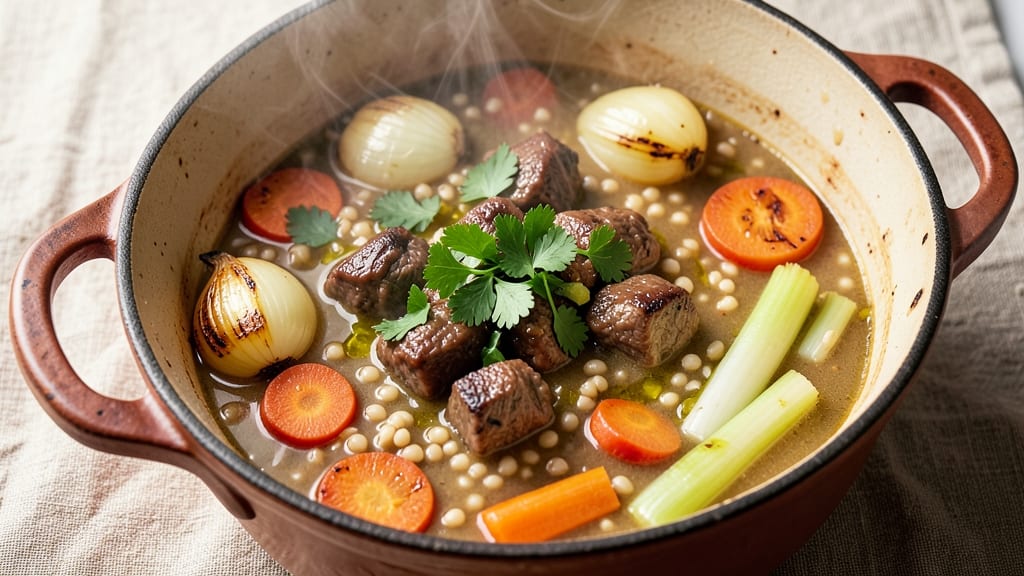
Jamie Oliver's beef and barley soup transforms humble ingredients into a rich, hearty masterpiece that tastes like a home-cooked hug. The secret lies in caramelizing the beef and developing deep flavors through slow simmering—no shortcuts, just pure, satisfying depth. This isn’t just soup; it’s a restaurant-quality dish that builds character with every spoonful, thanks to red wine and aromatic herbs.
The magic begins with browning the beef to create a caramelized fond at the bottom of the pot—this rich, flavorful crust forms the soul of the soup. Barley adds chewy texture and earthy notes, while red wine contributes complexity that elevates the broth from ordinary to extraordinary.
The result? A soup that’s comforting yet refined, perfect for chilly evenings or family gatherings.
What sets this recipe apart is the balance of techniques: searing the meat for depth, simmering long enough for flavors to meld, and finishing with fresh herbs for brightness. The broth will be velvety, the barley tender, and the beef so tender it falls apart at the touch.
Every ingredient plays a role, and the final product is a testament to how simple, well-executed methods can yield extraordinary results.
Serve it steaming hot in deep bowls, garnished with a drizzle of olive oil and a sprinkle of parsley. This isn’t just a recipe—it’s a flavor journey that proves homemade can outshine even the most expensive restaurant versions. Let’s get cooking.
Ingredients for beef and barley soup recipe jamie oliver
Six pounds of beef and aromatic vegetables transform into Jamie Oliver's velvety red wine braise.
| Ingredient | Amount | Notes |
|---|---|---|
| Beef Chuck Roast 🥩 | 2 lb | Cut into 1-inch cubes, trimmed of fat |
| Yellow Onions 🧅 | 2 whole | Chopped into 1/2-inch dice |
| Carrots 🥕 | 4 whole | Peeled, cut into 1-inch chunks |
| Celery Stalks 🧅 | 4 whole | Chopped into 1/2-inch pieces |
| Garlic Cloves 🧄 | 6 cloves | Minced, for depth of flavor |
| Pearl Barley 🌾 | 1 cup | Rinsed thoroughly before cooking |
| Dry Red Wine 🍷 | 1 cup | Bold variety like Cabernet Sauvignon |
| Beef Stock 💧 | 6 cups | Homemade preferred, low-sodium |
| Tomato Paste 🍅 | 2 tbsp | Smooth texture for richness |
| Fresh Thyme 🌿 | 2 sprigs | Leaves only, stems removed |
| Fresh Parsley 🌿 | ¼ cup | Chopped, for final garnish |
| Olive Oil 🫒 | 2 tbsp | Extra-virgin for high heat searing |
| Salt 🧂 | 1 ½ tsp | Diamond Crystal kosher salt |
| Black Peppercorns 🌶️ | 1 tsp | Freshly cracked for intensity |
| Bay Leaves 🍃 | 2 whole | Removed before serving |
The beef selection is non-negotiable for this recipe. Chuck roast delivers that coveted fall-apart tenderness—sirloin or ribeye will stay too firm. Look for well-marbled cuts at Whole Foods Market or your local butcher shop; the fat renders beautifully during the long simmer. Carrots and celery should be fresh with vibrant color—organic produce from the grocery store's refrigerated section works best. The pearl barley? Bob's Red Mill is my go-to brand, but any pearl barley will do. Rinse it thoroughly before cooking to remove excess starch that can make the soup gluey. For the red wine, bold Cabernet Sauvignon or Merlot works best—avoid sweet varieties that will overpower the dish.
No beef stock on hand? Substitute with a mix of water and soy sauce (1 tbsp per cup of water) for umami depth. Running short on fresh thyme? Dried thyme at one-third the amount suffices, though fresh is ideal. The tomato paste can be swapped for crushed tomatoes (½ cup) if you prefer a chunkier texture. For a vegetarian adaptation, replace the beef with mushrooms and extra barley, but the wine and stock remain essential for that signature depth. The bay leaves add subtle earthiness—remove them before serving to avoid a bitter bite. If you're using a pre-made stock, opt for low-sodium versions to control the seasoning balance.
This soup develops even better flavors the next day, so make a double batch if you can. Store in airtight containers in the fridge for up to 5 days or freeze for 3 months—the broth actually improves with time. For reheating, use low heat and stir occasionally to prevent scorching. The barley will soften further, becoming even more tender. Garnish with fresh parsley just before serving to maintain that vibrant pop of color. If you're prepping ahead, you can even par-cook the barley separately and add it back in at the end to avoid overcooking.
Why You'll Love This Recipe
- One-Pot Magic: I swear by this—just dump everything in one pot, let it simmer, and walk away. No fancy techniques, no last-minute chopping frenzy. The chuck roast practically melts into tender chunks while you’re watching TV.
- Umami Bomb: That slow-cooked beef? It’s dangerously flavorful—deep, rich, and packed with caramelized onion and garlic. The barley soaks up all the goodness, turning every bite into a cozy, savory hug.
- Leftovers That Beg: Make a double batch and thank me later. This soup tastes even better the next day as the flavors meld. Freeze half for those "I can’t be bothered" nights—just reheat and serve.
- Budget Hero: A single chuck roast stretches for meals, and the veggies (onions, carrots, celery) are cheap staples. Honestly, it’s the kind of dish that makes grocery bills feel less painful while keeping everyone full and happy.
Step-by-step instructions for beef and barley soup with deep red wine braise
This method transforms humble ingredients into a restaurant-quality soup with rich, caramelized depth.
Sear the Beef Chuck Roast for Maximum Flavor
Heat a large Dutch oven over medium-high heat until it's screaming hot. Add the 2 tablespoons olive oil and swirl to coat the bottom evenly. Working in batches if needed, add the 2 lb beef chuck roast cut into 1-inch cubes, being careful not to overcrowd the pan.
Let the beef develop a deep golden-brown crust on all sides, which takes about 4-5 minutes per batch. This searing step creates the fond—the flavorful browned bits—that will dissolve into the soup later. Once all pieces are browned, transfer them to a plate and set aside. I press down gently on the beef cubes during searing to ensure even contact with the pan.
Build the Aromatic Vegetable Base
In the same Dutch oven, add the 2 whole yellow onions chopped into ½-inch dice, 4 whole carrots cut into 1-inch chunks, and 4 whole celery stalks chopped into ½-inch pieces. Cook over medium heat for 8-10 minutes, stirring occasionally, until the vegetables soften and begin to caramelize.
Add the 6 cloves minced garlic and cook for another 30 seconds until fragrant. Stir in the 2 tablespoons tomato paste and cook for 1 minute to deepen its flavor. This aromatic vegetable base forms the flavor foundation of your soup, so don't rush this step. The vegetables should be tender but still hold their shape.
Deglaze and Develop the Wine Reduction
Pour in the 1 cup dry red wine, scraping up all the browned bits from the bottom of the pan with a wooden spoon. This deglazing step captures all the concentrated beef flavor. Let the wine simmer for 3-4 minutes until reduced by half, until it forms a syrupy consistency with noticeable depth of color.
Here's the thing—this reduction is where the magic happens. The alcohol evaporates, leaving behind complex wine flavors that will infuse the entire soup. If you're using a bold Cabernet Sauvignon, you'll notice those dark fruit notes intensifying as it reduces. Don't walk away during this step; you want to monitor it closely to prevent burning.
Simmer the Soup Until Tender and Flavorful
Return the seared beef to the Dutch oven. Add the 6 cups beef stock, 1 cup rinsed pearl barley, 1.5 teaspoons salt, 1 teaspoon freshly cracked black peppercorns, and the 2 whole bay leaves. Bring to a gentle boil, then reduce heat to low and cover partially. Let it simmer for 1 hour 15 minutes.
After the initial hour, check the tenderness of the beef and vegetables. The beef should be fork-tender, and the barley should have absorbed some of the liquid but still have a slight bite. If the soup is too thin, uncover and simmer for another 10-15 minutes to thicken slightly. I like to stir occasionally to prevent the barley from sticking to the bottom.
Finish with Fresh Herbs and Perfect Garnish
Remove the 2 bay leaves and stir in the 2 sprigs fresh thyme leaves. Simmer uncovered for another 5 minutes to allow the flavors to meld. Taste and adjust seasoning with additional salt or pepper if needed. The soup should be rich and well-seasoned, with the wine's acidity balanced by the beef's depth.
Just before serving, stir in the ¼ cup chopped fresh parsley. This final touch adds brightness and freshness to cut through the richness. Ladle the soup into bowls and serve immediately. The pearl barley should be tender but still hold its shape, and the beef should be meltingly tender with a deep, satisfying flavor that carries through every spoonful.
Pro Tips For Making Beef And Barley Soup Recipe Jamie Oliver
- Sear the Chuck Hard: The beef chuck roast needs a deep, dark crust to stay tender later. Hit it with a dry cast-iron skillet over medium-high heat for 4-5 minutes per side—don’t rush, or it’ll steam instead of brown. I used to skip this, and the soup always tasted underdeveloped.
- Chop Celery Small: Jamie’s recipe calls for celery, but most people leave it in big chunks. Dice it into ¼-inch pieces so it softens properly and blends into the broth instead of floating like a boat. (Yes, it’s extra work, but your soup will thank you.)
- Deglaze with Beer: After browning the beef, don’t just splash in water—use the full 500ml of stout or ale the recipe calls for. The alcohol burns off, but the maltiness cuts through the richness of the beef fat. I learned this the hard way when I substituted broth and wondered why the soup tasted flat.
- Add Barley Late: Pearl barley needs time to soften, but if you add it too early, it turns mushy. Toss it in 30 minutes before the soup finishes cooking—just enough time to plump up without dissolving. If you’re short on time, soak it for 15 minutes first, but don’t skip the final simmer.
Creative variations of this dish
Wine Variations
While Cabernet Sauvignon is my go-to for its bold fruit notes, don't hesitate to experiment. A Pinot Noir adds lighter, earthier complexity perfect for a lighter winter soup. For something truly unique, try Malbec—its dark berry flavors shine beautifully.
If you're avoiding alcohol, substitute with 1 cup beef broth + 1 tbsp balsamic vinegar for acidity. 🍷
Vegetarian Twist
Swap the beef for 8 oz cremini mushrooms sliced thickly and seared until golden. Add 1 cup lentils (rinsed) instead of barley for extra protein. The wine and stock remain essential for depth—just simmer 30 minutes longer to let flavors meld. Garnish with crumbled feta for a Mediterranean touch. 🌱
Spicy Kick
Add 1 tbsp smoked paprika with the tomato paste and ½ tsp cayenne pepper when simmering. For heat lovers, stir in 1 chopped chipotle pepper in adobo sauce during the final 5 minutes of cooking.
The wine's acidity balances the spice beautifully. Serve with sour cream or crème fraîche on top. 🌶️
Herb Variations
Swap thyme for rosemary sprigs (remove before serving) for piney depth. Add 1 sprig fresh sage during the wine reduction for earthy notes. For a Mediterranean flair, stir in ½ tsp dried oregano with the bay leaves. Fresh herbs like tarragon or chervil make stunning garnishes too. 🌿
Comfort Food Upgrade
Add ½ cup diced potatoes with the carrots and celery—they'll soften perfectly during simmering. For extra richness, stir in ¼ cup heavy cream during the final 5 minutes of cooking. Top with crispy fried onions or grated Parmesan for a restaurant-worthy finish. 🍽️
Global Adaptations
For a French bistro version, add 1 tsp Dijon mustard with the wine reduction. Try an Indian-inspired twist by adding 1 tsp garam masala and ½ tsp turmeric during simmering. Japanese home cooks might use dashi stock instead of beef stock and add shitake mushrooms. 🗺️
Nutrition facts
Frequently asked questions
Why does Jamie Oliver's recipe use chuck roast instead of tender cuts?
The chuck roast is perfect because it becomes incredibly tender when slow-cooked, creating that melt-in-your-mouth texture. Tender cuts like sirloin would stay too firm and lose their richness during the long simmer. The fat in chuck also renders beautifully, adding depth to the broth. Think of it as the ideal balance between flavor and texture—just what you want in a hearty soup!
Can I make this soup in a slow cooker instead of a Dutch oven? Brown the beef and vegetables first in a skillet, then transfer everything to your slow cooker. Use the same ingredients and simmer on low for 6-7 hours or high for 3-4 hours. The slow cooker's gentle heat will help the flavors meld beautifully, though you may need to add a splash of water if it gets too thick. Just
What's the best way to store leftovers?
Let the soup cool completely, then transfer to airtight containers. It keeps well in the fridge for 4-5 days—the flavors actually improve as they meld! For longer storage, freeze for up to 3 months. When reheating, warm gently on the stove with a splash of water or stock to restore the perfect consistency. The barley will soften further, becoming even more tender.
How do I know when the barley is done?
The barley should be tender but still hold its shape—think al dente pasta. After 1 hour 15 minutes of simmering, test a piece: it should be soft enough to crush between your fingers but not mushy. If it's still firm, simmer uncovered for another 10-15 minutes. Overcooked barley turns to mush and makes the soup gluey. The perfect texture adds that satisfying bite to each spoonful!
Can I substitute pearl barley for another grain?
While pearl barley is ideal for its chewy texture, you can use wild rice (simmer 45 minutes) or brown rice (simmer 1 hour) for a different texture. For a gluten-free option, try quinoa (simmer 15 minutes after adding to the soup). Just remember that cooking times vary—check your grain's package instructions and adjust accordingly. Each brings its own unique texture to the dish!