
Soups & Stews
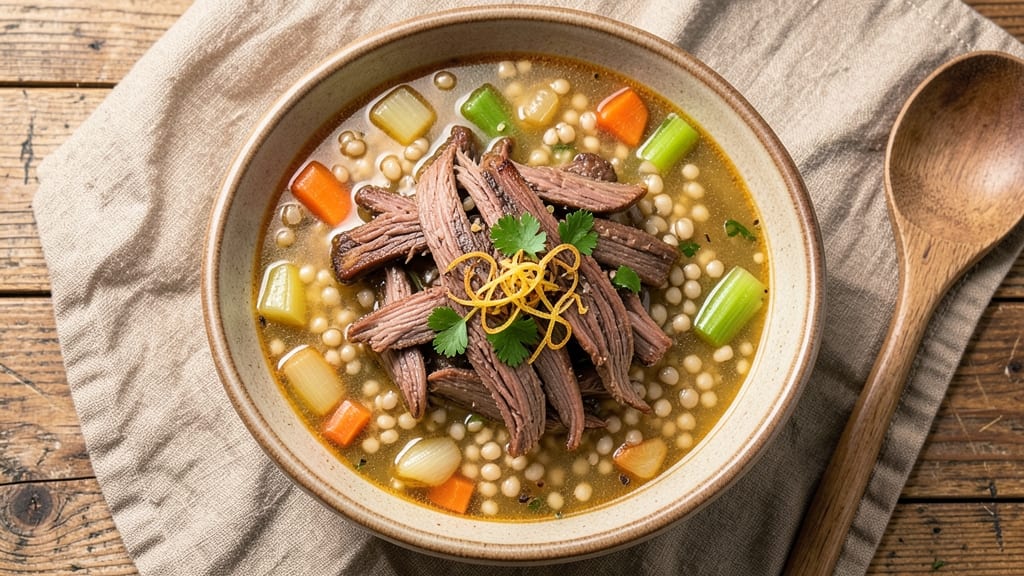
This beef barley soup recipe with leftover roast transforms Sunday dinner into Monday magic—no waste, just deeper flavor. The secret lies in shredding that leftover roast into tender, savory bites that infuse the broth with rich, meaty depth while barley and vegetables soak up every last drop of flavor.
I developed this method after realizing how much good food gets wasted when roasts go uneaten, and it's become my go-to for turning leftovers into something truly special.
The beauty of this one-pot approach is its simplicity: you'll combine your roast beef, vegetable scraps, and barley in a single pot, letting everything meld together over 45 minutes of gentle simmering.
The barley absorbs the beefy broth, creating a hearty, comforting texture that's perfect for chilly evenings. No fancy techniques required—just basic pantry staples and a little patience for the flavors to develop.
What you'll end up with is a steaming bowl of soup where every spoonful delivers tender beef, chewy barley, and perfectly seasoned vegetables—all infused with the deep, savory essence of your roast. The broth reduces to a rich, velvety consistency that coats every ingredient, making this more than just leftovers.
It's a complete meal that feels like it took hours to prepare, even though it comes together in under an hour.
Serve with crusty bread for dipping or alongside a simple green salad to balance the richness. The best part? This recipe scales effortlessly, so you can make a single serving or double the batch for meal prep. Let's turn those leftovers into something extraordinary.
Ingredients for beef barley soup recipe with leftover roast
Pantry staples meet leftover magic in this hearty, one-pot soup.
| Ingredient | Amount | Notes |
|---|---|---|
| Leftover Roast Beef 🥩 | 2 cups | Shredded into bite-sized pieces |
| Pearl Barley 🌾 | ¾ cup | Rinsed before cooking |
| Yellow Onion 🧅 | 1 whole | Diced into small pieces |
| Carrots | 3 medium | Peeled and chopped into chunks |
| Celery Stalks 🧄 | 3 whole | Chopped into 1-inch pieces |
| Garlic Cloves 🧄 | 4 cloves | Minced for rich flavor |
| Beef Broth 💧 | 4 cups | Low-sodium preferred |
| Tomato Paste 🍅 | 2 tbsp | For depth of flavor |
| Dried Thyme 🌿 | 1 tsp | Or 1 tbsp fresh thyme |
| Bay Leaves 🍃 | 2 whole | Remove before serving |
| Salt 🧂 | 1 tsp | Adjust to taste |
| Black Pepper 🌶️ | ½ tsp | Freshly ground preferred |
| Olive Oil 🫒 | 1 tbsp | For sautéing vegetables |
The roast beef is the star here—look for well-marbled, leftover pieces that'll shred easily. Costco or Whole Foods often have great roast options if you need to buy fresh. Pearl barley takes longer to cook than other varieties, so don't skip rinsing it first—removes excess starch and prevents gumminess. For the veggies, buy organic carrots and celery if possible—they're less likely to have pesticide residue on their skins, which you'll be eating. The tomato paste? Trader Joe's has the best squeeze tubes—no waste, and it keeps for months in the pantry.
No beef broth? Chicken broth plus 1 tbsp soy sauce works in a pinch, though the flavor won't be quite as rich. Fresh thyme is ideal, but dried works at one-third the amount. Short on carrots? Sweet potatoes or parsnips add great texture. The garlic can be roasted for a sweeter flavor—just wrap whole cloves in foil, roast at 400°F for 20 minutes, then mince. For extra depth, add 1 tsp Worcestershire sauce (check for vegetarian version if needed). The bay leaves are non-negotiable—they add that subtle herbal note that makes this soup sing.
This soup tastes even better the next day as flavors meld. Keeps 4-5 days in the fridge or 3 months frozen. I always make a double batch—one for dinner, one for lunches. Store in airtight containers with a layer of broth on top to preserve freshness. Reheat gently on the stove with a splash of water if it's too thick. The barley will soften further, so add a little extra broth if needed.
Why You'll Love This Recipe
- No-Chop Nightmare: I swear by this trick—just roughly chop the celery, carrots, and onion into big chunks. The soup tastes just as good, and I save 10 minutes of prep while still getting that classic veggie base.
- Rich Without Effort: That leftover roast beef? It’s the star—shredded and tossed in, it soaks up the barley’s chewy goodness and the broth’s depth like a dream. Honestly, the first bite makes me forget I’m eating leftovers.
- Meal Prep MVP: Double the batch and freeze half—it reheats like a hug on busy days. My kids grab it straight from the fridge for lunch, and I don’t have to stress about packing anything.
- Budget Booster: Pearl barley stretches a dollar, and roast beef stretches further than you’d think. Between us, this is my go-to when I’m staring down a fridge full of scraps but zero ideas.
Step-by-step instructions for beef barley soup with leftover roast
Transform your leftover roast into a hearty, comforting soup with minimal effort.
Sauté the Vegetable Base
Heat the 1 tablespoon olive oil in a large pot over medium heat. Add the diced yellow onion, chopped carrots, and celery stalks, stirring occasionally for 5 minutes until the vegetables soften and begin to release their natural juices. You'll know they're ready when they look tender and the edges start to turn slightly translucent.
Next, add the 4 cloves minced garlic and cook for another 30 seconds until fragrant. This step builds the flavor foundation—don't rush it, or you'll burn the garlic. The vegetables should be soft enough to break down easily during the simmering process, but not mushy yet.
Add Tomato Paste and Seasonings
Stir in the 2 tablespoons tomato paste and cook for 1 minute to deepen the flavor. This step intensifies the savory notes and gives the soup a rich, slightly sweet undertone. Add the 1 teaspoon dried thyme, 2 whole bay leaves, 1 teaspoon salt, and ½ teaspoon black pepper, stirring to combine.
Here's the thing—tomato paste can be bitter if overcooked, so keep the heat at medium and stir constantly. The paste will darken slightly, which is perfect for adding depth to your soup. This is also where the spices meld with the vegetables, creating a fragrant base for the broth.
Incorporate Barley and Broth
Add the ½ cup rinsed pearl barley and stir for 30 seconds to coat the grains in the vegetable mixture. This helps prevent the barley from sticking together during cooking. Pour in the 4 cups beef broth, making sure to scrape up any browned bits from the bottom of the pot—those bits are packed with flavor.
Bring the mixture to a boil over high heat, then reduce the heat to low and let it simmer for 15 minutes. This initial simmer helps the barley begin to soften and allows the broth to infuse with the flavors you've built so far. Stir occasionally to prevent the barley from sticking to the bottom of the pot.
Add Leftover Roast Beef and Simmer
Gently stir in the 2 cups shredded leftover roast beef, breaking it into bite-sized pieces as you go. This ensures even distribution throughout the soup. Return the soup to a gentle simmer and cook uncovered for 30-40 minutes, stirring occasionally. You'll notice the barley softening and the broth thickening slightly as it reduces.
Real talk: The soup should be thick enough to coat the back of a spoon but still have a light, brothy consistency. If it's too thick, add ½ cup water or more broth to reach your desired texture. The beef should be heated through and the barley tender but still with a slight bite—this is the perfect balance of texture and flavor.
Finish and Serve
Remove the 2 whole bay leaves from the soup—they've done their job and can be a bit tough to eat. Taste and adjust the seasoning with additional salt or black pepper if needed. The soup should be rich, savory, and perfectly balanced—no single ingredient overpowering the others.
Let the soup sit off the heat for 5 minutes before serving. This allows the flavors to meld even further and makes it easier to ladle into bowls. Serve warm with crusty bread to soak up every last drop of that hearty broth. The combination of tender beef, chewy barley, and aromatic vegetables makes this soup a true one-pot revival of savory depth.
Pro Tips For Making Beef Barley Soup Recipe With Leftover Roast
- SHRED THE ROAST FIRST: Cut the leftover beef into thin strips—not chunks—before adding it to the pot. Thick slices stay chewy; shredding ensures every bite melts easily. (Yes, even if you’re impatient like me, resist the urge to toss in big hunks.)
- SOAK BARLEY 30 MINUTES: Pearl barley swells faster and cooks more evenly if you rinse and soak it in cold water for 30 minutes before adding to the soup. Skipping this step leaves you with grainy, undercooked bits—trust me, I’ve learned this the hard way.
- SWEAT VEGETABLES LOW: Cook onions, carrots, and celery at medium-low heat for 8–10 minutes until soft but not browned. High heat burns them before they release flavor, turning your soup into a sad, bitter mess. (Your future self will thank you.)
- SKIP THE BOILING START: Add barley and broth to the pot, then bring to a gentle simmer (tiny bubbles, not a rolling boil). Boiling too hard makes barley gummy and scatters it everywhere—this isn’t a science experiment, but it does matter.
Storing and reheating this recipe
Refrigerator Storage
Let your soup cool completely before transferring to airtight glass containers—I love using Pyrex with snap-on lids. Store at 40°F or below for up to 4-5 days, but honestly?
The flavors deepen overnight, making it even more delicious for lunch the next day. The barley absorbs extra broth, creating a thicker, heartier texture that’s perfect for cold weather. 🥣
Freezer Prep Tips
For longer storage, freeze in quart-sized freezer bags (leave 1-inch headspace for expansion) or glass containers. I always portion it into individual servings to avoid thawing more than needed.
Label with the date—this soup keeps 3 months without losing quality. The broth may thicken further when frozen, so add a splash of water when reheating. ❄️
Stovetop Reheating
My preferred method is reheating on the stove over medium-low heat. Add ¼ cup water or broth to prevent sticking, then simmer for 10-15 minutes until steaming. Stir occasionally to distribute heat evenly—this prevents the barley from drying out.
Taste and adjust seasoning; reheated soup often needs a pinch more salt. For extra richness, stir in 1 tablespoon butter or a splash of heavy cream at the end. 🔥
Microwave Shortcuts
For quick lunches, microwave in 2-minute intervals on 50% power, stirring between each interval. Cover with a damp paper towel to retain moisture. If the soup seems too thick after reheating, add 2-3 tablespoons of water or broth to loosen it up.
The microwave method works best for single servings—just don’t overdo it, or the barley can turn mushy. ✨
Thawing Frozen Soup
Thaw overnight in the fridge for best results, or use the quick thaw method: Place the sealed container in a cold water bath, changing the water every 30 minutes until fully thawed (usually 2-3 hours).
Never thaw at room temperature—it’s a food safety no-no. Once thawed, reheat as directed above. The texture will be slightly thicker, but adding a little broth brings it back to perfection. ⏰
Serving Leftovers
Leftover soup tastes even better the second time around! Garnish with fresh parsley or a drizzle of olive oil for brightness. Serve with crusty bread or buttered noodles to soak up every last drop.
If you’re meal prepping, store components separately—barley, beef, and broth—then assemble fresh when ready to eat. This keeps the barley from getting soggy and the beef from drying out. 💫
Nutrition facts
Frequently asked questions
Can I use any type of leftover roast beef?
For best results, use well-marbled roast beef that's been cooked to medium-rare or medium—it shreds beautifully and stays tender. Avoid overcooked beef that's dry or stringy, as it won't hold up well in the soup. If your leftovers are tough, trim any excess fat and consider adding 1 teaspoon soy sauce to help tenderize during simmering.
How do I adjust the recipe for a slow cooker?
Transfer all ingredients (except bay leaves) to your slow cooker and cook on low for 6-7 hours or high for 3-4 hours. The barley will absorb more liquid, so add ½ cup water during the last hour if needed. Remove bay leaves before serving—they're tough after slow cooking. The flavors develop beautifully this way, making it perfect for hands-off meal prep!
What can I do if my barley is undercooked?
If the barley still has a bite after 45 minutes, it's not ruined—just needs more time! Return the soup to a simmer and cook uncovered for another 15-20 minutes, stirring occasionally. For extra insurance, use ½ cup quick-cooking barley (like pearl barley) instead of regular pearl barley—it cooks in 30-40 minutes total. The texture should be tender but still hold its shape slightly.
Can I make this soup vegetarian?
Replace the beef with 2 cups shredded tempeh or seitan (marinated in soy sauce and garlic) or 1.5 cups lentils. Use vegetable broth instead of beef broth and add 1 teaspoon smoked paprika for depth. The barley and vegetables will still deliver that comforting texture, just with a plant-based twist. The soup will taste hearty and satisfying!
Why does my soup taste bland?
Blandness usually means the broth needs more flavor. Try adding 1 teaspoon balsamic vinegar or ½ teaspoon fish sauce (for umami depth) and a pinch more salt. If the beef is flavorless, it might have been under-seasoned originally—boost the broth with 1 teaspoon Worcestershire sauce or a splash of red wine (reduce first). Always taste as you go! The key is building layers of flavor through slow simmering.