
Soups & Stews
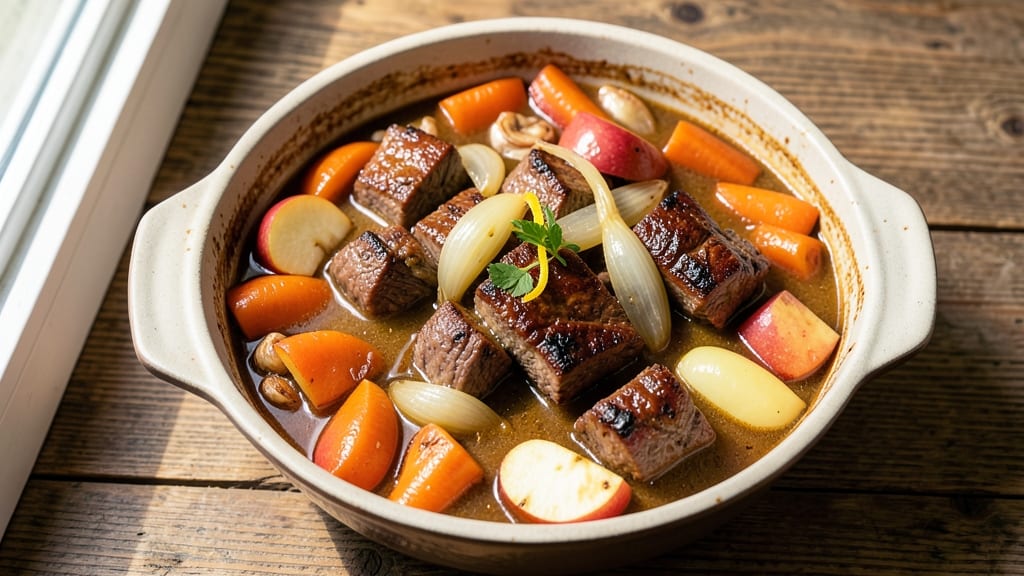
This apple beef stew recipe transforms humble ingredients into a rich, comforting dish where tender beef and sweet-tart apples create perfect harmony.
The key lies in slow braising—searing the beef first develops deep flavor, while simmering with apples and spices unlocks a balance of sweetness and savory richness that lingers long after the last bite.
What makes this recipe special is how the apples soften into a natural thickener, eliminating the need for flour or cornstarch while adding subtle sweetness that complements the beef's depth.
What sets this stew apart is its versatility—whether you simmer it on the stovetop for 2 hours or use a slow cooker for 6-8 hours, the results are consistently tender and flavorful.
The onions and garlic form the aromatic base, while the apples (I recommend Honeycrisp or Braeburn) caramelize slightly, adding a touch of natural sweetness that rounds out the savory broth.
This isn't just a stew; it's a one-pot meal that feels like a hug on a chilly evening, with every spoonful delivering layers of comfort and satisfaction.
The finished stew delivers perfectly tender beef that falls apart easily, surrounded by tender apples, onions, and carrots in a rich, velvety broth. The aroma alone—warm spices mingling with caramelized apples and seared beef—will have your kitchen (and your guests) craving seconds.
Serve it with crusty bread to soak up every last drop of that flavorful liquid, or pair it with mashed potatoes for a heartier meal. This is the kind of stew that tastes even better the next day, making it ideal for meal prep or feeding a crowd.
For those who love modern twists, consider adding a splash of red wine to the broth or finishing with a sprinkle of fresh thyme for brightness. The slow-cooker adaptation is a game-changer for busy weeknights, while the stovetop version delivers deeper flavor for those who prefer hands-on cooking.
Either way, you're guaranteed a stew that's rich, comforting, and packed with layers of flavor—proof that simple ingredients can create something truly extraordinary.
Ingredients for apple beef stew
Sweet-tart apples and rich beef chuck create this hearty stew's perfect harmony.
| Ingredient | Amount | Notes |
|---|---|---|
| Beef Chuck Roast 🥩 | 2 lb | Cut into 1.5-inch cubes, preferred |
| Yellow Onions 🧅 | 2 whole | Medium size, sliced into half-moons |
| Carrots 🥕 | 4 whole | Medium size, peeled and cut into chunks |
| Honeycrisp Apples 🍎 | 4 whole | Peeled, cored, and cut into wedges |
| Garlic Cloves 🧄 | 4 cloves | Minced for aromatic base |
| Beef Broth 💧 | 3 cups | Low-sodium preferred, homemade or store-bought |
| Red Wine 🍷 | ½ cup | Dry variety like Cabernet Sauvignon |
| Tomato Paste 🍅 | 2 tbsp | Smooth consistency for richness |
| Dried Thyme 🌿 | 1 tsp | Or 1 tbsp fresh thyme leaves |
| Bay Leaves 🌿 | 2 whole | Remove before serving |
| Ground Black Pepper 🌶️ | 1 tsp | Freshly ground for best flavor |
| Kosher Salt 🧂 | 1 ½ tsp | Adjust to taste throughout cooking |
| Olive Oil 🫒 | 2 tbsp | Extra-virgin for searing |
| All-Purpose Flour 🌾 | 1 tbsp | For thickening if needed |
The beef chuck roast is the star—look for well-marbled cuts at your butcher or grocery store's meat counter. I usually grab mine from Costco when I'm doing a big batch, but the regular supermarket stuff works fine for a weeknight. For the apples, Honeycrisp or Braeburn are my go-tos—they hold up well during cooking and add that perfect sweet-tart balance. If you can't find those, Granny Smith works too, but it'll be more tart. The onions and carrots can be any variety you have on hand, but yellow onions add the most flavor to the base. For the broth, low-sodium is key—you'll be adding salt later, and you don't want to overdo it.
No red wine? Substitute with extra beef broth—just add 1/4 cup more. Fresh thyme is ideal, but dried works at one-third the amount. If you're using pre-sliced apples, pat them dry first to prevent the stew from getting watery. The tomato paste can be swapped for crushed tomatoes if you prefer, but paste gives a deeper, richer flavor. For the flour, only use it if the stew feels too thin—this recipe is designed to thicken naturally as the apples cook. If you're making this ahead, freeze the raw ingredients in a bag and cook straight from frozen—it'll just take a few extra minutes.
This stew tastes even better the next day—make a double batch if you can. Store leftovers in the fridge for up to 5 days or freeze for 3 months. I like to portion mine into containers so lunches are ready to grab. The apples will soften more after refrigeration, so if you're serving it right away, serve with crusty bread to soak up the rich broth. For extra brightness, finish with a sprinkle of fresh thyme or parsley right before serving. The flavors meld beautifully overnight, so don't rush it—patience is key here.
Why You'll Love This Recipe
- One-Pot Magic: I swear by this recipe when I’m too tired to scrub a million dishes. Chuck roast, onions, and carrots all simmer together—no extra pots, no fuss—while the apples melt into sweet, tender chunks. Honestly, the only cleanup is a quick wipe of the pot.
- Sweet-Savory Balance: That first bite? The crisp Honeycrisp apples cut through the rich beef like a bright, juicy surprise. The garlic cloves sizzle just enough to wake up every spoonful, and the onions caramelize into something dangerously addictive. I’ll be real: my husband always asks for seconds before I even finish serving.
- Weeknight to Holiday: This stew works everywhere. Too busy for dinner? Toss it in a thermos for lunch. Hosting Thanksgiving? It’s the one dish that’ll disappear before the pie. Even my picky teen devours it—(yes, even on a Tuesday night).
- Budget-Friendly Feast: A chuck roast stretches further than you’d think, and the apples add luxury without breaking the bank. Leftovers? Even better the next day—if there are any. I’ve fed six people for under $20 and still had containers packed for lunch. My secret weapon for stretching meals without sacrificing taste.
Step-by-step instructions for apple beef stew
Here's how to create a rich, comforting stew where tender beef and sweet-tart apples shine together.
Sear the Beef for Deep Flavor
Heat the 2 tablespoons olive oil in a large Dutch oven over medium-high heat until shimmering. Pat the 2 lb beef chuck roast dry with paper towels and cut it into 1.5-inch cubes. Working in batches, add the beef to the pot and sear for 2-3 minutes per side until deeply browned on all sides. This step develops rich, caramelized flavors that form the stew's foundation.
Don't overcrowd the pot—sear in batches if needed. You'll know it's ready when the beef releases easily from the pan and develops a golden crust. Transfer the seared beef to a plate and set aside for now.
Build the Aromatic Base
In the same Dutch oven, add the 2 whole yellow onions sliced into half-moons, 4 whole carrots cut into chunks, and 4 cloves garlic minced. Cook for 5-6 minutes until the onions soften and the carrots begin to caramelize slightly. You want them to develop color but not burn—this adds sweetness to balance the tart apples later.
Stir occasionally and watch the pan closely. If the vegetables start to stick, add a splash of beef broth to deglaze. This creates a flavorful sauce that will form the stew's base. The vegetables should be tender but still hold their shape.
Deglaze and Simmer the Stew
Pour in the 0.5 cup red wine and scrape up any browned bits from the bottom of the pot with a wooden spoon. These bits are packed with flavor. Let the wine simmer for 2-3 minutes until reduced by half. Then stir in the 2 tablespoons tomato paste and cook for another 1 minute to deepen the sauce's richness.
Return the seared beef to the pot along with the 3 cups beef broth, 4 whole honeycrisp apples cut into wedges, 1 teaspoon dried thyme, 2 whole bay leaves, 1.5 teaspoons kosher salt, and 1 teaspoon ground black pepper. Bring the mixture to a gentle boil, then reduce heat to low and cover the pot.
Cook Until Tender and Flavorful
Let the stew simmer for 1 hour and 15 minutes or until the beef is fork-tender and pulls apart easily. The apples should be soft but still hold their shape. You'll notice the stew will thicken naturally as it cooks, but if it becomes too thin, you can stir in the 1 tablespoon all-purpose flour mixed with a little water to help it thicken slightly.
I like to check the stew after 45 minutes to ensure everything is cooking evenly. If the liquid seems too low, add a little more beef broth. The stew should have a rich, aromatic scent with the sweetness of the apples and the savory depth of the beef.
Finish and Serve
Once the beef is tender, remove the bay leaves and adjust the seasoning if needed. The stew should be well-seasoned with a balance of sweetness from the apples, acidity from the wine, and savory depth from the beef and broth. Serve the stew hot in bowls, garnished with fresh parsley if desired.
This stew tastes even better the next day as the flavors continue to meld. Pair it with crusty bread or over mashed potatoes to soak up every last drop of that delicious sauce. The combination of tender beef and sweet-tart apples creates a comforting, hearty dish that's perfect for any season.
Pro Tips For Making Apple Beef Stew
- SEAR THE ROAST HARD: Get that Dutch oven screaming hot—like, the kind of heat where a drop of water sizzles violently. The beef chuck needs a deep, caramelized crust to hold up through hours of braising, and cutting corners here means mushy meat later. Use about 2 tablespoons of oil and don’t rush the process, even if you’re impatient like me.
- PEEL AND CORE APPLES LAST: I used to peel and slice the apples first, only to have them turn mealy by the time I added them. Instead, peel and core them right before tossing them in the stew—Honeycrisp stays crisp and sweet when it hits the hot liquid. Cut them into even ½-inch chunks so they cook through without turning to mush.
- DON’T OVERCROWD THE POT: Stuffing the Dutch oven with too many onions and carrots at once steams the beef instead of browning it. Work in batches: Sear half the onions and carrots, remove them, then repeat with the rest before adding the beef. This guarantees a flavorful base that won’t turn watery.
- USE COLD APPLES FOR BALANCE: Sounds weird, but it works: Toss the sliced apples into the stew cold during the last 20 minutes of cooking. The cold apples release their juices gradually, preventing the stew from becoming cloyingly sweet. It also keeps their texture bright and crisp instead of dissolving into syrup.
Regional styles of this apple beef stew
Classic French Approach
In France, this stew often appears as bœuf bourguignon with apples added for sweetness. The French technique involves browning the beef in butter before deglazing with red wine and simmering with pearl onions and mushrooms.
I like to use Pinot Noir instead of Cabernet Sauvignon for its lighter body, which complements the apples beautifully. The key difference is the French version uses bacon lardons for extra smokiness, while our recipe keeps it beef-forward. 🍷
German Apple Beef Tradition
Germany's Apfel-Rindfleisch-Eintopf (apple beef stew) leans into hearty, rustic flavors with dark rye bread added to thicken the stew naturally. I've adapted this by using sauerkraut as a side rather than mixing it in, but some German recipes incorporate both apples and sauerkraut for a tangy contrast.
The Germans often use potatoes instead of carrots, and I've found Fueling apples (a German variety) work exceptionally well if you can find them. 🥔
American Heartland Twist
The American Midwest version often includes tomato-based elements, like adding crushed tomatoes or ketchup for a slightly sweet-savory balance. I've seen recipes from Iowa and Nebraska that use cornbread instead of crusty bread for serving.
For a true regional touch, add a dash of smoked paprika (inspired by Kansas barbecue traditions) to the searing beef. This adds a subtle smokiness that pairs wonderfully with the apples' natural sweetness. 🌽
British Pub-Style Adaptation
British pubs serve a similar dish called beef and apple pie, but the stew version is equally comforting. The British approach often includes a splash of ale (like Guinness) instead of red wine, and a touch of Worcestershire sauce for umami depth.
I've found that Bramley apples (a British variety) hold up exceptionally well in long simmering. For extra richness, some British recipes add a spoonful of marmalade at the end to enhance the apple flavor. 🍺
Italian Rustic Variation
Italy's stufato di manzo con mele (beef stew with apples) often incorporates rosemary and white wine instead of thyme and red wine. The Italians tend to use pear instead of apple, but I've had great success with Honeycrisp apples in this style.
For an authentic touch, add a handful of sun-dried tomatoes to the stew during the final 15 minutes of cooking. This adds a Mediterranean brightness that contrasts beautifully with the beef's richness. 🌿
Modern Slow-Cooker Fusion
For a contemporary take, many home cooks adapt this stew for slow cookers using apple cider instead of red wine and adding a splash of balsamic vinegar for depth. I've seen versions with gingersnap cookies crumbled into the stew at the end for a sweet crunch.
This works particularly well when served with mashed sweet potatoes instead of regular potatoes. The slow cooker method lets the flavors meld even more deeply, creating a stew that's almost like a cross between a traditional recipe and a dessert. 🍪
Nutrition facts
Frequently asked questions
What's the best apple variety for this beef stew?
For this recipe, Honeycrisp or Braeburn apples work best—they hold their shape while cooking and provide that perfect sweet-tart balance. If you can't find these, Granny Smith apples add more tartness, while Fuji apples will be sweeter. Avoid overly soft varieties like Red Delicious, as they'll turn mushy during the long simmer.
Can I make this stew in a slow cooker?
For a slow cooker version, sear the beef first (as directed), then transfer everything to your slow cooker and cook on low for 6-8 hours or high for 4-5 hours. The slow cooker method actually enhances the apple's natural sweetness and makes the beef even more tender. Just skip the tomato paste if you're using apple cider instead of wine for a different flavor profile.
Why does my stew taste too sweet or too savory?
If it's too sweet, try adding a splash of red wine vinegar or 1/2 teaspoon of smoked paprika to balance the flavors. For a stew that's too savory, add 1-2 more apple wedges or a pinch of cinnamon to enhance the sweetness. The key is the red wine—it adds acidity that bridges the sweet and savory elements perfectly.
How do I store and reheat leftovers?
Store leftovers in an airtight container in the fridge for up to 5 days or freeze for 3 months. To reheat, warm on the stovetop over medium-low heat until bubbling, stirring occasionally. For best results, add a splash of beef broth or water if the stew seems too thick after reheating. The flavors actually improve overnight as everything melds together!
Can I substitute beef with another protein?
While beef chuck is ideal for its rich flavor and tenderness, you can substitute with lamb shoulder (for a gamey twist) or pork shoulder (reduce cooking time by 20-30 minutes). For a vegetarian option, use mushrooms or lentils instead, but reduce the cooking time to 45 minutes and add them at the end. The apples will still provide that sweet contrast, though the texture will differ.