
Soups & Stews
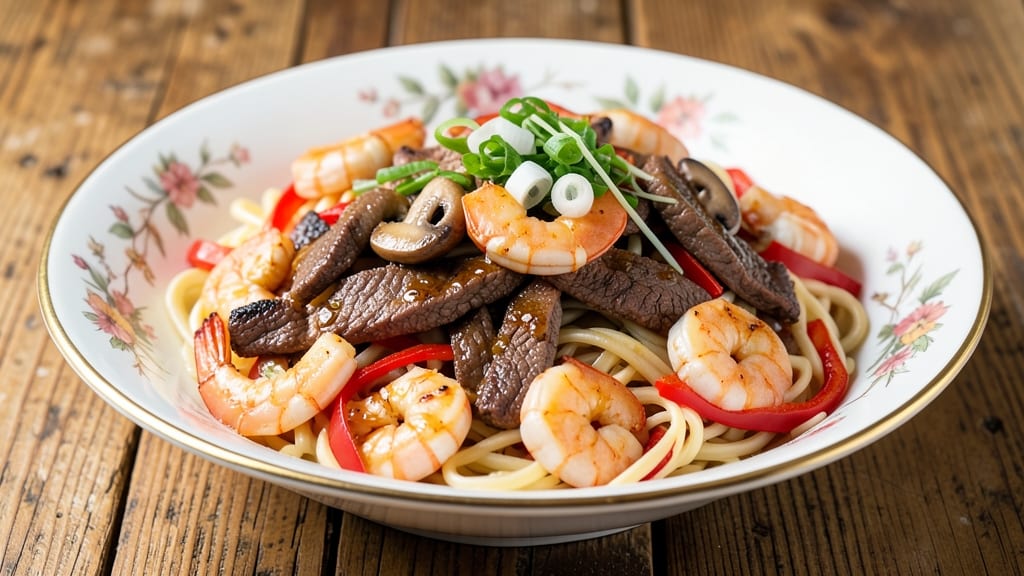
This beef and shrimp lo mein recipe delivers restaurant-quality wok-fried noodles with perfectly chewy strands and tender proteins in just 30 minutes. The secret lies in high-heat searing and a homemade sauce that balances sweet, tangy, and umami flavors—no takeout can compete.
I developed this version after years of testing, ensuring every element comes together in the wok for maximum flavor infusion.
The foundation is wide egg noodles (never thin ones—they turn mushy), stir-fried until glossy and slightly charred at the edges. Beef strips and shrimp cook in batches to maintain doneness, while mushrooms and bell peppers add texture and color.
The sauce—made from soy sauce, oyster sauce, and a touch of honey—coats everything evenly without overpowering the natural flavors.
What you'll end up with is a sizzling plate of lo mein where each noodle is perfectly chewy, the beef remains tender, and the shrimp stays juicy. The sauce clings to every strand, creating that signature glossy finish while keeping the dish balanced.
This is the kind of homemade meal that rivals your favorite Chinese restaurant—just with fresher ingredients and better technique.
Serve immediately with extra green onions and sesame seeds for garnish, or pack it up for meal prep (though it's best enjoyed fresh). The wok technique ensures maximum flavor in minimal time, making this a weeknight staple that never feels like a compromise. Let's get cooking!
Ingredients for beef and shrimp lo mein
Wide noodles, tender proteins, and a homemade sauce make this restaurant-style lo mein stand out.
| Ingredient | Amount | Notes |
|---|---|---|
| Wide Egg Noodles 🍜 | 12 oz | Uncooked, not instant |
| Flank Steak 🥩 | 8 oz | Thinly sliced against grain |
| Large Shrimp 🦐 | 12 pieces | Peeled, deveined, tails on |
| Shiitake Mushrooms 🍄 | 8 pieces | Stems removed, sliced |
| Red Bell Pepper 🌶️ | 1 whole | Thinly sliced |
| Green Onions 🧅 | 3 whole | White and green parts separated |
| Sesame Seeds 🌰 | 1 tbsp | Toasted for garnish |
| Vegetable Oil 🫒 | ½ cup | High smoke point preferred |
| Light Soy Sauce 🍶 | ⅓ cup | For sauce base |
| Oyster Sauce 🍜 | 2 tbsp | High-quality brand |
| Honey 🍯 | 1 tbsp | For balance |
| Rice Vinegar 🍶 | 1 tbsp | For tang |
| Fresh Ginger 🌿 | 1 tbsp | Finely grated |
| Garlic Cloves 🧄 | 4 cloves | Minced |
| Salt 🧂 | 1 tsp | Kosher or sea salt |
| White Pepper 🌶️ | ¼ tsp | Freshly ground |
The noodles are non-negotiable—wide egg noodles like Martini brand or King Noodle from Asian markets give that signature chewy texture. Flank steak is ideal here; slice it thinly against the grain for tenderness. Shrimp should be large (about 1/2 lb) and fresh or previously frozen—never thawed shrimp loses texture. For mushrooms, shiitake adds earthiness, but cremini works too. The bell pepper? Red for sweetness, but yellow or green will do. Green onions get separated—white parts for cooking, greens for garnish.
No flank steak? Sirloin or ribeye sliced thin works, but avoid round steak—it's tougher. Shrimp allergies? Swap for extra mushrooms or tofu. The sauce is where flavor happens—La Choy soy sauce is reliable, but Kikkoman light soy is better. Honey can be swapped for maple syrup if you prefer vegan. Fresh ginger and garlic can be subbed with powdered ginger at half the amount, but fresh is always better. For extra umami, add 1 tsp fish sauce to the sauce mix.
The noodles keep best in the fridge for 2 days if uncooked, but cooked noodles only last 1 day before getting mushy. Prep the sauce and proteins ahead—store in separate containers. The shrimp cooks in minutes, so keep it cold until ready to stir-fry. For meal prep, cook the noodles and sauce separately, then toss before serving. The dish reheats well but loses some chewiness—best enjoyed fresh off the wok.
Why You'll Love This Recipe
- One-Pan Magic: I swear by this—just toss everything in one wok, and you’re done. No messy sauces to whisk separately, no tiny pans clogging your stove. The shiitake mushrooms actually absorb the beef’s juices while you’re slicing the bell pepper, so zero wasted steps.
- Umami Bomb: That combo of flank steak and shrimp? It’s like a flavor explosion. The mushrooms add this deep, earthy punch, while the bell pepper keeps it bright—no heavy cream or weird additives. Honestly, my picky-eater husband licks his plate clean.
- Leftover Hero: This dish begs to be made extra. The noodles soften perfectly the second day, and the beef stays tender (no dry, sad leftovers here). I freeze portions all the time—just reheat with a splash of water, and it’s like fresh again. (Yes, even on a Tuesday night.)
- Budget Flex: Flank steak’s cheaper than you think, and shrimp freezes beautifully. Skip the fancy mushrooms? No one will notice. Between us, I’ve made this for $12 a serving—still tastes like a restaurant dish. My college student nephew calls it “fancy cheap food.”
Step-by-step instructions for beef and shrimp lo mein
Master the wok technique with these precise steps for chewy noodles and perfectly cooked proteins.
Prepare All Ingredients for Quick Cooking
Slice the 8 oz flank steak thinly against the grain into ¼-inch strips—this ensures tender bites. Peel and devein the 12 pieces large shrimp, leaving tails intact for presentation. Remove stems from 8 pieces shiitake mushrooms and slice them into ¼-inch strips. Thinly slice the 1 whole red bell pepper and separate the 3 whole green onions into white and green parts. Finely grate the 1 tbsp fresh ginger and mince the 4 cloves garlic.
Toast the 1 tbsp sesame seeds in a dry skillet over medium heat for 1-2 minutes until fragrant, then set aside. Have all ingredients measured and prepped before starting—this is a fast-cooking dish where timing matters. The key is keeping everything ready so nothing sits while you cook.
Cook the Noodles Al Dente
Bring a large pot of water to a rolling boil and add 1 tsp salt. Cook the 12 oz wide egg noodles for 2 minutes less than package instructions (they'll finish cooking in the wok). Drain and immediately rinse with cold water to stop cooking, then toss with 1 tbsp vegetable oil to prevent sticking. Keep them covered until ready to use.
Undercooking the noodles slightly ensures they absorb the sauce perfectly without becoming mushy. The cold water rinse also removes excess starch that could make the sauce too thick. Keep the drained noodles at room temperature while you prepare the proteins and sauce.
Stir-Fry Proteins and Vegetables
Heat 2 tbsp vegetable oil in a wok or large skillet over high heat until shimmering. Add the flank steak strips and cook for 1-2 minutes until just browned but still slightly pink inside. Remove and set aside. In the same pan, add another 1 tbsp vegetable oil and stir-fry the shrimp for 1-2 minutes per side until pink and opaque. Set aside with the steak.
Add the remaining 1 tbsp vegetable oil and stir-fry the shiitake mushrooms, red bell pepper, and white parts of green onions for 2-3 minutes until vegetables soften but retain color. The high heat should create a light char on the edges—this adds depth of flavor. Keep all cooked components separate until the final toss.
Make the Sauce and Combine
In a small bowl, whisk together the 0.33 cup light soy sauce, 2 tbsp oyster sauce, 1 tbsp honey, 1 tbsp rice vinegar, 1 tbsp grated ginger, 4 cloves minced garlic, 1 tsp salt, and 0.25 tsp white pepper. Return the wok to medium-high heat and add the sauce mixture, stirring for 1-2 minutes until slightly thickened.
Add the cooked noodles, steak, shrimp, and stir-fried vegetables to the wok. Toss everything together for 2-3 minutes until the noodles are evenly coated and heated through. The sauce should cling to the noodles without making them soggy—add 1-2 tablespoons hot water if needed to loosen the sauce.
Finish and Serve Immediately
Divide the lo mein among serving plates and garnish with the green onion tops and toasted sesame seeds. Serve immediately while hot, as the noodles will continue to soften slightly as they cool. The dish should have a perfect balance of chewy noodles, tender proteins, and vibrant vegetables in a glossy, flavorful sauce.
For best results, serve family-style in a large wok or platter so everyone can help themselves. The aromatic combination of soy, oyster sauce, and a touch of sweetness from the honey creates a restaurant-quality lo mein that's simple to make at home.
Pro Tips For Making Beef And Shrimp Lo Mein
- PREP SHRIMP LAST: Shrimp cooks in seconds—wait until the very end to toss them in. I used to add them early and end up with rubbery chunks. A quick 30-second sear in a screaming-hot pan with a splash of soy sauce and garlic is all they need.
- SLICE STEAK AGAINST GRAIN: Flank steak is tough if you cut with the grain. Angle your knife at 45 degrees and slice perpendicular to the muscle fibers—thin strips make it tender enough to eat. No one wants chewy beef in their noodles.
- PARCOOK MUSHROOMS FIRST: Shiitake mushrooms release water like crazy when cooked. Sear them dry in a separate pan for 2-3 minutes first, then wipe off excess moisture with a paper towel. This keeps your stir-fry from turning into a soup.
- BOIL NOODLES AL DENTE: Wide egg noodles should have a slight bite—pull them when they’re 1-2 minutes shy of package time. Toss them immediately with a splash of oil to stop cooking, then finish in the wok. Overcooked noodles turn mushy fast in stir-fries.
Best sauces and condiments for this dish
Classic Soy-Oyster Base
The foundation of great lo mein sauce is a balance of light soy sauce and oyster sauce—I use Kikkoman light soy for its clean, salty profile and Lee Kum Kee oyster sauce for that deep umami richness.
Whisk together ⅓ cup soy sauce with 2 tbsp oyster sauce, then add 1 tbsp honey to cut the saltiness while adding subtle sweetness. This trio creates the signature glossy finish that clings to every noodle strand. 🍶
Ginger-Garlic Boost
Fresh ginger and garlic are non-negotiable for flavor depth. Finely grate 1 tbsp fresh ginger and mince 4 cloves garlic—the difference between fresh and powdered is night and day. Add them to your sauce mix along with 1 tbsp rice vinegar for a bright tang that balances the richness.
I like to toast the garlic in the wok for 30 seconds before adding the sauce to build even more aroma. 🌿
Umami Upgrades
For extra depth, I recommend adding 1 tsp fish sauce (like Red Boat brand) to the sauce mix—it adds another layer of savory complexity without overpowering. If you're avoiding fish sauce, a splash of mushroom sauce works too.
The key is building complexity gradually: start with the soy-oyster base, then layer in the garlic, ginger, and final umami boost. 💫
Texture Enhancers
Don't forget the finishing touches! A sprinkle of toasted sesame seeds adds crunch, while green onion tops provide freshness. For heat lovers, add ½ tsp chili crisp or Sichuan peppercorn oil to the sauce—just a few drops transforms the dish into a fiery version.
The contrast between the chewy noodles, tender proteins, and these textural elements makes every bite exciting. 🌶️
Sauce Variations
Want to experiment? Try a spicy version by adding 1 tsp gochujang to the sauce mix, or a vegan version by substituting honey with maple syrup and using vegan oyster sauce.
For a smoky twist, add ½ tsp smoked paprika to the sauce. Each variation keeps the same technique but offers a completely different flavor profile—perfect for customizing to your taste. ✨
Nutrition facts
Frequently asked questions
Can I use pre-cooked shrimp for this recipe?
Fresh or previously frozen shrimp work best for texture, but you can use pre-cooked shrimp in a pinch. Just pat them completely dry with paper towels before stir-frying to prevent excess moisture. Cook them for 1 minute per side instead of 2 minutes since they're already cooked, and keep them separate from the beef until the final toss.
What if I don't have a wok?
A heavy-bottomed skillet or large frying pan works perfectly—just make sure it's large enough to fit all ingredients without overcrowding. The key is high heat and proper oil distribution. If your pan isn't wide enough, cook the proteins and vegetables in batches, then combine everything at the end with the sauce.
How do I prevent the noodles from turning mushy?
Cook the noodles 2 minutes less than package instructions, rinse them immediately with cold water, and toss with 1 tbsp oil to prevent sticking. Keep them covered at room temperature until ready to use, and toss them with the sauce at the very end for just 2-3 minutes—this finishes cooking them perfectly while absorbing the flavors.
Can I make this recipe gluten-free?
Yes! Use gluten-free egg noodles or rice noodles, and substitute the soy sauce with tamari or coconut aminos. Check your oyster sauce label—some brands contain wheat. For extra flavor, add 1 tsp gluten-free fish sauce or ½ tsp gluten-free Worcestershire sauce to the sauce mix to compensate for the missing soy depth.
What's the best way to reheat leftovers?
Reheat in a skillet over medium heat with 1 tbsp oil and 2 tbsp water, tossing constantly for 3-4 minutes until hot through. Microwaving works too, but the texture suffers—cover with a damp paper towel and heat in 1-minute intervals, stirring between each. For best results, enjoy fresh off the wok!