
Main Courses
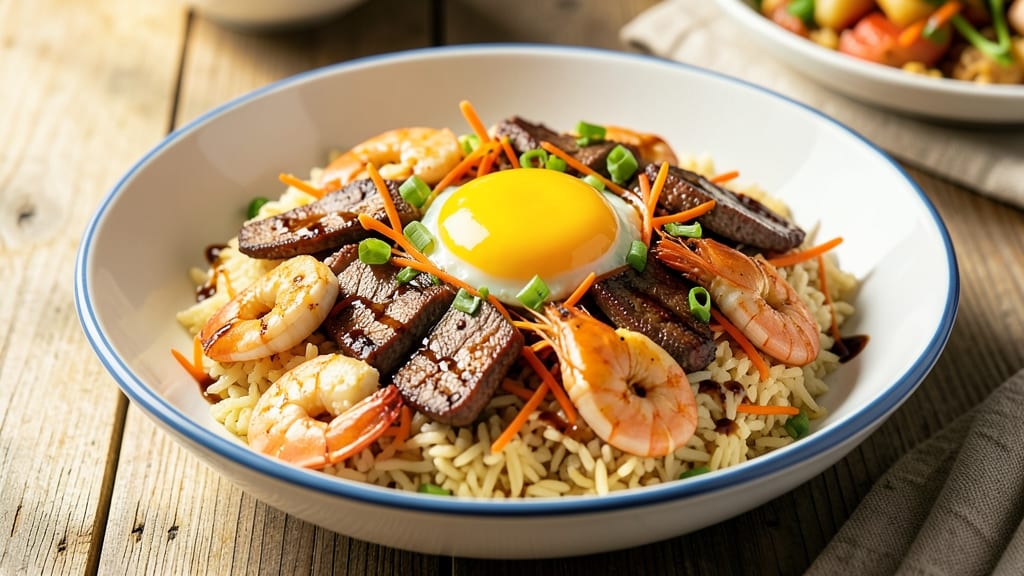
This beef and shrimp fried rice recipe delivers restaurant-quality wok-fired crunch with tender proteins and silky egg threads. 🔥 The secret lies in high-heat stir-frying that locks in juices while creating that signature wok hei aroma.
I developed this version after years of testing—balancing protein-to-rice ratios and texture contrasts that make every bite satisfying.
What sets this recipe apart is the layered technique: searing the beef first for deep flavor, then adding shrimp at the perfect moment to keep them tender-crisp. Fresh vegetables add crunch, while beaten eggs create delicate ribbons that coat each grain.
The sauce is simple but essential—just soy sauce, oyster sauce, and a touch of sesame oil to tie everything together.
By the time you're done, you'll have a fragrant, flavorful dish with perfectly cooked rice that's neither mushy nor dry. The beef stays juicy, shrimp maintain their snap, and every forkful delivers that perfect harmony of textures and flavors.
This is the kind of fried rice that makes you want to make it again and again.
Serve with a cold beer or jasmine tea to complement the dish's bold flavors. The recipe scales beautifully for parties or meal prep, making it perfect for any occasion. Let's get cooking—your taste buds will thank you.
Ingredients for beef and shrimp fried rice
Restaurant-quality fried rice starts with these fresh ingredients—crisp proteins, silky eggs, and veggies that pop with every bite.
| Ingredient | Amount | Notes |
|---|---|---|
| Day-Old Cooked White Rice 🍚 | 4 cups | Cold, dry, and separated |
| Flank Steak 🥩 | ½ lb | Thinly sliced against grain |
| Large Shrimp 🦐 | 1 lb | Peeled, deveined, tails on |
| Large Eggs 🥚 | 4 whole | Beaten until frothy |
| Carrots 🥕 | 1 cup | Julienned or thinly sliced |
| Green Onions 🧅 | ½ cup | White and green parts separated |
| Garlic Cloves 🧄 | 4 cloves | Minced or finely chopped |
| Vegetable Oil 🫒 | ½ cup | High smoke point preferred |
| Light Soy Sauce 🍶 | ⅓ cup | Kikkoman preferred |
| Oyster Sauce 🍶 | 2 tbsp | High-quality brand |
| Sesame Oil 🫒 | 1 tbsp | Toasted, for aroma |
| Toasted Sesame Seeds 🌾 | 1 tbsp | For garnish |
| Salt 🧂 | ½ tsp | Adjust to taste |
| Black Pepper 🌶️ | ¼ tsp | Freshly ground |
The flank steak is non-negotiable for that signature wok-fired texture—thin slices sear fast and stay juicy. Costco often has great deals on pre-sliced flank steak, but if you're cutting it yourself, slice against the grain for tenderness. Shrimp should be fresh or frozen-thawed—never pre-cooked. Look for wild-caught if possible, but farm-raised works in a pinch. The rice? Day-old is key—it's dry and won't turn mushy. If you're making this ahead, cook the rice, spread it on a tray, and refrigerate overnight.
No flank steak? Sirloin or ribeye work too—just slice thinner. Shrimp too expensive? Scallops or extra chicken thigh add great texture. The carrots can be baby carrots or regular, but julienne them yourself—pre-shredded gets soggy. Green onions? White parts cook down, green parts add freshness at the end. The soy sauce matters—Kikkoman is the gold standard, but any good light soy works. For oyster sauce, Lee Kum Kee is my go-to, but check the ingredients—some brands add sugar or preservatives. Sesame oil? Toasted—the nutty aroma makes all the difference.
This dish tastes even better the next day—perfect for meal prep! Store in an airtight container for 4-5 days in the fridge. Freezes beautifully for 3 months—just thaw overnight in the fridge. Garnish with sesame seeds right before serving, or they'll lose their crunch. Double the recipe? It scales perfectly for parties—just use a larger wok or divide the cooking between two pans. The leftovers? Even more delicious reheated with a splash of water or broth.
Why You'll Love This Recipe
- One-Pan Wonder: I swear by this recipe when I’m too tired to scrub a million bowls—just one wok or skillet handles everything. The rice, beef, shrimp, and eggs all get tossed together, and honestly? The only cleanup is wiping down the counter. That crispy carrot and shrimp combo? It’s the star without extra effort.
- Umami Bomb: Between the tender flank steak (marinated in soy and garlic, obviously), the juicy shrimp, and that perfect egg—runny yolk, firm edges—every bite is a flavor party. I’ll be real: my picky husband actually asks for seconds. The day-old rice soaks up all the savory goodness like a sponge.
- Meal Prep MVP: This is my go-to for busy mornings or when I need to feed the family without stress. I’ll make a big batch on Sunday, and it reheats like a dream—no soggy rice, just that satisfying crunch. Pack it in containers for lunches, or serve it cold in lettuce wraps for a quick lunch. (Yes, even on a Tuesday night.)
- Budget Flex: Flank steak and shrimp sound fancy, but they stretch across two meals without breaking the bank. Use half the shrimp for tonight’s dinner and save the rest for tomorrow’s fried rice or stir-fry. The eggs and carrots? Cheap staples that bulk it up. It’s fancy enough for company but practical enough for my wallet.
Step-by-step instructions for wok-fired beef and shrimp fried rice
Get ready to create restaurant-quality fried rice with perfect texture and bold flavors!
🔥 Step 1: Prep All Ingredients for Maximum Efficiency
Start by spreading the 4 cups day-old cooked white rice on a baking sheet and let it dry completely in the fridge for 30 minutes. This prevents mushy rice. While that dries, slice the 0.5 lb flank steak thinly against the grain—this ensures tender bites. Peel and devein the 1 lb large shrimp, leaving tails on for presentation.
Julienne the 1 cup carrots into matchsticks and separate the 0.5 cup green onions into white and green parts. Mince the 4 cloves garlic cloves finely. Beat the 4 whole large eggs until frothy but not too stiff—just until whites and yolks are fully combined. Measure out the sauces: 0.33 cup light soy sauce, 2 tbsp oyster sauce, and 1 tbsp sesame oil. Have all ingredients ready before you start cooking—this is a fast-moving dish!
🍳 Step 2: Sear the Beef and Shrimp for Deep Flavor
Heat 0.25 cup vegetable oil in a wok or large skillet over high heat until shimmering. Add the sliced flank steak and sear for 1-2 minutes until browned but still slightly pink. Remove and set aside. Add another 0.1 cup vegetable oil and cook the shrimp for 1-2 minutes per side until pink and opaque. They'll finish cooking later, so don't overcook them now.
Here's the thing—searing the proteins first builds layers of flavor that infuse into the rice. If your shrimp starts to curl up, press down gently with a spatula. Remove both proteins and set aside with the steak. The residual heat in the wok will help cook the rice perfectly.
🍳 Step 3: Scramble the Eggs and Cook the Aromatics
Return the wok to high heat and add the remaining 0.15 cup vegetable oil. Pour in the beaten eggs and scramble quickly for 30-45 seconds until just set but still slightly moist. Remove and set aside with the proteins. Add the white parts of the green onions and minced garlic, cooking for 30 seconds until fragrant—this prevents bitter flavors.
Now add the julienned carrots and stir-fry for 1-2 minutes until they begin to soften but still retain some crunch. The carrots should look vibrant and bright—this indicates they're cooked just enough to soften but not turn mushy. If they stick, add a splash of water to deglaze, but don't overdo it.
🥘 Step 4: Combine Everything for Perfect Texture
Push the vegetables to one side of the wok and add the dried rice. Stir-fry for 1-2 minutes, breaking up any clumps with your spatula. This is where the magic happens—you want the rice to get toasty and fragrant before adding the sauces.
Pour in the 0.33 cup light soy sauce, 2 tbsp oyster sauce, and 1 tbsp sesame oil. Toss everything together vigorously for 2-3 minutes until the rice is evenly coated and heated through. The rice should be hot and slightly sticky but still distinct grains. If it looks dry, add 1-2 tablespoons of water to create steam and help distribute the flavors.
🔪 Step 5: Finish and Garnish for Restaurant-Quality Results
Return the seared beef and shrimp to the wok, tossing gently to combine. Cook for another 30 seconds to heat everything through. Taste and adjust seasoning with the 0.5 tsp salt and 0.25 tsp black pepper if needed. The dish should be savory, slightly sweet, and umami-rich with a hint of garlic and sesame.
Garnish immediately with the green parts of the green onions and 1 tbsp toasted sesame seeds for that final restaurant touch. Serve hot with extra sesame seeds sprinkled on top. The contrast of textures—crispy edges on the rice, tender shrimp, and silky eggs—makes every bite incredible. This dish is best enjoyed fresh, so dig in while it's hot!
Pro Tips For Making Beef And Shrimp Fried Rice
- STIR-FRY THE SHRIMP FIRST: I learned this the hard way—adding shrimp last means they’ll turn rubbery while you finish everything else. Toss them in the wok with a splash of water or soy sauce for 30 seconds before the beef, then pull them out. They’ll stay juicy and plump when you mix them back in at the end.
- SLICE THE BEEF AGAINST THE GRAIN: Flank steak’s tough when cut with the grain, no matter how thin you slice. Turn the meat 90 degrees and cut perpendicular to the grain—this shortens the fibers and keeps it tender. Freeze it for 20 minutes first if it’s stubborn, but don’t skip the grain rule.
- USE COLD RICE AND HIGH HEAT: Day-old rice sticks together like glue when warm. Spread it on a tray and chill for 10 minutes before stirring—it’ll crisp up better. Then crank the wok to screaming hot before adding oil; cold rice + low heat = mushy rice. Trust me, your future self will notice.
- SCRAMBLE EGGS SEPARATELY: Eggs in fried rice always end up overcooked or watery. Scramble them in a small bowl with a fork first, then slide them in just before the rice goes in. They’ll stay creamy and bright yellow instead of turning into a sad, dry clump. (Yes, even if you’re impatient like me.)
Storing and reheating your beef and shrimp fried rice
Fridge Storage Tips
Store your fried rice in an airtight container with a tight-sealing lid—I love using glass Pyrex containers for this. Let it cool to room temperature first (about 30 minutes), then refrigerate for up to 4-5 days. The flavors actually deepen overnight as the ingredients meld together. 🥗
Freezer-Friendly Method
For longer storage, freeze in single-serving portions using quart-sized freezer bags. Squeeze out excess air to prevent freezer burn, and store for up to 3 months. When ready to eat, thaw overnight in the fridge—microwaving can make the rice soggy.
I like to reheat portions in a skillet with a splash of water to restore crispiness.
Reheating Like a Pro
My go-to method is stovetop reheating: add 2-3 tablespoons of water or beef broth to the pan, then heat over medium heat for 3-4 minutes, stirring constantly.
The steam helps restore the rice's texture. For microwave reheating, cover with a damp paper towel and heat in 1-minute intervals until piping hot—this prevents drying out.
Texture Rescue Tips
If your fried rice turns out dry after reheating, simply add 1-2 teaspoons of sesame oil and toss—it instantly adds moisture and flavor. For extra crispiness, spread reheated portions on a baking sheet and broil for 1-2 minutes until edges crisp up.
This works especially well for leftovers that need a restaurant-quality finish. ✨
Meal Prep Strategy
Double the recipe and store half for later—it reheats beautifully! I like to prep 2-3 servings on Sundays so I have quick lunches ready. Just portion into containers with sesame seeds on top (they'll stay fresh longer) and refrigerate.
The proteins stay tender when reheated properly, making this an ideal make-ahead dish for busy weeks.
Garnish Refresh
Before serving reheated fried rice, always add fresh green onion tops and a sprinkle of toasted sesame seeds. These add brightness and crunch that's lost during storage. A drizzle of extra sesame oil (about ½ teaspoon) also helps revive the dish's aromatic profile.
This simple step makes reheated fried rice taste almost as good as fresh! 💫
Nutrition facts
Frequently asked questions
Can I use frozen shrimp instead of fresh?
Yes, but thaw them properly first! Place frozen shrimp in a bowl of cold water for 10-15 minutes or use the microwave defrost setting. Never use partially thawed shrimp straight from the freezer, as this can lead to uneven cooking. For best texture, pat them completely dry before cooking to ensure a good sear.
What if my rice turns out mushy?
Mushy rice usually means it wasn't dry enough. Always use day-old, cold rice that's been spread on a tray and chilled for 30 minutes before cooking. If it happens, try adding 1-2 teaspoons of cornstarch mixed with water to the final stir-fry to help crisp up the texture. Stir well and cook for 30 seconds until the rice absorbs the mixture.
How do I adjust the recipe for a larger group?
Double all ingredients and use a larger wok or two separate woks to maintain high heat. Work in batches: cook the beef and shrimp first, then set aside. Scramble the eggs separately if needed, and cook the rice in two portions. The key is keeping everything hot and moving quickly to prevent soggy textures. For 8 servings, you'll need about 8 cups rice and 1.5 lbs each of beef and shrimp.
Can I make this dish vegetarian?
Replace the beef with extra-firm tofu (pressed and cubed) or mushrooms (shiitake or oyster work best). For shrimp, use king oyster mushrooms or extra firm tofu slices seared until crispy. Boost umami with 1 tbsp vegetarian oyster sauce or ½ cup soy sauce (reduce other liquids slightly to balance flavors). The texture contrast will still shine through!
Why does my fried rice taste bland?
Blandness usually comes from under-seasoning or overcooking the aromatics. Double-check your sauces: use high-quality soy and oyster sauce (they should be rich and flavorful). Cook the garlic and green onions just until fragrant (30 seconds), not browned. For extra depth, add ½ teaspoon fish sauce or 1 teaspoon MSG (if you tolerate it) to the final toss. A squeeze of lime juice at the end also brightens flavors.