
Soups & Stews
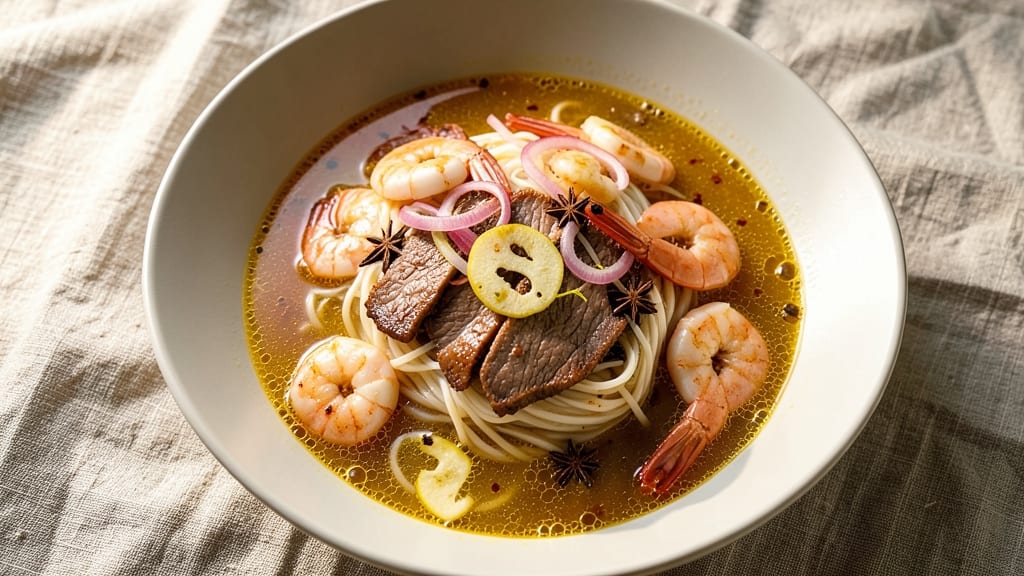
This beef and shrimp pho recipe delivers the aromatic essence of Vietnam’s most beloved soup in your own kitchen. The secret lies in slow-simmering star anise, cinnamon, and ginger—transforming simple ingredients into a fragrant, umami-rich broth that’s both comforting and deeply satisfying.
After years of perfecting the balance, I’ve developed a method that cooks both beef and shrimp to tender perfection without overpowering the delicate flavors.
The foundation is a deeply aromatic broth infused with spices that linger long after the first sip. Thinly sliced beef tenderizes beautifully while shrimp cooks just until pink, ensuring each bite delivers tender protein against silky rice noodles.
What sets this recipe apart is the careful layering of flavors—sweet from caramelized onions, salty from fish sauce, umami from mushrooms, and a bright finish of fresh herbs and lime.
What you’ll end up with is a bowl of pho that’s restaurant-quality yet approachable for home cooks. The broth should be fragrant enough to draw in passersby, the beef fork-tender, and the shrimp perfectly cooked—all resting on a bed of silky noodles topped with fresh garnishes.
The beauty of this recipe is its flexibility: adjust the spice level to your preference, swap in additional proteins, or customize your garnishes while maintaining that essential Vietnamese soul.
Perfect for a cozy weeknight dinner or a special gathering, this pho recipe proves that authentic flavors don’t require a trip halfway across the world. The process might seem involved, but each step builds toward a deeply rewarding result.
Let’s get started on creating your own fragrant, heartwarming bowl of pho.
Ingredients for beef and shrimp pho
The aromatic backbone of pho begins with these carefully selected ingredients, each playing a precise role in crafting restaurant-quality broth.
| Ingredient | Amount | Notes |
|---|---|---|
| Thinly Sliced Beef Tenderloin 🥩 | ½ lb | Cut against the grain, 1/4-inch slices |
| Large Shrimp 🦐 | ½ lb | Peeled, deveined, tails on |
| Fresh Rice Noodles 🍜 | 8 oz | Banh pho noodles, soaked per package |
| Yellow Onions 🧅 | 1 whole | Thinly sliced, charred for depth |
| Garlic Cloves 🧄 | 8 cloves | Crushed, aromatic foundation |
| Fresh Ginger 🌿 | ¼ cup | Julienned, 1/4-inch slices |
| Star Anise Pods 🌟 | 2 whole | Whole, aromatic essential |
| Cinnamon Sticks 🌿 | 2 whole | 2-inch pieces for infusion |
| Cardamom Pods 🌿 | 4 whole | Lightly crushed, optional depth |
| Fish Sauce 🍶 | ¼ cup | Red Boat preferred, umami base |
| Coconut Aminos 🥄 | ¼ cup | Gluten-free alternative to soy sauce |
| White Mushrooms 🍄 | ½ lb | Thinly sliced, earthy umami |
| Lime Wedges 🍋 | 4 whole | Freshly cut, bright finish |
| Fresh Thai Basil 🌿 | ½ cup | Packed, aromatic garnish |
| Fresh Cilantro 🌿 | ¼ cup | Chopped, bright contrast |
| Sugar 🍚 | 1 tbsp | White or brown, balances broth |
| Salt 🧂 | 1 tsp | Diamond Crystal preferred |
| Black Peppercorns 🌶️ | ½ tsp | Freshly cracked, subtle heat |
The spices are non-negotiable for authentic flavor. Star anise and cinnamon from Penzeys Spices deliver the signature pho aroma—avoid pre-ground blends, as they lack potency. For ginger, organic from the produce section ensures vibrant flavor; peel only what you'll use immediately to prevent oxidation. The beef should be tenderloin or flank steak, purchased from the butcher counter for proper slicing. Shrimp should be fresh or previously frozen—never thawed in water, as this dulls their flavor. Mushrooms add umami depth; cremini or shiitake work beautifully if you prefer a meatier texture.
Substitutions require thoughtful adjustments. No star anise? Use 1/2 teaspoon ground anise or 1 teaspoon fennel seeds, but expect a milder result. Fish sauce shortages? Coconut aminos or soy sauce work in a pinch, though the flavor profile shifts slightly. For a vegetarian version, replace shrimp with tofu or mushrooms and beef with shiitake or king oyster mushrooms. The noodles must be rice-based—vermicelli or udon won't replicate the silky texture. Fresh herbs are ideal, but dried basil at 1/3 the amount can substitute if needed, though it lacks the bright anise notes of Thai basil.
Store aromatic spices like star anise and cinnamon in airtight containers away from light for up to 12 months. Fresh ginger keeps 3 weeks in the fridge wrapped in a damp towel, while garlic and onions last 2 weeks in the crisper. The beef and shrimp should be used within 2 days of purchase for optimal texture. Fresh herbs like Thai basil and cilantro wilt quickly—wrap them in damp paper towels and store in a sealed bag for 5 days. The broth can be made ahead and reheated gently; it actually improves in flavor as the spices meld over 3-4 days in the fridge.
Why You'll Love This Recipe
- Same recipe, different vibes: dump it in a bowl for a lazy Tuesday, or plate it with fresh herbs and lime for when your in-laws drop by. The noodles soak up the broth like a dream, so you’re never stuck with dry leftovers.
- No-Fuss Prep: I swear, the hardest part is slicing the beef paper-thin—everything else is just simmering and stirring. You’re talking 15 minutes max, and honestly? That’s longer than it takes me to decide what to eat when I’m hangry.
- Umami Bomb: The beef tenderloin melts into the broth like it’s been cooking for hours, while the shrimp stay plump and juicy. Between us, that garlic-onion base? It’s the kind of flavor that makes you pause mid-sip of tea and go, "Wait, what am I even doing right now?"
- Weeknight to Dinner Party: Same recipe, different vibes: dump it in a bowl for a lazy Tuesday, or plate it with fresh herbs and lime for when your in-laws drop by. The noodles soak up the broth like a dream, so you’re never stuck with dry leftovers.
Step-by-step instructions for beef and shrimp pho
Master this aromatic broth technique and you'll achieve restaurant-quality pho every time.
Prepare the Aromatic Broth Base
In a large stockpot, combine the 1 whole yellow onion, 8 cloves garlic cloves, 0.25 cup fresh ginger, 2 whole star anise pods, 2 whole cinnamon sticks, and 4 whole cardamom pods. Add 8 cups cold water and bring to a boil over high heat. Once boiling, reduce to a simmer and cook uncovered for 30 minutes to allow the spices to infuse deeply.
After 30 minutes, strain the broth through a fine-mesh sieve into a clean pot, pressing gently on the solids to extract maximum flavor. Discard the solids. The broth should be fragrant with warm, spiced notes—this is the foundation of your pho. If you prefer a deeper color, lightly toast the spices in a dry pan for 1 minute before adding to water.
Build Depth with Umami and Seasonings
Return the strained broth to the pot and add 0.5 lb thinly sliced beef tenderloin, 0.5 lb large shrimp, 0.5 lb white mushrooms, 0.25 cup fish sauce, 0.25 cup coconut aminos, 1 tbsp sugar, 1 tsp salt, and 0.5 tsp black peppercorns. Bring to a gentle simmer over medium heat—never a rolling boil, as this can make the broth cloudy.
Simmer for 10-12 minutes until the beef is just cooked through (it should still be tender, not rubbery). The shrimp should turn opaque and curl slightly. Taste the broth and adjust seasoning—add more fish sauce for saltiness or sugar to balance. The broth should be rich, aromatic, and perfectly seasoned without being overpowering.
Prepare the Noodles and Garnishes
While the broth simmers, prepare the 8 oz fresh rice noodles by soaking them in warm water for 20-30 minutes until pliable but still slightly firm to the bite. Drain and set aside. Thinly slice the 1 whole yellow onion for garnish—char them quickly in a dry pan for 2-3 minutes until caramelized and set aside.
Prepare the garnishes: finely chop the 0.5 cup fresh Thai basil and 0.25 cup fresh cilantro, and slice the 4 whole lime wedges into thin wedges. Keep these separate until serving to maintain freshness. The charred onions, herbs, and lime will add layers of texture and brightness to each bowl.
Assemble and Serve Immediately
Ladle 1 cup hot broth into each of four bowls. Add 2 oz cooked rice noodles to each bowl, followed by 2 oz sliced beef and 2 oz shrimp. Arrange the 0.5 oz sliced mushrooms and 1 tbsp charred onions on top. Drizzle with any remaining broth if needed.
Finish each bowl with a generous sprinkle of Thai basil and cilantro, and serve with the lime wedges on the side. The contrast of silky noodles, tender beef, and bright shrimp against the fragrant broth creates the perfect balance. Serve immediately while the noodles are hot and the aromatics are at their peak.
Pro Tips For Making Beef And Shrimp Pho
- STIR-FRY BEEF FAST: High heat for 30 seconds max—any longer and it turns to mush. I used to walk away for "even cooking," but beef pho needs that quick sear to stay tender. Keep the pan screaming hot and work fast.
- PEEL SHRIMP LAST: Leave the shells on until the broth is ready, then peel them right before serving. The shells add depth to the broth, but peeled shrimp look better and stay fresher in the hot soup. (Yes, even if it feels like extra work.)
- DON’T BOIL THE NOODLES: Soak them in warm water (not hot) for 10-15 minutes until pliable, then rinse quickly. Boiling turns rice noodles gummy—this method keeps them light and absorbs the broth perfectly. Trust me, your soup will taste better.
- CHAR THE ONIONS: Cut onions into thick slices and fry them in the broth’s fat until deep golden, almost caramelized. Raw onions make the broth taste harsh; crispy ones add sweetness and texture. (Skip the crowding—give them space to brown.)
Storing and reheating this beef and shrimp pho
Broth Storage Essentials
Your pho broth is even better the next day—its flavors deepen as the spices meld. Store it in an airtight glass container (like Pyrex) in the fridge for up to 4 days.
The aromatic spices like star anise and cinnamon continue infusing, creating a more complex taste. If you're prepping ahead, let the broth cool completely before refrigerating to prevent bacterial growth. 🌡️
Reheating Broth Perfectly
Reheat broth gently over low heat on the stovetop—never microwave, as it can make the broth cloudy. Add ¼ cup water if it's too concentrated, and simmer for 5-7 minutes until steaming.
For extra depth, add a 1-inch piece of fresh ginger while reheating. If you notice any oil separation, stir vigorously or skim it off before serving.
Noodle Prep Ahead
Soak your 8 oz rice noodles in warm water for 20-30 minutes before storing. Drain well and wrap them in a damp paper towel, then place in an airtight container with a splash of water to prevent drying.
They'll keep in the fridge for 2 days—reheat in the broth for 2-3 minutes before serving. For freezer storage, blanch noodles for 1 minute in boiling water, then shock in ice water before freezing in a single layer.
Protein Handling Tips
Cook shrimp fully before storing—overcooked shrimp turn rubbery when reheated. Store cooked beef and shrimp separately in airtight containers for up to 3 days. To reheat, warm proteins in the broth for 2-3 minutes on the stovetop.
For shrimp, add them last to avoid overcooking. I like to reheat proteins with a splash of fish sauce to restore their savory depth. 🦐
Garnish Freshness Matters
Fresh herbs like Thai basil and cilantro lose their vibrancy when stored. Keep them in a sealed bag with a damp paper towel in the fridge for 3-4 days.
Charred onions can be stored in an airtight container for 2 days—reheat them briefly in a dry pan before serving. Lime wedges stay fresh for 5 days if stored in the fridge. Always add garnishes fresh to each bowl for maximum brightness.
Freezing for Later
Pho broth freezes beautifully for up to 3 months in ziplock freezer bags (leave 1-inch headspace for expansion). Thaw overnight in the fridge, then reheat gently. Avoid freezing noodles or proteins—they become mushy when thawed.
For a quick meal, freeze broth in 1-cup portions so you can reheat just what you need. Label containers with the date to track freshness. ✨
Nutrition facts
Frequently asked questions
Can I make this pho recipe without star anise?
Yes, but the flavor will be less aromatic. Use ½ teaspoon ground anise or 1 teaspoon fennel seeds as substitutes, though they won't replicate the exact depth of star anise. For a milder alternative, add 1 cinnamon stick and 1 bay leaf for warmth, but the signature pho fragrance will be missing.
How do I prevent the beef from becoming tough?
Slice the beef thinly against the grain (about ¼-inch thick) and cook it just until tender—10-12 minutes in the broth. Overcooking turns it rubbery, so remove it when it's still slightly pink inside. For extra tenderness, marinate the beef in 1 tbsp fish sauce + 1 tsp sugar for 30 minutes before adding to the broth.
Can I add other proteins to this pho?
This recipe works well with chicken thighs (cook for 12-15 minutes), tofu (add last for 2 minutes), or mushrooms (shiitake or oyster add depth). For seafood, try scallops or clams—add them 2 minutes before serving to avoid overcooking. Just adjust cooking times based on the protein's doneness.
Why does my broth look cloudy?
Cloudiness usually means the broth boiled too vigorously, breaking down proteins and starches. Simmer gently at medium-low heat (small bubbles, not a rolling boil) and skim any foam that rises. If it's already cloudy, strain it again through a cheesecloth-lined sieve for a clearer result. For extra clarity, chill the broth overnight—fat rises to the top and can be skimmed off before reheating.
How spicy should the broth be?
The recipe balances sweet, salty, umami, and subtle heat without being overpowering. For more spice, add 1-2 slices of fresh chili or ½ tsp chili flakes while simmering. If you prefer a milder broth, omit the black peppercorns or reduce them to ¼ tsp. Taste as you go—adjust with sugar (for sweetness) or fish sauce (for saltiness) to maintain harmony.