
Soups & Stews
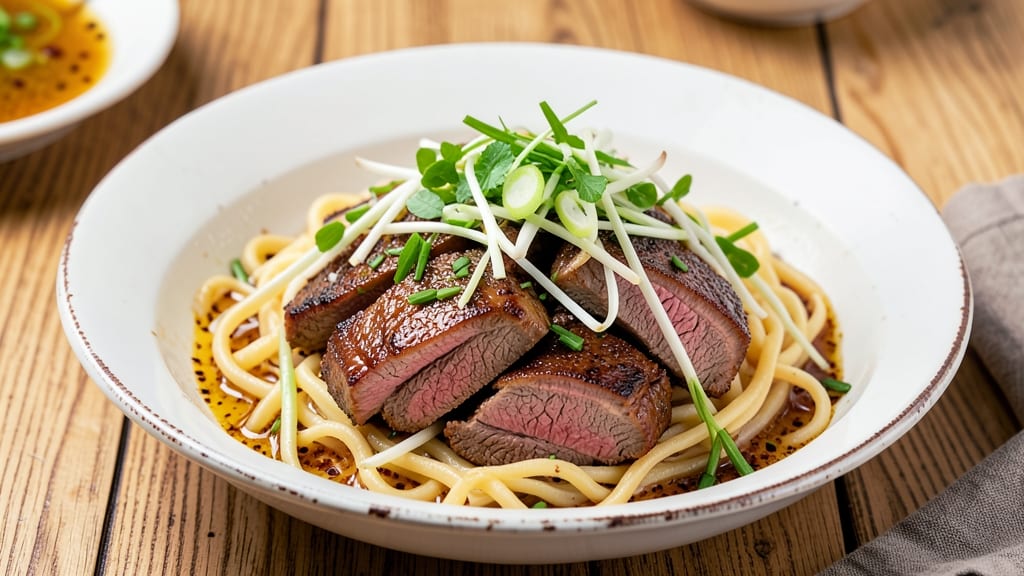
This beef batchoy recipe brings the vibrant flavors of Filipino street food into your kitchen with its aromatic broth, silky egg ribbons, and tender beef slices. 🔥 The dish starts with a rich, savory beef stock infused with garlic, ginger, and star anise, creating a fragrant base that's the heart of every bite.
Batchoy noodles—thin, chewy, and slightly translucent—are the perfect vessel for soaking up the flavorful broth, while toppings like crisp bean sprouts and fresh chives add texture and freshness.
The magic lies in the technique: wok-firing the noodles and toppings just before serving ensures everything stays hot and vibrant. Traditional batchoy often includes pork liver and century eggs for depth, but modern twists might swap these for more accessible ingredients without losing authenticity.
What sets this dish apart is its balance—rich yet light, hearty yet refreshing, and always served piping hot for that true street-food experience.
By the time you finish assembling this dish, you'll have a steaming bowl of beef batchoy that's packed with layers of flavor and texture. The broth is deeply aromatic, the egg ribbons melt in your mouth, and the toppings add just the right crunch.
It's a dish that's perfect for sharing, whether you're hosting a dinner party or craving a comforting meal on a chilly evening.
Ready to make this Filipino classic? The recipe includes step-by-step instructions for preparing the broth, cooking the noodles, and assembling the toppings—so you can recreate that authentic street-food taste at home. Serve with pickled vegetables on the side for a complete meal that's as satisfying as it is delicious.
Ingredients for beef batchoy
Aromatic broth, tender beef, and silky egg ribbons—this Filipino classic needs just 15 ingredients.
| Ingredient | Amount | Notes |
|---|---|---|
| Batchoy Noodles 🍜 | 8 oz | Dried, thin and chewy variety |
| Beef Top Round Roast 🥩 | 1 lb | Pre-sliced thin for quick cooking |
| Large Eggs 🥚 | 6 whole | Fresh, cold for silky ribbons |
| Bean Sprouts 🌱 | 1 cup | Fresh, crisp for crunch |
| Green Onions 🧅 | ½ cup | Chopped, white and green parts |
| Fresh Chives 🌿 | ¼ cup | Finely chopped for garnish |
| Garlic Cloves 🧄 | 6 cloves | Minced for aromatic base |
| Fresh Ginger 🌿 | 2 tbsp | Grated, for zesty kick |
| Star Anise 🌟 | 2 whole | For deep aromatic flavor |
| Bay Leaves 🍃 | 2 whole | Dried, for broth depth |
| Soy Sauce 🍶 | ¼ cup | Dark variety for richness |
| Sesame Oil 🫒 | 1 tbsp | For finishing aroma |
| Vegetable Oil 🫒 | ½ cup | For wok-frying |
| Salt 🧂 | 1 tsp | Adjust to taste |
| Black Pepper 🌶️ | ½ tsp | Freshly ground |
The batchoy noodles are non-negotiable—Filipino markets or Asian grocery stores carry them, but if you can't find them, substitute thin rice noodles. For the beef, top round roast is ideal—it stays tender when sliced thin. If you're feeling adventurous, grab some pork liver too (traditional batchoy often includes it), but it's not required. The star anise and bay leaves are what give the broth its signature depth—don't skip them. Whole Foods or Penzeys have great bulk spice options if you want to stock up.
No star anise? Cinnamon sticks or a pinch of anise extract work in a pinch, though they won't be identical. Running low on soy sauce? Coconut aminos or tamari are great swaps. The eggs should be cold and fresh—room temperature eggs won't ribbon properly. For the bean sprouts, Trader Joe's or Costco sell them pre-washed, which saves time. If you're using dried sprouts, soak them for 30 minutes first. The green onions and chives can be swapped for cilantro if that's what you've got—just adjust the amount to taste.
This dish is all about timing—everything needs to be piping hot when served. The broth keeps well for 3 days in the fridge, so make extra if you're feeding a crowd. Store it in an airtight container with the fat layer intact (it adds flavor!). The noodles and toppings should be prepped right before serving—wok-frying them just before assembly keeps everything crisp. Freeze the broth without the noodles for up to 3 months—just thaw and reheat before using.
Why You'll Love This Recipe
- No Boil, No Stress: I swear by this shortcut—just soak the batchoy noodles in hot water for 10 minutes while the beef simmers. No chopping, no straining, just hands-off magic that still delivers that perfect chewy texture.
- Beef That Melts: That top round roast? It’s the star—tender enough to cut with a fork after hours of slow simmering, but still holds its shape when sliced. The broth soaks it into pure satisfaction, and the crispy edges? Chef’s kiss.
- Leftovers That Shine: Batchoy’s weirdly better the next day. I’ll be real: the noodles soften just enough to soak up even more of that rich beef broth, and the eggs reheat like a dream. Pack it for lunch—no sad desk meals here.
- Budget-Friendly Feast: You’re feeding a crowd for less than takeout. Top round’s affordable, batchoy’s a bulk buy, and those eggs stretch across multiple bowls. Honestly, my wallet thanks me every time I make this.
Step-by-step instructions for wok-fired beef batchoy
Here's how to make this iconic Filipino street food with perfect silky egg ribbons and tender beef.
🍳 Step 1: Prepare the Aromatic Base
Heat the 0.5 cup vegetable oil in a wok over medium-high heat until shimmering. Add the 2 whole star anise and 2 whole bay leaves and let them sizzle for 30 seconds—this releases their deep aromatic oils that'll infuse the entire dish.
Next, add the 6 cloves minced garlic and 2 tbsp grated fresh ginger. Stir constantly for 1-2 minutes until the garlic turns golden and fragrant—this is your flavor foundation. Be careful not to let the garlic burn; it should smell sweet and nutty, not bitter. Here's where the magic begins, so don't rush this step.
🔥 Step 2: Sear the Beef for Maximum Flavor
Push the aromatics to one side of the wok and add the 1 lb pre-sliced beef top round roast in a single layer. Let it sear undisturbed for 2-3 minutes until the edges turn golden brown and crispy. This initial sear locks in juices and creates that wonderful caramelized flavor.
Once the beef is browned on one side, stir it into the aromatics and cook for another 2-3 minutes until it's fully cooked through but still tender. The beef should be just barely pink in the center—overcooking will make it tough. Season with 0.25 cup soy sauce, 1 tsp salt, and 0.5 tsp black pepper, stirring well to coat the beef evenly.
🍳 Step 3: Cook the Noodles and Prepare Egg Ribbons
While the beef cooks, bring a large pot of water to a rolling boil and cook the 8 oz batchoy noodles according to package instructions until al dente. Drain and set aside, reserving 1 cup of the starchy noodle water. This water is liquid gold for creating that signature silky sauce.
In a separate bowl, crack the 6 whole cold large eggs into a whisk. Whisk vigorously until the yolks and whites are fully combined—this ensures those beautiful silky ribbons when cooked. The eggs should be well-chilled from the refrigerator for the best texture.
🥘 Step 4: Combine Everything in the Wok
Add the cooked noodles to the wok with the beef and aromatics. Pour in ½ cup of the reserved noodle water and toss everything together vigorously for 1-2 minutes. The noodles should be well-coated in the savory beef mixture, absorbing all those delicious flavors.
Here comes the fun part—creating those signature egg ribbons. Pour the whisked eggs into the wok in a slow, steady stream while continuously stirring with chopsticks. The motion creates those beautiful, silky strands that make batchoy so special. Keep stirring for 30-45 seconds until the eggs are just set but still slightly runny in the center.
🍽️ Step 5: Finish and Serve Immediately
Turn off the heat and quickly stir in the 1 cup bean sprouts, 0.5 cup chopped green onions, and 0.25 cup chopped fresh chives. Add the remaining ½ cup noodle water if the mixture seems too dry. Drizzle with 1 tbsp sesame oil and toss everything together one final time.
Serve immediately in deep bowls, garnished with extra green onions and chives. The beauty of batchoy is in its immediate serving—those egg ribbons start to firm up quickly once off the heat. Each bite should deliver tender beef, chewy noodles, silky egg strands, and fresh crunch all in perfect harmony. Enjoy while hot!
Pro Tips For Making Beef Batchoy
- SEAR THE BEEF LOW AND SLOW: I learned this the hard way—blasting top round on high heat turns it into shoe leather. Cook it at medium-low for 10 minutes per side until it reaches 145°F internally, then let it rest. The meat stays juicy, and you won’t end up fighting dry, chewy slices later.
- SOAK NOODLES JUST UNTIL TENDER: Batchoy noodles are delicate—don’t drown them. Soak them in cold water for 8-10 minutes until they’re flexible but still hold shape. Over-soaking turns them mushy, and you’ll regret it when they fall apart in the broth.
- SALT THE BROTH IN STAGES: Add salt gradually while tasting—batchoy broth is forgiving but not bottomless. Start with 1 tsp per liter, then adjust after the beef and noodles are in. Too much upfront makes the egg curdle and the noodles soggy faster.
- UPGRADE WITH A SPLASH OF WORCESTERSHIRE: Skip the generic soy sauce—add 1 tbsp Worcestershire to the broth when simmering. It deepens the umami without overpowering, and it’s the one thing that makes homemade batchoy taste like the old-school versions you crave. (Yes, even if you’re skeptical.)
Regional styles of these flavors
Manila Street Style
In Manila, batchoy is all about bold flavors and quick service—just like the street stalls you'd find along Escolta or Quiapo. The key here is the quick wok-firing technique that keeps everything hot and vibrant.
I like to add 1 tbsp fish sauce to the broth for that signature umami punch that Manila vendors swear by. The egg ribbons should be slightly runny in the center, almost custard-like, which is a hallmark of authentic Manila-style batchoy.
Serve with extra chili flakes on the side for those who want heat. 🌶️
Pampanga Home Version
Pampanga, known as the culinary capital of the Philippines, takes batchoy to a more refined level. Here, the broth is often simmered longer with 1 cinnamon stick and 1 tsp sugar to balance the flavors.
The beef is typically pre-marinated in ½ cup soy sauce and 1 tbsp calamansi juice for 30 minutes before cooking. I’ve found that using thicker batchoy noodles (like those from Pampanga’s local markets) gives that extra chewiness that locals love. Garnish with sliced radishes for a touch of freshness. 🥕
Modern Twists
For a contemporary take, many chefs now incorporate mushrooms (like shiitake or oyster) for an earthy depth. I’ve seen versions with crispy pork belly bits added at the end for texture. Another fun twist is using duck eggs instead of chicken eggs—the richer yolks create even silkier ribbons.
If you're feeling adventurous, try adding a splash of coconut milk to the broth for a creamy, slightly sweet variation that’s popular in coastal regions. 🥚
Regional Broth Variations
In Bicol, the broth often includes chili peppers and shrimp paste (bagoong) for a funky, spicy kick. Meanwhile, Cebu-style batchoy sometimes uses squid ink in the broth for a deep, oceanic flavor.
For a lighter take, Ilocano batchoy might swap beef for chicken and add longanisa (Filipino sausage) for a smoky note. Each region’s twist reflects local ingredients and preferences—so don’t be afraid to experiment! 🗺️
Vegetarian Adaptations
For a plant-based version, replace the beef with extra-firm tofu (pressed and pan-fried) or mushroom slices. Use soy sauce and miso paste to mimic the umami depth of the beef broth. I’ve even seen batchoy made with jackfruit for a meaty texture.
The egg ribbons remain the star, so focus on keeping them silky by using well-chilled eggs or a vegan egg substitute like silken tofu blended with a bit of cornstarch. 🌱
Nutrition facts
Frequently asked questions
What makes batchoy noodles different from regular noodles?
Batchoy noodles are thin, chewy, and slightly translucent—unlike regular wheat noodles. They're made from 100% rice flour and have a delicate texture that absorbs broth beautifully. You can find them in Asian grocery stores, but thin rice noodles work in a pinch. The key is cooking them al dente so they hold up when wok-fried.
How do I get the perfect silky egg ribbons?
Use cold eggs straight from the fridge and whisk them vigorously until fully combined. Pour them slowly into the hot wok while stirring constantly with chopsticks. The eggs should cook for just 30-45 seconds—they'll look slightly runny in the center when done. Overcooking makes them rubbery!
Can I make batchoy broth ahead of time?
The broth keeps well for 3 days in the fridge or 3 months in the freezer. Just store it in an airtight container with the fat layer intact (it adds flavor). When reheating, bring to a gentle simmer—never boil—to preserve the aromatics. The noodles and toppings should be prepped fresh before serving.
What's the best way to substitute pork liver?
If you can't find pork liver, try thinly sliced beef liver or extra mushrooms (shiitake or oyster) for umami. For texture, add crispy fried tofu bits or extra bean sprouts. Traditional batchoy often includes liver, but these swaps work well while keeping the dish hearty.
Why does my batchoy taste bland?
Check your seasoning—batchoy needs a balance of soy sauce (½ cup total), fish sauce (1 tbsp for Manila style), and fresh aromatics. Boost flavor by adding 1 tsp sugar to balance saltiness or a pinch of white pepper for depth. Also ensure your beef is properly seared—this builds rich, caramelized flavors.