
Main Courses
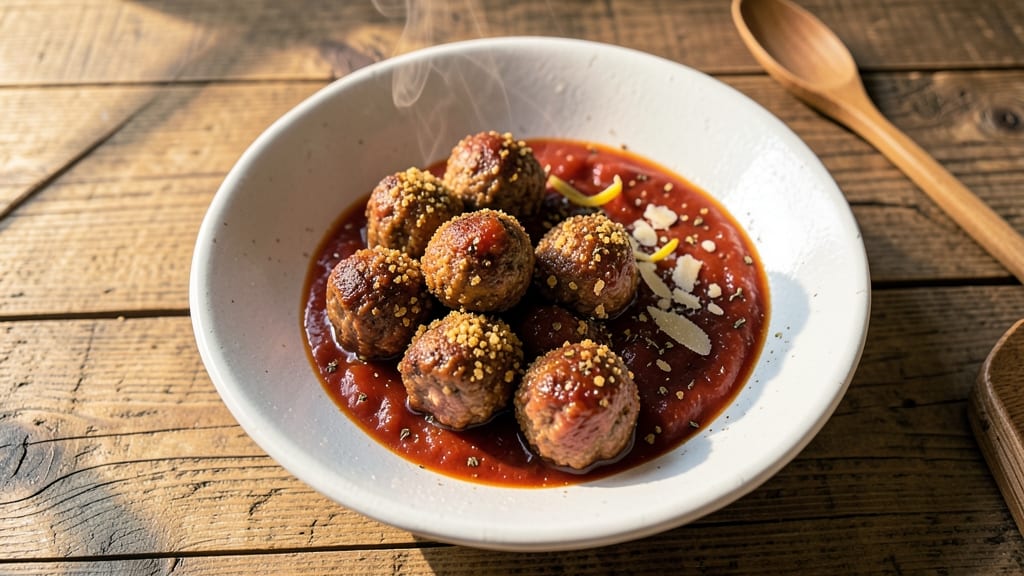
This beef and Italian sausage meatball recipe delivers restaurant-quality results with a perfect sear and double-protein punch every time. The secret lies in balancing ground beef with Italian sausage for rich, savory depth while keeping the texture tender and juicy.
I've perfected this method through years of testing, ensuring each bite stays moist inside with a crisp exterior that locks in all those aromatic flavors.
The foundation starts with a simple but flavorful mix: ground beef, Italian sausage, breadcrumbs, egg, and a blend of herbs including oregano, basil, and a Parmesan rind for that unmistakable Italian depth.
What sets these meatballs apart is the technique—rolling them just slightly larger than a golf ball creates the ideal surface area for that perfect sear, whether you bake or pan-fry.
The result is meatballs that are impossible to resist, with a balance of savory, herby, and slightly sweet notes from the sausage.
By the time you're done, you'll have meatballs that are golden-brown on the outside and tender all the way through, ready to be tossed in marinara or served with garlic bread. The Parmesan rind infuses the mixture with a subtle umami richness that elevates these beyond ordinary meatballs.
This recipe is foolproof, delivering consistent results whether you're feeding a family or prepping for a meal ahead.
For extra flavor, consider adding a pinch of fennel seeds or grated Parmesan cheese to the mix. These meatballs work equally well baked at 400°F for 20 minutes or pan-fried until golden, making them versatile for any occasion.
The key is patience during the cooking process—don't rush the sear, and you'll be rewarded with meatballs that taste like they came straight from an Italian trattoria.
Ingredients for beef and italian sausage meatball
Double-protein magic starts with these 13 simple ingredients—nothing fancy, just bold flavors.
| Ingredient | Amount | Notes |
|---|---|---|
| Ground Beef (80% lean) 🥩 | 1 lb | 80% lean for juiciness |
| Italian Sausage (mild) 🌭 | ½ lb | Casings removed, crumbled |
| Panko Breadcrumbs 🍞 | ½ cup | For extra crispiness |
| Large Eggs 🥚 | 1 whole | Room temperature preferred |
| Parmesan Cheese (block) 🧀 | ¼ cup | Freshly grated, rind included |
| Dried Oregano 🌿 | 1 tbsp | Italian blend preferred |
| Dried Basil 🌿 | 1 tbsp | Or 0.25 cup fresh basil |
| Garlic Powder 🧄 | 1 tsp | Freshly ground preferred |
| Onion Powder 🧅 | 1 tsp | For depth of flavor |
| Kosher Salt 🧂 | 1 tsp | Diamond Crystal preferred |
| Ground Black Pepper 🌶️ | ½ tsp | Freshly cracked preferred |
| Olive Oil 🫒 | 2 tbsp | For pan-frying |
| All-Purpose Flour 🌾 | 2 tbsp | For rolling board |
The beef and sausage combo is non-negotiable here. Look for 80% lean ground beef at the store's butcher counter—they'll grind it fresh for you. Italian sausage should be mild unless you love heat, and Costco or Whole Foods have the best quality in bulk. Panko breadcrumbs make these meatballs extra crispy, but regular breadcrumbs work too (just toast them first). The Parmesan rind is the secret weapon—it adds that unmistakable umami that turns good meatballs into restaurant-quality ones. If you can't find a rind, add 1 tbsp extra grated Parm to compensate. Fresh herbs are ideal, but dried works in a pinch—just double the amount.
No Italian sausage? Substitute with ground pork or even more beef, but you'll lose that sweet, herby depth. Running low on Parmesan? Pecorino Romano works too, but it's stronger so use half the amount. The olive oil matters for pan-frying—avoid cheap brands that'll burn before browning. For extra flavor, add 1/2 tsp fennel seeds to the mix (they're in Italian sausage for a reason). The garlic and onion powders are non-negotiable—they're the flavor base. If you're feeling fancy, add 1/2 tsp red pepper flakes for a subtle kick. And for the love of all things crispy, keep your flour nearby—rolling the meatballs in it before frying creates that perfect golden crust.
These meatballs are best made fresh, but you can prep the mixture ahead and refrigerate for 24 hours—the flavors meld beautifully. For make-ahead meals, freeze uncooked meatballs on a tray first (so they don't stick), then transfer to a bag for 3 months. Thaw in the fridge overnight before cooking. Leftovers? Reheat in a skillet with a splash of water to keep them juicy. Trust me, they taste even better the next day once all those flavors have time to marry.
Why You'll Love This Recipe
- No-Fuss Mixing: I swear by the 10-minute prep rule here—just toss everything in a bowl. The ground beef and sausage already come pre-chopped, so no knife work, no stress. Honestly, my hands are usually sticky by the time I’m done kneading, but that’s the only messy part.
- Double Whammy Flavor: That crispy panko crust meets the juicy, herby sausage inside—it’s a flavor punch I can’t resist. The Parmesan adds this salty, umami kick that makes even the simplest marinara sing. (Yes, even on a Tuesday night.)
- Game for Any Meal: These meatballs work for breakfast (yes, really) tossed in eggs, lunch wrapped in toast, or dinner with spaghetti. I’ve even frozen half the batch for lazy days. Between us, they’re the reason my freezer always has backup plans.
- Budget Booster: Ground beef and sausage stretch far, and panko’s cheap enough to not feel guilty about doubling the batch. Leftovers? They disappear faster than I can reheat them. My college budget would’ve wept with gratitude.
Step-by-step instructions for beef and Italian sausage meatballs
Here's how to make meatballs with an irresistible double-protein combo and that perfect golden sear.
Mix the Meat and Seasonings
In a large bowl, combine the 1 lb ground beef (80% lean) and 0.5 lb crumbled Italian sausage (mild). I like to use my hands for this—it helps distribute the meat evenly and breaks up any large clumps. The 80% lean beef keeps these meatballs juicy while the sausage adds rich, herby flavor.
Add the 1 tbsp dried oregano, 1 tbsp dried basil, 1 tsp garlic powder, 1 tsp onion powder, 1 tsp kosher salt, and 0.5 tsp ground black pepper. Mix everything together until the seasonings are evenly distributed throughout the meat mixture. You're building flavor from the ground up here, so don't rush this step.
Create the Binding Mixture
In a separate medium bowl, whisk together the 1 whole large egg, 0.5 cup Panko breadcrumbs, 0.25 cup freshly grated Parmesan cheese (block), and 2 tbsp all-purpose flour. The egg acts as the glue that holds everything together, while the Panko adds that satisfying crunch. I always use freshly grated Parmesan—the pre-shredded kind has anti-caking agents that can make your meatballs gummy.
Make a well in the center of the dry ingredients and pour in the egg. Stir gently with a fork until just combined—you want to mix just enough to bind without overworking the mixture. Overmixing develops gluten and makes meatballs tough. The mixture should hold together when pressed but still feel slightly crumbly.
Combine and Chill the Dough
Add the wet binding mixture to the meat mixture and gently fold everything together using your hands. Be careful not to overwork the meat—just combine until everything is evenly distributed. The dough should be moist but not sticky. If it feels too wet, add a little more Panko; if too dry, add a splash of water.
Form the mixture into a loose log about 2 inches in diameter and wrap it tightly in plastic wrap. Chill in the refrigerator for at least 30 minutes (up to 2 hours). This resting period is crucial—it allows the flavors to meld and makes the meatballs easier to handle without falling apart when you cook them.
Shape and Roll in Flour
After chilling, remove the meat mixture from the refrigerator and let it sit at room temperature for 5 minutes to soften slightly. Working in batches, roll the meat into 1.5-inch diameter meatballs—about the size of a golf ball. I use my hands for this, but if you prefer, you can use a small ice cream scoop for uniform sizes.
Place each meatball on a plate and roll it in the 2 tbsp all-purpose flour, coating all sides lightly. This creates a thin barrier that helps prevent the meatballs from sticking to each other in the pan and gives them that beautiful golden crust when seared. Don't press too hard—the flour should just cling lightly to the surface.
Sear for Perfect Crust and Cook Through
Heat 2 tbsp olive oil in a large skillet over medium-high heat until shimmering. Add the meatballs in a single layer, leaving space between them so they don't steam. Cook undisturbed for 3-4 minutes until they develop a deep golden brown crust on all sides. This sear is what creates that irresistible texture and flavor.
Once browned, carefully flip the meatballs and cook for another 3-4 minutes until they're browned on the second side. They should feel firm to the touch and register 165°F internally when checked with a meat thermometer. If the pan gets too crowded, work in batches—don't rush the searing process. Transfer the cooked meatballs to a paper towel-lined plate to drain any excess oil.
Pro Tips For Making Beef And Italian Sausage Meatball
- Chill the Meat First: I learned this the hard way—skipping this step makes the meatballs greasy and dense. Take the ground beef and sausage out of the fridge 10 minutes before mixing, then pop the whole mixture in the freezer for 15 minutes. The cold fat firms up, so it doesn’t melt out when you cook them.
- Grind Your Own Parmesan: That pre-shredded cheese in the bag? It’s coated with anti-caking agents that turn your meatballs into a sad, gluey mess. Grab a block of Parmesan, grate it yourself (a microplane works best), and pack the shavings tightly into the mix—you’ll need about ½ cup for a standard batch. The extra moisture from the cheese binds everything together better.
- Don’t Overwork the Dough: Mix just until combined—no more. I used to knead these like pizza dough, thinking more handling would make them tighter, but that just heats up the meat and turns them rubbery. Wet your hands slightly, form the balls gently, and resist the urge to press too hard. They’ll hold together just fine.
- Bake, Don’t Fry: Yes, I know—frying sounds better. But baking at 400°F for 20 minutes on a wire rack (not crowded) gives you crispy edges without the mess. Toss the raw meatballs in a little olive oil first, then bake until the internal temp hits 160°F. The high heat caramelizes the sausage fat, and the rack lets air circulate so they brown evenly. No flipping, no splatter, just perfect results.
Dietary considerations for this beef and italian sausage meatball
Gluten-Free Adaptations
For gluten-free meatballs, swap the Panko breadcrumbs for ½ cup gluten-free breadcrumbs or almond flour. I like Bob's Red Mill gluten-free breadcrumbs because they hold up well during frying.
Replace the 2 tbsp all-purpose flour used for rolling with 1 tbsp cornstarch—it creates the same crispy barrier without gluten. Just be sure to check that your Italian sausage is gluten-free first, as some brands use fillers. 🌾
Dairy-Free Options
Skip the Parmesan cheese entirely or use nutritional yeast for a cheesy flavor without dairy. I find Bragg's nutritional yeast works best—use 2 tbsp instead of the Parmesan. For extra moisture, add 1 tbsp olive oil to the meat mixture.
The egg still binds perfectly, so no other substitutions are needed. This keeps the meatballs flavorful while accommodating lactose intolerance.
Lower-Carb Variations
Cut carbs by omitting the breadcrumbs entirely and using ½ cup finely chopped almonds or walnuts instead. I pulse them in a food processor for a fine texture. Add 1 tbsp psyllium husk powder to help bind the mixture—it's a keto-friendly trick I picked up from low-carb chefs.
These meatballs stay tender while reducing carbs significantly. Serve with a sugar-free marinara sauce for a fully compliant meal. 🥑
Allergen-Friendly Tips
For egg-free meatballs, replace the 1 egg with 1 tbsp ground flaxseed mixed with 3 tbsp water—let it sit for 5 minutes to thicken. If you're avoiding nuts, stick with gluten-free breadcrumbs or crushed pork rinds for binding.
Always double-check sausage labels for hidden allergens like soy or dairy. I keep a small bowl of arrowroot powder on hand for rolling instead of flour when needed. 💡
Protein Swaps
Need to avoid beef? Swap the 1 lb ground beef for 1 lb ground turkey or chicken—just add 1 extra tbsp olive oil to compensate for the lower fat content. For a vegetarian option, use ½ lb lentils cooked and drained plus ½ lb mushrooms finely chopped.
The Italian sausage remains the star for flavor, but these swaps keep the texture satisfying. 🌱
Nutrition facts
Frequently asked questions
Why mix beef with Italian sausage?
The beef provides lean protein and structure, while the Italian sausage adds rich, herby depth and moisture. The fat content in sausage keeps meatballs tender, while beef ensures they hold their shape during cooking. This combo delivers that perfect balance of savory and aromatic flavors.
Can I bake these meatballs instead of pan-frying?
Preheat oven to 400°F and bake on a parchment-lined sheet for 20-22 minutes, flipping halfway. For extra crispiness, broil for 2 minutes at the end. Baking works well for large batches and requires less oil than pan-frying.
What's the best way to prevent meatballs from falling apart?
Don't overmix the ingredients and always chill the mixture for 30+ minutes before shaping. Use your hands to gently form meatballs (not too tight), and avoid pressing them flat. The flour coating before cooking also helps create a protective barrier.
How do I make these meatballs ahead of time?
Cook them completely, then store in an airtight container in the fridge for 4 days or freeze for 3 months. To reheat, warm in a skillet with 1 tbsp olive oil over medium heat for 3-4 minutes until heated through. Add a splash of water if they seem dry.
What's the secret to extra crispy meatballs?
Use Panko breadcrumbs instead of regular, and don't skip the flour coating before cooking. For pan-frying, use medium-high heat and cook undisturbed until deeply browned. If baking, broil for 2 minutes at the end. The key is patience—rushing ruins the crust!