
Main Courses
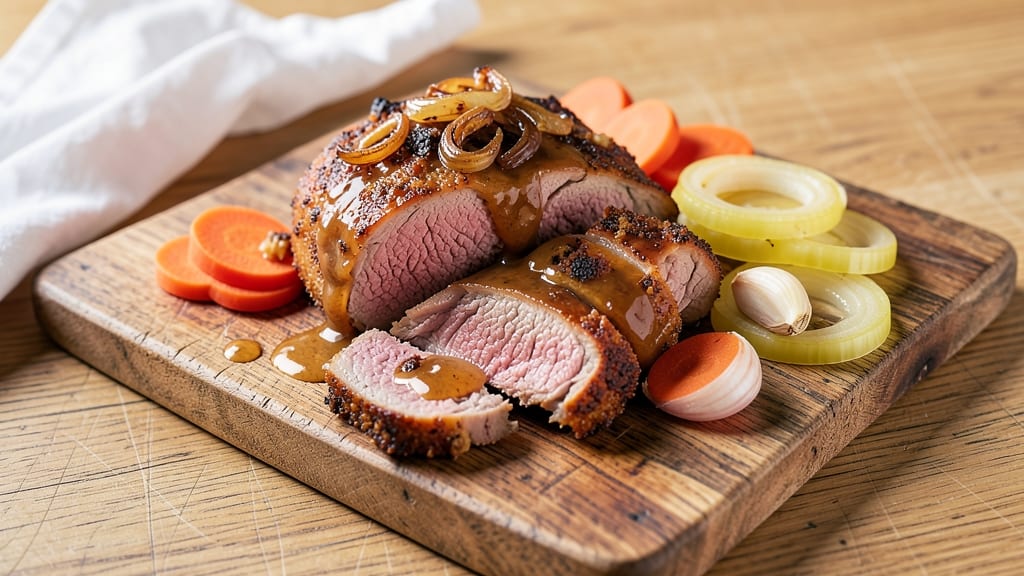
This apple cider beef brisket recipe transforms tough cuts into melt-in-your-mouth perfection with a balance of sweet, tangy, and savory flavors. The slow-simmering process breaks down the meat while infusing it with aromatic spices and rich apple cider, creating a dish that’s both comforting and impressive.
Whether you’re hosting a holiday feast or simply craving a hearty meal, this recipe delivers restaurant-quality results with minimal effort.
The secret lies in the marinade—a blend of warm spices, brown sugar, and apple cider—that tenderizes the brisket while building deep, complex flavors. Unlike traditional dry rubs, this method uses a wet brine for even moisture distribution, ensuring every bite is juicy and flavorful.
The slow cook (or oven) does the heavy lifting, allowing you to focus on the finishing touches—like basting with reduced cider—to achieve a glossy, caramelized crust.
By the time you’re done, you’ll have a brisket so tender it practically falls apart, with a sauce that’s rich, slightly sweet, and packed with umami. The apple cider adds a bright, autumnal note that cuts through the richness, making this dish feel both nostalgic and elevated.
Serve it with crusty bread to soak up every last drop of that luscious sauce, or pair it with roasted root vegetables for a complete meal.
This recipe works equally well for a slow cooker, oven, or smoker, so you can adapt it to your preferred method. The key is patience—letting the brisket cook low and slow until it’s fork-tender.
Whether you’re a seasoned cook or a beginner, this step-by-step guide ensures foolproof results every time. Let’s get started!
Ingredients for apple cider beef brisket
Six ingredients transform tough brisket into fork-tender perfection with apple cider’s sweet-tangy magic.
| Ingredient | Amount | Notes |
|---|---|---|
| Beef Brisket 🥩 | 4 lb | Flat cut, trimmed of excess fat |
| Apple Cider 🍎 | 2 cups | Unfiltered, preferably spiced |
| Brown Sugar 🍚 | ½ cup | Light or dark variety |
| Yellow Onion 🧅 | 1 whole | Medium, sliced into wedges |
| Carrot 🥕 | 3 whole | Medium, cut into chunks |
| Garlic Cloves 🧄 | 6 cloves | Peeled, smashed slightly |
| Beef Broth 💧 | 2 cups | Low-sodium preferred |
| Tomato Paste 🍅 | 2 tbsp | Smooth, not chunky |
| Ground Black Pepper 🌶️ | 1 tbsp | Freshly cracked |
| Ground Cinnamon 🌿 | 1 tsp | Warm, aromatic variety |
| Ground Cloves 🌶️ | ½ tsp | Freshly ground preferred |
| Ground Allspice 🌶️ | ½ tsp | For depth of flavor |
| Kosher Salt 🧂 | 1 ½ tbsp | Diamond Crystal preferred |
| Olive Oil 🫒 | 2 tbsp | Extra-virgin for richness |
| Fresh Thyme 🌿 | 4 sprigs | Stems removed, leaves only |
The brisket is your star, so pick a 4-pound flat cut—it’s leaner and more tender than the point cut. Trim off any thick fat caps, but leave a thin layer for flavor. Costco or local butchers usually carry the best cuts, but the regular supermarket will have it too. Look for good marbling—those little white streaks mean more flavor. If you’re using a point cut, plan for an extra hour of cooking. The apple cider? Mulling spice cider adds warmth, but any unfiltered cider works. Just skip the ones with added sugar—they’ll make your sauce cloyingly sweet.
No apple cider? Substitute with beef broth plus 1 tbsp apple juice concentrate—it’s not the same, but it’ll get you close. Fresh thyme is ideal, but dried thyme at half the amount works in a pinch. The spices are non-negotiable though—cinnamon, cloves, and allspice create that cozy autumnal vibe. Penzeys or bulk bins at Whole Foods have the best quality, but the regular grocery store stuff is fine. For the tomato paste, those little squeeze tubes at Trader Joe’s are perfect—no waste, and they keep forever. If you’re using a slow cooker, you can skip the olive oil—just brown the meat first in a pan.
This reheats beautifully—honestly tastes better the next day once everything melds together. Store leftovers in the fridge for 5-6 days or freeze for 3 months. I like to portion it into containers so I can grab a serving for sandwiches all week. The sauce thickens as it cools, so just add a splash of water or cider when reheating. And save the cider bag—it’s perfect for making apple cider vinegar or even mulled wine later.
Why You'll Love This Recipe
- One-Pan Magic: I swear by this recipe when I’m too tired to juggle pots—just toss the brisket, onions, carrots, and apple cider in one deep skillet. The cider reduces into a glossy glaze while you sip your coffee, and honestly? That’s my kind of cooking.
- Sweet-Savory Balance: The brown sugar caramelizes into the brisket while the apple cider keeps it from being cloying—it’s rich but bright, like a fall hug in a bowl. My picky-eater husband licks the plate clean, and he’s not easily impressed.
- Leftovers That Shine: This brisket actually gets better the next day, especially when shredded into tacos or mashed potatoes. I make a double batch on Sundays because reheating it in the oven with a splash of cider turns it into next-level comfort food.
- Budget-Friendly Crowd-Pleaser: A whole brisket feeds six for under $20, and the apple cider adds depth without breaking the bank. It’s the kind of dish where everyone asks for seconds, and I don’t even have to pretend it’s fancy. (Between us, my kids think it’s “fancy” anyway.)
Step-by-step instructions for apple cider braised beef brisket
This rich, slow-simmered brisket delivers deep flavor with minimal effort—just follow the steps.
Sear the Brisket for Maximum Flavor
Heat the 2 tablespoons olive oil in a large Dutch oven over medium-high heat until shimmering. Pat the 4 lb beef brisket dry with paper towels—this ensures a proper sear. Place the brisket fat-side down and sear for 8-10 minutes until deeply browned. Flip and sear the other side for another 6-8 minutes. The goal is to develop a rich crust while keeping the meat tender.
Once browned, remove the brisket and set it aside. The seared bits left in the pot will form the base of your sauce, so don’t scrape them out. This step is where all the magic begins—those caramelized flavors infuse into the braising liquid.
Build the Aromatic Base
In the same Dutch oven, add the 1 whole yellow onion (sliced into wedges) and 3 whole carrots (cut into chunks). Cook for 5 minutes until softened. Add the 6 cloves garlic cloves (smashed slightly) and stir for 30 seconds until fragrant. Sprinkle in the 1.5 tablespoons kosher salt, 1 tablespoon ground black pepper, 1 teaspoon ground cinnamon, 0.5 teaspoon ground cloves, and 0.5 teaspoon ground allspice. Stir to coat the vegetables evenly.
Next, add the 2 tablespoons tomato paste and cook for 1 minute, stirring constantly. This step deepens the flavor profile and adds a subtle tanginess that balances the sweetness of the apple cider. The spices will bloom and create a fragrant base for your braise.
Deglaze and Simmer the Brisket
Pour in the 2 cups apple cider and scrape up any browned bits from the bottom of the pot. Return the brisket to the Dutch oven, fat-side up, and pour in the 2 cups beef broth. Bring the mixture to a gentle boil, then reduce the heat to low and cover. Let it simmer for 2.5 hours, adding the 4 sprigs fresh thyme after 30 minutes of cooking.
Here’s the key: keep the liquid at a gentle simmer, not a rolling boil. You want the brisket to cook slowly and evenly, absorbing all those rich flavors. If the liquid reduces too much, add a splash of water or broth to maintain a thin but flavorful sauce.
Finish with Sweetness and Rest
After 2.5 hours, remove the brisket and set it aside. Stir in the 0.5 cup brown sugar and let the braising liquid simmer uncovered for 10-15 minutes to thicken slightly and caramelize. This step adds a beautiful sweetness that complements the savory depth of the brisket.
Return the brisket to the Dutch oven and let it rest for 15-20 minutes before slicing. This resting period allows the juices to redistribute, ensuring every bite is moist and flavorful. The brisket should be fork-tender, with a rich, caramelized sauce clinging to it.
Serve with Confidence
Slice the brisket against the grain into ¼-inch thick pieces. Spoon the braising sauce over the top and serve immediately. The result is a tender, sweet-and-savory brisket that pairs perfectly with roasted vegetables, crusty bread, or mashed potatoes. Each bite delivers layers of flavor—spiced apple cider, warm cinnamon, and the deep richness of slow-cooked beef.
Pro Tips For Making Apple Cider Beef Brisket
- SEAR THE BRISKET FIRST: The apple cider and brown sugar will do the heavy lifting later, but a good crust starts with high heat. Sear the brisket over medium-high until it’s deep brown—about 5 minutes per side—before you even think about adding liquid. I used to skip this, and the final dish never had that satisfying depth of flavor.
- USE FULL-STRENGTH CIDER: That "reduced apple cider" you’re tempted to grab? Skip it. The concentrated sweetness throws off the balance with the brown sugar and onions. Go for plain, unreduced apple cider—it’s the acidity that tenderizes the brisket and cuts through the richness. Trust me, your taste buds will notice the difference.
- CHOP ONIONS THICK: Thinly sliced onions disappear into mush by the halfway point. Cut them into ½-inch chunks so they hold their shape and caramelize properly. You’ll still get sweetness, but with actual texture—no sad, watery onion sludge at the end.
- REST THE MEAT UNDER FOIL: After pulling the brisket from the oven or slow cooker, tent it with foil and let it sit for at least 15 minutes. This keeps the juices from running out when you slice, and it’s especially important for brisket, which can dry out fast. I know, I know—you’re eager to eat it—but rushing this step means a tougher first bite.
Essential equipment for this dish
Dutch Oven Essentials
A heavy-bottomed Dutch oven like the Le Creuset 6-quart or All-Clad Stainless Steel is your best friend for this recipe. These pots distribute heat evenly, preventing hot spots that can dry out your brisket.
I’ve used my Le Creuset for years—it’s worth the investment if you plan to make braised dishes regularly. For budget-friendly options, Amazon Basics or Cuisinart make great starter choices. 🔥
Precision Thermometer
Invest in a meat thermometer with a probe—like the ThermoWorks Smoke or Instant Read models—to monitor your brisket’s internal temperature accurately. The goal is to reach 195-203°F for fork-tender perfection.
I keep mine near the stove at all times; it’s saved me from overcooked (or undercooked!) brisket more times than I can count. Avoid cheap dial thermometers—they’re notoriously inaccurate.
Slow Cooker Adaptations
For hands-off cooking, a 6-quart slow cooker (like Hamilton Beach or Crock-Pot) works beautifully. Skip the searing step—just brown the brisket in a separate pan first. The slow cooker’s lid helps trap steam, tenderizing the meat in 4-5 hours on low. I’ve made this recipe in my Crock-Pot during busy weeks, and the results are just as rich. Just
Smoker Gear
If you’re smoking your brisket, you’ll need a reliable smoker (like Traeger Pellet Grill or Weber Smokey Mountain) and wood chips—apple or hickory work perfectly. Maintain a steady 225-250°F temperature using a smoker thermometer like Meater. For extra moisture, wrap the brisket in butcher paper after 2 hours of cooking. I’ve found that adding ½ cup apple cider to the smoker’s water pan enhances the flavor without overpowering the meat. 🌟
Basting Tools
Basting is where the magic happens! Use a baster (like the OXO Good Grips) or a spoon to spoon the reduced cider sauce over the brisket during the last 30 minutes of cooking. This creates a glossy, caramelized crust that’s irresistible.
I also like to add a splash of apple cider vinegar to the basting liquid for extra tang. A wire cooling rack helps drain excess liquid after resting, keeping your slices clean for serving.
Storage Containers
For leftovers, glass storage containers (like Pyrex or Rubbermaid) are ideal—they keep the brisket moist and make reheating a breeze. I portion my brisket into quart-sized containers so I can grab a serving for sandwiches all week.
If freezing, use vacuum-sealed bags (like FoodSaver) to preserve freshness for up to 3 months. Label everything with the date—trust me, you’ll thank yourself later when you pull out perfectly preserved brisket for a last-minute dinner. ❄️
Nutrition facts
Frequently asked questions
Can I use point cut brisket instead of flat cut?
The flat cut is ideal for this recipe, but you can use point cut if that's what you have! Just add 30-60 extra minutes to the cooking time since it has more connective tissue. The point cut will be more flavorful but slightly tougher. For best results, trim any large fat pockets and consider wrapping it in butcher paper after 2 hours of cooking to help tenderize it faster.
How do I know when the brisket is fully cooked?
Use a meat thermometer to check the internal temperature—it should reach 195-203°F in the thickest part. The probe should slide in like butter, and the meat should easily pull apart with two forks. If you don't have a thermometer, cut into the thickest part: if it's fork-tender with no pink center, it's done. Never rely on time alone!
Can I make this in a slow cooker instead of a Dutch oven?
Brown the brisket first in a skillet, then transfer it to a 6-quart slow cooker with all the braising ingredients. Cook on low for 6-8 hours or high for 4-5 hours. The slow cooker's gentle heat works perfectly, though you might need to add ½ cup extra apple cider if the liquid reduces too much. The texture will be just as tender!
What if my brisket turns out too dry?
This usually happens if the heat was too high or the brisket wasn't rested properly. To fix it, slice the brisket thinly against the grain and serve with extra sauce. For next time, keep the temperature at 300°F or lower and let it rest for 15-20 minutes before slicing. The resting time is crucial—it lets the juices redistribute!
Can I use store-bought apple cider instead of fresh?
Yes, but choose an unfiltered, unsweetened cider for the best flavor. Avoid pre-packaged ciders with added sugar—they can make the sauce overly sweet. For extra depth, look for ciders labeled "spiced" or "mulling." If you're in a pinch, apple juice concentrate works in a bind, though it lacks the same complexity.