
Main Courses
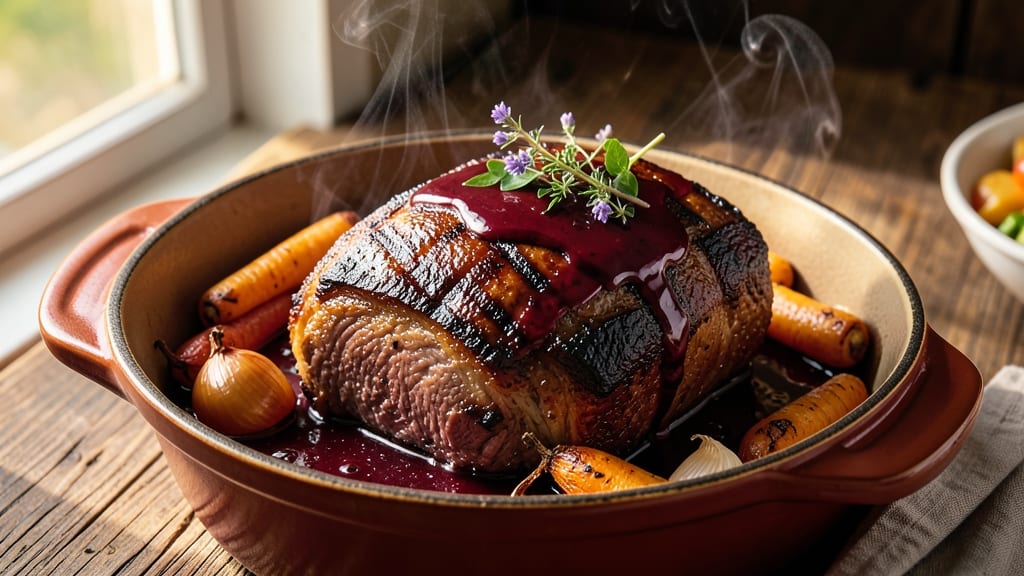
This Angus beef pot roast recipe transforms tough cuts into melt-in-your-mouth perfection with a deep red wine fond that caramelizes into luxurious richness. The secret lies in proper searing and slow braising—techniques that unlock the beef's natural tenderness while building layers of flavor in the sauce.
I've perfected this method over years of testing, ensuring every bite delivers that perfect balance of caramelized crust and velvety interior.
The process begins with a deep sear to develop a flavorful crust, followed by slow cooking in aromatic vegetables and red wine until the meat practically falls apart. This isn't just dinner—it's an experience that transforms your kitchen into a homey restaurant table.
The wine fond reduces to a glossy, velvety sauce that coats every bite, making even simple sides taste extraordinary.
What makes this recipe truly special is its versatility—equally impressive for weeknight dinners or holiday gatherings. The rich, wine-infused sauce pairs beautifully with creamy mashed potatoes, crusty bread, or roasted root vegetables.
And don't forget the perfect beverage pairing: a bold Cabernet Sauvignon complements the dish's deep flavors while cutting through the richness.
With proper preparation and patience, you'll achieve restaurant-quality results that impress even the most discerning guests. The key is temperature control and resting time—critical steps that ensure tender meat and a sauce that's rich without being greasy.
Let's get started on creating this showstopping centerpiece that will have everyone asking for seconds.
Ingredients for angus beef pot roast
The foundation of restaurant-quality pot roast starts with these premium ingredients designed to caramelize beautifully.
| Ingredient | Amount | Notes |
|---|---|---|
| Angus Beef Chuck Roast 🥩 | 4 lb | Center-cut preferred for tenderness |
| Dry Red Wine 🍷 | 2 cups | Bold Cabernet Sauvignon recommended |
| Beef Broth 💧 | 2 cups | Low-sodium preferred for balance |
| Yellow Onion 🧅 | 1 whole | Large, peeled and quartered |
| Carrots 🥕 | 4 whole | Medium, peeled and halved lengthwise |
| Garlic Cloves 🧄 | 6 cloves | Smashed for maximum flavor infusion |
| Fresh Thyme 🌿 | 2 sprigs | Stems removed for easy handling |
| Fresh Rosemary 🌿 | 1 sprig | Woody stems removed |
| Tomato Paste 🍅 | 2 tbsp | High-quality for depth of flavor |
| Olive Oil 🫒 | ½ cup | Extra-virgin for searing |
| All-Purpose Flour 🌾 | 2 tbsp | For dusting and thickening |
| Salt 🧂 | 2 tsp | Diamond Crystal preferred |
| Black Peppercorns 🌶️ | 1 tsp | Freshly cracked for intensity |
| Bay Leaves 🍃 | 2 whole | For aromatic depth |
The Angus beef chuck roast is the star—center-cut for tenderness and marbling for flavor. Source from a reputable butcher or high-end grocery store like Whole Foods or Wegmans, where the cuts are properly aged. A 4-pound roast serves six generously, with leftovers that reheat beautifully. The red wine should be bold and dry—Cabernet Sauvignon works perfectly, but Merlot or Malbec add different depth. Avoid sweet wines that will cloy with the rich beef. For the broth, low-sodium is critical to balance the wine's acidity without overpowering the natural flavors. The tomato paste should be San Marzano if available—its sweetness and depth elevate the fond significantly.
No red wine? Beef broth with a splash of balsamic vinegar creates a similar depth, though the sauce will lack the wine's complexity. Fresh herbs are ideal, but dried thyme at one-third the amount works in a pinch. The garlic should be smash-clove for maximum surface area during searing. For the onions and carrots, baby varieties work perfectly—no need to peel if using organic. The flour is for both dusting and creating a light roux to thicken the fond. If you're watching carbs, reduce to 1 tbsp—the sauce will still thicken from the natural reduction. The bay leaves should be removed before serving, as their texture can be off-putting to some palates.
The beef should rest at room temperature for 30 minutes before searing to ensure even cooking. Store any unused red wine in a cool, dark place—unopened bottles last 6-12 months, while opened wine should be refrigerated and used within 3-5 days. The fresh herbs keep for 5-7 days wrapped in damp paper towels in the fridge. For long-term storage, freeze the beef broth in ice cube trays for easy portioning. The tomato paste remains stable for up to 18 months in the pantry, while olive oil should be stored in a cool, dark cabinet to prevent oxidation. This dish reheats beautifully—simmer gently for 10-15 minutes to restore its velvety texture.
Why You'll Love This Recipe
- Rich Without Effort: That first bite? The tender beef falling apart, the wine-infused sauce clinging to every forkful—it’s restaurant-quality but made with ingredients you already own. Honestly, the beef broth and red wine combo makes this taste like a fancy dinner, not a weeknight meal.
- Leftovers That Win: Between us, this roast is so good the second day is almost better. The beef gets even more tender, and the sauce thickens into something you’ll want to drizzle on toast. Not the prettiest, but the taste makes up for it every time.
- Budget-Friendly Feast: A single chuck roast feeds my whole family, and the onions and carrots stretch the flavors without breaking the bank. I’ll be real: it’s my go-to when I need a hearty, satisfying meal that doesn’t empty my wallet.
Step-by-step instructions for perfectly braised Angus beef pot roast
Master this French-inspired technique for melt-in-your-mouth beef with a velvety wine reduction.
Sear the Roast for Maximum Flavor Development
Pat the 4 lb Angus Beef Chuck Roast completely dry with paper towels—this ensures a proper sear. Heat 0.5 cup Olive Oil in a heavy Dutch oven over medium-high heat until shimmering. Place the roast in the pot, fat-side down, and sear for 8-10 minutes until deeply browned on one side.
Flip the roast and sear the second side for another 8-10 minutes. The key here is patience—don't rush the searing or the fond (browned bits) won't form properly. For even browning, rotate the roast quarter-turns every 2 minutes during the final 4 minutes of searing. Remove the roast and set it aside on a plate.
Build the Aromatic Base
In the same Dutch oven, reduce heat to medium and add 1 whole Yellow Onion (quartered) and 4 whole Carrots (halved lengthwise). Cook for 5 minutes until the onions soften and begin to caramelize slightly. Add 6 cloves Garlic Cloves (smashed) and cook for 30 seconds until fragrant.
Stir in 2 tbsp Tomato Paste and cook for 1 minute to deepen the flavor. Sprinkle 2 tbsp All-Purpose Flour over the vegetables and stir vigorously for 1 minute to remove any raw flour taste. This creates a smooth, velvety base for your sauce.
Deglaze and Simmer the Wine Reduction
Pour in 2 cups Dry Red Wine and scrape up all the browned bits from the bottom of the pot with a wooden spoon. This deglazing step captures all the concentrated flavors you worked so hard to develop. Bring to a gentle simmer and reduce by half—about 8-10 minutes—until the liquid reduces to about 1 cup. You want a thick, syrupy consistency that coats the back of a spoon.
Add 2 cups Beef Broth, 2 sprigs Fresh Thyme, 1 sprig Fresh Rosemary, 2 whole Bay Leaves, 2 tsp Salt, and 1 tsp Black Peppercorns. Return the roast to the pot, fat-side up, and bring the liquid to a gentle simmer. The liquid should just barely cover the roast—this ensures even cooking without steaming.
Braise Until Fork-Tender
Cover the Dutch oven and transfer to a 325°F oven. Braise for 3-3.5 hours until the beef is fork-tender. The internal temperature should reach 200-205°F—this is the magic zone where collagen breaks down into gelatin, creating that irresistible tenderness. Check the temperature with a meat thermometer inserted into the thickest part of the roast, avoiding the bone.
Here's the thing—don't peek or lift the lid during cooking. Every time you open the pot, you release steam and add 15-20 minutes to your cooking time. The roast should be so tender that it practically falls apart when you test it with a fork.
Rest and Serve with Rich Sauce
Remove the roast from the pot and transfer it to a cutting board. Tent loosely with foil and let it rest for 15-20 minutes. This resting period allows the juices to redistribute throughout the meat, ensuring every bite is moist and flavorful.
While the roast rests, skim any excess fat from the sauce and adjust the seasoning if needed. The sauce should be thick and glossy, with a deep, caramelized richness from the wine reduction. Slice the roast against the grain into ½-inch thick slices and serve immediately with the sauce spooned over the top. The vegetables should be tender but still hold their shape—perfect for serving alongside the beef.
Pro Tips For Making Angus Beef Pot Roast
- SEAR THE ROAST FIRST: I learned this the hard way—skipping the sear means flavorless broth. Heat your Dutch oven until it’s smoking hot, then pat the chuck roast very dry with paper towels before browning it on all sides. That crust locks in juices and builds depth that simmering alone can’t match.
- USE COLD BROTH: Pour cold beef broth into the pot after searing, then bring to a boil. The sudden temperature drop keeps the meat from cooking too fast at the start, which guarantees tender results instead of tough, overdone beef. (Yes, even if you’re impatient like me.)
- CHAR THE ONIONS: Don’t just dice those onions—cook them low and slow until they’re deep brown, almost caramelized, before adding wine. This step cuts through the richness of the beef and adds a sweet, complex base that makes the whole dish sing. Skip it, and you’ll taste plain broth.
- BASIL AT THE END: Toss in a handful of fresh basil leaves during the last 10 minutes of cooking. It brightens the wine’s acidity and lifts the whole dish without overpowering the beef. Sounds weird, but it works—my grandmother swore by it, and she was right.
Make-ahead tips for this dish
Prep Ahead Strategy
Start your prep the night before by trimming and seasoning the 4 lb Angus Beef Chuck Roast with 2 tsp salt and 1 tsp black peppercorns. Store it uncovered in the refrigerator to dry the surface—this helps achieve a better sear later.
I like to marinate it in 1 cup red wine mixed with 2 tbsp olive oil for 4-6 hours before cooking. This step infuses the meat with incredible flavor and makes the final dish even more tender. 🥩
Slow Cooker Adaptation
For a hands-off approach, sear the roast as directed, then transfer it to a 6-quart slow cooker with all the braising ingredients. Cook on LOW for 8 hours or HIGH for 5-6 hours until fork-tender. The slow cooker maintains consistent heat, reducing the risk of overcooking. Just
Sauce Pre-Reduction
Make the wine reduction ahead of time by combining 2 cups red wine, 2 tbsp tomato paste, and 2 tbsp flour in a saucepan. Simmer until reduced by half, then cool and refrigerate for up to 3 days. When ready to cook, simply reheat the sauce and add the fresh herbs and broth. This shortcut saves you 30 minutes of active cooking time while maintaining the same depth of flavor. 🍷
Make-Ahead Serving
This pot roast reheats beautifully for leftovers. Store the roast and sauce separately in airtight containers in the refrigerator for up to 4 days.
To reheat, warm the sauce in a saucepan over medium-low heat for 5-7 minutes, then transfer the roast to a skillet with the sauce and heat through gently. For a crispier presentation, broil for 2-3 minutes at the end. The flavors actually deepen overnight! ❄️
Freezer-Friendly Prep
For long-term meal prep, fully cook the roast and freeze it with the sauce in a freezer-safe bag or container. Thaw overnight in the refrigerator, then reheat gently in the oven at 325°F for 1-1.5 hours covered with foil.
The texture remains tender, and the sauce stays rich. Label your freezer bags with the date—this dish keeps well for up to 3 months. Perfect for holiday leftovers! ❄️
Vegetable Prep Shortcut
Save time by prepping all your vegetables the night before. Peel and chop the onions, carrots, and garlic, then store them in a resealable container in the fridge. When you're ready to cook, simply dump them into the Dutch oven and continue with the recipe.
This reduces your active cooking time by 15 minutes while keeping everything fresh. 🥕
Nutrition facts
Frequently asked questions
Can I use a different cut of beef instead of chuck roast?
While chuck roast is ideal for its marbling and tenderness, you can substitute with short ribs or brisket—both work well with braising. However, avoid lean cuts like sirloin or filet mignon, as they'll dry out. If using short ribs, reduce cooking time by 30-45 minutes since they cook faster.
What's the best way to thicken the sauce if it's too thin?
Simmer the sauce uncovered for 5-10 minutes to reduce it naturally. For quick thickening, mix 1 tbsp cornstarch with 2 tbsp cold water, stir into the sauce, and cook until it reaches your desired consistency. A splash of beef broth or red wine can also help balance the thickness while maintaining flavor.
How do I know when the beef is fully cooked?
Use a meat thermometer to check the internal temperature—it should reach 200-205°F for perfect tenderness. The beef should also be fork-tender, with the meat pulling apart easily. If it's not quite there after 3.5 hours, add 15-20 minutes more and check again.
Can I make this recipe without red wine?
Yes! Replace the wine with 2 cups beef broth plus 2 tbsp balsamic vinegar for depth. For extra richness, add 1 tbsp soy sauce or a pinch of smoked paprika. The sauce will be slightly different but still delicious—just less complex than the wine reduction.
Why does my pot roast turn out tough?
Overcooking is the most common cause—keep the lid on and avoid peeking! The 325°F oven temp is critical; higher temps can dry out the meat. Also, ensure you're cutting against the grain** when slicing. If the beef still feels tough, it may need more time in the oven.