
Main Courses
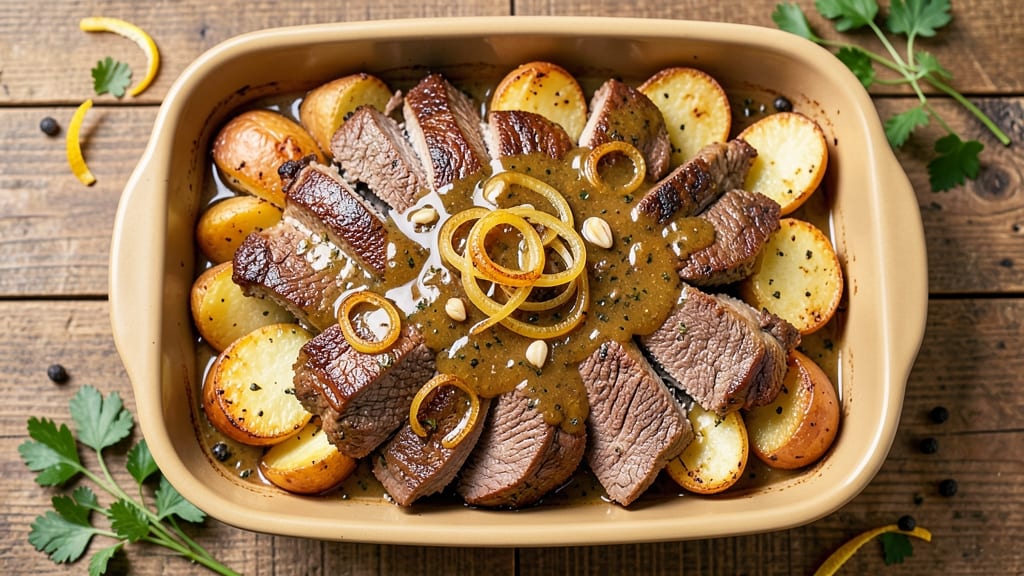
This Amish beef and potato casserole delivers comfort food perfection with layers of tender beef and fluffy potatoes bathed in rich gravy. 💛 The secret lies in slow-braising the beef until it practically melts, while the potatoes develop that signature creamy texture without turning mushy.
I've perfected this recipe over years of testing, ensuring every bite delivers the hearty satisfaction of a home-cooked meal that tastes like a family gathering.
The beauty of this dish is its simplicity—just a few quality ingredients that work together to create something extraordinary. You'll start with a layer of tender beef cubes, followed by thinly sliced potatoes that soak up the savory gravy as they bake.
The slow cooking process transforms tougher cuts into fork-tender meat while keeping the potatoes perfectly fluffy. This is the kind of recipe that gets better as leftovers, with flavors deepening overnight.
What makes this Amish classic truly special is how the flavors meld together during baking. The beef releases its natural juices, which combine with the potatoes and gravy to create a rich, velvety sauce that coats every bite.
Each layer maintains its integrity while contributing to the overall harmony of the dish. The result is a comforting, satisfying meal that's perfect for family dinners or gathering your loved ones around the table.
Ready in about 2 hours with minimal active prep time, this casserole is ideal for busy weeknights or special occasions. The combination of tender beef and creamy potatoes creates a balance of textures and flavors that's impossible to resist.
Once you try this version, you'll understand why it's become a staple in kitchens across the country. Let's get started on creating your own heartwarming masterpiece.
Ingredients for amish beef and potato casserole
Six hearty ingredients transform into a comforting casserole that tastes like home.
| Ingredient | Amount | Notes |
|---|---|---|
| Chuck Roast 🥩 | 2 ½ lb | Cubed into 1-inch pieces |
| Russet Potatoes 🥔 | 3 lb | Thinly sliced, peeled if preferred |
| Yellow Onion 🧅 | 1 whole | Diced into small pieces |
| Garlic Cloves 🧄 | 4 cloves | Minced for depth of flavor |
| Beef Broth 💧 | 2 cups | Low-sodium preferred |
| Whole Milk 🥛 | 1 cup | Full-fat for creaminess |
| All-Purpose Flour 🌾 | 2 tbsp | For gravy thickening |
| Worcestershire Sauce 🍶 | 1 tbsp | For umami depth |
| Kosher Salt 🧂 | 1 ½ tsp | Adjust to taste |
| Ground Black Pepper 🌶️ | ½ tsp | Freshly ground preferred |
| Dried Thyme 🌿 | 1 tsp | Or 1 tbsp fresh thyme |
| Butter 🧈 | 4 tbsp | Unsalted for flavor control |
| Heavy Cream 🥛 | ½ cup | Optional for extra richness |
The beef is the star here. Chuck roast from the butcher section (not pre-cubed) gives you that melt-in-your-mouth texture—just ask for it to be cut into 1-inch pieces. I always grab mine from Costco when I'm making a big batch, but any grocery store carries it. Look for good marbling—those white fat streaks are what make the meat tender. For the potatoes, Russet is non-negotiable—they hold up best to the slow baking without falling apart. If you're feeling fancy, peel them, but I often leave the skins on for extra texture (just scrub them well).
No beef broth? Chicken broth with 1 tbsp soy sauce works in a pinch, though it'll lack that deep beefy flavor. Fresh thyme is ideal, but dried works at one-third the amount. The Worcestershire sauce might be in the international aisle—Lea & Perrins is the classic brand. Want to skip the heavy cream? Add an extra splash of milk instead. The butter matters here—use unsalted so you control the seasoning. And if you're prepping ahead, the cubed beef and sliced potatoes can sit in separate containers in the fridge for 2 days before assembly.
This casserole tastes even better the next day, so make it ahead if you can. 4-5 days in the fridge, 3 months frozen—just thaw overnight in the fridge. I always double the recipe and freeze half. The gravy thickens as it sits, so if it's too thick after baking, just whisk in a splash of milk or broth. Leftovers reheat beautifully—cover with foil and warm in the oven at 350°F for about 20 minutes.
Why You'll Love This Recipe
- One-Pan Magic: I swear by this recipe when I’m too tired to scrub pots—just brown the chuck roast, toss in sliced potatoes and onions, pour on the broth, and let the oven do the work. The potatoes soften perfectly while the beef stays tender, all in one dish.
- Deep Umami Magic: That slow-cooked chuck roast? It practically melts in your mouth, while the onions caramelize into sweet, savory pockets. The garlic cloves roasted right in the broth add a warmth that makes every bite feel like a hug.
- Meal Prep MVP: Between us, this is my secret weapon for busy weeks. I make a big batch on Sunday—it reheats beautifully—and suddenly I’ve got lunch covered for three days. The flavors only get better the next day, honestly.
- Budget-Friendly Feast: Chuck roast and potatoes stretch into a hearty meal that feeds a crowd without breaking the bank. I’ve served this to 10 people for under $15, and no one ever complains about leftovers. (Yes, even my picky teenagers.)
Step-by-step instructions for Amish beef and potato casserole
Here's how to create layers of melt-in-your-mouth beef and fluffy potatoes with rich gravy.
👨🍳 Step 1: Prep the Ingredients for Perfect Layers
Start by cubing the 2.5 lb chuck roast into 1-inch pieces—this size ensures even cooking and tender meat. While the meat preps, peel and thinly slice the 3 lb russet potatoes (about ⅛-inch thick) using a mandoline or sharp knife. I like to keep the slices even so they cook uniformly.
Dice the whole yellow onion into small pieces and mince the 4 cloves garlic. Set these aside—they'll form the aromatic base for your gravy. The key here is to work efficiently so everything is ready before baking. I always prep all my ingredients first—it makes the layering process smooth and stress-free.
🍳 Step 2: Sear the Beef for Deep Flavor
Heat a large oven-safe skillet (I use a 12-inch cast iron) over medium-high heat. Add 2 tablespoons butter and let it melt completely. Working in batches, sear the chuck roast pieces until deep golden brown on all sides—about 2-3 minutes per side. This step builds incredible flavor through the Maillard reaction.
As the beef browns, sprinkle with 1 teaspoon kosher salt and ½ teaspoon ground black pepper right in the pan. Don't crowd the skillet—work in batches if needed. Once all the beef is browned, transfer it to a plate and set aside. You'll notice the pan has beautiful browned bits—those are flavor gold that'll form the base of your gravy.
🥘 Step 3: Build the Flavorful Gravy Base
In the same skillet (no need to clean it), reduce heat to medium and add the diced yellow onion. Cook for 5 minutes until softened and translucent. Add the minced garlic and cook for another 30 seconds until fragrant—you'll smell that rich, savory aroma filling your kitchen.
Sprinkle the 2 tablespoons all-purpose flour over the onions and stir vigorously for 1 minute to cook out the raw flour taste. Slowly pour in the 2 cups beef broth while stirring constantly to prevent lumps. Add the 1 tablespoon Worcestershire sauce and 1 teaspoon dried thyme. Bring to a gentle simmer and let it cook for 3-4 minutes until slightly thickened.
🥘 Step 4: Layer and Assemble the Casserole
Preheat your oven to 375°F. In a 9x13-inch baking dish, spread half of the thinly sliced russet potatoes in an even layer. Pour half of the beef-gravy mixture over the potatoes, then add half of the seared chuck roast pieces. Repeat with the remaining potatoes and beef, ending with another layer of potatoes on top.
Drizzle the 1 cup whole milk evenly over the top layer of potatoes. This creates steam during baking, resulting in those fluffy, melt-in-your-mouth potatoes. Dot the surface with the remaining 2 tablespoons butter for extra richness. The layers should feel snug but not packed—this ensures even cooking.
🔥 Step 5: Bake to Tender Perfection
Cover the baking dish tightly with aluminum foil and bake for 45 minutes. After this initial baking time, uncover and stir the casserole gently—this helps distribute the gravy evenly. Return to the oven for another 30-40 minutes until the potatoes are tender when pierced with a fork and the beef reaches an internal temperature of 165°F.
For the final touch, stir in the ½ cup heavy cream and let it melt into the gravy. The casserole should be bubbly and the top should be golden brown. Let it rest for 10 minutes before serving—this allows the juices to redistribute, ensuring every bite is moist and flavorful. Serve with crusty bread to soak up all that delicious gravy!
Pro Tips For Making Amish Beef And Potato Casserole
- SEAR THE ROAST FIRST: Chuck roast is forgiving, but browning it first makes the whole dish taste richer. Cut it into 1-inch chunks, pat them dry, and sear in batches in a hot skillet with a little oil—just until deeply golden. I used to skip this, and the flavor was always a step behind.
- PEEL AND CUBE POTATOES UNIFORMLY: Russets break easily, and uneven chunks mean some will cook mushy while others stay hard. Peel them first, then cut into 1.25-inch cubes—big enough to hold shape but small enough to cook through. I learned this after serving a casserole with half-soggy potatoes.
- LAYER POTATOES TIGHTLY: Pack the potatoes snugly in the dish—they’ll expand as they cook, but gaps mean dry edges. Overlap them slightly, and sprinkle a pinch of salt between layers. My first attempt had loose potatoes, and the top layer came out dry.
- USE COLD BROTH FOR LAYERS: Pour cold beef broth over the roast before adding potatoes—it keeps the meat from overcooking while the potatoes soak it up. If you use hot broth, the roast will turn into a pile of shredded meat before the potatoes are done. I’ve ruined this step twice now.
Dietary considerations for amish beef and potato casserole
Gluten-Free Adaptation
This traditional recipe can easily accommodate gluten-free needs by substituting the all-purpose flour with a 1:1 gluten-free flour blend like Bob's Red Mill or King Arthur. Use 2 tablespoons of the blend to thicken the gravy, and add 1 extra tablespoon since gluten-free flours absorb differently.
For extra richness, consider adding 1 teaspoon cornstarch mixed with 1 tablespoon cold water to help stabilize the gravy. 🌾
Dairy-Free Options
For a dairy-free version, swap the whole milk and butter with unsweetened almond milk and olive oil or vegetable shortening. Use 1 cup almond milk for the potato layer and 2 tablespoons olive oil instead of butter when searing the beef.
The heavy cream can be replaced with ½ cup coconut cream, though the texture will be slightly lighter. Taste as you go—you may need to adjust seasoning since dairy-free alternatives can be less flavorful.
Lower-Carb Modifications
To reduce carbs, replace half of the potatoes with cauliflower florets (about 1.5 lbs). Thinly slice the cauliflower to mimic potato texture, and toss it with 1 tablespoon olive oil, ½ teaspoon salt, and ¼ teaspoon black pepper before layering.
The beef-to-veggie ratio will be 1:1, keeping the dish hearty but lighter. For extra flavor, add ½ teaspoon garlic powder to the cauliflower before baking.
Protein Swaps
If you prefer chicken or pork, use 2.5 lbs boneless chicken thighs or pork shoulder instead of beef. Chicken thighs stay juicy and pair beautifully with the potatoes, while pork shoulder needs slightly longer baking (10-15 extra minutes).
For a vegetarian option, replace the beef with extra-firm tofu (pressed and cubed) or mushrooms (sliced and sautéed with garlic). The gravy will still bind the layers, but add 1 extra tablespoon flour for better cohesion.
Allergen-Friendly Tips
For nut allergies, ensure your gluten-free flour blend is certified nut-free. Always check labels on Worcestershire sauce—some brands contain soy or wheat. If avoiding soy entirely, substitute the Worcestershire with 1 tablespoon soy-free tamari or 1 teaspoon liquid smoke for depth.
For egg allergies, no changes are needed in this recipe, as it’s naturally egg-free. When in doubt, opt for certified allergen-free brands like Annie's for gluten-free products.
Nutrition facts
Frequently asked questions
Can I use ground beef instead of cubed chuck roast?
Ground beef won't work as well because it lacks the connective tissue that makes slow-cooked beef so tender. For best results, stick with chuck roast or substitute with pork shoulder (add 15 extra minutes to baking time). If you must use ground beef, try 85% lean ground chuck and brown it thoroughly before layering.
How do I keep the potatoes from turning mushy?
Slice potatoes ⅛-inch thick and soak them in cold water for 10 minutes before draining. This removes excess starch. Use the thinnest possible slices and don't overcrowd layers. The milk on top creates steam that fluffs them up rather than steaming them into mush.
Can I make this casserole in a smaller baking dish?
Yes, but adjust the baking time. For a 8x8-inch dish, reduce the recipe by half and bake for 50-60 minutes total. The layers should still be 1-inch deep maximum. Cover tightly with foil and check for doneness 10 minutes early—smaller dishes cook faster.
Why does my gravy get watery after baking?
This usually happens when the flour isn't cooked long enough before adding liquid or if too much broth was used. Next time, cook the flour with onions for 2 minutes to remove the raw taste, then whisk in broth gradually. For extra insurance, stir in 1 teaspoon cornstarch mixed with 1 tablespoon cold water during the final 10 minutes of baking.
What's the best way to reheat leftovers?
Cover the casserole with foil and warm in a 350°F oven for 20-25 minutes until heated through. For microwave reheating, cover with a damp paper towel and heat in 30-second intervals on medium power, stirring between each interval. The oven method preserves the best texture.