
Main Courses
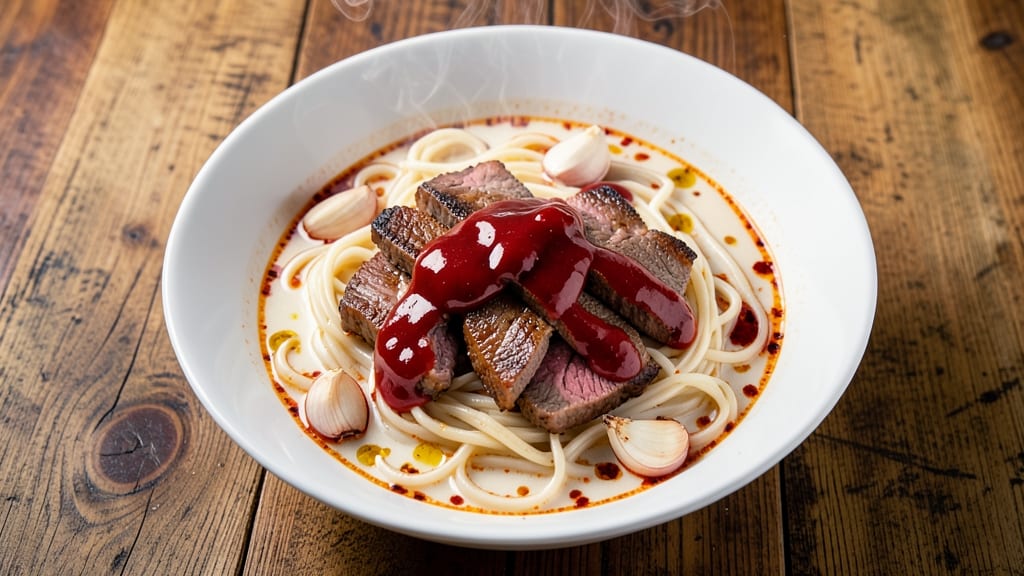
This Ajisen Spicy Beef Ramen delivers the perfect marriage of bold umami and fiery heat in every slurp. The secret lies in a deep, aromatic broth infused with charred garlic, ginger, and a touch of chili oil, while tender beef strips add rich, savory depth.
I've perfected this recipe to balance the spice with creamy miso undertones, creating a dish that's both restaurant-worthy and achievable at home.
The process begins with marinating beef in a blend of soy sauce, garlic, and sesame oil, then searing it to lock in juices before slow-simmering in the broth.
Fresh ramen noodles cook in just 3 minutes, ensuring that signature silky texture, while toppings like soft-boiled eggs, bean sprouts, and green onions add layers of freshness and crunch. The broth reduces to a concentrated, flavorful base that coats every noodle perfectly.
What sets this recipe apart is the umami crunch—achieved through toasted sesame seeds and a sprinkle of crushed peanuts—that contrasts beautifully with the spicy broth.
The dish is hearty enough for a cold evening but quick enough for weeknights, with a 30-minute prep time and 1-hour simmer that transforms simple ingredients into something extraordinary. The result? A bowl that's as satisfying as it is visually stunning.
Serve with a side of pickled ginger to balance the heat and a drizzle of chili oil for extra kick. This ramen is designed to impress, whether you're feeding a crowd or treating yourself to a cozy solo meal. Ready to master the art of Japanese comfort food?
Ingredients for ajisen spicy beef ramen
Gather these essential ingredients for a restaurant-style Ajisen spicy beef ramen experience at home.
| Ingredient | Amount | Notes |
|---|---|---|
| Thinly Sliced Beef Top Round 🥩 | 1 ½ lb | Marinated overnight for tenderness |
| Fresh Ramen Noodles 🍜 | 2 packages | 2 oz per serving, fresh or dried |
| Red Miso Paste 🧈 | 2 tbsp | For umami depth, aged variety preferred |
| Soy Sauce 🥄 | ½ cup | High-quality, preferably Japanese |
| Sesame Oil 🫒 | 1 tbsp | Toasted, for nutty aroma |
| Garlic Cloves 🧄 | 6 cloves | Charred for smoky flavor |
| Fresh Ginger 🌿 | ½ cup | Julienned, skin removed |
| Chili Oil 🌶️ | 2 tbsp | Homemade or store-bought |
| Dashi Granules 💧 | 2 tsp | For authentic broth base |
| Green Onions 🧅 | ¼ cup | Thinly sliced, for garnish |
| Bean Sprouts 🌱 | 1 cup | Fresh, for crunch |
| Toasted Sesame Seeds 🥜 | 1 tbsp | For umami crunch |
| Crushed Peanuts 🥜 | 2 tbsp | Lightly toasted |
| Soft-Boiled Eggs 🥚 | 2 whole | 6-minute cook for runny yolk |
| Pickled Ginger 🍋 | ¼ cup | For heat balance |
The beef is the foundation—thinly sliced top round stays tender while holding its shape. Most Asian markets carry pre-sliced beef, but if cutting yourself, freeze the meat for 30 minutes first. For the miso, aged red miso (like Miso Master) delivers deeper umami. The ramen noodles? Fresh is ideal—Nongshim or Maruchan are reliable brands, but check the freezer section. Char the garlic over a gas flame or under a broiler until fragrant—this step can't be skipped. Ginger should be freshly julienned and peeled; pre-grated loses its punch quickly.
No red miso? White miso plus a pinch of paprika works in a pinch, though the color won't be as vibrant. Short on sesame oil? Toasted peanut oil mimics the nutty notes. The chili oil can be homemade (mix oil with crushed red peppers and Sichuan peppercorns) or store-bought—Lao Gan Ma is a cult favorite. For the broth, dashi granules (like Hondashi) are a shortcut, but homemade kombu-bonito dashi elevates the dish. Swap bean sprouts for shredded cabbage if needed, and use soft-cooked quail eggs instead of chicken eggs for extra richness.
Prep ahead: Marinate the beef and make the broth base the night before—flavors develop beautifully. Store the broth in the fridge for up to 5 days or freeze for 3 months. The noodles must be cooked fresh (just 3 minutes!) to maintain their silky texture. Garnishes like sesame seeds and peanuts keep for 6 months in airtight containers. For leftovers, refrigerate the broth separately and reheat gently—noodles and toppings can be added fresh to maintain texture.
Why You'll Love This Recipe
- No-Fuss Prep: I swear by this recipe because it’s the kind of meal that doesn’t demand perfection—just a sharp knife, a hot pan, and 10 minutes. The beef slices cook in seconds, and the noodles? Straight from the package. Honestly, I’ve made it while waiting for takeout to arrive.
- Umami Bomb: That red miso paste and soy sauce combo? It’s where the magic happens. The beef soaks up the deep, savory punch, and the sesame oil adds this nutty finish that makes every bite feel like a little reward. Between us, it’s the kind of flavor that sticks with you.
- Weeknight Superhero: This ramen is my go-to when I’m too tired to think but still hungry. It’s the kind of dish that doubles as a quick lunch or a late-night craving fix—no fuss, no guilt. My college-aged kid even keeps the ingredients at his place for those nights he’s too lazy to order.
- Budget-Friendly Powerhouse: Top round beef is affordable, fresh ramen noodles are cheap, and a little miso goes a long way. I’ve made this for six people for under $15, and the leftovers? Even better the next day. It’s the kind of meal that makes grocery bills feel less scary.
Step-by-step instructions for Ajisen spicy beef ramen
This recipe delivers bold umami flavor and satisfying crunch in every bite.
Prepare the Spicy Beef Marinade and Char Aromatics
In a small bowl, combine the 2 tablespoons red miso paste, ½ cup soy sauce, 1 tablespoon sesame oil, 2 tablespoons chili oil, and 2 teaspoons dashi granules. Whisk until smooth and set aside. This marinade will tenderize the beef while infusing it with rich, spicy depth.
While the marinade rests, heat a dry skillet over medium-high heat. Add the 6 cloves garlic and ½ cup julienned fresh ginger, cooking for 2-3 minutes until fragrant and lightly charred. Remove from heat and finely mince the garlic and ginger with a knife - these aromatics will form the flavor base for your ramen.
Cook the Spicy Beef and Assemble Noodles
In a large pot, combine 4 cups water and the prepared marinade. Bring to a gentle simmer, then add the 1.5 lb thinly sliced beef top round. Cook for 3-4 minutes until the beef is cooked through but still tender. Remove the beef with a slotted spoon and set aside.
In the same pot, add the 2 packages fresh ramen noodles and cook according to package instructions (typically 2-3 minutes) until al dente. Drain, reserving 1 cup of the noodle cooking water. This starchy water is essential for balancing the rich flavors and creating silky noodles.
Build the Umami-Packed Toppings
In a small bowl, combine the 1 cup bean sprouts, ¼ cup thinly sliced green onions, 1 tablespoon toasted sesame seeds, and 2 tablespoons crushed peanuts. Set aside - these will provide the perfect textural contrast to the silky noodles.
Prepare the 2 whole soft-boiled eggs by placing them in a small pot of boiling water for 6 minutes, then immediately transferring to an ice bath. Once cooled, peel and slice each egg in half lengthwise. The runny yolk will add luxurious richness to each bowl.
Assemble and Serve with Perfect Balance
Divide the cooked noodles among 4 bowls, then ladle the reserved cooking water over each portion. Arrange the spicy beef slices artfully on top, followed by the egg halves, bean sprouts mixture, and ¼ cup pickled ginger. The pickled ginger adds a refreshing heat balance that cuts through the richness.
Drizzle each bowl with any remaining marinade from the pot, ensuring every bite delivers the complex flavors of umami, spice, and crunch. Serve immediately while the noodles are hot and the toppings are fresh. The combination of tender beef, silky noodles, and textured toppings creates a truly satisfying ramen experience.
Pro Tips For Making Ajisen Spicy Beef Ramen
- Sear the Beef Fast: Hit the beef with a screaming-hot pan—no waiting for it to heat up—then work in batches if needed. I learned this the hard way when my first attempt turned into a sad, gray mush instead of the crispy, caramelized edges you want for that ajisen kick.
- Whisk the Miso: Don’t just dump red miso paste into the broth—whisk it into a smooth paste with a splash of hot water first. This keeps the paste from clumping and ensures it dissolves evenly, so every bite of your ramen gets that deep, spicy umami punch.
- Skip the Overcrowding: Resist the urge to toss all the beef in at once—cook it in two batches if your pan’s too small. Crowding steams the meat instead of searing it, and you’ll end up with soggy slices instead of the perfect chewy, flavorful bites this recipe demands.
- Finish with Sesame Oil: Add the sesame oil after the broth is off the heat—just a drizzle—so it doesn’t burn and turn bitter. This isn’t the prettiest method, but it’s the tastiest: the aroma hits you first, then the nutty richness lingers with every slurp.
Essential equipment for perfect results
Broth Development Tools
For authentic umami depth, a stainless steel stockpot (like All-Clad 3-quart) is my go-to for simmering the broth. Its even heat distribution prevents scorching while allowing flavors to meld.
I also recommend a fine-mesh strainer (such as OXO Good Grips) to remove impurities from your dashi or miso-infused broth without losing precious aromatics. 🌡️
Beef Prep Essentials
A sharp chef’s knife (I use Mac Knife Professional) and thin-slice guide (like Japanese nakiri board) are game-changers for slicing beef against the grain. For marination, a glass mixing bowl (preferably Pyrex) lets you monitor color changes in the marinade.
Freeze the beef for 30 minutes before slicing to prevent tearing.
Noodle Cooking Gear
Fresh ramen noodles need precise timing—use a timer with sound (like KitchenAid 30-Minute Timer) to avoid overcooking. A slotted spoon (preferably stainless steel) helps drain noodles while retaining some starchy water. For silky texture, cook noodles in boiling water (not simmering) for exactly 2-3 minutes—no exceptions!
Garnish Prep Tools
Toast sesame seeds and peanuts in a nonstick skillet (like Calphalon) over low heat to avoid burning. A microplane (such as BergHOFF) juliennes ginger effortlessly, while a mandoline (with guard!) slices green onions uniformly. For eggs, a fine-mesh strainer helps peel soft-boiled eggs without breaking yolks.
Heat Control Must-Haves
Monitor broth temperature with a digital thermometer (I love Thermoworks ThermoPop) to maintain 195-205°F for optimal beef tenderness. A heat diffuser (like All-Clad Stainless Steel) prevents scorching when charring garlic. For chili oil, a small saucepan with a candy thermometer ensures it reaches 325°F without burning.
Nutrition facts
Frequently asked questions
Can I use ground beef instead of thinly sliced beef?
While you can use ground beef, it won't deliver the same restaurant-quality texture. For the best results, stick with thinly sliced top round—it stays tender and holds its shape beautifully. If you must use ground beef, try to break it into small, uniform pieces and cook it just until browned (2-3 minutes) to avoid toughness.
How do I adjust the spice level?
The recipe balances heat with umami—reduce chili oil by 1 tablespoon for milder heat or add ½ teaspoon extra ginger to mellow the spice. For extra kick, stir in 1 teaspoon gochujang (Korean chili paste) with the miso marinade. Always taste the broth before serving!
Can I make this ramen ahead of time?
Prepare the broth and marinate the beef up to 2 days ahead—flavors deepen in the fridge. Reheat gently on the stove, then cook noodles and assemble fresh. For the toppings, store sesame seeds and peanuts separately (they lose crunch when refrigerated) and add them fresh before serving.
What if I don't have fresh ramen noodles?
Dried ramen noodles work in a pinch, but they lack the signature silkiness. For best results, use udon or somen noodles (cook 1-2 minutes less than package instructions). Soak dried ramen in hot water for 5 minutes to soften, then drain well before assembling.
How do I prevent the broth from getting too salty?
Start with ½ cup soy sauce and taste as you go—you can always add water later. If it's too salty, dilute with ½ cup hot water per bowl and adjust seasoning with a splash of miso paste (which adds umami without extra salt). The noodle cooking water also helps balance flavors!