
Soups & Stews
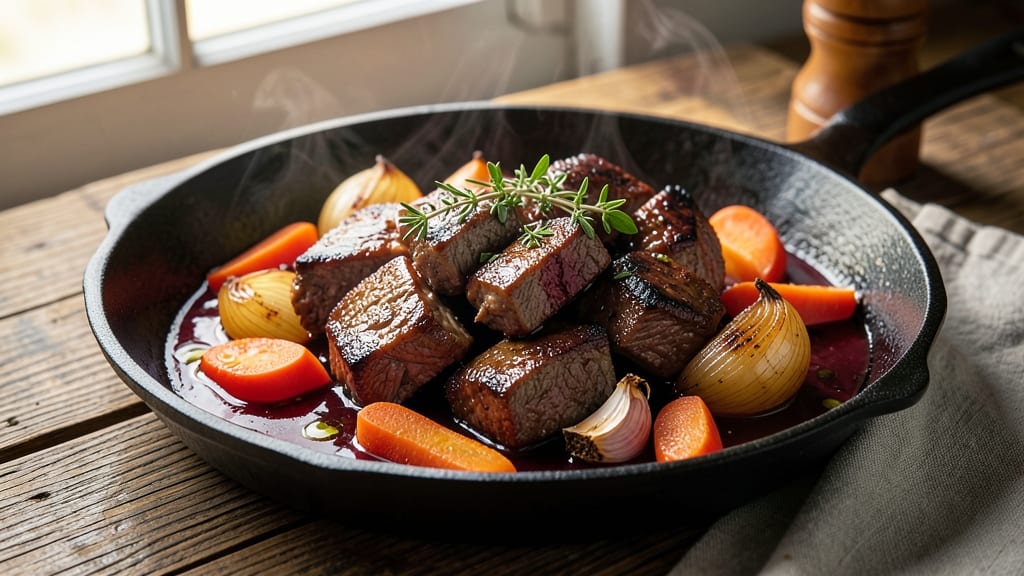
This Beef Beaujolais recipe transforms humble beef chuck into a restaurant-worthy braise, where rich red wine and aromatic herbs create a velvety sauce that clings to tender meat. The secret lies in slow cooking—allowing flavors to meld over hours until the beef practically melts in your mouth.
I developed this version after years of experimenting with French bistro techniques, and it never fails to impress even skeptical dinner guests.
The dish begins with a deep sear to develop a flavorful crust on the beef, followed by a classic Beaujolais wine deglaze that forms the base of the sauce. Carrots, onions, and garlic round out the vegetables, while thyme and bay leaves infuse the wine with earthy depth.
The result is a dish that balances hearty beef with bright, fruity wine notes—comforting yet refined enough for special occasions.
What makes this recipe stand out is its foolproof technique: no fancy equipment required, just patience. The beef becomes fork-tender while the sauce reduces to a glossy, wine-infused finish.
Serve it with crusty bread to soak up every last drop, or pair it with creamy mashed potatoes for a complete meal. The wine pairing? A bottle of the same Beaujolais used in cooking—because nothing complements the dish better than its inspiration.
This braise is perfect for weeknight dinners when you crave something substantial, or for impressing guests with minimal effort. The flavors only deepen as it sits, making it an ideal make-ahead dish. Let's get started on this Burgundy-inspired classic that brings French bistro elegance to your table.
Ingredients for beef beaujolais
Rich red wine, tender beef, and aromatic herbs—just these essential ingredients transform into a French bistro classic.
| Ingredient | Amount | Notes |
|---|---|---|
| Beef Chuck Roast 🥩 | 2 ½ lb | Cut into 1.5-inch cubes |
| Dry Beaujolais Wine 🍷 | 2 cups | Bold, fruity variety preferred |
| Yellow Onions 🧅 | 1 whole | Cut into 1-inch chunks |
| Carrots 🥕 | 4 medium | Peeled, cut into 1-inch chunks |
| Garlic Cloves 🧄 | 4 cloves | Smashed with side of knife |
| Fresh Thyme 🌿 | 2 sprigs | Or 1 tsp dried thyme |
| Bay Leaves 🍃 | 2 whole | Standard dried leaves |
| All-Purpose Flour 🌾 | 2 tbsp | For dredging beef |
| Olive Oil 🫒 | 2 tbsp | For searing |
| Beef Broth 💧 | 1 cup | Low-sodium preferred |
| Salt 🧂 | 1 ½ tsp | Kosher or sea salt |
| Black Pepper 🌶️ | 1 tsp | Freshly ground preferred |
| Tomato Paste 🍅 | 1 tbsp | Squeeze tube or canned |
The beef is everything here. Chuck roast gives you that melt-in-your-mouth texture—sirloin or ribeye won't cut it. Grab a pre-cubed package from Costco or Walmart to save time, or ask your butcher to cut it for you. Look for good marbling (white fat streaks) in the meat. The wine? Beaujolais or Pinot Noir works perfectly—whatever's open in your fridge. Just make sure it's dry and fruity, not sweet. Fresh thyme and bay leaves elevate the dish, but dried works in a pinch if you're in a hurry.
No Beaujolais? Substitute with Pinot Noir or Merlot—just avoid heavy Cabernet. Short on carrots? Substitute with parsnips or celery for a different twist. The tomato paste is non-negotiable though—it deepens the sauce color and adds richness. If you're using dried herbs, reduce to one-third the amount of fresh. For the flour, all-purpose works fine, but bread flour adds a nice chewiness. The beef broth can be homemade or store-bought—just check for low sodium if you're watching your intake.
This braise tastes even better the next day—make extra and freeze portions. The wine sauce keeps for 5 days in the fridge, but the beef stays tender for 4 days. I portion mine into containers with a splash of wine to keep it moist. For serving, crusty bread is a must—it soaks up every last drop of that velvety sauce. Leftovers reheat beautifully—just add a splash of water or broth to loosen the sauce.
Why You'll Love This Recipe
- Wine-Pairing Magic: The Beaujolais wine doesn’t just cook the beef—it transforms it. That deep, fruity acidity tenderizes the chuck roast while adding layers of flavor you won’t find in a dry rub or marinade. Honestly, I’ve tried other red wine braises, but this one? It’s like the beef and wine were meant to be.
- One-Pot Wonder: Between us, this recipe is ridiculously hands-off. You brown the beef, toss in chopped onions, carrots, and garlic, then pour in the wine and water. Walk away for 3 hours—no stirring, no stress. The only real effort is peeling the carrots, and even my lazy Sunday mornings can handle that.
- Leftovers That Shine: This dish tastes even better the next day, which is perfect because it makes so much. I’ll be real: I’ve reheated portions for lunch three days in a row, and the beef stays juicy, the sauce thickens just right, and no one complains. (Yes, even on a Tuesday night.)
- Budget-Friendly Feast: A chuck roast stretches across multiple meals, and Beaujolais is cheaper than fancy wine—no need to splurge. I’ve fed six people for under $20, and the leftovers keep my family from ordering takeout. Plus, the onions and carrots are pantry staples, so you’re not scrambling for obscure ingredients.
Step-by-step instructions for Burgundy-inspired beef braise
Here's how to transform tough beef into melt-in-your-mouth braise with that signature Burgundy wine sauce.
Sear the Beef for Maximum Flavor
Heat a large Dutch oven over medium-high heat and add the 2 tablespoons olive oil. Once shimmering, add the 2.5 lb beef chuck roast cut into 1.5-inch cubes in a single layer. Let them sear undisturbed for 3-4 minutes until deep golden brown on all sides - this builds the flavor foundation.
Don't crowd the pan or you'll steam instead of sear. Work in batches if needed, then transfer the browned beef to a plate. The goal is caramelized crust on each piece - that's where all the rich flavor hides. I like to press down gently on the beef during the first minute to prevent curling and ensure even contact with the pan.
Build the Aromatic Base
In the same Dutch oven, add the 1 whole yellow onion cut into 1-inch chunks and the 4 medium carrots cut into 1-inch chunks. Cook for 5 minutes until softened and starting to caramelize slightly. Add the 4 smashed garlic cloves, 2 sprigs fresh thyme, and 2 whole bay leaves, stirring for 30 seconds until fragrant.
This step develops the sweet, caramelized flavors that form the backbone of the sauce. The thyme and bay leaves will infuse their earthy notes into the wine. Don't skip this - it's what makes homemade braise taste so much better than store-bought.
Deglaze and Add Wine
Sprinkle the 2 tablespoons all-purpose flour over the vegetables and stir for 1 minute to coat everything evenly. Pour in the 2 cups dry Beaujolais wine, scraping up all those browned bits from the bottom - this is called deglazing and captures all that seared flavor.
Bring to a simmer and let it reduce by half, about 8-10 minutes. You'll see the liquid go from ruby red to deep burgundy as the alcohol cooks off. This reduction concentrates the wine's fruity flavors. I know it seems like too much wine now, but trust me - it's the perfect amount for that rich, velvety sauce we're after.
Braise Until Tender
Return the seared beef to the Dutch oven along with any accumulated juices. Stir in the 1 tablespoon tomato paste and add the 1 cup beef broth. Bring to a gentle simmer, then cover and transfer to a 325°F oven. Braise for 2-2.5 hours until the beef is fork-tender and falls apart easily.
The key here is patience - low and slow is what transforms tough beef into melt-in-your-mouth perfection. Check occasionally and add a splash of water if the liquid gets too low. You'll know it's done when the beef pulls apart with just a fork and the sauce has thickened beautifully.
Season and Finish
Remove the braised beef from the oven and let it rest for 10 minutes. Discard the thyme sprigs and bay leaves. Stir in the 1.5 teaspoons salt and 1 teaspoon black pepper, then taste and adjust seasoning if needed. The sauce should be rich and velvety, coating the beef beautifully.
For serving, spoon the beef and sauce over mashed potatoes or crusty bread. The wine sauce will have reduced to a perfect consistency - thick enough to coat but still silky smooth. Each bite should deliver tender beef with that deep, complex wine flavor we worked so hard to create.
Pro Tips For Making Beef Beaujolais
- Sear the Chuck Hard: That beef chuck roast needs a deep, dark crust to hold up through hours of braising. I used to rush this step, but now I sear it on all sides over medium-high heat for at least 10 minutes total—until it’s got that caramelized armor. Let the pan get screaming hot first, and don’t move the meat until it releases naturally.
- Brown the Onions First: Chop those yellow onions into even ½-inch slices and sweat them in the same pan after searing the beef. The flavor difference is massive—browned onions add depth that raw or lightly cooked ones can’t match. Just don’t walk away; they’ll burn faster than you think.
- Deglaze with Wine Immediately: As soon as you remove the beef, pour in that Beaujolais and scrape every last bit of fond from the pan. I learned this the hard way—skipping this step means losing half the flavor. Let the wine simmer for 2-3 minutes to cook off the alcohol before adding broth or tomatoes.
- Use a Meat Thermometer: Chuck roast is forgiving, but you’re aiming for 195°F internal temp for melt-in-your-mouth tenderness. I used to guess and ended up with dry meat or undercooked chunks. A cheap probe thermometer solves this—pull it when it hits 190°F, then rest it. The residual heat will carry it the rest of the way.
Dietary considerations for this dish
Gluten-Free Adaptations
This braise naturally accommodates gluten-free diets since the only flour used is for dredging the beef. Simply omit the 2 tablespoons all-purpose flour entirely—skip the dredging step and sear the beef directly in the Dutch oven.
The wine reduction will still create a rich sauce, though it may be slightly thinner. For extra thickness, stir in 1 tablespoon cornstarch mixed with 1 tablespoon cold water during the final 10 minutes of cooking. Always check labels on beef broth and tomato paste for hidden gluten. 🌾
Low-Carb Options
Reduce the 1 cup beef broth by half and replace it with ½ cup low-sodium chicken broth to cut carbs. Skip the carrots and use 4 cups sliced mushrooms instead—they add umami depth without many carbs.
For extra richness, stir in 1 tablespoon butter during the final 5 minutes of braising. The wine sauce remains the star, but this version keeps carbs under 10g per serving. Pair with cauliflower mash for a fully low-carb meal. 🥕
Dairy-Free Considerations
This recipe is already dairy-free, but if you're sensitive to potential cross-contamination, use a dedicated Dutch oven that hasn’t held butter or cheese. The wine sauce’s richness comes entirely from the beef, wine, and tomato paste—no dairy is needed.
For serving, opt for garlic roasted potatoes instead of mashed potatoes (which often contain butter). The crusty bread should also be 100% dairy-free—check labels for milk powder. 🧀
Allergen-Friendly Swaps
For nut allergies, ensure your beef broth is nut-free (some brands use nut-based thickeners). If you’re avoiding tomato paste, substitute with 1 tablespoon red wine reduction (simmer ½ cup red wine until syrupy).
For thyme allergies, replace with 1 sprig rosemary or ½ teaspoon dried oregano. Always verify ingredient labels, especially for wine and broth, as some brands process in facilities with allergens. 🌿
Vegetarian Adaptations
While beef is the star, you can create a vegetarian version by replacing the beef with 2.5 lbs portobello mushrooms or firm tofu. Marinate the mushrooms in 2 tbsp olive oil, 1 tbsp soy sauce, and 1 tsp smoked paprika for 30 minutes before searing.
Use the same wine reduction technique, but add 1 cup cooked lentils for protein. The dish will be heartier but still packed with that Burgundy wine flavor. 🍄
Nutrition facts
Frequently asked questions about beef Beaujolais
Can I use a different red wine instead of Beaujolais?
Yes! While Beaujolais adds that signature fruity depth, Pinot Noir or Merlot work beautifully too. Avoid bold wines like Cabernet Sauvignon—they can overpower the dish. If using a lighter wine, add ½ teaspoon red wine reduction at the end for richness. The key is a dry, medium-bodied red with good acidity.
How do I know when the beef is fully tender?
The beef is ready when it easily falls apart with a fork and pulls cleanly from the bone. For 2.5 lb chuck roast, this typically takes 2-2.5 hours at 325°F. If using a meat thermometer, aim for 203°F in the center—the collagen will have broken down completely.
Can I make this recipe in a slow cooker?
Brown the beef first in a skillet, then transfer everything to the slow cooker. Cook on Low for 7-8 hours or High for 4-5 hours, adding ¼ cup water if needed to prevent drying. The slow cooker method is perfect for busy days—just skip the oven braising step. The flavors will develop just as beautifully!
What's the best way to reheat leftovers?
Reheat gently in a saucepan over medium-low heat for 5-7 minutes, adding 1-2 tablespoons beef broth to loosen the sauce. Avoid microwaving—it can make the sauce grainy. For oven reheating, cover with foil and warm at 300°F for 15 minutes. The beef stays tender when reheated properly!
Why did my sauce turn out too thin?
This usually happens if the wine didn't reduce enough or too much liquid was added. For future batches, let the wine reduce longer (12-15 minutes) before adding broth. If your sauce is still thin, simmer uncovered for 5-10 minutes to thicken it. A splash of cornstarch slurry (1 tbsp cornstarch + 1 tbsp cold water) can also rescue it!