
Soups & Stews
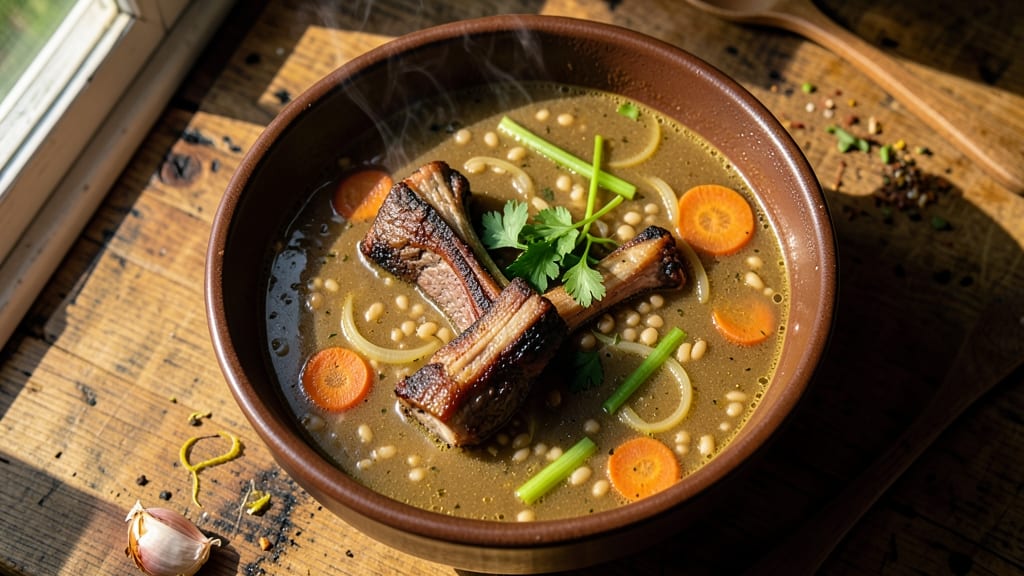
Prime rib bones transform ordinary beef barley soup into something extraordinary—deep, rich, and layered with flavor that builds with every spoonful. The secret lies in roasting the bones first to develop a caramelized crust that infuses the broth with unmatched depth, while barley adds satisfying texture.
This isn’t just soup; it’s a comforting, hearty meal that feels like a hug in a bowl, perfect for chilly evenings or when you crave something truly nourishing.
What sets this recipe apart is the technique: searing the bones until deeply browned, then simmering them low and slow to extract every last bit of collagen and marrow. The result?
A broth so flavorful it practically tastes like it’s been simmering for days, even if you’re working with a shorter timeline. Barley soaks up the rich liquid while remaining tender, creating the perfect balance of heartiness and comfort.
By the time you’re done, you’ll have a soup that’s velvety, deeply savory, and packed with umami from the bones—each bite delivers layers of flavor that make it impossible to stop at one bowl.
The aroma alone will have everyone gathering around your table, and the texture—tender beef, chewy barley, and silky broth—makes it a meal worth savoring.
Serve it with crusty bread to soak up every last drop of that precious broth, or garnish with fresh parsley for a pop of color and brightness. This is the kind of soup that tastes even better the next day, so make a big batch and enjoy it all week.
Ingredients for beef barley soup recipe with prime rib bones
Rich, caramelized bones and hearty barley make this soup unforgettable—every spoonful packed with depth.
| Ingredient | Amount | Notes |
|---|---|---|
| Prime Rib Bones 🦴 | 3 lb | With meat still attached, cut into chunks |
| Pearl Barley 🌾 | 1 ½ cups | Rinsed before cooking |
| Yellow Onion 🧅 | 1 whole | Chopped into 1/2-inch pieces |
| Carrot 🥕 | 4 whole | Cut into 1-inch chunks |
| Celery Stalk 🥬 | 4 whole | Cut into 1-inch pieces |
| Garlic Cloves 🧄 | 6 cloves | Smashed with side of knife |
| Tomato Paste 🍅 | 2 tbsp | Smooth, not chunky |
| Dried Thyme 🌿 | 1 tbsp | Or 1 tbsp fresh thyme leaves |
| Dried Rosemary 🌿 | 1 tsp | Crushed between fingers |
| Bay Leaves 🍃 | 2 whole | Removed before serving |
| Black Peppercorns 🌶️ | 1 tsp | Freshly cracked |
| Salt 🧂 | 1 ½ tsp | Kosher or sea salt |
| Beef Broth 💧 | 8 cups | Homemade or high-quality store-bought |
| Fresh Parsley 🌿 | ¼ cup | Chopped, for garnish |
Prime rib bones are your flavor foundation. Ask your butcher for the knuckle ends—they've got the most marrow and collagen. Look for bones with good meat still attached (about 1/2 lb meat per 2 lb bones). Costco or local meat counters usually have them, or check the freezer section. If you can't find prime rib, beef short ribs work too—they've got that same rich, fatty marrow. Just trim off any excess fat before roasting. The key is getting those bones deeply browned—almost black in spots—so they develop that caramelized crust that melts into the broth.
No prime rib bones? Beef marrow bones or oxtail will work in a pinch, though the flavor will be slightly different. For the barley, pearled barley is quickest (30-40 minutes), but pearl barley has more texture. Short on thyme? Dried oregano at half the amount works, but thyme's earthy note is essential here. The tomato paste is non-negotiable—it deepens the umami. If you're using store-bought broth, Kitchen Basics or Pacific Foods brands have the best flavor. And for the love of soup, don't skip the bay leaves—they add that subtle herbal depth that makes this soup sing.
This soup tastes even better the next day—honestly, 3-4 days in the fridge is perfect. The flavors meld and deepen. Store in airtight containers, and skim off any hardened fat before reheating. For leftovers, freeze in 2-cup portions—thaw overnight in the fridge, then reheat gently. The barley stays firm when frozen, so it's ideal for meal prep. Garnish with fresh parsley right before serving—it adds a bright contrast to the rich broth. And trust me, make a double batch. This soup disappears faster than you'd think.
Why You'll Love This Recipe
- One-Pot Wonder: The prime rib bones do all the heavy lifting—just simmer them with veggies and barley, then walk away. No chopping like a pro, no extra pots to wash.
- Rich Umami Bomb: That marrow inside the bones? Pure flavor gold. The barley soaks it up like a sponge, turning every spoonful into a hearty, savory hug.
- Leftovers That Shine: Tastes even better the next day—perfect for prepping ahead. My kids beg for seconds (even when I tell them to stop).
- Budget-Friendly Luxury: Prime rib bones stretch into a whole pot of soup without breaking the bank. Honestly, it’s the most cost-effective way to feel fancy on a weeknight.
Step-by-step instructions for beef barley soup with prime rib bones
This rich, hearty soup delivers deep flavor from the bones—here's how to make it shine.
Sear the Prime Rib Bones for Maximum Flavor
Preheat your largest pot over medium-high heat. Pat the 3 lb prime rib bones completely dry with paper towels—this ensures a good sear. Working in batches if needed, place the bones in the hot pot and sear them for 3-4 minutes per side until deeply browned.
Here's the thing—those browned bits are pure flavor. As the bones sear, they develop a crust called the Maillard reaction, which dissolves into the broth later. Don't rush this step; you want deep golden brown color on all sides. Once seared, remove the bones and set them aside in a bowl.
Build the Aromatic Base with Vegetables and Herbs
In the same pot (no need to clean it—the browned bits are flavor gold), add 2 tablespoons tomato paste and cook for 1 minute to remove the raw taste. Then add the chopped 1 whole yellow onion, 4 whole carrots, 4 whole celery stalks, and 6 smashed garlic cloves. Cook for 5-6 minutes until the vegetables soften slightly and become fragrant.
Next, stir in the 1 tablespoon dried thyme, 1 teaspoon dried rosemary, 2 whole bay leaves, and 1 teaspoon cracked black peppercorns. These herbs will infuse the broth with their earthy flavors. Cook for another 1 minute to toast the spices slightly—this releases their essential oils and deepens their aroma.
Simmer the Bones and Vegetables for Deep Flavor Extraction
Return the seared bones to the pot. Pour in 8 cups beef broth until the bones are just covered. Bring to a gentle boil, then reduce heat to low and add the 1.5 teaspoons salt. Here's where the magic happens: simmer uncovered for 1.5 hours, skimming off any foam that rises to the surface. This removes impurities and keeps the broth clear.
After 1.5 hours, remove the bones with tongs and set them aside. Strain the broth through a fine-mesh sieve into a clean pot, pressing gently on the vegetables to extract all their flavor. Discard the solids. The broth should now be rich, golden, and deeply aromatic—this is the foundation of your soup.
Cook the Pearl Barley to Perfect Tenderness
Return the strained broth to the pot and bring it back to a gentle simmer. Add the 1.5 cups rinsed pearl barley and stir gently. The barley needs 30-35 minutes of simmering to become tender but still hold its shape—overcooking turns it mushy.
Here's the trick: taste the barley after 25 minutes. It should be slightly firm but starting to soften. If it's not quite done after 35 minutes, it's okay—just let it simmer a few more minutes. The barley should be tender enough to eat but still have a slight bite, not falling apart.
Finish and Serve with Fresh Herbs
Once the barley is perfectly tender, return the prime rib bones to the pot and let them warm through for 5 minutes. Using tongs, remove the bones and discard the bay leaves. Shred the meat from the bones with two forks and return it to the soup. Stir in the 0.25 cup chopped fresh parsley just before serving—this adds a bright, fresh contrast to the rich broth.
Ladle the soup into bowls, making sure each serving gets a generous portion of both the shredded meat and barley. The broth should coat the back of a spoon and have a velvety texture. Serve immediately with crusty bread to soak up every last drop of that flavorful liquid.
Pro Tips For Making Beef Barley Soup Recipe With Prime Rib Bones
- BLISTER THE BONES FIRST: Hit those prime rib bones with a screaming-hot pan for 3-4 minutes before adding liquid—this caramelizes the bone marrow and turns your broth from good to deeply flavorful. I used to skip this, and the soup always tasted like it needed more seasoning.
- SOAK BARLEY 30 MINUTES: Pearl barley swells up like a sponge when soaked in cold water first—this cuts cooking time by 20 minutes and keeps it from turning mushy. Drain well before adding to the pot, or your soup will turn into a thick paste.
- DON’T CROWD THE POT: If you dump all the veggies in at once, the onions and carrots will steam instead of caramelize, leaving you with bland, pale flavors. Sear the onions and celery in batches until golden, then add the carrots separately for that rich, developed taste.
- SKIM THE FOAM OFF: The first 10 minutes of simmering? A greasy, bubbly foam rises to the top. Lift it off with a spoon—it’s where all the impurities and fat collect. Ignore it, and your broth will taste cloudy and off. (Yes, even if you’re impatient like me.)
Regional styles of this recipe
Classic British Style
In the UK, this soup often incorporates dried mushrooms (about ¼ cup) and a splash of stout beer (½ cup) for depth. The British version also uses pearl barley but cooks it slightly longer—40 minutes—for a creamier texture.
I like adding a pinch of nutmeg at the end for warmth, a nod to traditional English comfort food. 🌍
French Country Version
French country kitchens elevate this soup with diced pancetta (½ cup) instead of extra meat, and a splash of dry white wine (¼ cup) deglazed from the pot. They also add a handful of pearl onions (about 12 small) for sweetness.
The French technique calls for simmering the bones for 2 hours to extract maximum collagen. 🍷
German Hearty Adaptation
In Germany, this soup becomes a Sunday family meal with potatoes (2 cups, cubed) added during the final 15 minutes of cooking. They also include a bay leaf plus a sprig of fresh thyme for herbal brightness.
The Germans serve it with dark rye bread and a dollop of sour cream on top. I find this version especially satisfying in winter. ❄️
American Southern Twist
Southern cooks often add smoked paprika (½ teaspoon) and a dash of hot sauce (like Crystal or Tabasco) for heat. They also include collard greens (2 cups, chopped) in the final 10 minutes of simmering.
The result is a smoky, slightly spicy broth that pairs perfectly with cornbread. 🌶️
Italian Rustic Approach
Italian versions replace barley with orzo pasta (1 cup) and add sun-dried tomatoes (¼ cup, chopped) for acidity. They also include a handful of fresh basil (chopped) at the end.
The Italians simmer the bones with a splash of red wine (½ cup) and a pinch of red pepper flakes for subtle heat. This version feels lighter but still deeply flavorful. 🌿
Modern Shortcut Version
For busy weeknights, I use pressure cookers to cut simmering time to 45 minutes at high pressure. I also add pre-made beef stock (like Kitchen Basics) and instant barley (½ cup) that cooks in 15 minutes.
This keeps all the rich flavor without the long wait. Perfect for meal prep! ⏰
Nutrition facts
Frequently asked questions
Why do the prime rib bones need to be seared so deeply?
The deep sear creates a caramelized crust through the Maillard reaction, which dissolves into the broth for maximum flavor. Skipping this step means missing out on that rich, meaty depth that makes this soup truly exceptional. Aim for deep golden brown to almost black spots on the bones.
Can I use regular barley instead of pearl barley?
Yes, but cooking times will differ. Regular barley needs 45-60 minutes to soften, while pearl barley cooks in 30-35 minutes. The texture will be slightly chewier, which some people prefer. Just monitor closely to avoid mushiness.
What if I don't have prime rib bones—what's the next best option?
Beef marrow bones or short ribs work beautifully as substitutes. They contain similar rich marrow and collagen. If using short ribs, trim excess fat first. The flavor will be slightly different but still deeply satisfying.
How can I make this soup ahead of time?
This soup actually tastes better the next day! Store in airtight containers in the fridge for up to 4 days. Reheat gently on the stove, skimming off any hardened fat. For freezing, portion into 2-cup servings—thaw overnight in the fridge before reheating.
Why does the barley need to be rinsed before cooking?
Rinsing removes excess starch that can make the barley gummy. Clean barley absorbs the broth better and stays firm rather than turning mushy. Give it a quick rinse under cold water before adding to the pot.