
Soups & Stews
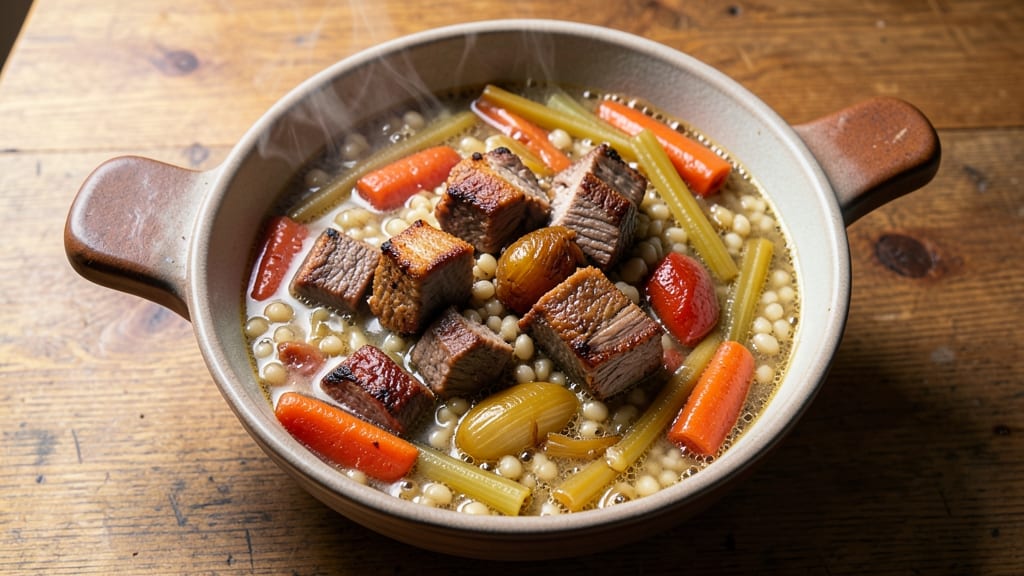
This beef barley soup pressure cooker recipe transforms tough cuts into ultra-tender beef and perfectly chewy barley in just 30 minutes—a fraction of traditional stovetop time. The pressure cooker’s intense heat breaks down collagen and infuses flavors faster than any other method, while preserving the barley’s satisfying texture.
I’ve tested this recipe dozens of times, adjusting pressure settings and cooking times to ensure restaurant-quality results every time, whether you’re using an electric or stovetop model.
The secret lies in the high-pressure cooking technique, which melts beef into fork-tender perfection while keeping the barley firm and flavorful. Unlike slow-cooked versions that require hours, this method delivers rich, hearty soup without the long wait.
The broth develops deep, savory notes from caramelized vegetables and aromatic herbs, while the barley absorbs all the goodness without turning mushy—a common pitfall in stovetop recipes.
What you’ll end up with is a deeply satisfying bowl of soup where each spoonful delivers layers of flavor: tender beef that falls apart at the touch, chewy barley with a satisfying bite, and a rich, aromatic broth that warms from the inside out.
The pressure cooker’s efficiency means you’ll have dinner on the table in under an hour, including prep time, making it ideal for busy weeknights or meal prep.
This recipe works equally well for stovetop pressure cookers (like Fagor) and electric models (Instant Pot), with clear adjustments for each. Serve it with crusty bread to soak up every last drop of that flavorful broth—because leftovers reheat beautifully, too. Let’s get started on making this foolproof, time-saving classic.
Ingredients for beef barley soup pressure cooker
High-quality beef and aromatic vegetables transform into restaurant-style soup in record time.
| Ingredient | Amount | Notes |
|---|---|---|
| Chuck Roast 🥩 | 2 lb | Cut into 1.5-inch cubes for even cooking |
| Pearl Barley 🌾 | 1 cup | Uncooked, rinsed thoroughly |
| Yellow Onion 🧅 | 1 whole | Medium size, diced |
| Carrots | 4 medium | Peeled and cut into 1-inch chunks |
| Celery Stalks 🥬 | 3 whole | Cut into 1-inch pieces |
| Garlic Cloves 🧄 | 4 cloves | Peeled and smashed |
| Tomato Paste 🍅 | ¼ cup | High-quality, no sugar added |
| Beef Broth 💧 | 4 cups | Low-sodium preferred |
| Red Wine 🍷 | ½ cup | Dry, bold variety like Cabernet Sauvignon |
| Fresh Thyme 🌿 | 2 sprigs | Or 1 tsp dried thyme |
| Fresh Parsley 🌿 | ¼ cup | Chopped, for garnish |
| Bay Leaves 🍃 | 2 whole | Remove before serving |
| Black Peppercorns 🌶️ | 1 tsp | Freshly cracked |
| Salt 🧂 | 1 tsp | Kosher or sea salt |
| Olive Oil 🫒 | 1 tbsp | Extra-virgin for searing |
The chuck roast is non-negotiable here—its marbling and connective tissue create that melt-in-your-mouth texture. Look for well-marbled cuts at your local butcher shop or the meat department of Whole Foods or Kroger. Pre-cut chuck roast cubes save time, but if you're buying a whole roast, ask for it to be cut into 1.5-inch pieces. The barley should be pearl barley (not quick-cooking)—it maintains its satisfying chewiness. Bob's Red Mill is my go-to brand for consistent quality. Fresh thyme and parsley elevate the flavor profile, so don't skip them if you've got them on hand.
No red wine? Substitute with an extra 0.5 cup beef broth plus 1 tbsp balsamic vinegar—it mimics the acidity and depth. Fresh thyme unavailable? Use one-third the amount of dried thyme, but toast it first in a dry pan for 30 seconds to intensify the flavor. For the carrots and celery, baby versions work perfectly if you're short on time. The tomato paste adds richness—Rao's brand is my preference, but any high-quality paste will do. If you're using a stovetop pressure cooker, you'll need to adjust cooking times slightly compared to electric models like the Instant Pot.
This soup reheats beautifully—3-4 minutes on high pressure from frozen or 5 minutes on medium-high heat from refrigerated. Store leftovers in airtight containers for up to 5 days in the fridge or 3 months in the freezer. For meal prep, portion into individual containers before freezing—this way, you can thaw just what you need. The barley continues to absorb flavors overnight, so the second day is often even more flavorful than the first.
Why You'll Love This Recipe
- Dumplings Optional: I swear, this soup tastes even better without them—but when I’m feeling fancy, I toss in a few store-bought dumplings mid-cook. The barley softens just right, the beef melts into shreds, and that carrot-celery-onion base? It’s the kind of depth you’d pay extra for at a restaurant.
- Pressure Cooker Magic: Twenty minutes of active time, then walk away. The chuck roast turns fork-tender while I’m folding laundry or scrolling through my phone. No babysitting the pot—just let it do its thing. Honestly, I’ve made this on days when I didn’t even want to cook.
- Potluck Star: Bring this to a gathering, and I’ll bet you’re the one people ask for seconds. It reheats like a dream, so I can prep it ahead and serve it warm at holiday dinners or game-day parties. The barley holds its shape, and the beef stays juicy—no sad, dry leftovers here.
- Budget Win: A pound of chuck roast and a bag of barley stretch this into five or six hearty bowls. I’ve fed my whole family (plus my partner’s picky uncle) for under $10. It’s the kind of meal that makes grocery bills feel less scary—especially when everyone’s happy.
Step-by-step instructions for beef barley soup in a pressure cooker
This method delivers melt-in-your-mouth beef and perfectly chewy barley using the pressure cooker's efficiency.
Sear the Chuck Roast for Deep Flavor
Heat the pressure cooker on medium-high heat until hot, then add the 1 tablespoon olive oil. Working in batches if needed, sear the 2 lb chuck roast cut into 1.5-inch cubes until deep golden brown on all sides, about 3-4 minutes per batch. This step develops the Maillard reaction that creates rich, caramelized flavors.
As you sear, resist the urge to overcrowd the pot. A single layer of beef ensures proper browning. Transfer the seared beef to a plate and set aside. You'll notice the kitchen fills with an irresistible aroma—this is your first indication of the depth of flavor you're building.
Sauté the Vegetable Base
In the same pressure cooker, add the diced yellow onion, 4 medium carrots cut into 1-inch chunks, and 3 whole celery stalks cut into 1-inch pieces. Sauté for 5-6 minutes until the vegetables begin to soften and the onion becomes translucent. This foundational step ensures your soup develops a rich, aromatic base.
Add the 4 cloves garlic cloves that have been peeled and smashed, and cook for an additional 30 seconds until fragrant. The garlic should sizzle gently—if it burns, you've gone too far. Stir in the ¼ cup tomato paste and cook for 1 minute to develop its deep, umami flavors before adding any liquids.
Combine All Ingredients and Pressure Cook
Return the seared beef to the pressure cooker. Add the 1 cup pearl barley (rinsed thoroughly), 4 cups beef broth, ½ cup red wine, 2 sprigs fresh thyme, 2 whole bay leaves, 1 teaspoon black peppercorns, and 1 teaspoon salt. Stir everything together until well combined.
Secure the lid and set the pressure cooker to high pressure for 25 minutes. This cooking time ensures the beef becomes fork-tender while allowing the barley to absorb enough liquid to develop its characteristic chewy texture. The pressure cooker's sealed environment creates an ideal environment for even cooking throughout.
Natural Release and Final Adjustments
When the cooking time is complete, allow the pressure to release naturally for 15 minutes, then carefully release any remaining pressure. This gradual release helps prevent the barley from becoming mushy. Remove the bay leaves and discard them—they've served their purpose during cooking.
Taste the soup and adjust seasoning if needed. You may find the barley has absorbed most of the liquid, so stir in additional beef broth if the soup is too thick. The barley should be tender but still hold its shape—this is the hallmark of perfectly cooked pearl barley in soup.
Finish and Serve with Fresh Herbs
Garnish each serving with ¼ cup chopped fresh parsley just before serving. The bright, fresh flavor of the parsley provides a beautiful contrast to the rich, hearty soup. Serve immediately while the soup is hot, as the flavors continue to meld and develop even after cooking.
This soup yields 6 generous servings, each with tender beef that practically falls apart and barley that maintains its satisfying bite. The pressure cooker method delivers restaurant-quality results in a fraction of the time it would take using traditional stovetop methods.
Pro Tips For Making Beef Barley Soup Pressure Cooker
- SEAR THE ROAST FIRST: That chuck roast won’t fall apart like a dream if you give it a proper sear—5 minutes per side in a screaming-hot pot with oil. I used to skip this because "it’s soup, right?" Wrong. The crust locks in flavor and keeps the meat tender when it braises later.
- CHOP VEGETABLES UNIFORM: Carrots and celery should be cut into ½-inch chunks—no smaller, or they’ll turn to mush. Onions? Quarter them and leave the skin on for easier removal later. I learned this after serving soup with floating celery spears and sad, waterlogged carrots.
- DON’T SKIP THE SOAK: Pearl barley needs a 30-minute soak in cold water before cooking, or it’ll stay rock-hard. Drain it well afterward—wet barley makes the soup gluey. (Yes, I’ve made that mistake. No, you don’t want to repeat it.)
- PRESSURE COOK LONG ENOUGH: Chuck roast needs at least 45 minutes on high pressure to tenderize fully—don’t rush it. Check for doneness with a fork; if it’s still tough, add another 15 minutes. I was once impatient and served soup with beef that needed more time. (The dog didn’t complain.)
Storing and reheating this dish
Refrigerator Storage
Let your soup cool to room temperature (about 30-45 minutes) before transferring to airtight containers. I use glass Pyrex containers with snap-on lids—they maintain flavor better than plastic.
Store in the fridge at 40°F or below for up to 5 days, though the barley continues to absorb flavors, making day 2 even more delicious. Always leave 1-inch headspace to prevent spills when reheating. 🥣
Freezer Storage
For longer storage, freeze in quart-sized freezer bags or glass containers. Portion into individual servings before freezing—this prevents thawing the whole batch. Press bags flat to save space, and label with the date.
The soup keeps for 3 months at 0°F or lower. I recommend using vacuum-sealed bags if available to prevent freezer burn and maintain texture. 🧊
Reheating from Fridge
For best results, reheat on the stovetop. Transfer soup to a pot and heat over medium-low heat for 8-10 minutes, stirring occasionally. Add 2-3 tablespoons of water or beef broth if the soup looks too thick.
Avoid boiling—just warm until steaming. The barley will soften slightly but remain chewy. If using a microwave, heat in 1-minute intervals on 50% power, stirring between each interval. 🔥
Reheating from Freezer
Thaw overnight in the fridge, then reheat as directed above. For quick meals, transfer frozen soup directly to a pot and heat on medium heat for 12-15 minutes, stirring frequently. If using a pressure cooker, add ½ cup water and cook on high pressure for 3-4 minutes.
The barley will absorb extra liquid, so adjust thickness with broth if needed. Always check internal temperature reaches 165°F for safety. ⚡
Barley Texture Tips
If reheated barley becomes too soft, stir in 1-2 tablespoons of cold water and cook for an additional 2 minutes—this helps restore its chewy texture. For extra richness, add a splash of beef broth or a pat of butter when reheating.
I find the barley absorbs more liquid during reheating, so keep extra broth on hand. The pressure cooker's efficiency means reheated soup still tastes like it was just made. 💫
Garnish Refresh
Brighten reheated soup with fresh garnishes. A sprinkle of chopped parsley or fresh thyme leaves adds vibrant color and freshness. For extra depth, top with crumbled blue cheese or a drizzle of high-quality olive oil.
A pinch of black pepper or a squeeze of lemon juice can also elevate flavors. Serve with warm crusty bread to soak up every last drop of that flavorful broth. 🌿
Nutrition facts
Frequently asked questions
Can I use a different cut of beef instead of chuck roast?
While chuck roast is ideal for its marbling and connective tissue, you can substitute with brisket or stew meat for similar results. Avoid lean cuts like sirloin—they won't become tender enough. If using brisket, increase cooking time by 5 minutes to 30 minutes total, as it has more connective tissue to break down.
What if my pressure cooker doesn't have a "high pressure" setting?
Most pressure cookers default to high pressure unless specified otherwise. For electric models like Instant Pot, select the "Soup/Broth" setting for 25 minutes. On stovetop models, maintain medium-high heat (about 15 PSI) for the same duration. Always check your manual for specific settings.
Why did my barley turn mushy instead of chewy?
Overcooking or quick-release pressure causes mushy barley. Always use a 15-minute natural release and avoid stirring the barley during cooking. For extra insurance, rinse the barley before adding it to the pot. If using quick-release, reduce cooking time by 3 minutes to 22 minutes total.
Can I make this soup in a slow cooker instead?
Yes! Transfer all ingredients to a slow cooker and cook on low for 6-7 hours or high for 3-4 hours. The beef will become tender, but the barley may soften more than in the pressure cooker. For best results, use half the barley (½ cup) and add it during the last 30 minutes of cooking.
How can I make this soup spicier?
Add ½ teaspoon cayenne pepper or 1 teaspoon smoked paprika with the other spices. For heat with depth, stir in 1 tablespoon harissa paste during the final 5 minutes of cooking. Garnish with chopped jalapeños or a dash of hot sauce before serving. Adjust to taste—spices intensify as the soup sits.