
Soups & Stews
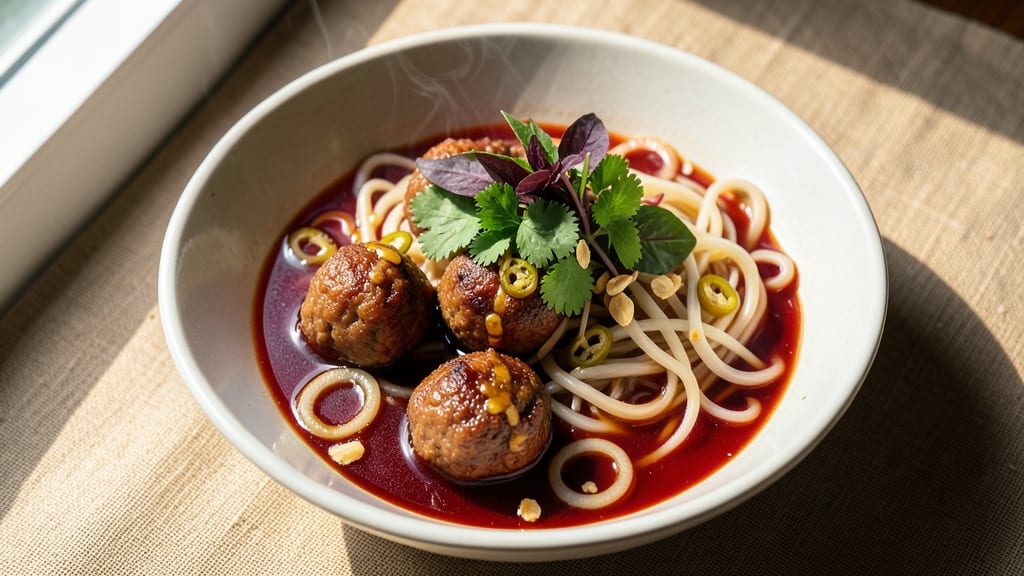
This beef ball pho recipe transforms traditional pho into a texturally exciting dish where crispy wok-seared beef balls meet a silky star-anise broth.
The secret lies in two key techniques: first, marinating ground beef with fish sauce and garlic to develop deep umami, then flash-searing the balls in a hot wok until they achieve that coveted crust.
Meanwhile, the broth simmers with aromatic spices and slow-cooked beef bones, creating a rich foundation that balances the bold beef flavor.
The result is a restaurant-quality bowl where each component plays its part—tender rice noodles soak up the fragrant broth, fresh herbs add brightness, and those crispy beef balls provide satisfying texture with every bite.
What sets this apart is the dual-cooking method for the beef: ground beef for the balls and bone-in beef for the broth, ensuring maximum flavor in every spoonful. The star-anise infuses the broth with subtle sweetness, while lime and chili bring the dish to vibrant life.
Plating is where the magic happens—arrange the beef balls artfully on top of steaming noodles, ladle the golden broth generously, and scatter fresh herbs and bean sprouts for color and crunch.
The contrast between the crispy exterior of the beef balls and the silky broth creates a sensory experience that feels both comforting and sophisticated. This isn't just pho; it's a textural masterpiece that elevates the humble beef ball to star status.
Perfect for weeknight dinners or special occasions, this recipe delivers authentic Vietnamese flavors with a modern twist. The beef balls can be made ahead and reheated in the wok for that signature crisp, while the broth freezes beautifully for future use.
Whether you're serving a crowd or treating yourself, this beef ball pho brings restaurant-quality results to your kitchen.
Ingredients for beef ball pho
Authentic Vietnamese flavors meet modern wok techniques in this beef ball pho.
| Ingredient | Amount | Notes |
|---|---|---|
| Ground Beef (80/20 fat ratio) 🥩 | 1 ½ lb | Lean but retains moisture for searing |
| Beef Bones (marrow or knuckle) 🦴 | 2 lb | For rich, gelatinous broth |
| Fish Sauce 🍶 | 2 tbsp | Red Boat brand preferred |
| Garlic Cloves 🧄 | 8 cloves | Minced for marinade and broth |
| Star-Anise Pods 🌟 | 2 whole | Whole for easy removal |
| Cinnamon Sticks 🌿 | 2 whole | 1-inch pieces for broth |
| Dried Coriander Seeds 🌶️ | 1 tbsp | Toasted for aromatic depth |
| Dried Ginger 🌿 | 1 tsp | Freshly grated preferred |
| Rice Noodles (Banh Pho) 🍜 | 8 oz | Flat rice noodles, 3-inch width |
| Fresh Thai Basil 🌿 | ½ cup | Stems removed for garnish |
| Bean Sprouts 🌱 | 1 cup | Fresh, rinsed thoroughly |
| Lime Wedges 🍋 | 4 whole | Freshly cut for serving |
| Red Chili Peppers 🌶️ | 2 whole | Thinly sliced, for heat |
| Vegetable Oil 🫒 | ½ cup | High smoke point for searing |
| Sesame Oil 🫒 | 1 tbsp | Toasted for finishing |
| Soy Sauce 🥢 | 2 tbsp | For beef ball marinade |
| Cornstarch 🌾 | 1 tbsp | For beef ball binding |
The ground beef and bones are the foundation—80/20 fat ratio ensures juicy beef balls, while marrow bones create a luxurious, gelatin-rich broth. For the beef, Costco or local Asian markets often carry pre-ground 80/20, but if not, ask your butcher to grind it fresh. The bones should be raw and uncooked, with visible marrow for maximum flavor. Star-anise and cinnamon are critical for that signature pho aroma; Penzeys Spices sells whole pods that stay potent for months. Toast the coriander seeds in a dry pan for 30 seconds before adding to the broth—they release their essential oils and transform the flavor profile.
No fish sauce? Soy sauce plus a splash of Worcestershire mimics the umami, though it won't be identical. Substitute fresh ginger with powdered at half the amount, but the texture won't be the same. For the beef balls, cornstarch is non-negotiable—it binds the meat and creates that signature crisp. If you can't find banh pho noodles, rice vermicelli works in a pinch, though the texture will differ slightly. The Thai basil should be fresh—dried won't have that same bright, anise-like flavor. And for the chili, bird's eye peppers deliver authentic heat, but serrano or jalapeño will work if that's what you have.
Broth freezes beautifully for up to 3 months—just reserve 2 cups before freezing to maintain consistency. Beef balls can be prepped ahead and refrigerated for 2 days or frozen for 1 month. Reheat them in the wok for 2-3 minutes to restore that crispy exterior. Fresh herbs like Thai basil and bean sprouts should be stored separately in airtight containers with a paper towel to absorb moisture. The lime wedges keep for 1 week in the fridge, but their flavor peaks within the first 3 days.
Why You'll Love This Recipe
- Same base, endless twists: serve it with rice and fresh herbs for a quick dinner, or add lime and basil for a bowl that feels fancy enough for guests. (Yes, even on a Tuesday night.)
- No-Chop Necessary: I swear by this—just brown the beef balls and toss in whole spices. The star-anise and garlic cloves infuse the broth without a single knife stroke. Honestly, my lazy Sundays love this.
- Rich Without Fuss: That 80/20 ground beef and beef bones? They melt into a broth so deep and savory, you’ll forget it’s not from a 12-hour simmer. Fish sauce ties it all together—salty, umami, chef’s kiss.
- Weeknight to Party: Same base, endless twists: serve it with rice and fresh herbs for a quick dinner, or add lime and basil for a bowl that feels fancy enough for guests. (Yes, even on a Tuesday night.)
Step-by-step instructions for beef ball pho
Here's how to craft a pho experience where wok-seared beef balls meet aromatic star-anise broth.
Prepare the Beef Balls for Maximum Crunch
In a large mixing bowl, combine the 1.5 lb ground beef (80/20 fat ratio), 2 tbsp soy sauce, 1 tbsp cornstarch, 8 minced garlic cloves, and 1 tsp dried ginger. Using your hands, gently mix until just combined—overworking will make the beef tough. Form into 1-inch balls (about 12 total) and place on a plate.
Refrigerate the beef balls for 30 minutes to firm up slightly. This chilling step is crucial—it prevents the balls from falling apart when searing. While they rest, toast the 1 tbsp dried coriander seeds in a dry skillet over medium heat for 1 minute until fragrant. Grind them lightly with a mortar and pestle or spice grinder for extra aromatic depth.
Build the Star-Anise Broth Foundation
In a 6-quart pot, combine the 2 lb beef bones (marrow or knuckle), 2 whole star-anise pods, 2 whole cinnamon sticks, and 1 cup water. Bring to a boil over high heat, then reduce to a simmer. Skim off any foam that rises to the surface for the first 10 minutes—this ensures clarity.
Add 2 tbsp fish sauce and 1 tbsp toasted coriander seeds. Simmer uncovered for 2 hours, maintaining a gentle boil. The broth should reduce slightly and develop a deep, aromatic color. Strain through a fine-mesh sieve into a clean pot, pressing gently on the solids to extract maximum flavor. Discard the bones and aromatics.
Sear the Beef Balls to Perfection
Heat 0.5 cup vegetable oil in a 14-inch wok or skillet over high heat until shimmering. Working in batches to avoid crowding, sear the beef balls for 2-3 minutes per side until deep golden brown and crispy. They should release easily from the pan—if they stick, your oil isn't hot enough. Transfer to a paper towel-lined plate to drain excess oil.
In the same wok, add a splash of the reserved broth to deglaze, scraping up any browned bits. Return the beef balls to the wok and toss with 1 tbsp sesame oil to coat evenly. Keep warm while you prepare the noodles.
Assemble the Pho Bowls
Bring a large pot of water to a boil and add the 8 oz rice noodles (banh pho). Cook for 4-5 minutes until tender but still slightly firm. Drain immediately and divide among 4 bowls. Ladle 1.5 cups hot broth over each portion.
Top each bowl with 2-3 beef balls, 0.25 cup bean sprouts, 0.125 cup fresh Thai basil, 1 lime wedge, and 0.5 sliced red chili pepper. Serve immediately with extra lime wedges and chili on the side for customization.
Master the Dipping Sauce Technique
For the ultimate pho experience, instruct guests to dip the noodles into the broth to soften them further. The contrast of the crispy beef balls against the silky broth and chewy noodles creates each bite's perfect texture. Serve with extra bean sprouts and Thai basil for garnishing.
This method delivers restaurant-quality pho where every element—from the wok-seared beef balls to the star-anise-infused broth—works in harmony. The key is balancing the high-heat sear with the gentle broth simmer, ensuring each component shines without overpowering the others.
Pro Tips For Making Beef Ball Pho
- STIR THE BEEF FAST: High heat for the ground beef isn’t just about browning—it’s about rendering fat fast before the balls form. I used to let it simmer, and my broth turned greasy instead of rich. Hit medium-high and keep it moving for 2-3 minutes until the meat fragments but doesn’t stick. That’s when you’ll get the deep umami flavor locked into the broth.
- BLANCH THE BONES FIRST: Skip the slow roast for beef bones if you’re short on time. Plunge them in boiling water for 10 minutes to remove impurities, then rinse and pat dry. This cuts the broth-clearing step later—no more skimming scum for hours. (Yes, even if you’re impatient like me.)
- CRUSH STAR-ANISE HARD: Whole star-anise pods? Too subtle. Lightly crush them with the flat side of a knife or roll a heavy pan over them. This releases more flavor without turning the broth bitter. I learned this the hard way after tasting a batch where I’d just tossed them in whole—like chewing on a toothpick.
- SALT THE BROTH IN STAGES: Add fish sauce early, but hold off on extra salt until the broth reduces by half. The bones release collagen slowly, and salting too soon masks the depth of flavor developing. Taste at the 2-hour mark—you’ll likely need just ½ teaspoon more to balance the sweetness from the marrow bones.
Serving suggestions for this recipe
Noodle Presentation
Arrange the 8 oz rice noodles (banh pho) in a loose pile at the center of each bowl, leaving space for the beef balls and toppings. The goal is to create a visual anchor that draws the eye to the heart of the bowl.
I like to use a pair of tongs to gently spread the noodles slightly—just enough to create an inviting texture without breaking them. For extra flair, use a spoon to create a small well in the center where the beef balls can nestle. 🍜
Broth Ladling Technique
Ladle the hot broth carefully over the noodles, starting from the outer edges and working toward the center. This prevents the noodles from becoming soggy too quickly and allows guests to customize their bowl by dipping.
I use a ladle with a medium-wide opening to create a gentle cascade, ensuring the broth covers the noodles evenly. For the first serving, I always ladle an extra ½ cup broth to demonstrate the perfect amount.
Topping Placement
Place the beef balls strategically—position 1-2 at the top of the noodle pile and arrange the remaining 1-2 around the edges. This creates visual balance and ensures each bite includes both the crispy exterior and the tender interior.
Scatter the bean sprouts and Thai basil lightly over the beef balls, focusing on the top half of the bowl. The fresh herbs should peek out from between the beef balls for a vibrant contrast. 🌿
Garnish Finishing Touches
Add the lime wedge and sliced red chili peppers to the side of each bowl, not on top. This allows guests to customize their heat and acidity levels. For an elegant touch, I drizzle a few drops of sesame oil around the edges of the bowl just before serving.
This adds a subtle aroma and enhances the overall presentation. The final step? A quick sprinkle of toasted coriander seeds over the beef balls for an extra layer of flavor and visual appeal. ✨
Serving Style Variations
For a more casual gathering, serve the beef balls and toppings in a shared platter with individual bowls of broth and noodles. This family-style approach encourages sharing and creates a communal dining experience.
For special occasions, I arrange the bowls on a wooden serving tray with a small bowl of extra broth in the center. The key is to keep the presentation simple yet intentional—every element should feel purposeful and delicious. 🍽️
Nutrition facts
Frequently asked questions
Why do the beef balls need to chill before searing?
The 30-minute chilling prevents the beef balls from falling apart when they hit the hot wok. Cold meat firms up, creating a better sear and that perfect crispy exterior. Plus, it gives you time to toast the coriander seeds for maximum aroma!
Can I make the broth ahead of time?
Yes! The broth freezes beautifully for up to 3 months. Just reserve 2 cups before freezing to maintain consistency when reheating. For best results, thaw overnight in the fridge and reheat gently on the stove. The flavors actually deepen over time!
What if I don't have a wok?
No problem! Use a 14-inch skillet with high sides. The key is maintaining high heat for that signature sear. Work in batches to avoid crowding, and keep the oil hot enough to get those golden-brown beef balls. A cast-iron skillet works perfectly!
How do I adjust the spice level?
For milder heat, reduce the chili to 1 pepper total or use a milder variety like serrano. For extra spice, add 1 tsp chili flakes to the broth or serve with extra sliced jalapeños. The lime juice also helps balance heat—don't skip it!
Can I use ground turkey instead of beef?
You can try, but the texture and flavor will differ. Ground turkey is leaner, so add 1 tbsp oil to the mix and increase the cornstarch to 2 tbsp for better binding. The beef balls won't be as rich, but they'll still work in a pinch!