
Sauces & Condiments
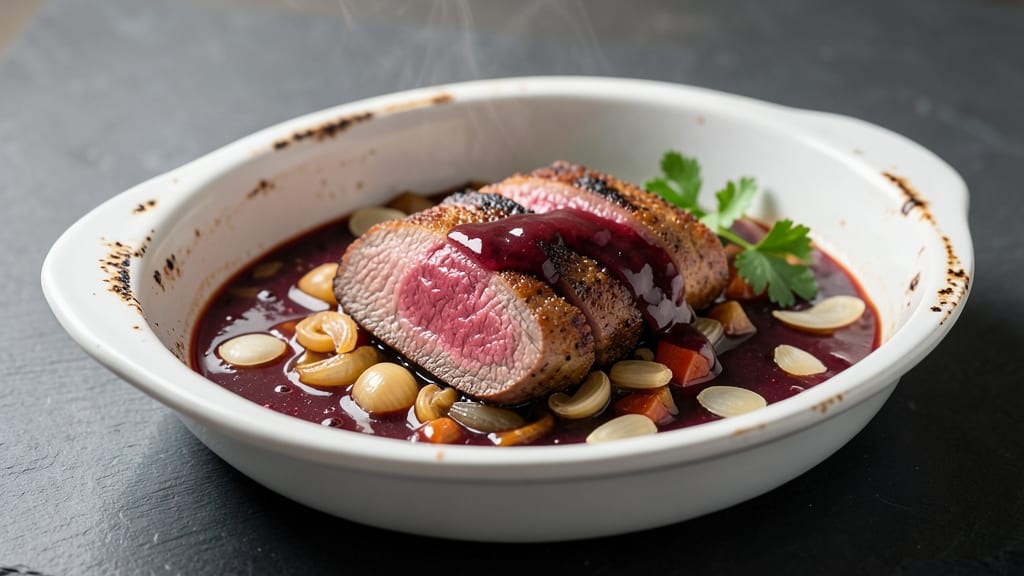
This beef au jus sauce recipe transforms humble pan drippings into a deep, wine-red elixir that elevates roasts, sandwiches, and dipping sauces alike. The secret lies in slow reduction—where beef stock, red wine, and aromatic vegetables meld into a velvety sauce with bold umami depth and just the right tang.
I've perfected this method over years of holiday roasts, where a single spoonful turns simple beef into a restaurant-worthy centerpiece.
The process begins with pan drippings—never wasted, always transformed. By adding red wine, beef stock, and a bouquet of aromatics, we create a foundation rich enough to stand alone or complement any beef dish.
The key? Patience—simmering until the sauce reduces to a glossy, concentrated consistency that clings to every bite. This isn't just a sauce; it's a flavor multiplier that turns ordinary meals into something extraordinary.
What makes this recipe truly special is its versatility. Use it to baste a roast for maximum flavor, drizzle over sandwiches for a gourmet touch, or serve as a dipping sauce for crusty bread.
The sauce keeps beautifully in the fridge for up to 5 days and reheats like a dream—no lumps, no separation, just restaurant-quality richness every time. Once you master this technique, you'll never buy store-bought au jus again.
For those who love homemade depth, this sauce delivers layers of flavor that bottled versions can't match. The red wine adds brightness, the beef stock brings richness, and the slow reduction concentrates every nuance into a savory, slightly tangy masterpiece.
Whether you're hosting a dinner party or simply craving a taste of fine dining, this beef au jus sauce is your secret weapon. Let's get started on creating something truly unforgettable.
Ingredients for beef au jus sauce
Pan drippings, red wine, and aromatic vegetables create a velvety sauce with bold umami depth.
| Ingredient | Amount | Notes |
|---|---|---|
| Pan Drippings 🥩 | 2 cups | From roasted beef, strained |
| Dry Red Wine 🍷 | 1 cup | Bold variety like Cabernet Sauvignon |
| Beef Stock 🍲 | 2 cups | Homemade or high-quality store-bought |
| Shallots 🧅 | 2 whole | Minced, about 0.25 cup |
| Garlic Cloves 🧄 | 4 cloves | Minced, for aromatic depth |
| Carrots 🥕 | 1 whole | Peeled, cut into chunks |
| Celery Stalks 🧅 | 2 whole | Cut into 1-inch pieces |
| Fresh Thyme 🌿 | 1 tbsp | Leaves only, stems removed |
| Black Peppercorns 🌶️ | 10 whole | Crushed, for subtle heat |
| Unsalted Butter 🧈 | 2 tbsp | For finishing richness |
The pan drippings are the foundation—never waste them! For the best flavor, use drippings from a well-marbled roast like chuck or ribeye. Costco or Whole Foods often carry pre-cut chuck roasts perfect for this. The red wine should be bold and dry—Cabernet Sauvignon or Merlot work beautifully. If you're using store-bought beef stock, look for brands like Kitchen Basics or Pacific Foods for maximum richness. Fresh thyme is ideal, but dried works at one-third the amount if you're in a pinch. The shallots and garlic are non-negotiable—they build the aromatic base that makes this sauce sing.
No red wine? Beef broth with a splash of balsamic vinegar gets you close, though the depth won't be identical. Fresh thyme unavailable? Dried thyme at one-third the amount will suffice. The carrots and celery can be swapped for frozen vegetable mix if needed, though fresh is always better. For extra umami, add a teaspoon of Worcestershire sauce (ensure it's vegetarian if needed). The butter at the end adds a luxurious finish—European-style butter like Plugrá melts beautifully. If you're making a big batch, double the ingredients and reduce accordingly.
This sauce is best made fresh, but it reheats beautifully—simply warm over low heat with a splash of water or stock. Store in an airtight container in the fridge for up to 5 days, or freeze for 3 months. For serving, strain through a fine-mesh sieve to achieve that silky texture. The sauce thickens as it cools, so add a splash of water or stock if it becomes too concentrated. Leftovers make an incredible sandwich spread or roast basting sauce the next day.
Why You'll Love This Recipe
- No-Waste Magic: I swear by the pan drippings—no extra shopping, just what’s left after cooking the beef. That golden, caramelized goodness? Pure flavor without a single added ingredient.
- Rich Without Effort: The red wine and beef stock do all the work—simmer them together, and suddenly, your sauce tastes like it’s been simmering for hours. (Spoiler: It’s not. But who’s counting?)
- Game for Any Meal: Slather it on steak, drizzle it over mashed potatoes, or use it to deglaze a pan for next night’s dinner. It’s the kind of sauce that makes you feel like a chef without trying too hard.
- Budget-Friendly Luxury: A splash of wine and a few aromatics turn cheap cuts of beef into something special. Honestly, this is how I feed my family well without breaking the bank.
Step-by-step instructions for beef au jus sauce
Here's how to transform simple pan drippings into velvety, restaurant-worthy au jus.
Sauté Aromatics Until Fragrant
Heat a large, heavy-bottomed saucepan over medium heat. Add the 2 whole shallots, 1 whole carrot cut into chunks, and 2 whole celery stalks cut into 1-inch pieces. Cook for 8-10 minutes until the vegetables soften and begin to caramelize slightly at the edges.
This foundational step builds flavor depth. The shallots should turn translucent and the carrots should yield to gentle pressure with a fork. Add the 4 cloves garlic cloves and 10 whole black peppercorns (crushed lightly) 2 minutes before the vegetables are tender. The garlic should just begin to turn golden—don't let it brown or it'll turn bitter.
Deglaze with Wine and Stock
Pour in the 1 cup dry red wine immediately after removing the pan from heat. The wine will sizzle dramatically—this is normal. Return the pan to medium heat and let it simmer for 3-4 minutes until reduced by half. Use a wooden spoon to scrape up any browned bits from the bottom of the pan—they're packed with flavor.
Add the 2 cups beef stock and bring to a gentle simmer. Stir in the 1 tablespoon fresh thyme leaves and the 2 cups pan drippings. The mixture should bubble gently but not boil vigorously. Simmer uncovered for 15-20 minutes until the liquid reduces by about one-third and the sauce thickens slightly. You'll see the color deepen to a rich, wine-red hue.
Finish with Butter for Richness
Remove the pan from heat and let it cool slightly for 2-3 minutes. Whisk in the 2 tablespoons unsalted butter until completely melted and emulsified. The sauce should become glossy and slightly thickened. Taste and adjust seasoning—this is your final opportunity to balance flavors. You may need to add a pinch of salt if your pan drippings weren't heavily seasoned.
For the smoothest texture, strain the sauce through a fine-mesh sieve into a clean saucepan. This removes any vegetable pieces but preserves all the flavorful liquid. Return to low heat and keep warm until ready to serve. The sauce should coat the back of a spoon and have a velvety consistency, not watery or overly thick.
Pro Tips For Making Beef Au Jus Sauce
- DEGLAZE HOT, NOT HURRY: Start with a screaming-hot pan right after removing your beef—those drippings will release like magic. I used to let it cool even a little, and the wine would just sit there, barely lifting. Scrape every last bit with a wooden spoon while the pan’s still smoking, then pour in that wine immediately.
- MINCE SHALLOTS SMALL: Tiny shallots mean flavor in every bite, not just chunks you pick out. Use a sharp knife and chop them into confit-like bits—think rice-sized, not dice. I learned this the hard way when my au jus tasted like it was missing something. (Yes, even if you’re impatient like me.)
- REDUCED STOCK IS BETTER: Skip the pre-made beef stock shortcut—it’s the fast track to watery sauce. Simmer your own stock down to a syrupy consistency (about 1/3 original volume) before adding it to the wine reduction. The extra effort gives you that rich, velvety texture you actually pay for in restaurants.
- STRAIN OUT GARLIC BITS: Overcooked garlic turns bitter, and whole cloves can make your sauce gritty. After sautéing, strain the aromatics through a fine-mesh sieve before adding liquid. I was skeptical until I tried it—now I can’t imagine serving au jus without it. (Your future self will notice.)
Common mistakes when making this recipe
Over-Reducing the Sauce
I’ve seen this happen more times than I can count—someone simmers the sauce too long, and suddenly it’s thick enough to coat a spoon like syrup. The result? A sauce that’s more like glue than liquid gold.
The goal is to reduce the liquid by about one-third, not evaporate it completely. Keep an eye on the sauce after the 15-20 minutes of simmering—it should still glide easily off a spoon, not cling stubbornly.
If it starts to thicken too much, add 1-2 tablespoons of warm beef stock to loosen it up. 💫
Skipping the Deglaze
The deglaze step isn’t just for flavor—it’s where the magic happens! Pouring in the 1 cup dry red wine immediately after sautéing the aromatics lifts all those delicious browned bits from the bottom of the pan. These bits are packed with umami-rich compounds that give the sauce its depth.
If you skip this step, you’re missing out on layers of flavor that make this sauce truly special. Pro tip: Use a wooden spoon to scrape up every last bit—don’t let a single drop go to waste!
Using Low-Quality Wine or Stock
This is a classic rookie mistake. Cheap wine or store-bought beef stock with artificial flavors will make your sauce taste flat and one-dimensional. Invest in a bold red wine like Cabernet Sauvignon—it adds brightness and complexity.
For stock, homemade is best, but if you’re using store-bought, brands like Kitchen Basics or Pacific Foods (which use real beef bones and vegetables) make a noticeable difference. The stock is the backbone of your sauce, so don’t skimp here. Trust me, your taste buds will thank you.
Ignoring the Butter Finish
The 2 tablespoons unsalted butter at the end isn’t just for richness—it’s what gives the sauce that silky, velvety texture that makes it feel luxurious. Whisk it in slowly while the sauce is still warm to emulsify it properly.
If you skip this step, the sauce will taste flat and lack that restaurant-quality finish. For extra decadence, use European-style butter like Plugrá—it melts beautifully and adds a subtle nutty flavor. Don’t overlook this final touch!
Not Straining the Sauce
Straining the sauce through a fine-mesh sieve might seem like an extra step, but it’s worth it for that smooth, silky texture that makes this sauce feel truly special. Vegetable bits can make the sauce grainy, and no one wants to deal with that while enjoying their meal.
If you’re short on time, you can skip this step, but the texture won’t be as refined. For the best results, always strain—it’s the secret to a sauce that looks and feels professional. 🌟
Rushing the Simmering Process
Patience is key when making au jus. If you rush the simmering process, the flavors won’t have enough time to meld together, and the sauce will taste harsh or underdeveloped. The 15-20 minutes of simmering allow the wine, stock, and aromatics to marry into a cohesive flavor profile.
Don’t be tempted to crank up the heat—keep it at a gentle simmer to avoid boiling off the alcohol too quickly. This step is where the sauce transforms from good to extraordinary, so take your time. 🔥
Nutrition facts
Frequently asked questions
Can I make this au jus sauce without red wine?
Yes! For a non-alcoholic version, substitute the 1 cup red wine with 1 cup beef broth plus 2 tablespoons balsamic vinegar. The vinegar adds acidity to mimic the wine's tang. For extra depth, add 1 teaspoon soy sauce or Worcestershire sauce (ensure it's vegetarian if needed). The flavor won't be identical, but it'll still be delicious.
How do I use leftover au jus sauce?
This versatile sauce works beautifully in so many ways! Drizzle it over sliced roast beef sandwiches, use it as a dipping sauce for crusty bread, or pour it over mashed potatoes for extra richness. It also elevates beef tacos, grilled steaks, or even as a gravy for meatloaf. Store leftovers in an airtight container in the fridge for up to 5 days or freeze for 3 months.
Why did my sauce turn cloudy?
Cloudiness often happens when the sauce hasn't reduced enough or contains too many vegetable particles. For a clearer sauce, strain it through a fine-mesh sieve after simmering. If it's still cloudy, simmer it uncovered for another 5-10 minutes to reduce further. The sauce should be glossy and wine-red, not murky—this indicates proper reduction and clarity.
Can I make this sauce without pan drippings?
If you don't have pan drippings, simply increase the beef stock to 3 cups and add 1 tablespoon beef bouillon powder for extra depth. The flavor won't be identical, but it'll still be rich and satisfying. For even more umami, add 1 teaspoon soy sauce or 1/2 teaspoon fish sauce (if you're not avoiding seafood).
How do I reheat au jus sauce?
Reheat gently over low heat on the stovetop, stirring occasionally. If the sauce thickens too much, add 1-2 tablespoons warm beef stock or water to loosen it. For microwave reheating, transfer to a microwave-safe dish, cover loosely, and heat in 30-second intervals, stirring between each. The sauce should be warm but not boiling—just hot enough to serve immediately.