
Main Courses
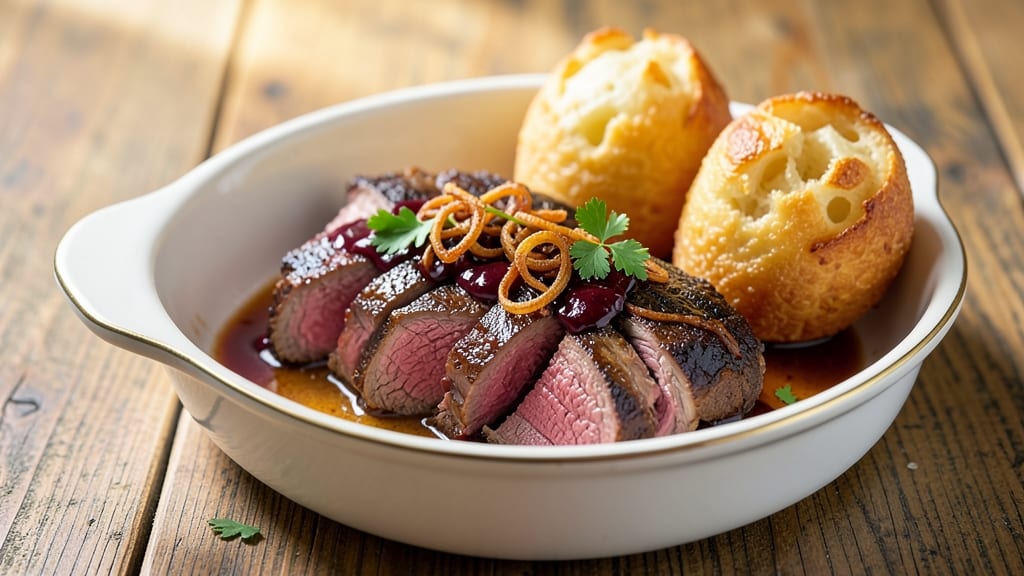
This beef and Yorkshire pudding recipe transforms a Sunday roast into a showstopping centerpiece. 💛 The secret lies in perfectly crisped puddings that crown tender beef, creating a dish that feels like a pub classic.
I’ve refined this technique over years—balancing rich beef flavors with golden, airy puddings that hold their shape even after resting. The beef requires careful roasting (or pan-searing) to achieve tender, juicy results, while the Yorkshire pudding batter relies on precise timing and high heat for those coveted crispy crowns.
The key is baking the puddings directly on the roasting tray, where their steam infuses the beef with savory depth. Gravy ties it all together, soaking into every bite. What you’ll end up with is a restaurant-quality meal that’s impressive yet approachable—ideal for family gatherings or cozy weeknight dinners.
The puddings stay crispy, the beef melts in your mouth, and the gravy elevates everything. Serve with roasted potatoes and seasonal vegetables for a complete Sunday spread. This recipe delivers on tradition without compromise. Let’s get cooking!
Ingredients for beef and yorkshire pudding
Quality beef and simple pantry staples create a Sunday roast with restaurant-worthy crispy crowns.
| Ingredient | Amount | Notes |
|---|---|---|
| Beef Chuck Roast 🥩 | 2 lb | Center-cut for even cooking |
| All-Purpose Flour 🌾 | 1 cup | For Yorkshire pudding batter |
| Large Eggs 🥚 | 2 whole | Room temperature preferred |
| Whole Milk 🥛 | ¾ cup | Full-fat for richness |
| Beef Stock 🍲 | 1 ½ cups | Homemade or high-quality store-bought |
| Unsalted Butter 🧈 | ½ cup | Cold, cubed for gravy |
| Fresh Rosemary 🌿 | ¼ cup | Chopped, for seasoning |
| Garlic Cloves 🧄 | 4 cloves | Minced for beef seasoning |
| Kosher Salt 🧂 | 1 ½ tsp | Diamond Crystal preferred |
| Ground Black Pepper 🌶️ | 1 tsp | Freshly ground preferred |
| Olive Oil 🫒 | 2 tbsp | For roasting tray |
| Fresh Parsley 🌿 | ¼ cup | Chopped, for garnish |
| Russet Potatoes 🥔 | 2 lb | For roasted side dish |
The beef is non-negotiable—chuck roast delivers that melt-in-your-mouth texture, while sirloin stays too tough. Costco or Whole Foods often carry excellent pre-trimmed cuts, but if you're buying whole, look for good marbling and ask the butcher to trim it evenly. Fresh rosemary from the grocery store's produce section (not the dried aisle) makes all the difference—it's brighter and more aromatic. For the flour, King Arthur or Gold Medal brands are reliable for consistent Yorkshire puddings. The beef stock should be rich and homemade if possible, but Kettle & Fire or Pacific Foods brands work in a pinch.
No chuck roast? Ribeye or top round can substitute, but expect different textures—ribeye stays juicier but less tender after long cooking. Fresh rosemary wilting? Dried rosemary at one-third the amount works, but toast it lightly in a dry pan first to wake up the flavor. The milk must be full-fat for proper pudding rise—no skim here. For the potatoes, Yukon Golds hold up better than Russets when roasted alongside, but stick with Russets if you're making crispy sides separately. The garlic should be fresh—jarred minced garlic lacks the punch needed for seasoning the beef properly.
Store the roast uncovered in the fridge for 24 hours before cooking to dry the surface slightly—this ensures better browning. Fresh rosemary keeps wrapped in damp paper towels for 5-7 days, while dried can last 6 months in a cool, dark place. The Yorkshire pudding batter should be mixed last minute and kept at room temperature—never refrigerate it before baking. Leftover beef reheats best in a low oven with a splash of beef stock to keep it moist, while puddings are best eaten fresh but can be reheated briefly in a toaster oven for 30 seconds to restore crispness.
Why You'll Love This Recipe
- One-Pot Magic: I swear by this trick—just brown the beef, dump in the stock, then nestle those golden Yorkshire puddings right on top. No extra pans, no extra stress. The steam does half the work while you sip your wine (or tea, no judgment).
- Deep, Rich Bite: That beef chuck roast? It turns insanely tender, falling apart like a dream, all thanks to slow simmering in beef stock. And the puddings? Crispy outside, pillowy inside—like biting into a cloud that somehow tastes like Sunday dinner.
- Weeknight to Dinner Party: Make it for yourself on a Tuesday with half the effort, or scale it up for guests by doubling the pudding batter. The same hands-off method works both times—just adjust the roast size. My in-laws think I’m a genius. (They’re not wrong.)
- Leftovers That Win: The beef stays juicy for days, perfect for sandwiches or reheating with a splash of stock. The puddings? Toast them up fresh—they’re even better the next day, like crispy little beefy croutons. Budget-friendly? Absolutely. Waste-free? Even better.
Step-by-step instructions for beef and Yorkshire pudding
Master this classic Sunday roast with perfectly crisp Yorkshire puddings and fall-apart beef.
🍳 Step 1: Prepare the Beef and Potatoes for Roasting
Preheat your oven to 425°F. Pat the 2 lb beef chuck roast dry with paper towels—this is critical for crispy edges. Rub it generously with 1.5 tsp kosher salt, 1 tsp ground black pepper, and 0.25 cup chopped fresh rosemary. Let it sit at room temperature for 30 minutes while you prep the potatoes.
Cut the 2 lb russet potatoes into 1-inch chunks and toss them in a bowl with 2 tbsp olive oil, 1 tsp kosher salt, and ½ tsp black pepper. Spread the potatoes on a rimmed baking sheet in a single layer. Place the beef on top of the potatoes—this creates steam that keeps the beef moist while the potatoes roast.
🔥 Step 2: Roast the Beef and Potatoes Together
Roast the beef and potatoes for 30 minutes uncovered. After this initial sear, reduce the oven temperature to 325°F and continue roasting for an additional 2-2.5 hours until the beef reaches an internal temperature of 195-200°F (use a meat thermometer).
Here's the thing—this low-and-slow method ensures tender beef with a rich, caramelized crust. If the potatoes start to brown too quickly, tent them loosely with foil after the first hour. The beef will continue cooking even after you remove it from the oven, so don't rush it.
👨🍳 Step 3: Make the Yorkshire Pudding Batter
While the beef roasts, prepare the Yorkshire pudding batter. Whisk together 1 cup all-purpose flour, 1.5 tsp kosher salt, and 1 tsp black pepper in a medium bowl. In a separate bowl, beat the 2 whole large eggs until frothy, then whisk in the 0.75 cup whole milk.
Gradually pour the wet ingredients into the dry ingredients while whisking continuously until you have a smooth, lump-free batter. The consistency should be like heavy cream—thick but pourable. Let the batter rest at room temperature for 30 minutes before using. This resting period relaxes the gluten, which helps create those signature crispy, airy puddings.
🔥 Step 4: Cook the Yorkshire Puddings
Heat 0.5 cup unsalted butter in a 12-inch cast-iron skillet over medium-high heat until it foams and sizzles. Pour the rested batter into the skillet, dividing it into 4 equal portions (about ¼ cup each) using a spoon. Immediately reduce the heat to medium-low.
Bake for 18-22 minutes until the puddings are puffed and deep golden brown on top. Don't open the oven door during cooking—this causes them to collapse. You'll know they're done when they've risen dramatically and the tops are crispy. Remove from the oven and let them rest for 2 minutes before serving.
🥘 Step 5: Rest the Beef and Make the Gravy
Transfer the beef to a cutting board and tent loosely with foil. Let it rest for 30 minutes—this allows the juices to redistribute, ensuring each slice is moist and flavorful. Skim the fat from the roasting pan (leave about 2 tbsp for flavor) and place it over medium heat.
Add 1.5 cups beef stock and scrape up any browned bits from the bottom of the pan with a wooden spoon. Bring to a simmer and cook for 5-7 minutes until slightly thickened. Strain the gravy through a fine-mesh sieve into a saucepan and whisk in the 0.5 cup cold unsalted butter until smooth. Season with additional salt and pepper if needed.
Pro Tips For Making Beef And Yorkshire Pudding
- Sear the Chuck First: A hot cast-iron pan with 1 tablespoon of oil—get that beef chuck roast screaming brown on all sides before you even think about adding onions or garlic. I used to skip this, and my roast ended up tough and gray; now it stays tender and develops that deep, caramelized flavor that makes the whole dish sing.
- Whisk the Batter Hard: No lumps allowed—whisk your flour, eggs, and milk until it’s smoother than a Sunday sermon. After burning three batches of Yorkshire pudding, I finally realized the batter needed to be actually combined, not just stirred. Use a fork if you’re lazy, but don’t cut corners here.
- Use Cold Stock for Pudding: Chill your beef stock overnight before using it to fill the pudding tin. Hot stock will cook the batter too fast, leaving you with sad, flat puffs instead of crispy towers. I learned this the hard way—now I always prep the stock the night before.
- Don’t Overfill the Tin: The pudding tin should be half full at most—any more, and you’ll end up with a greasy, dense mess instead of golden, crispy clouds. I was skeptical until I tried it, but now I measure the batter and resist the urge to add extra. Trust me, it’s worth it.
Flavor customization for this beef and yorkshire pudding
Herb-Infused Variations
Swap the rosemary for thyme and bay leaf for a French-inspired twist—simmer the beef with 2 sprigs fresh thyme and 1 bay leaf instead. The earthy notes pair beautifully with the crispy puddings.
I also love adding 1 tbsp chopped sage to the beef rub for a more robust herbal profile that stands up to the richness. 🌿
Spicy Kick Options
For heat lovers, add ½ tsp smoked paprika and ¼ tsp cayenne pepper to the beef rub. The smoky depth complements the crispy puddings perfectly. You can also stir 1 tsp hot honey into the gravy at the end for a sweet-spicy balance that cuts through the richness.
Trust me, this elevates the whole dish to new levels. 🌶️
Cheesy Yorkshire Twist
Transform the puddings into cheddar-stuffed Yorkshire puddings by mixing ¼ cup grated sharp cheddar into the batter. For extra decadence, add 2 tbsp cream cheese to the center of each pudding before baking. The melted cheese creates a gooey surprise in every bite that pairs perfectly with the beef. 🧀
Mushroom Gravy Upgrade
Sauté 8 oz sliced cremini mushrooms in the roasting pan after removing the beef, then deglaze with ½ cup red wine before adding the beef stock. The umami depth from the mushrooms transforms the gravy into a rich, velvety sauce that coats every bite.
This works especially well with the herb-infused beef variations. 🍄
Sweet Glaze Option
For a sweet-savory contrast, brush the beef with a mix of 2 tbsp balsamic vinegar and 1 tbsp brown sugar during the last 30 minutes of roasting.
The caramelized glaze adds complexity that pairs wonderfully with the crispy puddings. Serve with a side of roasted carrots to complement the sweetness. 🍯
Vegetarian Adaptation
Replace the beef with 2 lb portobello mushrooms or 1 large eggplant cut into chunks. Marinate them in 2 tbsp olive oil, 1 tbsp soy sauce, and 1 tsp smoked paprika for 30 minutes before roasting alongside the potatoes.
The meaty texture works surprisingly well with the Yorkshire puddings. 🌱
Nutrition facts
Frequently asked questions
Can I use a different cut of beef instead of chuck roast?
Yes, but with adjustments! For a quicker cook, try ribeye steak (sear for 4-5 minutes per side at 450°F), or top round (requires longer braising). Chuck roast is ideal because its fat content keeps it tender during slow roasting. If substituting, reduce cooking time by 30-45 minutes and check doneness early.
Why did my Yorkshire puddings collapse?
Most likely, you opened the oven door too soon or used cold batter. Yorkshire puddings need high heat (425°F+) and undisturbed cooking. Let the batter rest 30 minutes at room temperature before using, and avoid peeking! Also, ensure your butter is hot enough to foam before adding batter.
How do I make Yorkshire puddings ahead of time?
Puddings are best fresh, but you can reheat them! Wrap cooled puddings in foil and reheat in a 350°F oven for 10 minutes or use a toaster oven for 30 seconds to restore crispness. For the beef, cook it 1-2 days ahead, slice thinly, and reheat in gravy with a splash of beef stock to keep it moist.
Can I make this recipe in a slow cooker?
Not for the beef—slow cooking won't give you the crispy crust needed for this dish. However, you can make the gravy in a slow cooker by adding the beef stock and browned bits, then cooking on low for 4 hours or high for 2 hours. For the puddings, stick to the oven method—they need that intense heat to puff properly.
What's the best way to serve leftovers?
Repurpose the beef into beef sandwiches with crusty bread and gravy, or make beef stroganoff with mushrooms and sour cream. Yorkshire puddings work well as croutons in salads or as a topping for soups. Store leftovers separately—beef keeps 3-4 days in the fridge, while puddings are best eaten within 2 days.