
Soups & Stews
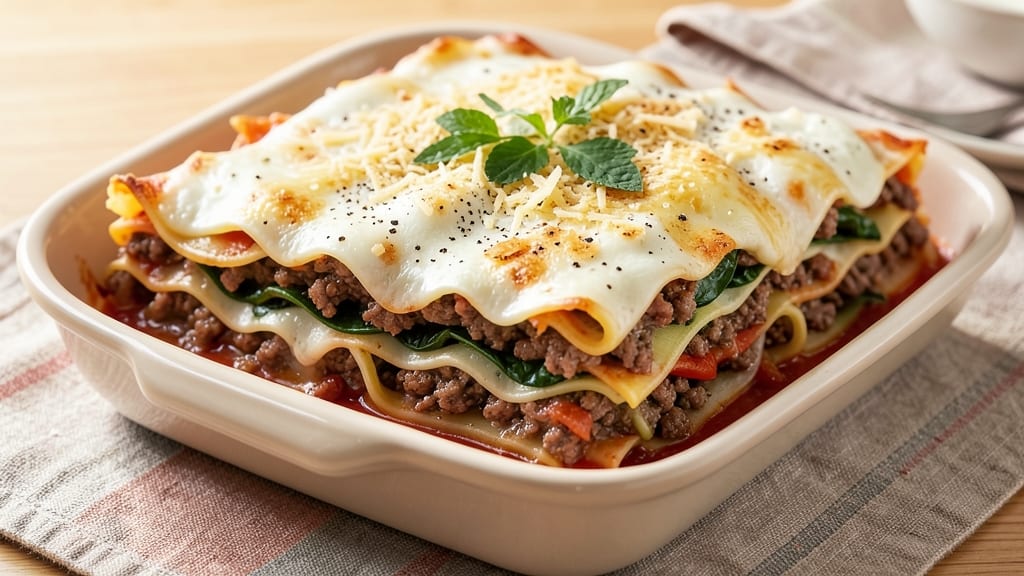
This beef and veggie lasagna recipe delivers restaurant-quality layers of tender beef, fresh vegetables, and rich cheese—all baked to golden perfection in one dish. 💛 The secret lies in balancing traditional Italian techniques (like using ricotta for creaminess) with modern shortcuts (pre-cooked meat and frozen veggies) to create a hearty meal that’s foolproof for weeknights or special occasions.
What sets this recipe apart is the harmony of flavors and textures: crispy edges on the lasagna noodles, tender beef that stays juicy, and a cheese layer so rich it melts into a velvety blanket.
The vegetables—spinach, zucchini, and bell peppers—add freshness without overpowering the beef, while the tomato sauce ties everything together with deep, savory notes.
Baking at 350°F ensures even cooking and that perfect golden crust, while layering the ingredients in the right order (sauce, noodles, ricotta, cheese, and beef) guarantees each bite is a perfect balance of flavors.
The result? A lasagna so satisfying, it’ll become your new go-to dinner—whether you’re feeding a family or meal prepping for the week.
No need for fancy techniques—just a few key steps to assemble layers that shine. Ready to bake up a dish that’s as comforting as it is impressive? Let’s get started.
Ingredients for beef and veggie lasagna
Traditional Italian techniques meet modern convenience in this hearty lasagna—rich beef, vibrant veggies, and melt-in-your-mouth cheese layers.
| Ingredient | Amount | Notes |
|---|---|---|
| Ground Beef (Chuck Roast) 🥩 | 1 ½ lb | 85% lean, finely ground |
| Lasagna Noodles (No-Bake) 🍝 | 12 pieces | Oven-ready for convenience |
| Ricotta Cheese 🧀 | 1 ½ cups | Whole-milk for creaminess |
| Marinara Sauce 🍅 | 3 cups | High-quality jarred or homemade |
| Mozzarella Cheese (Low-Moisture) 🧀 | 2 cups | Shredded, part-skim preferred |
| Parmesan Cheese (Freshly Grated) 🧀 | ½ cup | From a block, not pre-grated |
| Fresh Spinach 🍃 | 5 oz | Chopped, stems removed |
| Zucchini 🥒 | 1 ½ cups | Spiralized or thinly sliced |
| Red Bell Pepper 🌶️ | 1 whole | Diced, seeds removed |
| Yellow Onion 🧅 | 1 whole | Finely diced |
| Garlic Cloves 🧄 | 4 cloves | Minced, fresh preferred |
| Large Eggs 🥚 | 2 whole | For ricotta mixture |
| Extra-Virgin Olive Oil 🫒 | 2 tbsp | For sautéing vegetables |
| Dried Oregano 🌿 | 1 tsp | Italian blend preferred |
| Salt 🧂 | 1 ½ tsp | Diamond Crystal kosher |
| Black Pepper 🌶️ | ½ tsp | Freshly ground preferred |
The beef is the foundation—chuck roast delivers that perfect balance of tenderness and flavor. Pre-ground at the grocery store saves time, but if you're ambitious, buy a whole chuck roast and pulse it in a food processor for finer texture. For the ricotta, whole-milk is non-negotiable—it stays creamy after baking. Whole Foods or Trader Joe's carry excellent whole-milk ricotta in bulk. The mozzarella should be low-moisture to avoid a soggy lasagna; Sargento or Kraft brands work reliably. Freshly grated Parmesan makes all the difference—skip the pre-grated unless it's labeled 'Parmigiano-Reggiano' from a block.
Vegetable prep matters here. Zucchini should be spiralized for even cooking, while bell peppers and onions need fine dicing to blend seamlessly. No fresh spinach? Frozen works in a pinch, but thaw and drain it well. For the ricotta mixture, room-temperature eggs blend more smoothly—crack them into a bowl first to avoid shell fragments. The marinara can be store-bought (Rao's or Victoria), but homemade shines if you've got time. San Marzano tomatoes are the gold standard for canned sauce. Need to swap veggies? Mushrooms or roasted eggplant add depth without altering the core structure.
Assemble this lasagna no more than 2 hours ahead—the noodles soften faster when refrigerated. Cover tightly with foil and refrigerate to prevent drying. The ricotta mixture keeps 3 days in the fridge, but freeze portions if prepping ahead. Baked lasagna reheats beautifully—cover with foil for 10 minutes to revive moisture. Leftovers stay fresh 4-5 days refrigerated or 3 months frozen. Portion into individual containers for easy meal prep—just reheat covered at 350°F for 20 minutes.
Why You'll Love This Recipe
- No-Bake Magic: Honestly, those pre-cooked lasagna noodles are a game-changer—I just layer them like a lazy lasagna and skip the boiling. No waiting, no fuss, and zero soggy noodles ruining my dinner.
- Meaty, Cheesy, Perfect: That chuck roast ground beef gets browned just enough to lock in flavor, and the ricotta stretches into creamy pockets between layers. Between us, the low-moisture mozzarella on top? It crisps up like a dream, and that’s the kind of texture I’ll fight for.
- Lunch Tomorrow Solved: I swear by this for meal prep—it reheats beautifully, and the ricotta keeps the layers from drying out. Pack it up after dinner, and you’ve got a hearty lunch ready to go. (Yes, even on a Tuesday night.)
- Budget-Friendly Feast: Ground chuck stretches forever, and ricotta goes a long way when you’re layering it thin. A big pan of this feeds six for under $20, and the leftovers? They’re just as good the next day—if they last that long.
Step-by-step instructions for beef and veggie lasagna
Layer by layer, we'll build a lasagna with perfectly balanced flavors and textures.
👨🍳 Step 1: Sauté the Vegetable Base
Heat the 2 tablespoons extra-virgin olive oil in a large skillet over medium-high heat. Add the finely diced yellow onion and cook for 3-4 minutes until softened and translucent. Add the minced garlic cloves and cook for 30 seconds until fragrant.
Increase heat to high and add the diced red bell pepper and spiralized zucchini. Sauté for 5-6 minutes until the vegetables begin to soften but still retain some texture. Season with ½ teaspoon salt and ¼ teaspoon black pepper, then remove from heat and stir in the chopped fresh spinach until wilted. This vegetable mix will form the flavorful base between your lasagna layers.
🍳 Step 2: Brown the Ground Beef
In the same skillet (no need to clean it—the browned bits add flavor), add the 1.5 pounds ground beef (chuck roast) broken into small pieces. Cook over medium-high heat for 5-6 minutes, breaking up the meat with a wooden spoon until it's fully browned and cooked through.
Drain excess fat if needed, then return the skillet to medium heat. Stir in the 1 teaspoon dried oregano and remaining 1 teaspoon salt and ¼ teaspoon black pepper. Add 1 cup marinara sauce and simmer for 2 minutes to create a rich meat sauce. This will be your first lasagna layer.
👨🍳 Step 3: Prepare the Cheese Mixture
In a medium bowl, combine the 1.5 cups ricotta cheese, 2 whole large eggs, ½ cup freshly grated parmesan cheese, ½ teaspoon salt, and ¼ teaspoon black pepper. Mix gently with a fork until just combined—don't overmix or it will become grainy. This mixture should be thick but spreadable. If it's too thick, add 1 tablespoon whole milk to loosen it.
Fold in 1 cup mozzarella cheese (reserve the remaining 1 cup for layering). The ricotta mixture will create the creamy, rich layer between your noodles that makes lasagna so satisfying.
🥘 Step 4: Assemble the Lasagna Layers
Preheat your oven to 375°F. Spread ½ cup marinara sauce on the bottom of a 9x13-inch baking dish. Arrange 4 lasagna noodles (no-bake) in a single layer, slightly overlapping if needed. Spread half of the ricotta mixture evenly over the noodles, then sprinkle with ½ cup mozzarella cheese.
Add half of the meat sauce and half of the sautéed vegetable mixture, spreading them evenly. Repeat the layering process: noodles, remaining ricotta mixture, remaining mozzarella, remaining meat sauce, and remaining vegetable mixture. Top with the final 4 lasagna noodles, then spread the remaining 1 cup marinara sauce over the top. Finish with the remaining 1 cup mozzarella cheese and sprinkle with the remaining ¼ cup parmesan cheese.
🔥 Step 5: Bake to Golden Perfection
Cover the baking dish tightly with aluminum foil and bake for 25 minutes. Remove the foil and bake for an additional 10-15 minutes until the top is golden brown and bubbly. The edges should be slightly crispy while the center remains tender.
Let the lasagna rest for 10-15 minutes before slicing. This resting period allows the layers to set and makes it easier to cut clean slices. Serve immediately with a side salad or garlic bread for a complete meal that delivers hearty comfort in every bite.
Pro Tips For Making Beef And Veggie Lasagna
- Brown the Beef Properly: Chuck roast ground beef needs a good sear—no rushing here. Break it into small chunks first, then cook them in batches over medium-high heat until deeply browned (not just pink). I learned the hard way that skipping this step leaves your lasagna tasting bland, even with all the marinara and cheese.
- Pre-Cook the No-Bake Noodles: No-bake noodles still need a quick soak in warm water (about 15 minutes) while you assemble the lasagna. This prevents them from absorbing too much moisture from the ricotta later and keeps the layers from turning soggy. Trust me, your lasagna’s texture will thank you—no one likes a mushy middle.
- Salt the Ricotta Like It’s the Ocean: Ricotta is mild, but unsalted ricotta is a flavor ghost. Mix in at least ½ teaspoon of salt per 8 ounces—more if you’re using pre-salted cheese. I used to skip this, and the whole dish felt flat until I realized the ricotta was holding everyone back.
- Layer Sauce Like a Pro: Don’t just dump marinara on top—spread a thin layer on the bottom of the pan first, then alternate with ricotta and meat. This keeps the noodles from sticking and ensures every bite has sauce, not just the top. (Yes, even if it looks messy—it’s worth it.)
Perfect pairings for these flavors
Garlic Bread Pairing
No lasagna is complete without garlic bread to soak up those rich, cheesy layers. I love using a crusty Italian loaf like Schar or Bimbo, split lengthwise and topped with ½ cup softened butter, 3 minced garlic cloves, and 2 tbsp chopped parsley.
Bake at 375°F for 10 minutes until golden and crispy. For extra decadence, sprinkle with ¼ cup grated Parmesan before baking. 🥖
Side Salad Balance
A bright, peppery salad cuts through the richness of lasagna beautifully. My go-to is a simple arugula salad with 4 cups baby arugula, 2 tbsp extra-virgin olive oil, 1 tbsp lemon juice, ½ tsp Dijon mustard, and a pinch of salt.
Add ¼ cup shaved Parmesan and 2 tbsp toasted pine nuts for crunch. The acidity and texture contrast make every bite of lasagna feel lighter. 🥗
Wine Pairings
For red wine lovers, a medium-bodied Chianti Classico or Sangiovese complements the beef and tomato sauce perfectly. I reach for Brunello di Montalcino for something more robust—its earthy notes stand up to the richness.
White wine fans can try a crisp Vermentino or Pinot Grigio, which balances the dish without overpowering it. Avoid heavy, oaky whites or bold reds like Cabernet Sauvignon. 🍷
Creamy Polenta
If you want something heartier than salad, creamy polenta adds a comforting texture. Cook 1 cup polenta with 4 cups chicken broth and 2 tbsp butter until thick, then stir in ½ cup grated Parmesan and 2 tbsp cream cheese for extra richness.
Serve warm alongside lasagna for a satisfying, filling meal. The slight sweetness of polenta pairs wonderfully with the savory beef. 🌾
Roasted Vegetable Medley
For a veggie-forward side, roast a mix of carrots, Brussels sprouts, and sweet potatoes with 2 tbsp olive oil, 1 tsp smoked paprika, and ½ tsp salt at 400°F for 25 minutes.
Toss with 1 tbsp balsamic glaze before serving. The caramelized flavors add depth without competing with the lasagna’s bold profile. 🥕
Dessert Pairing
End the meal on a sweet note with tiramisu or panna cotta. The coffee and mascarpone in tiramisu contrast beautifully with the savory lasagna, while panna cotta’s silky texture feels like a luxurious finish.
For a quicker option, serve dark chocolate-dipped strawberries with a sprinkle of flaky salt. The bitterness of the chocolate cleanses the palate after such a rich main course. 🍫
Nutrition facts
Frequently asked questions
Can I use regular lasagna noodles instead of no-bake?
Yes, but you'll need to cook them al dente first (about 1 minute less than package instructions) and drain well. The key is to layer them immediately after draining while still slightly firm—they'll soften further during baking. For extra insurance, spread a thin layer of marinara sauce on the bottom of your dish before adding the first noodle layer.
How do I prevent a soggy bottom layer?
Always start with a thin layer of sauce on the bottom of your baking dish, then add noodles. The secret is to press the noodles gently into the sauce to create a barrier. Another trick: spread a small amount of ricotta mixture on top of the first noodle layer before adding cheese—this creates an extra moisture barrier. Bake uncovered for the last 10 minutes to crisp the bottom.
Can I make this lasagna ahead of time?
Assemble the lasagna up to 24 hours ahead and refrigerate uncovered. Before baking, let it sit at room temperature for 30 minutes (covered loosely with foil). This prevents steam buildup that could make the top soggy. For freezing, bake first, then cool completely and wrap tightly with plastic wrap and foil. It keeps for 3 months—reheat covered at 350°F for 20 minutes.
What's the best way to reheat leftovers?
Cover the lasagna with aluminum foil and bake at 350°F for 15-20 minutes until heated through. For microwave reheating, cover with a damp paper towel and heat in 30-second intervals on medium power, stirring between each interval. The foil method preserves texture better—just add 1-2 tablespoons water to the dish before reheating to restore moisture.
Can I substitute ground turkey or chicken?
Yes, but adjust cooking time—turkey/chicken will release moisture faster. Use 93% lean ground turkey and cook until 165°F internal temperature. For chicken, break it into very small pieces and cook until fully opaque. Reduce the ricotta mixture by ¼ cup to compensate for extra moisture, and bake covered for 5 extra minutes to prevent a watery texture.