
Main Courses
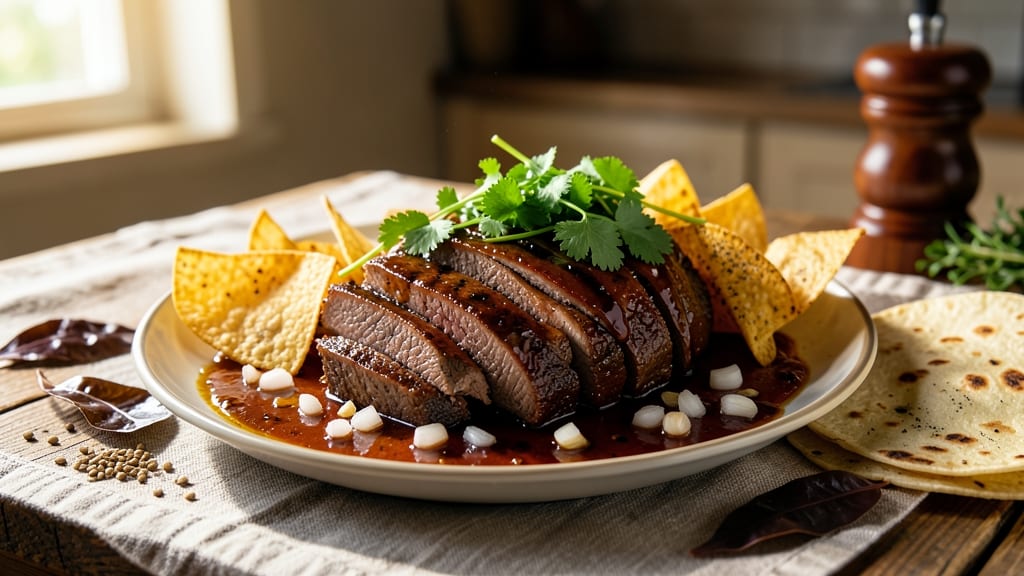
This barbacoa recipe with beef chuck roast transforms tough cuts into melt-in-your-mouth tenderness through slow braising—just like the legendary Texas-Mexican tradition. The secret lies in a rich blend of guajillo chiles, cumin, and garlic that infuses the meat over hours, creating depth that only gets better the next day.
I first discovered this technique while researching Central Mexican cooking methods, and it quickly became my go-to for weekend gatherings.
The beauty of barbacoa is its versatility—whether you follow the Northern style with vinegar or the Central Mexican approach with dried chiles, the result is always deeply flavorful. The chuck roast breaks down into tender shreds while absorbing the aromatic sauce, making every bite rich and satisfying.
This method requires patience, but the reward is a dish that feels both rustic and refined, perfect for feeding a crowd or meal prepping.
What makes this recipe special is the balance of smoky, spicy, and slightly sweet flavors that come together in the slow cook. The guajillo chiles add a subtle heat, while the cumin and bay leaves create an earthy depth that lingers.
Served with warm tortillas, fresh cilantro, and lime, it becomes a full experience—one that transports you straight to a Mexican street stall or family table.
For those new to barbacoa, don’t be intimidated by the process. The slow cooking does the heavy lifting, and the result is a dish that’s impossible to resist.
Whether you’re hosting a fiesta or simply craving comfort food, this recipe delivers restaurant-quality flavor with minimal effort. Let’s get started on creating something truly special.
Ingredients for barbacoa recipe with beef chuck roast
Six ingredients make the base, but the chiles and cumin steal the show—this is where the magic happens.
| Ingredient | Amount | Notes |
|---|---|---|
| Beef Chuck Roast 🥩 | 4 lb | 3-4 inches thick for even cooking |
| Dried Guajillo Chiles 🌶️ | 4 whole | Stems/seeds removed, toasted lightly |
| Garlic Cloves 🧄 | 8 cloves | Peeled, smashed for deeper flavor |
| White Onion 🧅 | 1 whole | Quartered, skin on for texture |
| Ground Cumin 🌿 | 2 tbsp | Freshly toasted preferred |
| Bay Leaves 🍃 | 2 whole | Dried, standard grocery store |
| Apple Cider Vinegar 🍎 | ½ cup | For tangy depth (or sub red wine) |
| Beef Broth 🥫 | 2 cups | Low-sodium preferred |
| Dark Brown Sugar 🍬 | ¼ cup | For subtle caramelization |
| Fresh Cilantro 🌿 | ½ cup | Chopped, for garnish (optional) |
| Lime 🍋 | 1 whole | Juiced, for brightness |
| Vegetable Oil 🫒 | 2 tbsp | For searing meat |
| Salt 🧂 | 1 ½ tsp | Kosher salt, adjust to taste |
| Black Pepper 🌶️ | 1 tsp | Freshly cracked |
The beef is non-negotiable here. Chuck roast is your best bet—it's tough enough to benefit from the long braise, but not so lean it dries out. I always grab mine from Costco or Walmart since they carry it in bulk. Look for good marbling—those little fat pockets melt during cooking and keep the meat juicy. If you're buying a whole roast, trim any big chunks of fat, but leave the rest. The guajillo chiles? Mexican markets or Latin grocery stores usually have them fresh and vibrant. If you can't find them, ancho chiles work in a pinch, but guajillo gives that signature smoky-sweet flavor.
No guajillo chiles? Ancho chiles at half the amount will work, but you'll lose some of that bright acidity. The cumin is crucial—toast it in a dry pan for 30 seconds before grinding to deepen the flavor. Vinegar substitute? Red wine works great, but don't skip it entirely—it's what cuts through the richness. The brown sugar might seem odd, but it caramelizes slightly during cooking and adds a subtle depth that balances the spices. Fresh cilantro is ideal, but dried oregano at one-third the amount gets you close if you're in a bind. And always use low-sodium broth—you're adding plenty of salt already.
This dish tastes even better the next day, so plan ahead. The meat keeps 4-5 days in the fridge, and the sauce freezes beautifully for 3 months if you want to make a big batch. I like to portion it into containers with tortillas and lime wedges—perfect for easy lunches. If you're serving it immediately, keep the meat warm in a slow cooker on low. The sauce thickens as it cools, so if it seems too thin when reheating, simmer it uncovered for 5 minutes to reduce. Trust me, the wait is worth it.
Why You'll Love This Recipe
- Same recipe, endless uses: shred it for tacos on a Tuesday, serve it in buns for a Sunday brunch crowd, or stuff it into burritos for a game-day feast. Honestly, I’ve never met a meal that works harder for me.
- Set-and-Forget Magic: I swear by this—toss the chuck roast in the slow cooker with the guajillo chiles (soaked, stems off, no fuss) and cumin, then walk away. The guajillo’s smoky depth and cumin’s warmth do all the work while you’re actually living your life.
- Smoky Depth in Minutes: Between us, the guajillo chiles (rehydrated in hot water) and charred onion give this a restaurant-worthy depth that’s ridiculously easy. That crispy, caramelized edge on the meat? Pure satisfaction—no fancy marinades, just patience and a blender for the sauce.
- Weeknight to Party Hero: Same recipe, endless uses: shred it for tacos on a Tuesday, serve it in buns for a Sunday brunch crowd, or stuff it into burritos for a game-day feast. Honestly, I’ve never met a meal that works harder for me.
Step-by-step instructions for slow-braised barbacoa
Here's how to create tender, melt-in-your-mouth barbacoa that only gets better the next day.
Prep and Sear the Beef Chuck Roast
Pat the 4 lb beef chuck roast completely dry with paper towels—this helps create that signature crispy exterior. Season both sides generously with 1.5 tsp salt and 1 tsp black pepper, pressing the spices into the meat so they stick. Let it sit at room temperature for 30 minutes while you prep the other ingredients.
Heat 2 tbsp vegetable oil in a heavy Dutch oven over medium-high heat. Once the oil shimmers, add the roast and sear for 4-5 minutes per side until it develops a deep golden-brown crust. This step locks in flavor and gives your barbacoa that rich, caramelized depth. Don't rush it—you want that crust to form before moving to the next step.
Toast and Rehydrate the Guajillo Chiles
While the beef sears, remove the stems and seeds from the 4 whole dried guajillo chiles and place them in a dry skillet over medium heat. Toast them for 30-45 seconds per side until they darken slightly and smell fragrant—this deepens their smoky flavor. Be careful not to burn them, as they can go from perfect to bitter in seconds.
Transfer the toasted chiles to a heatproof bowl and pour 0.5 cup apple cider vinegar over them. Let them soak for 15 minutes while you prepare the aromatics. This step rehydrates the chiles, making them easier to blend and infusing the liquid with their rich, earthy flavor. The vinegar also adds a bright tang that balances the richness of the beef.
Build the Barbacoa Sauce
In the same Dutch oven, add the 1 whole white onion (quartered, skin on) and the 8 cloves garlic cloves (peeled and smashed). Cook for 5-6 minutes until the onion softens and the garlic turns golden. Add the 2 tbsp ground cumin and 2 whole bay leaves, stirring for 1 minute to toast the spices and release their aromas.
Pour the soaked guajillo chiles and their vinegar into the pot, scraping up any browned bits from the bottom. Add 2 cups beef broth and 0.25 cup dark brown sugar, then bring everything to a simmer. Let it cook for 10 minutes until the sauce thickens slightly and the flavors meld together. This is where the magic happens—the sauce becomes the foundation of your barbacoa's rich, complex taste.
Braise the Barbacoa Low and Slow
Return the seared beef chuck roast to the Dutch oven, nestling it into the sauce. The liquid should come about halfway up the sides of the roast. Cover the pot with a lid and transfer it to a 300°F oven. Braise for 3 hours, then check the internal temperature—it should read 190-195°F and the meat should be fork-tender. If it's not quite there, add ½ cup water or broth and continue cooking for another 30-60 minutes.
Here's the thing—this long, slow cook time is what makes barbacoa so special. The connective tissue breaks down, and the meat becomes so tender it practically falls apart. The sauce will reduce and thicken, coating the beef in a glossy, flavorful glaze. Don't peek or lift the lid during cooking—every time you do, you lose heat and moisture, which can dry out the meat.
Shred and Finish with Fresh Flavors
Once the beef is fork-tender, remove it from the pot and let it rest for 10 minutes. Then, using two forks, shred the meat into bite-sized pieces. Return the shredded beef to the pot and stir it into the sauce. Taste and adjust the seasoning with more salt if needed—sometimes the beef needs a little extra help to shine.
Stir in the juice of the 1 whole lime and the 0.5 cup fresh cilantro, reserving a few sprigs for garnish. The lime brightens the dish, cutting through the richness of the beef and chiles, while the cilantro adds a fresh, herby finish. Serve the barbacoa immediately, or let it rest in the pot for 1-2 hours at room temperature—this allows the flavors to deepen even more, making it even more delicious the next day.
Pro Tips For Making Barbacoa Recipe With Beef Chuck Roast
- Trim the Chuck: Chuck roast has a thick fat cap—leave it on, but trim it down to about ¼-inch. I learned this the hard way after my first batch turned greasy instead of tender. The fat renders beautifully, but too much steams the meat instead of caramelizing.
- Toast Chiles Properly: Dry toasting guajillo chiles in a skillet over medium heat for 30 seconds per side—just until fragrant and slightly blistered. Skip the oven; it’s faster and prevents scorching. Soaked chiles will have deeper flavor if they’re toasted first.
- Braise Low and Slow: After searing the chuck, drop the heat to 275°F (135°C) and cover the pot. I used to rush it at 325°F, and the meat ended up dry. Low heat breaks down collagen slowly, turning tough chuck into melt-in-your-mouth shreds—just don’t peek.
- Reserve the Broth: Strain the cooking liquid into a bowl before shredding the meat. That rich, smoky broth is the soul of barbacoa—use it for tacos, tostadas, or even a quick sauce. I wasted my first batch by dumping it down the drain.
Regional styles of this dish
Northern Mexico Style
In Northern Mexico, barbacoa often features a tangy twist with white vinegar or lime juice added to the braising liquid. This region traditionally uses goat meat instead of beef, but chuck roast works beautifully with the same technique.
The sauce here tends to be thinner, almost like a broth, and the meat is often served with charro beans and warm bolillo bread for dipping. I’ve made this version at least three times, and the acidity from the vinegar really cuts through the richness of the meat. 🍋
Central Mexico Tradition
The Central Mexican approach focuses on dried chiles and wood smoke—often cooked in underground pits lined with maguey leaves. Here, the sauce is thicker and more complex, with guajillo and ancho chiles—creating a deeper, earthier flavor.
The meat is typically served with corn tortillas, pickled red onions, and a side of refried beans. I love this style because it’s more rustic and hands-off—perfect for a weekend project. The slow cooking in the oven mimics the pit tradition, making it accessible for home cooks.
Texas-Mexican Fusion
In Texas, barbacoa has evolved into a heartier dish, often served in tacos with crispy tortillas—a nod to Tex-Mex traditions. The sauce here might include beer or coffee—for depth, and the meat is sometimes mixed with crumbled chorizo—for extra flavor.
I’ve seen it topped with avocado slices and sour cream, which adds a creamy contrast to the spicy, smoky meat. This version is great for taco nights—just shred the meat finely and serve it in warm tortillas with all the fixings. 🌯
Modern Adaptations
Today, you’ll find creative twists like barbacoa-style pulled pork—using pork shoulder instead of beef, or even mushroom barbacoa—for vegetarians.
I’ve experimented with both—pork shoulder works well with the same slow-cooking method, while mushrooms absorb the sauce beautifully if you add a splash of soy sauce for umami. These adaptations keep the dish fresh while staying true to its roots.
The key is balancing the flavors so the sauce still shines, whether you’re using meat or veggies.
Serving Suggestions
No matter the style, serving barbacoa right is half the fun. In Mexico, it’s often eaten with warm tortillas, pickled onions, and lime wedges—simple but essential.
I like to set up a DIY taco bar with corn and flour tortillas, diced avocado, crumbled queso fresco, and hot sauce on the side. For a heartier meal, serve it over rice with a side of charro beans and grilled vegetables**. The leftovers?
Even better the next day—just reheat with a splash of broth to keep it moist. 💫
Nutrition facts
Frequently asked questions
Can I substitute beef chuck roast with another cut?
Yes, but choose wisely! Beef short ribs or brisket work beautifully—they have more connective tissue that breaks down into tender shreds. Avoid lean cuts like sirloin, as they dry out during the long braise. If using ribs, trim excess fat first to prevent greasiness in the sauce.
How do I know when the beef is tender enough?
Use the fork test: Insert two forks into the thickest part of the roast. If they slide in with minimal resistance and the meat shreds easily, it's done. The internal temperature should read 190-195°F. If it's not quite there after 3 hours, add ½ cup broth and cook another 30 minutes.
Can I make barbacoa in a slow cooker?
Sear the roast first, then transfer it to your slow cooker with all the sauce ingredients. Cook on low for 8 hours or high for 5-6 hours. The texture will be slightly different (more saucy), but still delicious. Just shred the meat and mix it back into the sauce before serving.
Why does my barbacoa taste bland?
Most likely, the chiles weren't toasted enough or the sauce didn't reduce properly. Next time, toast the guajillo chiles until they're fragrant and darken slightly. Also, let the sauce simmer uncovered for 5 minutes at the end to concentrate the flavors. If it's still bland, add 1 tsp smoked paprika or a pinch of chipotle powder.
How far ahead can I prep this recipe?
The meat actually tastes better the next day! Cook it completely, then refrigerate in the sauce for 4-5 days. For longer storage, freeze the meat and sauce together for up to 3 months. Just thaw in the fridge overnight before reheating. The flavors deepen as they sit, making it perfect for meal prep.