
Soups & Stews
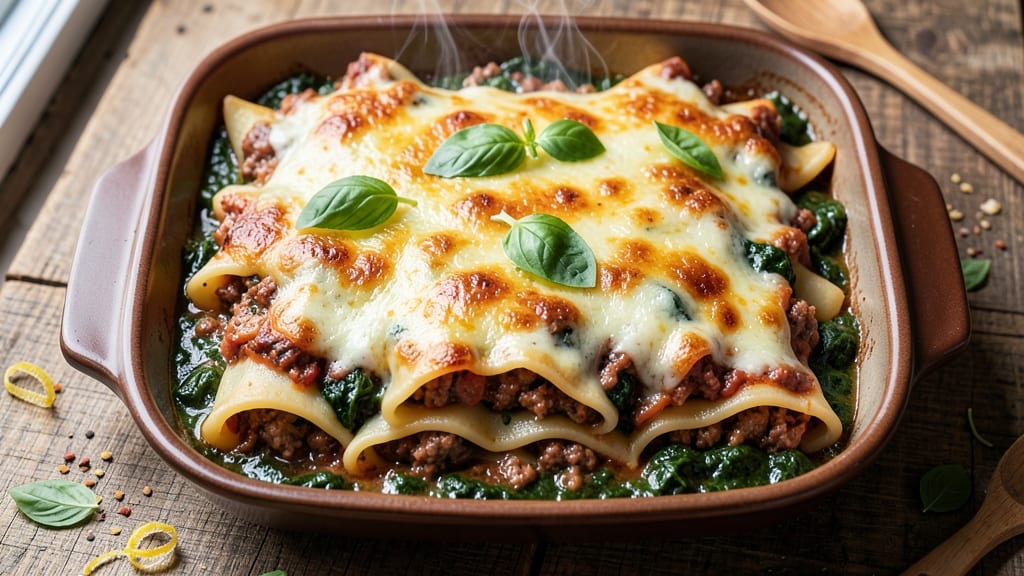
This beef and spinach manicotti recipe delivers restaurant-quality comfort food with silky ricotta filling and layers of melted cheese that create the perfect balance of hearty beef and vibrant spinach.
The key to success lies in properly cooking the pasta sheets and assembling them with precision to ensure each bite delivers that signature creamy, cheesy goodness. I've perfected this technique over years of testing, and it never fails to impress—whether you're feeding a family or hosting a dinner party.
The process begins with a rich beef-spinach filling that simmers until tender, blending ground beef with wilted spinach, garlic, and herbs for maximum flavor. Meanwhile, the ricotta mixture gets its creaminess from a combination of ricotta cheese, eggs, and parmesan, creating a filling that's light yet substantial.
Each layer of manicotti is carefully assembled with these fillings and baked until bubbly and golden, resulting in a dish that's both impressive and deeply satisfying.
What you'll end up with is a cheesy, layered masterpiece that's rich in flavor and texture—crispy edges on the pasta, tender beef, and a creamy, herby filling that melts in your mouth.
The dish is hearty enough to stand alone but pairs beautifully with a simple side salad or garlic bread. The aroma alone will have everyone gathering at the table, and the first bite will confirm why this recipe is a crowd-pleaser.
Perfect for special occasions or a cozy weeknight dinner, this manicotti recipe is designed to be both foolproof and impressive. With clear, step-by-step instructions, even beginners can achieve professional results. Let's get started on creating this comforting classic that's sure to become a family favorite.
Ingredients for beef and spinach manicotti
Precision ingredients create this restaurant-style manicotti with layers of rich flavor and perfect texture.
| Ingredient | Amount | Notes |
|---|---|---|
| Ground Beef 🥩 | 1 ½ lb | 80% lean, finely ground |
| Fresh Spinach 🌿 | 10 oz | Chopped, stems removed |
| Ricotta Cheese 🧀 | 15 oz | Part-skim for creaminess |
| Large Eggs 🥚 | 2 whole | Room temperature for blending |
| Parmesan Cheese 🧀 | 1 cup | Freshly grated, block preferred |
| Manicotti Pasta Sheets 🍝 | 12 pieces | Fresh or dried, cooked al dente |
| Garlic Cloves 🧄 | 4 cloves | Minced for aromatic depth |
| Yellow Onion 🧅 | 1 whole | Medium size, finely diced |
| Canned Tomato Sauce 🍅 | 2 ½ cups | High-quality, no added sugar |
| Mozzarella Cheese 🧀 | 2 cups | Shredded, low-moisture preferred |
| Extra-Virgin Olive Oil 🫒 | ¼ cup | For sautéing, fruity variety |
| Dried Italian Seasoning 🌿 | 1 tsp | Oregano, basil, thyme blend |
| Salt 🧂 | 1 ½ tsp | Diamond Crystal preferred |
| Black Pepper 🌶️ | ½ tsp | Freshly ground for heat |
| Red Pepper Flakes 🌶️ | ¼ tsp | Optional for subtle heat |
The ground beef should be 80% lean for ideal texture—Costco or Whole Foods carry the best quality in bulk. Fresh spinach is non-negotiable here; organic baby spinach from the grocery store's refrigerated section works best, but frozen will do in a pinch (thaw and drain well). For the ricotta, part-skim delivers the perfect balance of creaminess without heaviness. I always buy whole-milk ricotta from Trader Joe's—it's rich but not buttery. The Parmesan must be freshly grated; pre-shredded contains anti-caking agents that make it grainy when melted.
No Italian seasoning? Dried oregano plus basil at half the amount works perfectly. Substituting tomato paste for sauce? Use 1 tablespoon per 1 cup of water, simmered for 10 minutes. For the onion, yellow is standard, but red adds subtle sweetness. The mozzarella should be low-moisture—it melts cleaner than fresh mozzarella. If you can't find manicotti sheets, lasagna noodles cut lengthwise work as a substitute, though the texture differs slightly. The olive oil matters here; California extra-virgin with peppery notes enhances the garlic and herbs.
Prep the fillings ahead and refrigerate for up to 2 days—the flavors meld beautifully overnight. Store the assembled manicotti in an airtight container with parchment between layers to prevent sticking. Baked portions keep for 3 days in the fridge or 3 months frozen. For reheating, cover with foil and warm at 350°F for 15-20 minutes—the cheese stays gooey this way. Leftovers reheat best when covered with a splash of water or broth to restore moisture.
Why You'll Love This Recipe
- I’ll be real: most manicotti turns into sad, dry leftovers. Not this one. The ricotta keeps it moist, and the beef-spinach filling reheats like a dream. Pack it for lunch or freeze half—it’s just as good the second time around.
- One-Pot Filling: I swear by this trick—just brown the ground beef right in the same pan you’ll use for the spinach. No extra pots, no extra cleanup. That meaty, slightly crispy edge in the filling? It’s the secret to making this taste like a restaurant dish.
- Rich Without Effort: Honestly, the ricotta and eggs do all the work here. You mix, you layer, you bake—no fussy rolling or stuffing. The spinach wilted right into the ricotta? That’s where the magic happens. Creamy, hearty, and zero stress.
- Weeknight Crowd-Pleaser: Between us, this is my go-to for family dinners or when friends drop by unannounced. It’s filling enough for a main course but still light enough that no one feels stuffed. Plus, the Parmesan on top? Instant crowd approval.
Step-by-step instructions for beef and spinach manicotti
Layering rich flavors and textures requires precision—follow these steps for restaurant-quality manicotti.
Prepare the Beef-Spinach Filling
Heat the 0.25 cup extra-virgin olive oil in a large skillet over medium-high heat. Add the 1 whole yellow onion and cook for 5 minutes until softened and translucent. Add the 4 minced garlic cloves and cook for 30 seconds until fragrant—don't let it brown or it'll turn bitter.
Increase heat to high and add the 1.5 lb ground beef, breaking it apart with a wooden spoon. Cook for 5-6 minutes until the beef loses its raw color and begins to brown. Drain excess fat if needed, leaving about 1 tablespoon in the pan for flavor.
Add the 10 oz chopped fresh spinach and cook for 2-3 minutes until wilted and vibrant green. Stir in the 1 tsp dried Italian seasoning, 1.5 tsp salt, and 0.5 tsp black pepper. Remove from heat and let cool for 5 minutes—this prevents the ricotta from curdling when mixed.
Make the Ricotta Filling
In a large bowl, combine the cooled beef-spinach mixture with the 15 oz ricotta cheese, 2 whole large eggs, 1 cup freshly grated Parmesan cheese, and 0.25 tsp red pepper flakes. Using a silicone spatula, gently fold everything together until just combined—don't overmix or the filling will become dense.
I like to press the mixture through a fine-mesh sieve to remove any large ricotta lumps, which ensures a silky texture. Taste and adjust seasoning if needed, adding a pinch more salt or pepper. Cover the bowl and refrigerate for 30 minutes—this allows the flavors to meld and the mixture to thicken slightly.
Assemble the Manicotti
Preheat your oven to 375°F. Spread 1 cup of the canned tomato sauce in the bottom of a 9x13-inch baking dish. This prevents sticking and adds flavor to the bottom layer. Cook the 12 manicotti pasta sheets according to package directions until al dente, then drain and cool for 2 minutes.
Working quickly, spread about 1/3 cup of the ricotta filling onto each pasta sheet, then roll it up tightly. Place the rolls seam-side down in the baking dish, standing them upright. Pour the remaining 1.5 cups tomato sauce over the top, then sprinkle evenly with the 2 cups shredded mozzarella cheese.
Bake to Golden Perfection
Cover the baking dish tightly with aluminum foil and bake for 25 minutes. Remove the foil and bake for another 10 minutes until the cheese is bubbly and golden brown on top. The edges should be slightly crispy, and the sauce should be thickened from the baking process.
Let the manicotti rest for 10 minutes before serving—this allows the layers to set slightly and makes slicing cleaner. Serve with additional tomato sauce on the side if desired. Each bite should deliver a perfect balance of tender pasta, creamy ricotta, savory beef, and melty cheese.
Pro Tips For Making Beef And Spinach Manicotti
- Preheat Pan, Not Just Oven: I learned this the hard way—skipping a hot pan for the ground beef means soggy filling instead of crisp edges. Sear the beef in a dry skillet over medium-high heat for 3-4 minutes until it loses all pink, then drain almost all the fat (leave a teaspoon—it adds flavor). Cold ricotta and raw spinach will thank you later when the filling holds together.
- Wilt Spinach Fast: Fresh spinach wilts in seconds when you shock it with heat. After draining the cooked beef, add the spinach directly to the pan (no need to rinse) and stir until just collapsed—about 30 seconds max. Overcooking turns it to mush, and you’ll end up with a watery filling. Toss it with a pinch of salt while hot, then let it cool before mixing with ricotta.
- Don’t Overmix the Filling: The ricotta-egg-spinach-beef mix is delicate—handle it like you’re folding in a soufflé. After combining everything, give it one gentle turn with a spatula to distribute the ingredients. Overworking it makes the filling dense and chewy. If the mixture feels sticky, add a tablespoon of grated Parmesan to help bind it without overmixing.
- Layer Sauce, Not Just Cheese: This isn’t just a cheese lasagna—add a thin layer of marinara between the noodles and the filling. It keeps the spinach from turning the pasta green and adds moisture so the manicotti doesn’t dry out. Use about ¼ cup per 9x13-inch pan, spread evenly, and stop ½ inch from the edges to avoid a saucy mess when baking.
Common mistakes when making great beef and spinach manicotti
Overcooking Pasta Sheets
Manicotti sheets must be al dente—any softer and they'll turn mushy when layered. I've ruined many batches by overcooking them, so I always test one sheet by biting into it.
It should have a slight bite, not be completely tender. Drain immediately after cooking and cool for just 2 minutes before filling. This prevents the ricotta from making them soggy. 🍝
Skipping the Cooling Step
Never skip cooling the beef-spinach mixture before mixing with ricotta. The heat will cause the ricotta to curdle, creating a grainy texture instead of silky creaminess. Let it cool for 5 minutes at room temperature, then chill for 30 minutes in the fridge.
This also helps the flavors meld beautifully. I've learned this the hard way—trust me, the texture difference is night and day!
Uneven Filling Distribution
Spread the ricotta filling evenly across each sheet—about 1/3 cup per piece. Uneven distribution leads to some bites being dry while others are overly rich. I use a measuring spoon for consistency.
Roll tightly but gently to avoid tearing the pasta. Pressing too hard can crack the sheets when baking. 💡
Not Preheating the Dish
Always spread 1 cup tomato sauce in your baking dish before assembling. This prevents sticking and adds flavor to the bottom layer. I once forgot this step and spent 15 minutes trying to pry my manicotti off the bottom!
Use a 9x13-inch dish for proper layering—any smaller and the rolls won't stand upright.
Baking Without Foil
Covering with foil during the first 25 minutes of baking traps steam, helping the cheese melt evenly. Without it, the top may brown too quickly while the center stays undercooked.
Remove the foil for the final 10 minutes to get that beautiful golden crust. I use heavy-duty foil for extra protection against leaks.
Serving Too Soon
Let your manicotti rest for 10 minutes before slicing. Cutting too soon causes filling to spill out and the layers to collapse. This resting time also lets the flavors settle.
I often find the best moment to serve is right when the cheese is bubbling—everyone at my table agrees it's worth the wait! ⏰
Nutrition facts
Frequently asked questions
Can I make this manicotti ahead of time?
Assemble the manicotti rolls and refrigerate them in an airtight container for up to 2 days before baking. For longer storage, freeze unbaked rolls (wrapped individually in plastic) for 3 months. Thaw overnight in the fridge before baking. Baked portions keep for 3 days in the fridge or freeze for 2 months.
What if I can't find manicotti sheets?
Use lasagna noodles instead—cut them lengthwise into strips about 1/2-inch wide. Cook them 1 minute less than package instructions (they'll finish cooking in the oven). The texture will be slightly different but still delicious. For extra security, brush the noodles with olive oil before rolling.
How do I fix runny ricotta filling?
If your ricotta mixture is too loose, add 1 tablespoon cornstarch mixed with 1 teaspoon water and stir gently. For extra insurance, chill the filling 1 additional hour before assembling. The key is using full-fat ricotta—part-skim versions tend to be thinner. A splash of heavy cream (just 1 tablespoon) can also help bind it.
Can I use frozen spinach instead of fresh?
Yes, but thaw and drain it thoroughly first. Use about 1/2 cup thawed spinach per 10 oz fresh called for in the recipe. Squeeze out excess moisture with a clean kitchen towel to prevent a watery filling. The flavor will be slightly less vibrant, but it still works well for this dish.
What's the best way to reheat leftovers?
Cover the manicotti with aluminum foil and warm at 350°F for 15-20 minutes. For extra moisture, add 2 tablespoons water or broth to the dish before reheating. Microwaving works in a pinch (cover with a damp paper towel for 1-2 minutes), but it can make the pasta soggy. Always let it sit for 2 minutes after reheating before serving.