
Soups & Stews
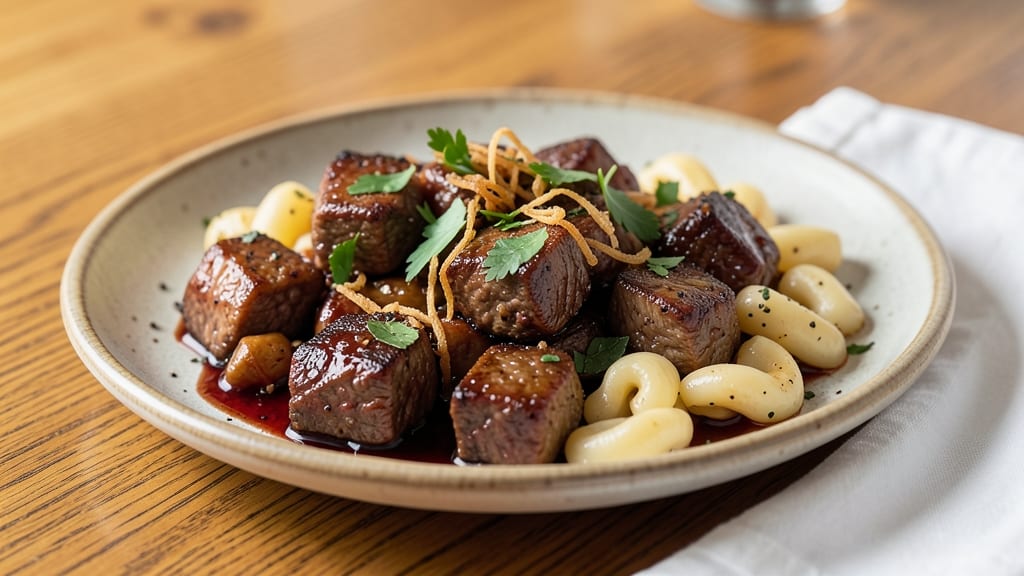
This German-style beef and spaetzle recipe brings hearty comfort to your table with tender beef and fluffy egg noodles that melt in your mouth. The secret lies in slow-braising the beef until fork-tender while preparing homemade spaetzle with just flour, eggs, and water—no special equipment needed.
Traditional techniques ensure rich flavors that transport you to a Bavarian kitchen.
What sets this dish apart is the perfect balance of textures: crispy edges on the spaetzle and succulent beef that falls apart easily. The recipe includes a simple gravy made from the braising liquid, enriched with butter and a touch of lemon for brightness.
German cuisine thrives on simplicity, and this dish delivers restaurant-quality results with minimal effort.
By the time you serve this, your kitchen will smell like home—warm, savory, and inviting. The beef absorbs the aromatic herbs and spices during braising, while the spaetzle soaks up the flavorful gravy.
This is the kind of meal that feels special without requiring hours of prep work, perfect for family dinners or cozy weeknight gatherings.
The beauty of this recipe lies in its versatility. Use chuck roast for a rich, flavorful stew or opt for thinly sliced beef for schnitzel-style bites. Serve with a crisp green salad and dark rye bread to complete the German meal experience. Let's get started on creating this comforting classic.
Ingredients for beef and spaetzle
Just 14 ingredients for a dish that feels like home—rich, hearty, and full of German comfort.
| Ingredient | Amount | Notes |
|---|---|---|
| Chuck Roast 🥩 | 2 lb | Cut into 1.5-inch cubes |
| All-Purpose Flour 🌾 | 2 cups | For spaetzle dough |
| Large Eggs 🥚 | 4 whole | Room temperature preferred |
| Salt 🧂 | 1 ½ tsp | Kosher or sea salt |
| Black Pepper 🌶️ | ½ tsp | Freshly ground for best flavor |
| Bay Leaves 🌿 | 2 whole | Remove before serving |
| Carrots 🥕 | 2 whole | Medium-sized, peeled and chopped |
| Yellow Onion 🧅 | 1 whole | Medium-sized, sliced |
| Garlic Cloves 🧄 | 4 cloves | Minced for braising |
| Unsalted Butter 🧈 | 4 tbsp | For spaetzle enrichment |
| Fresh Thyme 🌿 | ¼ cup | Chopped, or 1 tsp dried |
| Beef Broth 💧 | 2 cups | Low-sodium preferred |
| Lemon Juice 🍋 | 1 tbsp | Freshly squeezed |
| Water 💧 | 1 ½ cups | For spaetzle dough |
The chuck roast is non-negotiable here—it's got the fat and connective tissue for that melt-in-your-mouth texture. Costco or Walmart usually have it pre-cut, but if you're buying a whole roast, look for good marbling. The carrots and onion can be whatever's on sale, but organic makes the braising liquid brighter. Fresh thyme is ideal, but dried works in a pinch (just use one-third the amount). I always grab extra bay leaves—you can't overdo it in this dish.
No chuck roast? Brisket or short ribs work too, but they'll need longer braising. Short on thyme? Rosemary or marjoram add a nice twist. The beef broth can be homemade or store-bought, but skip the high-sodium versions—you'll taste it. For the spaetzle, if you don't have a spaetzle maker, a colander with big holes works perfectly. The flour should be all-purpose, but bread flour gives a slightly chewier texture if you're feeling fancy.
The braising liquid keeps for 5 days in the fridge—freeze extras for future meals. Spaetzle reheats best in a dry pan over medium heat, stirring constantly. The butter and lemon juice can be added fresh when serving, or mixed in right after cooking. This dish tastes even better the next day, so make extra if you can. Store components separately: beef and gravy in one container, spaetzle in another.
Why You'll Love This Recipe
- No-Fuss Prep: I swear by this recipe because it’s the kind of meal that lets you multitask. Chuck roast goes low-and-slow in the oven while you toss together spaetzle with just flour, eggs, and a pinch of salt—no fancy gadgets, no stress.
- Rich, Homey Depth: That chuck roast? It turns tender and melts in your mouth, soaking up all the savory juices while the spaetzle—light as clouds but sturdy enough to hold up—adds a comforting bite. Honestly, it’s the kind of flavor that makes you slow down and savor every forkful.
- Leftovers That Shine: Between us, this dish only gets better the second day. The roast stays juicy, and the spaetzle reheats like a dream—perfect for quick lunches or throwing into a skillet with a fried egg on top. (Yes, even on a Tuesday night.)
- Budget-Friendly Feast: Chuck roast is my go-to for stretching meals without breaking the bank, and spaetzle turns cheap ingredients into something special. One roast feeds my whole family, and the leftovers? They disappear just as fast. Solid. Reliable. My secret weapon.
Step-by-step instructions for German-style beef and spaetzle
Here's how to make this comforting German classic with tender beef and homemade spaetzle.
Prepare the Chuck Roast and Braising Vegetables
Cut the 2 lb chuck roast into 1.5-inch cubes and pat them dry with paper towels. Season each piece generously with 1.5 tsp salt and 0.5 tsp black pepper, pressing the spices into the meat so they adhere well. This helps create a flavorful crust during braising.
In a large Dutch oven, melt 2 tbsp unsalted butter over medium heat. Add the sliced 1 whole yellow onion and chopped 2 whole carrots, cooking for 5 minutes until they begin to soften. Stir in the 4 minced garlic cloves and cook for another 30 seconds until fragrant. This aromatic base will infuse the beef with deep flavor as it braises.
Brown the Beef and Begin the Braise
Increase heat to medium-high and add the seasoned beef cubes in a single layer, letting them brown undisturbed for 2-3 minutes per side. You want a deep golden crust—this is where all the flavor develops. Once browned, remove the beef and set it aside.
Return the Dutch oven to medium heat and add the 2 whole bay leaves and 0.25 cup chopped fresh thyme. Pour in the 2 cups beef broth and scrape up any browned bits from the bottom with a wooden spoon. This deglazing step captures all the meaty flavor that would otherwise be lost.
Braise the Beef Until Tender
Return the beef to the Dutch oven, along with any accumulated juices. Bring the mixture to a simmer, then reduce heat to low, cover, and let it cook for 2.5 to 3 hours. The beef is done when it's fork-tender and easily pulls apart. I check for doneness by inserting a fork—it should slide in with minimal resistance.
About 30 minutes before the beef is done, stir in the 1 tbsp lemon juice. This brightens the rich flavors of the braise and cuts through the heaviness of the beef. Keep the lid slightly ajar during the last 15 minutes of cooking to allow excess moisture to evaporate.
Make the Spaetzle Dough
While the beef braises, make the spaetzle dough by whisking together the 2 cups all-purpose flour, 1 tsp salt, and 4 whole large eggs in a medium bowl. Gradually add the 1.5 cups water, mixing until just combined. The dough should be smooth but slightly thicker than pancake batter—it should hold its shape when pressed between your fingers.
Transfer the dough to a piping bag fitted with a large star tip or use a spaetzle maker. Bring a large pot of salted water to a rolling boil. Pipe or press the dough directly into the boiling water, stirring gently to prevent sticking. The spaetzle will rise to the surface in about 1 minute—they're ready when they float and look opaque.
Combine and Serve
Remove the bay leaves from the braised beef and adjust the seasoning if needed. Stir in the 4 tbsp unsalted butter to enrich the sauce. Drain the spaetzle and serve it directly over the beef, allowing guests to spoon up the flavorful braising liquid. The contrast of the tender, eggy spaetzle with the rich, savory beef makes this dish truly special.
For an extra touch, garnish with additional chopped fresh thyme. Serve immediately while everything is hot—this dish tastes best straight from the pot, with all the flavors at their peak.
Pro Tips For Making Beef And Spaetzle
- SEAR THE ROAST HARD: Chuck roast has a tough exterior—don’t be shy with the heat. Get your pan screaming hot (medium-high for 3-4 minutes) and let that meat develop a deep brown crust before you even think about adding liquid. I used to rush this, and the beef always ended up dry. Now? It stays juicy and tastes like it’s been slow-cooked for hours.
- SALT THE FLOUR FIRST: Mix the salt into the flour before making the spaetzle dough—don’t just sprinkle it on top. A full teaspoon per cup of flour (yes, even if your recipe says otherwise) ensures every strand gets that subtle seasoning. I learned this the hard way when my spaetzle tasted bland no matter how much I seasoned the finished dish.
- DON’T OVERWORK THE DOUGH: Once you mix the eggs, flour, and water for spaetzle, stop stirring the second it comes together. Overmixing makes the dough tough and gummy—like chewing on rubber. Just fold it 2-3 times until no dry bits remain, then let it rest 5 minutes before pressing. Your future self will thank you when the spaetzle stays soft.
- REST THE BEEF RIGHT: After pulling the chuck roast from the oven, tent it loosely with foil and walk away for 15 minutes. Skipping this step means you’ll slice into a pool of juices, and all that flavor runs straight onto your cutting board. Let it sit—it’s the only way to guarantee tender, not stringy, beef. (Yes, even if you’re starving.)
Dietary considerations for this recipe
Gluten-Free Adaptation
For a gluten-free version, swap the all-purpose flour in the spaetzle with a 1:1 gluten-free flour blend like Bob's Red Mill or King Arthur. I've found that adding 1 extra egg helps bind the dough properly—gluten-free flours can be trickier to work with.
The beef portion remains unchanged, so you'll still get that rich, savory flavor, just without the traditional spaetzle texture. 🌾
Low-Carb Options
Skip the spaetzle entirely and serve the braised beef over cauliflower rice or shredded Brussels sprouts for a low-carb twist. The beef absorbs the same flavors beautifully, and you can still use the braising liquid as a sauce.
For extra richness, stir in 2 tbsp butter and a splash of beef broth to create a lighter gravy. This keeps the dish hearty while cutting carbs.
Dairy-Free Adjustments
To make this dish dairy-free, omit the butter from the braising process and use olive oil instead. For the spaetzle, replace the butter enrichment with coconut oil or olive oil drizzle after cooking.
The lemon juice still adds brightness, but you might want to increase it to 2 tbsp to compensate for the lack of dairy richness. The flavor stays true to its roots while being fully dairy-free.
Protein Swaps
If you're avoiding beef, try chicken thighs or pork shoulder for a similar texture and flavor profile. Both work well with the same braising technique and absorb the herbs beautifully.
For a vegetarian option, use mushrooms or lentils in place of the beef—simmer them with the same spices and broth to create a rich, hearty base. The spaetzle pairs wonderfully with all of these alternatives.
Allergen-Friendly Tips
Watch for hidden allergens: ensure your beef broth is gluten-free and dairy-free if needed. For nut-free kitchens, avoid cross-contamination with any butter substitutes that might contain tree nuts. When making spaetzle, use a clean colander or spaetzle maker if nut allergies are a concern.
Always check ingredient labels—even seemingly safe items can have hidden additives. A little extra caution goes a long way in keeping everyone safe at the table. 💡
Nutrition facts
Frequently asked questions
Can I make spaetzle without a spaetzle maker?
A simple colander with large holes works perfectly. Press the dough through the holes into boiling water, stirring gently to prevent sticking. For extra texture, try a grater or even a potato ricer—just aim for consistent-sized pieces that cook evenly. The key is keeping the water boiling vigorously so the spaetzle don't stick together.
How do I know when the beef is fully tender?
Use the fork test: insert a fork into the largest piece of beef—it should slide in with minimal resistance and the meat should pull apart easily. For chuck roast, this typically takes 2.5 to 3 hours of braising at low heat. If you're in a hurry, you can cut a small piece to check earlier, but undercooked beef can be tough and chewy.
What's the best way to reheat leftovers?
Reheat the beef and gravy together in a skillet over medium-low heat until warmed through, about 5-7 minutes. For spaetzle, toast them in a dry pan over medium heat for 2-3 minutes, stirring constantly to prevent sticking. The crispy edges make reheated spaetzle even more delicious! Store components separately in airtight containers for up to 3 days.
Can I use store-bought spaetzle instead of homemade?
Yes, but homemade makes a big difference in texture and flavor. If using store-bought, look for fresh spaetzle (not dried) and cook them according to package instructions. For extra richness, toss them in melted butter with a pinch of salt and nutmeg after cooking. The homemade version has a lighter, eggier quality that pairs perfectly with the braised beef.
What's the secret to the perfect spaetzle texture?
The dough should be smooth but slightly thicker than pancake batter—it should hold its shape when pressed between your fingers. Use room-temperature ingredients and mix just until combined to avoid overworking the gluten. Cook in boiling water until they float (about 1 minute) and drain immediately. The secret is in the butter enrichment after cooking—it makes them irresistibly tender.