
Soups & Stews
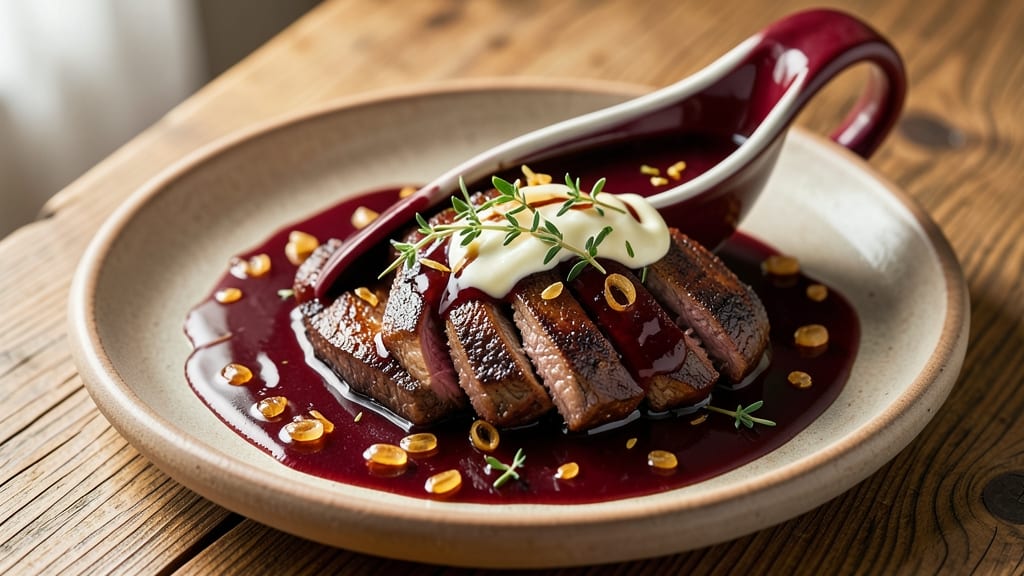
Transforming simple pan drippings into a rich, velvety beef and red wine gravy is where home cooking elevates from good to extraordinary. 💛 The secret lies in patience—letting the wine reduce slowly while building layers of flavor through a classic roux.
This isn’t just a sauce; it’s the kind of gravy that makes steak night feel like a restaurant experience without the price tag.
What sets this recipe apart is the balance: bold red wine cuts through the richness of beef drippings, while a proper roux ensures the gravy thickens smoothly without breaking.
Fresh herbs and aromatics like shallots add depth, turning a basic cooking task into a foolproof technique that delivers restaurant-quality results every time. The process takes just 20 minutes, but the flavor develops as it rests.
Imagine pouring this deep, glossy gravy over perfectly cooked steak, creamy mashed potatoes, or even roasted vegetables—each bite becomes richer, more complex, and utterly satisfying. The wine’s acidity brightens the dish, while the roux creates that signature cling, ensuring no drop is wasted.
This is the gravy that makes ordinary meals feel special.
The best part? You’ll have enough to reheat for leftovers, making it the ultimate make-ahead sauce for busy weeknights. Let’s create something truly memorable—starting with just a few simple ingredients and a little time.
Ingredients for beef and red wine gravy
Nine essential ingredients transform ordinary pan drippings into luxurious beef and red wine gravy.
| Ingredient | Amount | Notes |
|---|---|---|
| Beef Pan Drippings 🥩 | 2 cups | From cooked steak, fat included |
| Dry Red Wine 🍷 | ½ cup | Bold, dry variety like Cabernet |
| All-Purpose Flour 🌾 | ¼ cup | Diamond Crystal preferred |
| Unsalted Butter 🧈 | ½ cup | Cold, cubed for roux |
| Shallots 🧅 | 2 whole | Minced, for aromatic base |
| Fresh Thyme Leaves 🌿 | 1 tbsp | Or 1 tsp dried thyme |
| Fresh Parsley Leaves 🌿 | 1 tbsp | Chopped, for brightness |
| Beef Stock 🥄 | ½ cup | Homemade or high-quality |
| Kosher Salt 🧂 | ½ tsp | Diamond Crystal preferred |
| Ground Black Pepper 🌶️ | ¼ tsp | Freshly ground preferred |
The beef drippings are non-negotiable—fat equals flavor, so don't skim. For the wine, bold, dry reds like Cabernet Sauvignon or Merlot work best; avoid sweet varieties. Whole Foods or Trader Joe's carry excellent selections. Shallots should be fresh, not dried—their subtle sweetness elevates the sauce. If using dried thyme, measure carefully: it's more concentrated than fresh. The beef stock should be rich but not salty—homemade or high-quality store-bought makes all the difference.
No red wine? Beef broth with a splash of balsamic vinegar mimics the acidity. Short on shallots? Three times the amount of finely chopped yellow onion works in a pinch. Fresh herbs wilt fast, so store them in damp paper towels in the fridge. For the roux, keep the heat low—burnt flour ruins everything. If you lack beef stock, water plus a bouillon cube suffices, though flavor will be milder. The butter must be cold for a proper roux; microwave 20 seconds to soften if needed.
This gravy improves with time—reheat gently on low heat to preserve texture. Store in an airtight container for up to 5 days in the fridge or 3 months frozen. For leftovers, whisk in a splash of water or stock to loosen. The sauce thickens as it cools, so add a few drops of water if it becomes too stiff when reheating. Portion into ice cube trays for perfect single-use servings.
Why You'll Love This Recipe
- Here’s what sold me: the wine doesn’t just flavor it—it transforms it. That deep, fruity note from the red wine cuts through the richness, giving it this perfect balance. (Yes, even on a Tuesday night.)
- Uses What’s Already There: I swear by this trick—no extra shopping needed. Just the rich drippings from your roast, a splash of red wine (the good stuff you’d drink anyway), and a handful of pantry staples. That’s it. No wasted ingredients, no last-minute grocery runs.
- Wine That Actually Shines: Here’s what sold me: the wine doesn’t just flavor it—it transforms it. That deep, fruity note from the red wine cuts through the richness, giving it this perfect balance. (Yes, even on a Tuesday night.)
- Leftovers That Beg for More: This gravy thickens beautifully when reheated, and honestly? It’s even better the next day. Slather it on mashed potatoes, drizzle it over steak fries, or just eat it with a spoon—no judgment here.
Step-by-step instructions for beef and red wine gravy
Transform simple pan drippings into a velvety, wine-infused gravy with this foolproof technique.
🍳 Step 1: Create a Rich Roux Foundation
Heat a large skillet over medium heat and add the 0.5 cup unsalted butter and 2 cups beef pan drippings from your cooked steak. Let the mixture bubble gently for 3-4 minutes until the butter melts completely and the drippings begin to sizzle.
Here's the thing—this initial step builds flavor depth. The fat from the drippings carries all those caramelized meat notes that make this gravy extraordinary. If you see any browned bits clinging to the pan, use a wooden spoon to scrape them up and distribute them evenly. These bits, called fond, are pure flavor gold.
👨🍳 Step 2: Build Flavor with Shallots and Herbs
Add the 2 minced shallots to the skillet and cook for 3-4 minutes until they become translucent and just beginning to turn golden. This is where the aromatics develop their full potential—don't rush this step or you'll end up with bitter shallots.
Stir in the 1 tbsp fresh thyme leaves and 1 tbsp fresh parsley leaves, letting them cook for another 30 seconds until fragrant. The herbs will infuse the fat with their bright, earthy notes. I always use fresh herbs here because dried versions can be overpowering and lack complexity. If you're using dried, reduce to 1 teaspoon each and add them later in the process.
🥘 Step 3: Thicken with Flour and Deglaze with Wine
Lower the heat to medium-low and gradually whisk in the 0.25 cup all-purpose flour until completely dissolved—this creates a smooth roux that will thicken your gravy. Cook for 1-2 minutes until the mixture turns a pale golden color and smells nutty.
Now for the magic: pour in the 0.5 cup dry red wine all at once and scrape up any browned bits from the bottom of the pan. Let the wine simmer for 3-4 minutes until it reduces by about half and the alcohol smell dissipates completely. This step develops the wine's rich, complex flavors while adding depth to the gravy. Don't walk away—wine burns quickly and can turn bitter.
⏰ Step 4: Finish with Stock and Seasoning
Pour in the 0.5 cup beef stock and bring the mixture to a gentle simmer. Let it cook for 5-7 minutes until it thickens to your desired consistency—it should coat the back of a spoon but still be pourable. If it thickens too quickly, whisk in 1-2 tablespoons of hot water to adjust.
Season with 0.5 teaspoon kosher salt and 0.25 teaspoon ground black pepper, then taste and adjust as needed. The gravy should be rich but not overpowering—you want the wine and beef flavors to shine through. For extra brightness, you can add a splash more wine or a pinch of sugar to balance any acidity.
🍽️ Step 5: Strain and Serve Immediately
Transfer the gravy to a fine-mesh strainer set over a clean saucepan. Press gently with a wooden spoon to remove any herb bits or shallot pieces, but don't overdo it—you want to keep some texture for body. Return the strained gravy to the saucepan and keep it warm over low heat.
This gravy is best served immediately while still warm and glossy. The flavors continue to develop as it sits, so don't make it too far ahead of time. For maximum impact, drizzle it over perfectly cooked steak or use it to elevate roasted vegetables and mashed potatoes. The wine's acidity cuts through rich meats beautifully, creating a harmonious balance in every bite.
Pro Tips For Making Beef And Red Wine Gravy
- Deglaze Hot: Pan drippings cool fast—work fast. Keep the pan on medium-high heat while you whisk in the red wine, scraping every last bit of browned bits from the bottom. The more you get, the richer your gravy.
- Use Cold Butter: I learned this the hard way—adding cold butter at the end makes the gravy silky instead of greasy. Cut a pat into small cubes, let them melt slowly off the heat, and whisk until fully incorporated. No more lumps or separation.
- Strain the Shallots: Fine mincing shallots? They’ll turn your gravy grainy. Pulse them in a food processor or finely chop, then strain through a fine-mesh sieve before adding to the roux. Smooth texture every time.
- Simmer Slow: Boiling gravy ruins it—it turns cloudy and loses depth. Once the wine reduces, drop to a gentle simmer (tiny bubbles, occasional swirls) and let it cook uncovered for 8–10 minutes. Patience here makes all the difference.
Dietary considerations for this dish
Gluten-Free Adaptation
Replace the all-purpose flour with ¼ cup gluten-free all-purpose flour blend (like Bob's Red Mill 1-to-1) for a thickened gravy. The key is patience—cook the roux at medium-low heat for 2-3 minutes to avoid burning, as gluten-free flours brown faster.
For extra richness, whisk in 1 tablespoon cornstarch with the flour to improve binding. 🌾
Dairy-Free Option
Skip the butter entirely and use ½ cup beef drippings plus 2 tablespoons olive oil for the roux base. For thickness, blend 2 tablespoons gluten-free flour with 1 tablespoon cornstarch before whisking into the pan.
The olive oil adds a subtle fruity note that complements the wine beautifully. Store-bought dairy-free butter (like Earth Balance) works too, but expect slightly less depth.
Low-Sodium Version
Use low-sodium beef stock (like Pacific Foods) and reduce the salt to ¼ teaspoon kosher salt. Boost umami with 1 teaspoon Worcestershire sauce (check for gluten-free if needed) or ½ teaspoon fish sauce.
The wine's acidity will still brighten the dish without relying on salt. For extra flavor, add ½ teaspoon smoked paprika during the roux stage to deepen the beef notes.
Vegetarian Substitutes
Swap beef drippings for 2 cups mushroom pan drippings (sautéed shiitake or cremini mushrooms) and use vegetable stock instead of beef stock. For richness, add 1 tablespoon nutritional yeast after straining.
The wine's depth still shines through, making this a surprisingly hearty vegetarian gravy. Serve over roasted portobello mushrooms or lentil loaf for a satisfying meal. 🌱
Allergy-Friendly Tips
For nut allergies, avoid butter substitutes with nut oils. For soy allergies, check Worcestershire sauce labels—some contain soy. Always strain the gravy through a fine-mesh sieve to remove any potential cross-contamination from herbs or shallots.
When in doubt, prepare the gravy in a dedicated clean pot to avoid trace allergens from previous cooking.
Nutrition facts
Frequently asked questions
Can I use any red wine for this gravy?
For the best flavor, use a bold, dry red wine like Cabernet Sauvignon or Merlot. The tannins and acidity enhance the gravy's depth. Avoid sweet wines—they'll make the sauce taste cloying rather than balanced. If you only have a lighter red like Pinot Noir, add ½ teaspoon balsamic vinegar to boost acidity and richness.
What if my gravy gets too thick?
If your gravy thickens too much, whisk in 1-2 tablespoons of hot water or beef stock gradually until you reach the desired consistency. For a smoother texture, strain it again through a fine-mesh sieve. The key is to add liquid slowly—too much at once can make the gravy watery. Always taste as you go!
Can I make this gravy ahead of time?
Yes! This gravy actually tastes better the next day as the flavors meld. Store it in an airtight container in the fridge for up to 5 days. When reheating, warm it gently over low heat and whisk in a splash of water or stock if it thickens too much. For longer storage, freeze it for up to 3 months—portion into ice cube trays for perfect single servings.
What can I do with leftover gravy?
Use it to elevate leftovers like steak sandwiches, roasted potatoes, or even eggs! Drizzle it over grilled cheese for a gourmet twist, or use it as a base for beef stroganoff. For a quick fix, mix it with mashed potatoes or serve it alongside braised short ribs. The wine's acidity cuts through rich meats beautifully, making it incredibly versatile.
Why did my gravy turn bitter?
Bitter flavor usually comes from burning the wine or roux. Keep heat at medium-low when reducing the wine and never let the roux darken beyond a pale golden color. If it burns, start over with fresh ingredients. For extra insurance, add ½ teaspoon sugar when you pour in the wine—it helps balance any bitterness from overcooking.