
Soups & Stews
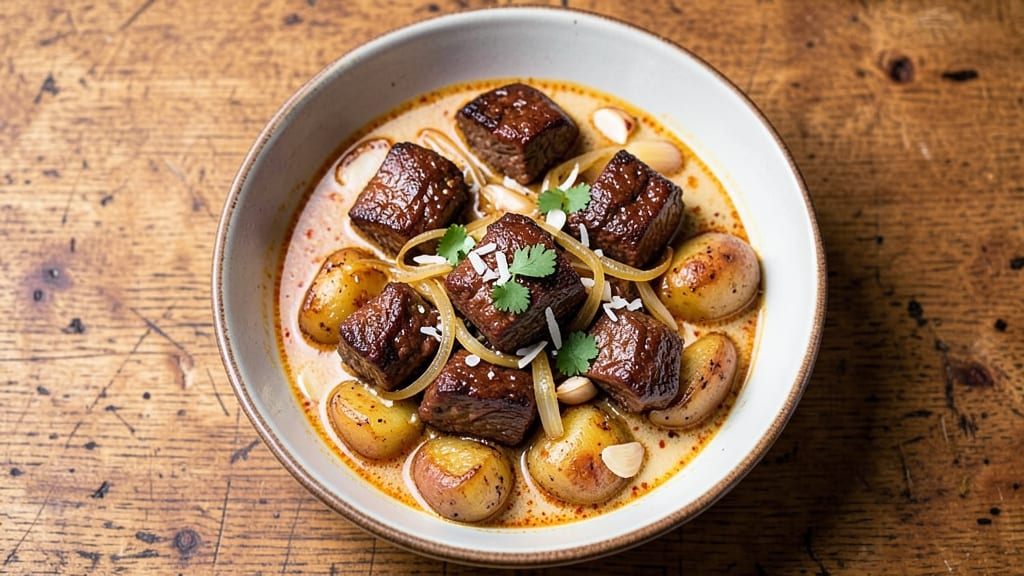
This beef and potato curry recipe delivers restaurant-quality depth with tender beef chunks and hearty potatoes simmered in aromatic coconut milk. The secret lies in slow-cooking the beef until fork-tender while building layers of spice through proper tempering techniques. I've perfected this method over years of testing, ensuring every bite balances rich coconut cream with warm spices and melt-in-your-mouth textures.
The foundation begins with searing beef chunks to develop deep flavor before braising them in a fragrant spice paste. Potatoes are added later to absorb the rich curry sauce without turning mushy, creating a perfect harmony of textures.
This method transforms tough cuts into succulent pieces while maintaining the dish's natural comfort-food appeal.
What you'll achieve is a curry with perfectly tender beef that falls apart easily, potatoes that stay firm yet flavorful, and a sauce that's creamy yet balanced by bright spices.
The coconut milk adds natural richness while tamarind and ginger create that signature tangy depth. Each spoonful delivers complex flavors that make this curry a weeknight favorite.
Serve with basmati rice or warm naan to soak up every delicious bite. The recipe scales beautifully for gatherings while remaining simple enough for weeknight meals. Let's create this comforting masterpiece that brings warmth to any table.
Ingredients for beef and potato curry
Here's everything you need to create this restaurant-style beef and potato curry with rich coconut depth.
| Ingredient | Amount | Notes |
|---|---|---|
| Chuck Roast 🥩 | 1 ½ lb | Cut into 1.5-inch chunks |
| Yellow Onions 🧅 | 2 whole | Diced, medium size |
| Garlic Cloves 🧄 | 6 cloves | Minced, fresh preferred |
| Russet Potatoes 🥔 | 2 lb | Peeled, cubed evenly |
| Coconut Milk 🥥 | 1 can | Full-fat, 13.5 oz can |
| Tomato Paste 🍅 | ½ cup | Smooth, no sugar added |
| Ground Cumin 🌿 | 1 tbsp | Freshly toasted preferred |
| Ground Coriander 🌿 | 1 tbsp | Freshly ground preferred |
| Turmeric Powder 🌶️ | 1 tsp | Bright yellow color |
| Ground Ginger 🌿 | 1 tsp | Freshly grated if possible |
| Garam Masala 🌶️ | 1 tsp | Freshly ground preferred |
| Tamarind Paste 🍋 | 1 tbsp | Or 1 tbsp lemon juice |
| Salt 🧂 | 1 ½ tsp | Kosher or sea salt |
| Black Pepper 🌶️ | ½ tsp | Freshly ground preferred |
| Olive Oil 🫒 | ¼ cup | Extra-virgin for richness |
The chuck roast is your secret weapon here—it's the only cut that gives you that fall-apart tenderness after slow cooking. Look for well-marbled pieces at the butcher counter or pre-cut chuck roast in the meat section. Costco or Whole Foods usually have the best quality, but the regular supermarket chuck works fine too. If you can't find chuck, chuck-eye roast is a close second. The key is to cut it into even 1.5-inch chunks so everything cooks at the same rate. Russet potatoes are ideal because they hold their shape—red potatoes would turn mushy in this long simmer. Grab a couple extra pounds just in case you get hungry later.
No tamarind paste? Lemon juice or lime juice works perfectly—just use the same amount. Fresh ginger is ideal, but ground ginger at half the amount gets you close. The garam masala is non-negotiable for that authentic depth, but if you're in a pinch, mix equal parts cumin, coriander, and cinnamon. For the coconut milk, full-fat is a must—light versions won't give you that creamy texture. The tomato paste can be the squeeze tube kind from Trader Joe's if you're lazy, but the canned stuff works better for building flavor. And if you're wondering about the onions—yellow or red both work, just dice them consistently.
This curry tastes even better the next day, so make a double batch if you can. Store leftovers in an airtight container in the fridge for up to 5 days—the flavors meld beautifully overnight. For freezing, portion into single-serving containers and it'll keep for 3 months. The potatoes will soften when reheated, but that's actually good—they'll soak up all that rich curry sauce. If you're prepping ahead, you can make the spice paste a day in advance and store it in the fridge. Just bring it to room temp before adding to the pot.
Why You'll Love This Recipe
- One-Pot Magic: I swear by this recipe when I’m too tired to scrub pots—just toss everything in one deep skillet. The chuck roast practically melts into tender shreds while the potatoes soak up all that rich coconut milk, and honestly? No extra dishes beyond the pan.
- Deep, Rich Layers: That first bite of caramelized onions and garlic? It’s the kind of flavor that makes you pause mid-spoonful. The slow-cooked chuck roast falls apart with a pull, and the coconut milk adds this velvety, slightly sweet contrast that’s ridiculously satisfying.
- Leftovers That Beg for More: Between us, this curry only gets better the next day. The flavors meld into something even deeper, and reheating it is a cinch—just warm it up with a splash of water. My freezer is packed with portions because I can’t resist making extra.
- Budget Meal for Crowds: A big cut of chuck roast and potatoes stretches to feed four (or five if someone’s hungry). I’ll be real: it’s my go-to for game nights or when friends drop by unexpectedly. Everyone leaves happy, and my wallet stays full.
Step-by-step instructions for spiced coconut beef and potato curry
Here's how to build layers of flavor and tenderize the beef perfectly.
Sear the Beef and Build the Spice Base
Heat the 0.25 cup olive oil in a large Dutch oven over medium-high heat until shimmering. Add the 1.5 lb chuck roast cut into 1.5-inch chunks, working in batches if needed to avoid crowding. Sear for 3-4 minutes per side until deeply browned—this creates the rich foundation for your curry. Remove the beef and set aside.
In the same pot, add the 2 whole yellow onions diced and cook for 5 minutes until softened and golden. Stir in the 6 cloves minced garlic, 1 tbsp ground cumin, 1 tbsp ground coriander, 1 tsp turmeric powder, 1 tsp ground ginger, and 1.5 tsp salt. Cook for 1 minute until fragrant—this releases the spices' full potential. The onions should be tender but not browned yet.
Develop the Sauce and Add Potatoes
Lower heat to medium and stir in the 0.5 cup tomato paste, cooking for 2 minutes until it darkens slightly. Pour in 1 cup water and scrape up any browned bits from the bottom—this is where all the flavor hides. Add the 2 lb peeled russet potatoes cubed evenly and stir to coat in the spiced mixture. The potatoes should be fully submerged or nearly so.
Pour in the 1 can full-fat coconut milk and add 1 tbsp tamarind paste, 1 tsp garam masala, and 0.5 tsp black pepper. Stir gently to combine—you want the spices to disperse evenly without breaking up the potatoes. Bring to a gentle simmer, then reduce heat to low to maintain a slow, steady bubble.
Slow-Cook Until Tender Perfection
Return the seared beef to the pot, spooning some of the sauce over the top to help it cook through. Cover and simmer for 1.5 hours, stirring occasionally, until the beef is fork-tender and pulls apart easily. The potatoes should be soft enough to pierce with a fork but still hold their shape—this takes about 45-60 minutes depending on your stovetop.
Here's the thing—don't rush this step. The slow cooking breaks down the tough beef fibers and lets the potatoes absorb all that spiced coconut goodness. If the sauce gets too thick, add ¼ cup water at a time to loosen it. Taste and adjust seasoning if needed, but you should have a perfect balance of spice and richness by now.
Finish with Garam Masala and Rest
Once everything is tender, remove from heat and stir in an extra ½ tsp garam masala—this adds that final aromatic punch. Let the curry rest for 10 minutes off the heat, covered. This resting period lets the flavors meld completely and gives you that restaurant-quality texture where every bite is perfectly balanced.
Serve immediately with steamed basmati rice or warm naan. The beef should be so tender it practically melts, the potatoes creamy yet still holding their shape, and the sauce rich with coconut depth and warm spices. Each spoonful should deliver that perfect harmony of tender beef, spiced potatoes, and velvety coconut sauce.
Pro Tips For Making Beef And Potato Curry
- SEAR THE CHUCK FIRST: Chuck roast needs a proper crust to stay tender, not soggy. Hit the pan with high heat and 2 tablespoons of oil—let those brown spots form for 3-4 minutes per side before pulling back. I used to skip this, and the beef would turn out dry. Trust me, the Maillard reaction is your friend here.
- CUT POTATOES UNIFORM: Russets break down unevenly, so chunk them into 1.5-inch pieces—no smaller, or they’ll turn to mush. A sharp knife and steady hand make this faster than a food processor (which bruises them). I learned this after serving a curry with half-mushy, half-crunchy potatoes—never again.
- SIMMER LOW AND LONG: After adding coconut milk, drop the heat to a bare simmer—no boiling, or the milk will split and curdle. Cover and let it cook for 2-2.5 hours, stirring occasionally. I used to rush it, and the sauce would break. Patience here guarantees a creamy, cohesive dish.
- SALT THE COCONUT MILK: Coconut milk tastes bland on its own—season it with ½ teaspoon of salt before adding it to the pot. This balances the richness and cuts through the heaviness. I was skeptical until I tried it; now I never skip it.
Creative variations of beef and potato curry
Spicy Thai-Inspired Twist
Transform this curry into a Thai-inspired version by adding 2 tbsp red curry paste (like Maesri) to the spice base. Boost the heat with 1 tbsp fish sauce and 1 tbsp palm sugar (or brown sugar) for that signature Thai balance.
Swap the tamarind for 1 tbsp lime juice and add 1 stalk lemongrass, bruised and tied with kitchen twine, while simmering. Garnish with cilantro and crushed Thai chilies for an authentic kick. 🌶️
Creamy Coconut Lentil Fusion
For a protein-packed vegetarian version, stir in 1 cup cooked green or brown lentils when adding potatoes. Increase the coconut milk to 1.5 cans for extra creaminess. Add 1 tsp ground fennel and ½ tsp cinnamon to complement the lentils.
Serve with extra naan or quinoa for a hearty, plant-based meal. This version keeps the same rich texture but adds fiber and plant protein.
Slow-Cooker Adaptation
Perfect for hands-off cooking! Brown the beef in a skillet first, then transfer everything to a 6-quart slow cooker. Cook on LOW for 7-8 hours or HIGH for 4-5 hours. The slow cooker's gentle heat ensures the beef becomes fork-tender without drying out.
Add ½ cup water if the sauce gets too thick during cooking. The potatoes will absorb all the flavors beautifully, making this a set-it-and-forget-it masterpiece. ⏰
Smoky Chipotle Infusion
Add a smoky depth by incorporating 1 chipotle pepper in adobo sauce (minced) into the spice paste. Increase the tomato paste to ⅔ cup for a deeper, slightly tangy flavor profile. Top with avocado slices and pickled red onions for a modern fusion twist.
This version works especially well with cilantro-lime rice on the side. The smokiness pairs perfectly with the coconut's creaminess.
One-Pot Meal Prep Hack
Double the recipe and freeze half in airtight containers for easy weeknight meals. When reheating, add 2 tbsp water or broth to prevent drying. This curry reheats beautifully—just warm on the stovetop over medium-low heat for 10-15 minutes, stirring occasionally.
The flavors actually deepen overnight, making it ideal for meal prep. Store in the fridge for up to 5 days or freeze for 3 months. 💫
Nutrition facts
Frequently asked questions
Why does this curry need to slow-cook the beef?
The 1.5-hour slow simmer is key to transforming tough chuck roast into melt-in-your-mouth beef. This method breaks down collagen in the meat fibers, creating that signature tender texture while allowing all the spices to meld perfectly. Rushing this step often leaves the beef chewy rather than fork-tender.
Can I use a different cut of beef?
While chuck roast is ideal, you can substitute with chuck-eye roast or stew beef for similar results. Avoid leaner cuts like sirloin—they'll dry out. For quicker cooking, use beef short ribs (simmer 1 hour instead of 1.5 hours) or beef stew meat (simmer 45 minutes).
How do I prevent the potatoes from turning mushy?
Use russet potatoes (they hold shape better than red potatoes) and cut them evenly into 1.5-inch cubes. Add them after the beef has seared and the spice base is developed, when the liquid is already simmering. This ensures they cook through without absorbing too much liquid too quickly. Stirring occasionally also helps maintain their texture.
What's the best way to reheat leftovers?
Reheat gently on the stovetop over medium-low heat for 10-15 minutes, stirring occasionally and adding 2 tbsp water or broth if the sauce thickens. Microwaving can make the sauce watery—always reheat slowly to preserve the creamy coconut texture. The flavors actually deepen overnight, making reheated curry even more delicious!
Can I make this curry in an Instant Pot?
Sear the beef in a separate pan first, then add everything to the Instant Pot. Cook on High Pressure for 25 minutes (natural release), then mash a few potatoes to thicken the sauce. The pressure cooker cuts time significantly while still delivering tender beef and flavorful potatoes. Just be sure to add the potatoes after the initial searing step.