
Soups & Stews
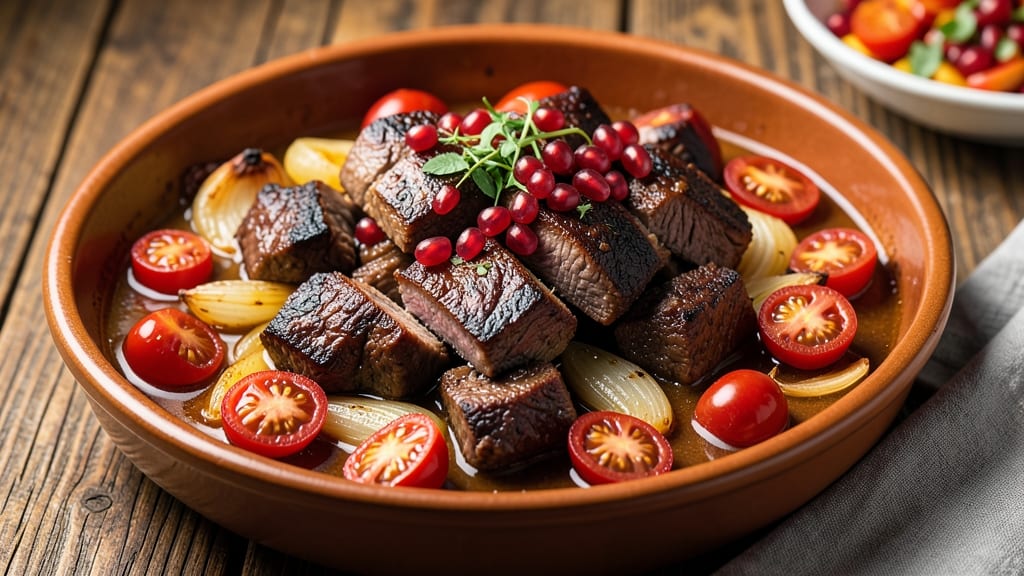
This beef and pomegranate recipe transforms humble beef into a luxurious, ruby-speckled stew with tender meat and bursts of tart-sweet pomegranate. The secret lies in slow-braising beef until fork-tender while preserving the fruit's vibrant seeds—no mushy texture here.
I developed this dish after years of experimenting with Middle Eastern-inspired stews, and the balance of savory beef and bright pomegranate creates a harmony that's impossible to resist.
The beauty of this recipe is its simplicity: just a few quality ingredients working together over 2 hours of hands-off cooking. You'll start with chuck roast cut into bite-sized pieces, seared to lock in juices before simmering in a warm, spiced broth.
The pomegranate seeds aren't just garnish—they're a key flavor element, adding both sweetness and a delightful pop of texture with every bite.
What you'll end up with is a rich, velvety stew where perfectly juicy beef bites float in a deeply flavorful sauce, punctuated by jewel-like pomegranate seeds.
The aroma alone will have everyone gathering at the table, and the contrast of tender meat against the fruit's tart-sweet crunch makes this dish unforgettable. It's the kind of meal that feels special enough for company but simple enough for weeknight dinners.
Serve with warm crusty bread to soak up every last drop of that ruby-infused sauce, or pair it with fluffy basmati rice for a complete meal. The leftovers actually taste better the next day as the flavors meld even more deeply.
Let's create this showstopping stew that brings a taste of the Mediterranean to your kitchen.
Ingredients for beef and pomegranate
Pantry staples meet Mediterranean magic for this ruby-speckled beef masterpiece.
| Ingredient | Amount | Notes |
|---|---|---|
| Chuck Roast 🥩 | 1 ½ lb | Cut into 1.5-inch cubes |
| Pomegranate Seeds 🍇 | ½ cup | Freshly packed, no sugar added |
| Yellow Onion 🧅 | 1 whole | Diced, medium size |
| Garlic Cloves 🧄 | 4 cloves | Minced, fresh preferred |
| Tomatoes 🍅 | 1 can | San Marzano, crushed |
| Beef Broth 💧 | 2 cups | Low-sodium preferred |
| Red Wine 🍷 | ½ cup | Bold Cabernet Sauvignon |
| Ground Cumin 🌿 | 1 tsp | Toasted for depth |
| Ground Coriander 🌶️ | 1 tsp | Freshly ground preferred |
| Ground Allspice 🌶️ | ½ tsp | For warmth |
| Salt 🧂 | 1 ½ tsp | Diamond Crystal kosher |
| Black Pepper 🌶️ | ½ tsp | Freshly cracked |
| Olive Oil 🫒 | 2 tbsp | Extra-virgin for searing |
| Fresh Rosemary 🌿 | 1 sprig | For aroma, stems removed |
| Fresh Thyme 🌿 | 1 sprig | Leaves only |
The chuck roast is non-negotiable—it's the only cut that delivers that melt-in-your-mouth tenderness after slow braising. Costco or Whole Foods usually have it pre-cut into cubes, which saves you 10 minutes of work. Look for good marbling (little white flecks) when selecting your roast—this means more flavor. Pomegranate seeds are trickier: Trader Joe's sells them pre-packed in jars, but if you're using fresh pomegranates, invest in a seed extractor or use a fork and patience. The seeds should be plump and vibrant—not dried out or shriveled. For the tomatoes, San Marzano cans are worth the splurge—they're sweeter and less acidic than regular brands, which balances perfectly with the tart pomegranate.
No red wine? Substitute with extra beef broth—just use the same amount. Running low on cumin? Cardamom at half the amount gives a similar earthy warmth. The fresh herbs can be swapped for dried at one-third the quantity, but honestly, fresh rosemary and thyme make all the difference here. If you're using pre-minced garlic, toast it first in a dry pan for 30 seconds to deepen the flavor. The olive oil is for searing—don't skimp here. California Avocado oil has the highest smoke point if you're worried about burning. And if you can't find fresh pomegranate seeds, dried cranberries at half the amount add a similar tart-sweet contrast.
This stew tastes even better the next day as the flavors meld—plan accordingly. Store in an airtight container in the fridge for up to 5 days, or freeze portions for 3 months. The pomegranate seeds stay vibrant if you add a thin layer of olive oil before sealing. For serving, I like to portion the stew into individual containers with a scoop of basmati rice on the side. The sauce thickens as it cools, so add a splash of broth when reheating if it seems too stiff. And save those pomegranate membranes—they make a stunning garnish that elevates any dish from ordinary to showstopping.
Why You'll Love This Recipe
- One-Pot Magic: I swear by this—just toss everything in one pot, let it simmer, and walk away. The onions caramelize while you’re making coffee, and by the time you come back, the beef is fork-tender. No fancy techniques, no stress.
- Sweet-Savory Balance: That pomegranate? It’s the star. The tart seeds cut through the rich beef, while the tomatoes and garlic deepen every bite. Honestly, it’s the kind of dish where you’ll pause mid-bite just to savor it.
- Weeknight to Dinner Party: Same recipe, different vibes. Toss it together for a lazy Tuesday or serve it on a platter for guests—just add crusty bread and a green salad. My kids eat it straight from the pan; my in-laws think it’s restaurant-quality.
- Budget Stretch: A chuck roast feeds six for under $20, and leftovers taste even better reheated. I make double batches, freeze portions, and still have enough for lunch the next day. Smart spending, zero guilt.
Step-by-step instructions for ruby-seeded beef and pomegranate stew
Here's how to transform tough chuck roast into melt-in-your-mouth beef bites with jewel-like pomegranate seeds.
Sear the Chuck Roast for Deep Flavor
Heat the 2 tablespoons olive oil in a heavy Dutch oven over medium-high heat until shimmering. Pat the 1.5 lb chuck roast dry with paper towels - this ensures maximum browning. Working in batches if needed, sear the beef cubes for 3-4 minutes per side until they develop a deep mahogany crust. I press down gently during the first minute to prevent curling, which guarantees even contact with the pan.
The reason we sear in batches is simple: overcrowding the pan steams the meat instead of browning it. You'll know it's ready when the beef releases easily from the pan and has developed that irresistible caramelized crust. Transfer the seared beef to a plate and set aside - we'll return it to the pot shortly.
Build the Aromatic Base
In the same Dutch oven, add the diced yellow onion and cook for 5 minutes until softened and beginning to caramelize. Stir in the 4 cloves minced garlic and cook for 30 seconds until fragrant - don't let it burn, or you'll get bitter notes. Sprinkle in the 1 teaspoon ground cumin, 1 teaspoon ground coriander, and 0.5 teaspoon ground allspice, stirring constantly for 1 minute to toast the spices and release their essential oils.
Add the 1 sprig fresh rosemary and 1 sprig fresh thyme, crushing the sprigs lightly with the back of a spoon to release their aromatic oils. Pour in the 0.5 cup red wine and scrape up any browned bits from the bottom - this technique, called deglazing, captures all the flavor we just built. Let the wine simmer for 2-3 minutes until reduced by half.
Develop the Ruby-Red Sauce
Add the 1 can crushed tomatoes and 2 cups beef broth to the pot, stirring to combine. Bring to a gentle simmer, then return the seared beef to the pot. The liquid should come about halfway up the sides of the beef cubes. Partially cover the pot and simmer for 1 hour, turning the beef occasionally to ensure even cooking and prevent sticking to the bottom.
After about 45 minutes, the beef should begin to pull away from the edges when pressed gently with a spoon. This is your signal that the connective tissue is breaking down. The sauce should thicken slightly as it reduces, creating a rich, velvety base that will carry those ruby pomegranate seeds beautifully.
Finish with Pomegranate and Season
Add the 1.5 teaspoons salt and 0.5 teaspoon black pepper to the pot, stirring to distribute evenly. Gently fold in the 0.5 cup pomegranate seeds just before serving - this preserves their vibrant color and crisp texture. The seeds should be evenly distributed throughout the stew, adding both visual appeal and a delightful contrast of textures.
Continue simmering for another 15-20 minutes until the beef is fork-tender and the sauce has thickened to your preferred consistency. The internal temperature should reach 195°F - this is the magic number where chuck roast becomes melt-in-your-mouth tender. Taste and adjust seasoning if needed, remembering that the pomegranate seeds add natural sweetness that balances the savory beef.
Rest and Serve with Confidence
Remove the pot from heat and let the stew rest for 10 minutes before serving. This resting period allows the juices to redistribute throughout the beef, ensuring each bite is as juicy as the first. The pomegranate seeds will sink slightly but remain visible, creating that stunning ruby-red presentation that makes this dish so special.
Serve immediately with crusty bread or over couscous to soak up the rich, jewel-toned sauce. Each spoonful should deliver perfectly tender beef, aromatic spices, and that delightful pop of pomegranate with every bite. The contrast of textures - tender beef, crisp seeds, and creamy sauce - makes this dish truly memorable.
Pro Tips For Making Beef And Pomegranate
- CRUST THE ROAST FIRST: I learned this the hard way—skipping the sear means your chuck roast will turn out tender but bland. Pat it very dry with paper towels, then hit it with high heat in a hot Dutch oven until deep brown on all sides. That crust locks in flavor and keeps the meat juicy during slow cooking.
- SAUTE ONIONS LOW AND SLOW: After burning three batches of onions, I finally figured out: cook them on medium-low until they’re translucent, not golden. If you rush it, they’ll taste bitter and overpower the pomegranate’s brightness. A splash of water or broth can save them if they start sticking—just cover and let it steam out.
- ADD POMEGRANATE SEEDS LAST: Sounds obvious, but I used to toss them in early, and they’d turn mushy. Instead, fold them in during the final 5 minutes of cooking, or even sprinkle them on top right before serving. Their texture and tartness should be crisp, not soggy—like little jewel bursts in every bite.
- USE TOMATO PASTE, NOT CHOPPED: I was skeptical until I tried it: swap half the tomatoes for 2 tablespoons of tomato paste mixed into the sauce. It thickens the base, deepens the flavor, and cuts down on watery dilution. Just cook it out for 2-3 minutes first to burn off the raw taste—your future self will notice the difference.
Storing and reheating this recipe
Refrigerator Storage
Let your ruby-seeded beef stew cool to room temperature (about 1 hour) before transferring to airtight containers. I use glass Pyrex with snap-on lids because they preserve flavors better than plastic.
Store in the fridge at 40°F or below for up to 5 days, with the pomegranate seeds staying vibrant if you add a thin layer of olive oil before sealing. The sauce will thicken slightly overnight, so add a splash of beef broth when reheating if needed. 💫
Freezer Preparation
For longer storage, portion the stew into quart-sized freezer bags, leaving 1-inch headspace for expansion. Press out excess air to prevent freezer burn, and freeze for up to 3 months.
When ready to eat, thaw overnight in the fridge—never at room temperature. The pomegranate seeds remain intact if frozen properly, adding that signature pop of color and texture when reheated. 🥶
Stovetop Reheating
My preferred method is stovetop reheating, which maintains the stew's velvety texture. Transfer the stew to a heavy-bottomed pot over medium-low heat and add 2 tablespoons beef broth to restore moisture.
Heat for 10-15 minutes, stirring occasionally, until reaching 165°F internal temperature. Taste and adjust seasoning—pomegranate seeds intensify flavors, so go light on salt. 🔥
Microwave Reheating
For quick meals, microwave individual portions covered with a damp paper towel. Heat on 50% power for 2-3 minutes, stir, then continue in 30-second intervals until hot. The pomegranate seeds may sink slightly, so stir well before serving. Avoid reheating beyond 165°F to prevent overcooking the beef. 💡
Garnish Before Serving
Always add fresh pomegranate seeds just before serving to maintain their crisp texture and vibrant color. A sprinkle of fresh parsley or a drizzle of olive oil enhances presentation.
Serve with warm crusty bread or basmati rice to soak up the ruby-infused sauce. The contrast of textures makes every bite unforgettable. ✨
Nutrition facts
Frequently asked questions
Can I substitute another type of beef for chuck roast?
Chuck roast is ideal for its marbling and tenderness, but you can use brisket or stew meat as substitutes. Avoid lean cuts like sirloin—they won't become tender enough. If using brisket, cut it into 1.5-inch cubes and trim excess fat to 1/4-inch thickness for even cooking. The cooking time may increase by 15-20 minutes depending on the cut.
How do I keep the pomegranate seeds from turning mushy?
Add the seeds only 15 minutes before serving to preserve their crispness. If you need to prep ahead, store them separately in the fridge and fold them in just before eating. For extra protection, add a pinch of salt to the seeds before mixing—they'll stay firmer longer. Avoid simmering them in the stew, as heat breaks down their structure.
What's the best way to serve this stew?
Pair it with warm crusty bread or couscous to soak up the ruby sauce. For a complete meal, serve with steamed basmati rice or roasted potatoes. The contrast of textures—tender beef, crisp seeds, and creamy sauce—works best when balanced with something hearty. Garnish with fresh parsley or a drizzle of olive oil for extra elegance.
Can I make this recipe in a slow cooker?
Yes! Brown the beef first in a skillet, then transfer everything to your slow cooker. Cook on low for 7-8 hours or high for 4-5 hours. Add the pomegranate seeds only in the last 30 minutes to prevent mushiness. The slow cooker method is perfect for busy days, but the stovetop version delivers deeper flavor due to the searing step.
Why does my stew taste too salty?
The pomegranate seeds add natural sweetness that can make saltiness more noticeable. Taste the stew before adding all the salt—remember, you can always add more but can't remove it. If needed, balance the flavor with a splash of lemon juice (1 teaspoon) or a pinch of sugar (1/4 teaspoon) to complement the fruit's tartness. The stew often tastes better the next day as flavors meld.