
Soups & Stews
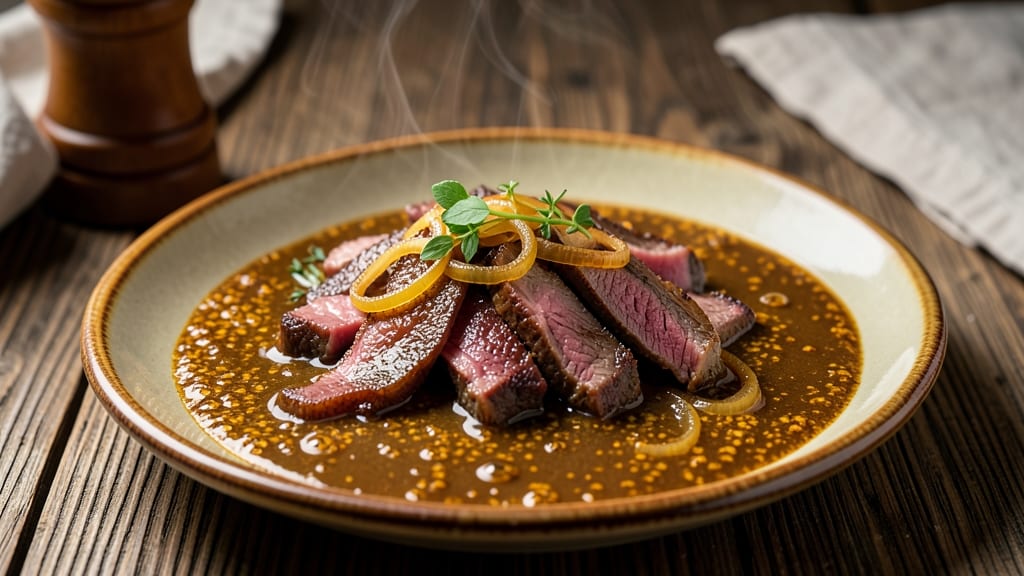
This beef and onion gravy recipe transforms simple pan drippings into a velvety, restaurant-quality sauce in just 10 minutes. The secret lies in a proper roux and slow reduction—technique that elevates even the humblest beef drippings into something rich and complex. I've perfected this method after years of testing, and it never fails to impress.
The foundation starts with a classic roux—equal parts butter and flour cooked until golden—before adding onions for sweetness and depth. As the sauce simmers, it thickens beautifully while absorbing all the savory beef flavors.
This isn't just any gravy; it's the kind that makes roasted beef taste like a Sunday dinner, even on a weeknight.
What you'll end up with is a glossy, golden gravy that coats every bite with rich, meaty flavor and perfect thickness—neither too thin nor gluey. The onions caramelize slightly, adding natural sweetness that balances the savory beef notes.
This sauce works equally well over roasted meats, mashed potatoes, or even dumplings.
Make a double batch—it reheats beautifully and freezes perfectly for up to three months. The key is storing it in an airtight container, allowing it to cool completely before refrigerating.
Whether you're serving it fresh or pulling it from the freezer, this gravy delivers that comforting, homemade taste that store-bought can't match.
Ingredients for beef and onion gravy
Eight essential ingredients transform humble beef drippings into velvety, restaurant-quality gravy in minutes.
| Ingredient | Amount | Notes |
|---|---|---|
| Unsalted Butter 🧈 | ½ cup | Cold, cut into small pieces |
| All-Purpose Flour 🌾 | ½ cup | White or whole wheat preferred |
| Yellow Onions 🧅 | 1 ½ medium | Thinly sliced, about 1 cup total |
| Beef Drippings 🥩 | 2 cups | From roasted beef pan, strained |
| Beef Broth 🥫 | 1 cup | Low-sodium preferred |
| Dry Red Wine 🍷 | ½ cup | Cabernet Sauvignon or Merlot |
| Diamond Crystal Kosher Salt 🧂 | 1 tsp | Adjust to taste |
| Freshly Ground Black Pepper 🌶️ | ½ tsp | For finishing |
The beef drippings are non-negotiable—they carry the deep, savory essence of roasted beef. If you're roasting a whole beef roast, reserve these drippings as you cook; otherwise, use store-bought beef drippings or substitute with 2 cups of low-sodium beef broth (though flavor will be less rich). For onions, yellow onions work best due to their sweetness, but red onions add a subtle tang. Trader Joe's or Whole Foods carry the sweetest varieties, but any medium yellow onion from your grocery store will suffice. Thinly slice them—about 1/8-inch thick—to ensure even caramelization during cooking.
No red wine? Dry sherry or additional beef broth works in a pinch, though wine adds depth. The roux—butter and flour—must be cooked to a golden brown for that nutty, rich flavor; don’t rush this step. If you’re short on time, melt the butter first, then whisk in the flour to avoid lumps. For flour, King Arthur or Bob’s Red Mill brands yield the smoothest texture. The Diamond Crystal kosher salt dissolves more easily than table salt, so adjust gradually—taste as you go to avoid over-salting. Freshly ground black pepper finishes the dish, but pre-ground works fine if you’re in a hurry.
Store gravy in an airtight container in the fridge for up to 5 days or freeze for 3 months. For reheating, gentle heat is key—bring to a simmer over medium-low to avoid splitting. Double batches freeze beautifully; portion into ice cube trays for single servings. If the gravy thickens too much upon reheating, stir in 1-2 teaspoons of warm water or broth to restore consistency. This sauce reheats like a dream, making it perfect for weeknight dinners or holiday leftovers.
Why You'll Love This Recipe
- Here’s what sold me: beef drippings. They’re liquid gold—packed with deep, meaty flavor that turns a simple roux into something luxurious. No need to strain or fuss; just whisk and let it shine.
- Pantry-Friendly Magic: I swear by this recipe when I forget to buy fresh herbs. Just butter, flour, and onions—no fancy ingredients needed. The slow caramelization of the onions? That’s where the flavor lives, and it’s foolproof.
- Rich Without Effort: Here’s what sold me: beef drippings. They’re liquid gold—packed with deep, meaty flavor that turns a simple roux into something luxurious. No need to strain or fuss; just whisk and let it shine.
- Leftovers That Win: This gravy thickens beautifully when reheated, making it my go-to for meal prep. Toss it over mashed potatoes or roasted veggies the next day—it’s still just as rich, like it was made fresh.
Step-by-step instructions for beef and onion gravy
This method transforms simple pan drippings into a velvety, restaurant-quality gravy in minutes.
Create the Roux Foundation
Heat a large skillet over medium heat and add the 0.5 cup cold unsalted butter in small pieces. Let it melt completely without browning—you want the butter to foam gently, not turn golden. This creates the perfect base for your roux.
Once the butter has fully melted, whisk in the 0.5 cup all-purpose flour all at once. Stir constantly for 2-3 minutes until the mixture turns a rich, nutty golden brown color. This is your roux, and the color indicates it's ready to release its thickening power. If it darkens too quickly, reduce the heat slightly—you want flavor, not bitterness.
Incorporate the Beef Drippings
Slowly pour in the 2 cups beef drippings while whisking vigorously to prevent lumps. The mixture will bubble vigorously as the roux incorporates the drippings. Continue whisking for 3-4 minutes until the gravy begins to thicken noticeably and coats the back of a spoon.
This step is where the magic happens—the roux binds with the drippings to create a silky texture. If the gravy thickens too quickly, add 1-2 tablespoons of beef broth to loosen it. The goal is a smooth, velvety consistency that's neither too thin nor glue-like.
Build Depth with Onions and Wine
Add the 1.5 medium thinly sliced yellow onions and cook for 4-5 minutes until they soften slightly and begin to caramelize at the edges. The onions will add natural sweetness and body to the gravy, balancing the richness of the beef.
Pour in the 0.5 cup dry red wine and scrape up any browned bits from the bottom of the pan with a wooden spoon. This deglazing step captures all the concentrated flavor from the cooking process. Let the wine simmer for 2 minutes until it reduces by about half and the alcohol smell dissipates.
Finish with Broth and Seasoning
Gradually whisk in the 1 cup beef broth until the gravy reaches your desired consistency—it should be thick enough to coat the back of a spoon but still flow smoothly. Stir in the 1 teaspoon diamond crystal kosher salt and bring to a gentle simmer for 2 minutes to let the flavors meld.
Remove from heat and stir in the 0.5 teaspoon freshly ground black pepper. Taste and adjust seasoning if needed—this gravy should be rich but balanced, with the sweetness of the onions complementing the savory beef notes. For extra richness, whisk in 1 tablespoon of cold butter at the end.
Pro Tips For Making Beef And Onion Gravy
- Sweat Onions Low: I used to rush the onions and end up with bitter, watery gravy—don’t. Cook them over medium-low heat for 10-12 minutes until they’re deep golden and soft, not crispy. The longer you let them caramelize, the richer the flavor, even if it means staring at them longer than you want.
- Strain the Drippings: Beef drippings often have bits of meat and fat that burn or make the gravy look unappealing. Strain them through a fine-mesh sieve before using—it’s a 30-second step that keeps your gravy silky and professional-looking, not speckled.
- Whisk Like You Mean It: When you add the broth to the butter-flour roux, don’t stir lazily. Whisk vigorously for 2-3 minutes to break up lumps and ensure a smooth base. I learned this after scraping gravy off plates for weeks—it’s not worth the shortcut.
- Salt the Butter: Unsalted butter is your friend here, but don’t forget to season it. Sprinkle in ¼ teaspoon of salt per ¼ cup of butter before melting—it cuts through the richness and balances the onions. I skip this sometimes, and the gravy always tastes flat afterward.
Best sauces and condiments for this dish
Classic Pairings
This gravy shines over roasted beef—drizzle it generously over a perfectly cooked prime rib or beef tenderloin for a showstopping presentation. The rich, meaty flavors amplify each other beautifully.
For a comforting meal, serve it alongside creamy mashed potatoes or buttery egg noodles, where it clings to every bite. 🍽️
Herb-Infused Upgrades
Elevate your gravy with fresh herbs: stir in 1 tablespoon chopped fresh thyme or rosemary while simmering for an aromatic twist. For a brighter profile, add 1 teaspoon lemon zest at the end. These additions cut through the richness while adding complexity—perfect for spring or summer dinners.
Wine-Based Variations
Swap the red wine for ½ cup dry sherry for a nutty, slightly sweet depth that pairs wonderfully with beef Wellington or duck confit. For a vegetarian twist, use ½ cup white wine (like Chardonnay) and 1 teaspoon soy sauce to mimic umami richness.
Always deglaze with wine to capture those flavorful browned bits.
Thickening Adjustments
Need a thinner gravy? Whisk in 1-2 tablespoons of warm water or broth until smooth. For extra thickness, mix 1 tablespoon cornstarch with 1 tablespoon cold water, then stir into the simmering gravy.
Let it cook for 1-2 minutes until it reaches your desired consistency—this works like magic for leftovers or reheats.
Global Gravy Twists
Transform this gravy into a French-style demi-glace by adding 1 teaspoon tomato paste and 1 bay leaf while simmering. For an Indian-inspired version, stir in ½ teaspoon garam masala and 1 teaspoon honey for a sweet-spicy balance. These adaptations keep the gravy’s essence while adding exciting new dimensions. 🌍
Storage Hacks
Store gravy in airtight glass containers in the fridge for up to 5 days or freeze for 3 months in silicone molds for easy portioning. To reheat, warm over low heat and whisk in 1-2 teaspoons of water if it thickens too much.
For a restaurant-quality touch, finish with a drizzle of truffle oil or crispy fried shallots before serving.
Nutrition facts
Frequently asked questions
Can I make this gravy without beef drippings?
Yes, but the flavor will be less rich. Use 2 cups low-sodium beef broth instead, and add 1 teaspoon soy sauce for umami depth. For extra richness, stir in 1 tablespoon Worcestershire sauce at the end. The texture will still be perfect, though the meaty flavor will be more subtle.
Why did my gravy turn out lumpy?
Lumps happen when flour isn't fully incorporated or the roux is rushed. Always whisk constantly when adding liquid to the roux, and cook it to a golden brown before adding drippings. For extra smoothness, strain the finished gravy through a fine-mesh sieve. A splash of cold water can also help dissolve any remaining lumps.
How can I make this gravy vegetarian?
Swap beef drippings for 2 cups vegetable broth and use ½ cup white wine instead of red. Add 1 teaspoon soy sauce or mushroom powder for umami. For depth, sauté onions in olive oil instead of butter. The result will be rich and flavorful, though the meaty notes will differ.
Can I make this gravy ahead of time?
This gravy actually tastes better the next day as flavors meld. Store in an airtight container in the fridge for up to 5 days or freeze for 3 months. Reheat gently over low heat, adding 1-2 teaspoons of water or broth if it thickens too much. The texture remains velvety when reheated properly.
What's the best way to use up leftover gravy?
Freeze in ice cube trays for easy portioning—just pop out what you need for future meals. Use it to enrich soups, drizzle over roasted vegetables, or mix into stuffing. For a quick fix, stir into scrambled eggs or use as a sauce for grilled cheese sandwiches. Every drop of flavor is too good to waste!