
Soups & Stews
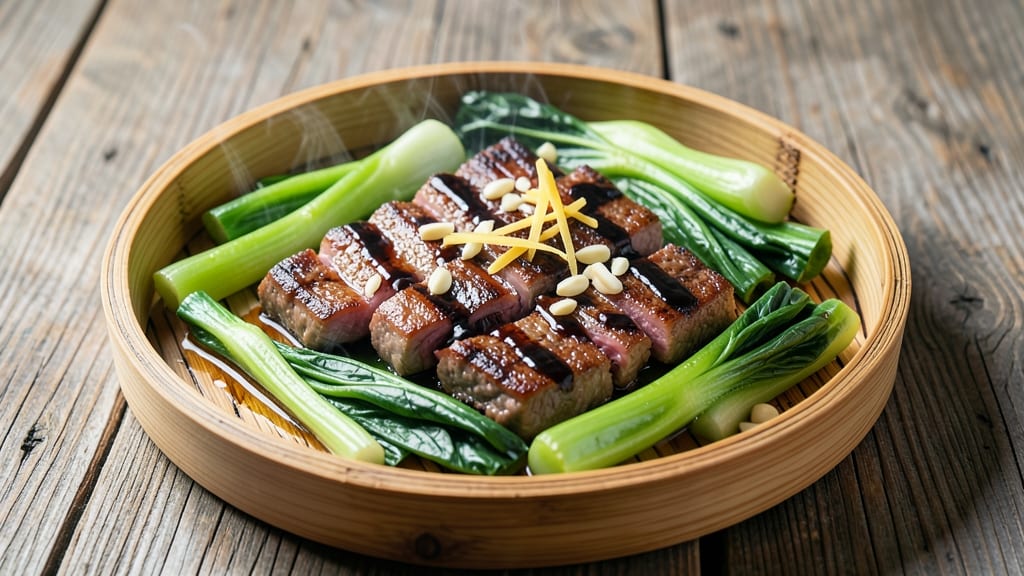
This beef and greens Chinese recipe delivers the perfect balance of tender beef and silky bok choy in a rich, savory soy-braised sauce. The secret lies in marinating the beef to ensure maximum tenderness, then braising it slowly until fork-tender.
This method transforms tough cuts into melt-in-your-mouth pieces that pair beautifully with the vibrant greens.
The dish begins with a simple yet flavorful marinade of soy sauce, garlic, and ginger, which infuses the beef with deep umami notes. As the beef braises, the aromatics meld together, creating a fragrant broth that will fill your kitchen with an irresistible scent.
Bok choy, with its crisp stems and tender leaves, absorbs the savory flavors beautifully, adding a fresh contrast to the rich beef.
What you'll achieve is a restaurant-quality dish that's both comforting and elegant—perfect for family dinners or special occasions. The silky texture of the bok choy and the tender beef create a harmonious bite, while the soy-braised sauce ties everything together with its balanced sweetness and saltiness.
This recipe is designed to be approachable for home cooks while delivering professional results.
Serve it steaming hot over steamed rice, garnished with green onions for a pop of color and freshness. The leftovers reheat beautifully, making it an ideal meal prep option for busy weeks. Let's create this satisfying dish that captures the essence of Chinese home cooking.
Ingredients for beef and greens chinese
These ingredients create a restaurant-worthy Chinese beef and greens dish with tender beef and vibrant bok choy.
| Ingredient | Amount | Notes |
|---|---|---|
| Flank Steak 🥩 | 1 ½ lb | Cut into 1-inch strips |
| Bok Choy 🥬 | 2 whole | Baby or regular size |
| Light Soy Sauce 🥄 | ½ cup | Kikkoman preferred |
| Dark Soy Sauce 🥄 | 1 tbsp | For color depth |
| Garlic Cloves 🧄 | 6 cloves | Minced for marinade |
| Fresh Ginger 🌿 | 1 tbsp | Grated, peeled |
| Sesame Oil 🫒 | 1 tbsp | Toasted for aroma |
| Green Onions 🧅 | 3 whole | Sliced, for garnish |
| Cornstarch 🌾 | 1 tbsp | For thickening sauce |
| Water 💧 | ½ cup | For cornstarch slurry |
| Brown Sugar 🍯 | 1 tbsp | Lightly packed |
| White Wine Vinegar 🍶 | 1 tbsp | Balances flavors |
| Vegetable Oil 🫒 | 2 tbsp | High smoke point |
| Salt 🧂 | 1 tsp | Kosher or sea |
| Black Pepper 🌶️ | ½ tsp | Freshly ground |
The flank steak is key here—look for well-marbled cuts at your local butcher or Costco for the best texture. If pre-cut strips aren't available, slice against the grain for tenderness. Kikkoman soy sauce is the gold standard, but any light soy will work. For the bok choy, freshness matters—Asian markets often have the crispest selection. The ginger should be freshly grated (not paste) for that bright, zesty kick that balances the soy's richness. If you're short on time, baby bok choy cooks faster than full-size heads.
No dark soy sauce? A 1:1 swap of light soy plus 1 tsp molasses mimics the depth. Substitute sesame oil with neutral oil plus 1/2 tsp toasted sesame seeds for aroma. The cornstarch slurry is non-negotiable—it thickens the sauce beautifully, but if you're out, 1 tsp arrowroot powder mixed with 1 tbsp water works too. For the marinade, if you're missing garlic or ginger, 1 tsp garlic powder and 1/2 tsp ground ginger can stand in, though fresh is always better. The green onions add freshness, but scallions or chives work just as well if that's what you've got.
Marinate the beef for at least 30 minutes (overnight is ideal) to maximize tenderness. Store prepped ingredients in airtight containers—beef marinade for 2 days, bok choy for 3 days, and prepped aromatics for 1 week in the fridge. The leftovers reheat beautifully—3 minutes in the microwave or 5 minutes on the stove with a splash of water revives the sauce perfectly. This dish freezes well too—portion into containers for 3 months of easy meals.
Why You'll Love This Recipe
- One-Pan Magic: I swear by this recipe when I’m too tired to scrub pots—just sear the flank steak, toss in the bok choy and garlic, then let the soy sauces work their magic. The steak caramelizes right alongside the greens, and honestly? I don’t even need to wash another dish.
- Umami Bomb: That combo of light and dark soy sauce? It’s a flavor explosion—salty, sweet, and just a little funky in the best way. The garlic cloves sizzle into crispy bits, and the bok choy wilts into something tender yet still holds its shape. My picky eaters actually ask for seconds.
- Leftover Hero: This dish tastes better the next day, which is perfect because I always make too much. The steak gets even more tender, and the flavors meld into this rich, savory sauce that’s perfect for quick lunches or tossing into rice bowls. (Yes, even on a Tuesday night.)
- Budget Steakhouse Feel: Flank steak is affordable, and a single cut feeds four—no fancy cuts or overpriced takeout here. The dark soy sauce adds depth without breaking the bank, and the bok choy is one of the cheapest greens out there. It’s my go-to when I want restaurant-quality without the price tag.
Step-by-step instructions for beef and greens Chinese recipe
Master this balance of tender beef and silky bok choy through precise timing and technique.
Prepare the Flank Steak
Slice the 1.5 lb Flank Steak into 1-inch strips against the grain for maximum tenderness. Arrange the strips in a single layer on a plate and season both sides generously with 1 tsp Salt and 0.5 tsp Black Pepper. Let them sit at room temperature for 15 minutes while you prepare the marinade.
In a small bowl, whisk together 0.5 cup Light Soy Sauce, 1 tbsp Dark Soy Sauce, 1 tbsp Brown Sugar, 1 tbsp White Wine Vinegar, 6 cloves minced Garlic Cloves, and 1 tbsp grated Fresh Ginger. Pour this marinade over the steak strips, ensuring each piece is fully coated. Let the beef marinate for 20 minutes—this short time keeps the meat tender while infusing flavor without over-braising.
Sear the Beef and Set Aside
Heat 2 tbsp Vegetable Oil in a large wok or deep skillet over medium-high heat until shimmering. Add the marinated steak strips in a single layer, leaving space between them to avoid steaming. Sear undisturbed for 2-3 minutes until the edges develop a deep golden-brown crust—this creates the Maillard reaction that builds flavor.
Once browned, stir the beef and cook for an additional 1-2 minutes until just cooked through but still slightly pink in the center. Remove the beef from the wok and set it aside on a plate. Don't clean the wok yet—the browned bits are essential for building the sauce.
Stir-Fry the Bok Choy
In the same wok, add the 2 whole Bok Choy (halved lengthwise) and stir-fry over medium-high heat for 2-3 minutes until the stems begin to soften but the leaves remain vibrant. Remove the bok choy and set it aside with the beef—keeping both components separate ensures they don't overcook while you finish the sauce.
Here's the thing—bok choy cooks quickly. Watch closely and remove it as soon as the stems yield slightly when pressed with tongs. Overcooking turns the greens mushy, which ruins the dish's delicate texture.
Build the Sauce
Return the wok to medium heat and add 1 tbsp Sesame Oil. Swirl to coat the bottom, then pour in the 0.5 cup Water. Scrape up all the browned bits from the bottom with a wooden spoon—this creates a rich, flavorful base for the sauce.
In a small bowl, whisk together 1 tbsp Cornstarch and 2 tablespoons water from the 0.5 cup Water remaining (save the rest for later if needed). Slowly pour this slurry into the wok while stirring constantly. The sauce will thicken immediately into a glossy, silky consistency—this is the moment that matters.
Combine and Finish
Return the beef and bok choy to the wok and toss everything together for 1-2 minutes until the greens are heated through and the sauce clings evenly to both components. Taste and adjust seasoning with additional Light Soy Sauce or White Wine Vinegar if needed.
Garnish with 3 whole sliced Green Onions and serve immediately while the beef remains tender and the bok choy stays crisp-tender. This dish is best enjoyed straight from the wok—each bite delivers perfectly balanced textures and flavors.
Pro Tips For Making Beef And Greens Chinese
- Slice Against the Grain: Flank steak’s tough fibers run diagonally—cutting perpendicular to them turns chewy meat into tender slices. Grab a sharp knife and angle those cuts like you’re slicing through a loaf of bread, not against it. (Yes, it takes a few extra seconds, but your fork will thank you.)
- Blanch Bok Choy First: Toss whole bok choy into boiling water for 30 seconds before stir-frying—it wilts faster and keeps its bright color. Drain and shock in ice water, then pat dry. This step guarantees crisp-tender greens instead of sad, limp piles. (I learned this the hard way after serving mushy bok choy to skeptical in-laws.)
- Use Dark Soy for Color: Light soy adds flavor, but dark soy sauce is your secret weapon for that glossy, restaurant-worthy sheen. Toss in 1 teaspoon at the end—just before plating—and watch the dish transform. (Your future self will wonder how you ever lived without it.)
- Sear Steak in Batches: A crowded pan steams instead of sears, leaving you with gray, soggy beef. Cut flank steak into thin strips and cook in two batches over high heat—just 2-3 minutes per batch—until deep brown. The crust makes all the difference, and your stir-fry won’t taste like boiled meat. (Trust me, I’ve been there.)
Wine and beer pairings for beef and greens chinese
Red Wine Classics
For this beef-centric dish, a Chinese Cabernet Sauvignon or Merlot is my go-to choice. The medium body and subtle oak notes complement the soy-braised beef without overpowering the delicate bok choy.
Look for a Chinese red blend from Chateau Ste. Michelle—their Columbia Valley Cabernet has the perfect balance of fruit and earthiness that mirrors the dish's savory-sweet profile. 🍷
Light Beer Pairings
A crisp Chinese lager like Snow Beer or Tsingtao cuts through the richness while enhancing the umami flavors. The subtle maltiness and light carbonation refresh your palate between bites of tender beef.
For craft beer lovers, a Belgian witbier with its citrus and coriander notes adds a refreshing contrast to the soy-based sauce. Avoid heavy stouts or IPAs—they'll clash with the dish's delicate balance.
Rice Wine Elevation
Skip the wine entirely and opt for Shaoxing rice wine—it's the secret weapon in many Chinese braised dishes. Add 1 tbsp to your marinade or sauce for an authentic depth that complements the beef's tenderness.
I keep a bottle of Kikkoman Shaoxing Cooking Wine on hand specifically for this purpose. This approach transforms your dish into a restaurant-quality experience with minimal effort. 💛
Non-Alcoholic Options
For a refreshing non-alcoholic pairing, try jasmine green tea served chilled. Its floral notes complement the soy sauce's umami while providing a palate-cleansing contrast. Alternatively, a ginger-lime soda (like San Pellegrino Aranciata Rossa) with a splash of lime adds a citrusy brightness that balances the dish's savory richness.
Both options work beautifully without alcohol's interference.
Regional Wine Adaptations
In Cantonese-style preparations, a Pinot Noir from Yunnan province adds earthy complexity that mirrors the region's terroir. For Sichuan-influenced versions with extra heat, a Gewürztraminer with its lychee aroma stands up to the spice.
The key is choosing wines with enough acidity to cut through the soy's saltiness while complementing the beef's richness. Always taste first—wine pairings should enhance, not compete with, the dish. ✨
Nutrition facts
Frequently asked questions
What's the best cut of beef for this Chinese recipe?
Flank steak is ideal for this dish—it's flavorful and tender when sliced thinly against the grain. For extra tenderness, try sirloin or ribeye, but avoid tougher cuts like chuck. The key is to slice 1-inch strips and marinate for at least 20 minutes before cooking.
Can I substitute bok choy with other greens?
Baby spinach or napa cabbage work well, but bok choy's crisp stems and tender leaves are perfect for this dish. For a heartier option, try Chinese broccoli or gai lan. Just adjust cooking time—bok choy cooks in 2-3 minutes, while spinach needs only 1 minute to wilt.
Why does my sauce turn out too thin?
The cornstarch slurry is critical—always whisk it fully and add it gradually while stirring constantly. If the sauce is too thin, mix 1 tsp cornstarch with 1 tbsp water and simmer for 1-2 minutes until thickened. Pro tip: Use a splash of the cooking liquid to create the slurry for a smoother consistency.
How do I make this dish spicier?
Add 1 tsp chili flakes or 1 tbsp chili paste to the marinade for heat. For Sichuan-style spice, include 1 tsp Sichuan peppercorns (toasted and ground) and a pinch of star anise in the sauce. Balance with a splash of white wine vinegar to keep flavors harmonious.
Can I prep this recipe ahead of time?
Yes! Marinate the beef for up to 2 days in the fridge, and prepped bok choy lasts 3 days. Store components separately in airtight containers. When ready to cook, sear the beef, then reheat the sauce with the greens for 2-3 minutes over medium heat. Leftovers reheat beautifully—just add a splash of water to restore sauce consistency.