
Breakfast & Brunch
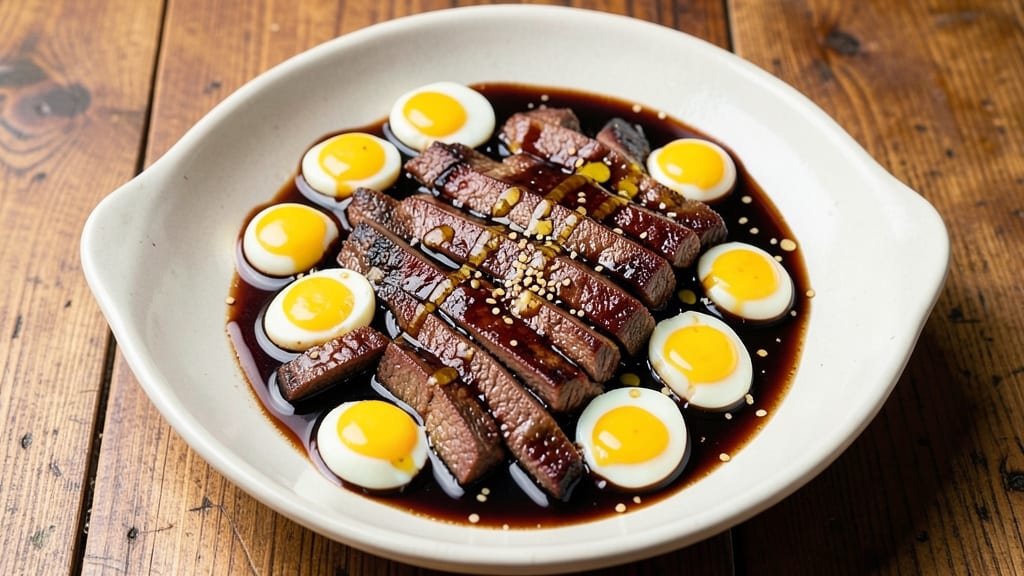
This fast beef and egg Chinese recipe delivers a protein-packed breakfast that balances tender beef, silky eggs, and wok-hei aroma in under 20 minutes. The secret lies in high-heat stir-frying, where beef strips sear quickly for a caramelized crust while eggs scramble into delicate ribbons.
I developed this version after years of testing—it’s the perfect blend of restaurant-style flavor and home-cook simplicity, with ingredients you likely already have.
The dish starts with thinly sliced beef that cooks in just 2-3 minutes, releasing deep umami flavors into the wok. Eggs are scrambled last, their creamy texture contrasting beautifully with the beef’s chewiness.
A splash of soy sauce and a touch of sugar create that signature Chinese balance—savory, slightly sweet, and packed with umami. The result is a dish that’s hearty enough for breakfast but light enough to enjoy anytime.
What makes this recipe stand out is its versatility—serve it over steamed rice for a filling meal, wrap it in a tortilla for a quick lunch, or pair it with pickled vegetables for brightness.
The technique is simple but critical: keep the heat high, stir constantly, and cook the beef just until it’s tender. This ensures every bite delivers that perfect harmony of textures and flavors that defines Chinese stir-fried dishes.
Perfect for busy mornings or meal prep, this recipe proves you don’t need complicated techniques to create restaurant-quality results. The ingredients are straightforward, the method is efficient, and the outcome is undeniably satisfying. Let’s get cooking—your taste buds will thank you.
Ingredients for beef and egg chinese
Fast, flavorful, and packed with protein—this stir-fry brings restaurant-quality Chinese breakfast to your wok in minutes.
| Ingredient | Amount | Notes |
|---|---|---|
| Flank Steak 🥩 | 1 lb | Thinly sliced against grain |
| Large Eggs 🥚 | 4 whole | Fresh, room temperature |
| Light Soy Sauce 💧 | 2 tbsp | Kikkoman preferred |
| Dark Soy Sauce 💧 | 1 tbsp | For color depth |
| Granulated Sugar 🍚 | 1 tsp | Balances flavors |
| Sesame Oil 🫒 | 1 tsp | Toasted aroma |
| Garlic Cloves 🧄 | 3 cloves | Minced finely |
| Green Onions 🧅 | 3 whole | Sliced diagonally |
| Vegetable Oil 🫒 | 2 tbsp | High smoke point |
| White Pepper 🌶️ | ¼ tsp | Freshly ground |
| Cornstarch 🌾 | 1 tbsp | For tender beef |
| Sesame Seeds 🌱 | 1 tsp | Toasted for garnish |
| Steamed White Rice 🍚 | 2 cups | Cooked separately |
The flank steak is your secret weapon here—thinly sliced against the grain for that signature tender bite. Ask your butcher to slice it if they won’t do it for you; otherwise, freeze it 30 minutes before slicing for easier work. I grab mine from Whole Foods when I can, but any well-marbled cut works. The cornstarch coating is non-negotiable—it keeps the beef juicy while creating that perfect sear. For the eggs, room temperature is key—they scramble faster and more evenly. Pro tip: Crack them into a bowl first to avoid shell surprises in your wok.
No light soy sauce? Substitute with regular soy sauce plus 1/2 tsp sugar—it’ll still work, though the color won’t be as vibrant. Swapping dark soy sauce for extra light soy plus a drop of molasses gets you close. The sesame oil might seem optional, but trust me on the full amount—it’s what gives that authentic wok-hei aroma. Garlic? Fresh is non-negotiable here, but if you’re in a pinch, garlic powder at half the amount won’t ruin it. Green onions can be swapped for scallions or chives if that’s what’s in your fridge, but the white parts add that extra depth of flavor when sliced thin.
Prep ahead like a pro: Slice the beef and marinate it in soy sauce, sugar, and cornstarch for up to 4 hours in the fridge—this keeps it tender and ready to cook. The eggs scramble in seconds, so have them cracked and whisked before you start the beef. Leftover stir-fry? Reheats beautifully—just add a splash of water and stir-fry for another 2 minutes. Store in an airtight container for 3 days or freeze for 1 month. I always make extra rice to serve on the side—it soaks up all the delicious juices.
Why You'll Love This Recipe
- One-Pan Magic: I swear by this recipe when I’m too tired to wash dishes—just sear the flank steak, crack eggs right into the pan, and let the soy sauces do their thing. The dark soy gives that glossy sheen without extra effort, and cleanup? One spatula, one wipe-down.
- Umami Bomb: That balance of light and dark soy with a pinch of sugar? It’s like a flavor explosion. The eggs get silky while the beef stays tender, and the caramelized edges? Chef’s kiss. Honestly, the first time I tasted it, I immediately doubled the recipe.
- Lunchbox Hero: Pack it cold or reheat it—this dish holds up like a champ. I make a big batch on Sundays, slice the beef thin, and toss it with the eggs for grab-and-go lunches. My kids actually eat their veggies with it (fine, I’ll admit I sneak in some stir-fried greens on the side).
- Budget Powerhouse: Flank steak stretches further than you’d think, and eggs are the ultimate cheap protein. A single pan-sear turns $8 worth of ingredients into a meal that feeds four for under $2 each. Between us, this is how I feed my family without breaking the bank—no delivery apps needed.
Step-by-step instructions for stir-fried beef and eggs
This dish comes together in minutes—crispy beef, silky eggs, and aromatic flavors that wake up your taste buds.
Prep the Flank Steak for Perfect Texture
Slice the 1 lb flank steak thinly against the grain into ¼-inch strips—this ensures tender, bite-sized pieces. Toss the sliced steak with 1 tablespoon cornstarch and 0.25 teaspoon white pepper in a bowl. Let it sit for 5 minutes while you prep the rest. The cornstarch creates a light coating that keeps the beef juicy and prevents it from turning tough during the quick stir-fry.
Here's the thing—don't skip the resting time. The cornstarch needs a few minutes to adhere properly, and the steak benefits from coming to room temperature for even cooking. If you're short on time, at least let it sit for 2 minutes before cooking, but 5 minutes is ideal.
Stir-Fry the Beef Until Nearly Cooked
Heat 1 tablespoon vegetable oil in a large wok or skillet over high heat until shimmering. Add the steak in a single layer and stir-fry for 1-2 minutes until it turns light brown but remains slightly undercooked—this is crucial. Overcooking now will make the beef tough later. Push the beef to one side of the pan and let it rest while you scramble the eggs.
You'll know it's ready when the edges start to crisp slightly and the steak releases easily from the pan. If it sticks, don't force it—just wait 30 seconds for the pan to heat up more. The goal is 60-70% doneness at this stage so the beef finishes perfectly when combined with the eggs.
Scramble the Eggs to Silky Perfection
In the same pan (no need to clean it—the fond adds flavor), add the remaining 1 tablespoon vegetable oil. Crack in the 4 large eggs and scramble quickly over medium-high heat for 30-45 seconds until just set but still slightly runny—this creates that signature creamy texture. The eggs should look soft and custard-like, not dry or rubbery.
Here's where it gets fun—fold the eggs back onto themselves a few times with a spatula to create soft, fluffy curds. Remove the eggs from the pan and set aside. The residual heat will keep them warm while you finish the sauce.
Build the Flavor-Packed Sauce
Return the pan to high heat and add 1 teaspoon sesame oil, 3 minced garlic cloves, and 3 sliced green onions. Stir-fry for 20-30 seconds until fragrant—you should smell garlic and sesame immediately. Add 2 tablespoons light soy sauce, 1 tablespoon dark soy sauce, and 1 teaspoon granulated sugar. Let it simmer for 1 minute until the sauce thickens slightly and the sugar dissolves.
This is the moment that matters: the dark soy sauce gives depth and color, while the sugar balances the saltiness. If the sauce looks too thick, add 1 tablespoon hot water to loosen it. The sauce should coat the back of a spoon but still be pourable.
Combine and Serve Over Steamed Rice
Return the beef and eggs to the pan, tossing everything together with the sauce for 1-2 minutes until fully heated through and coated evenly. Sprinkle with 1 teaspoon sesame seeds for texture and garnish. Serve immediately over 2 cups steamed white rice—the contrast of the warm, fragrant rice with the savory beef and eggs is pure comfort.
Real talk: this dish tastes best fresh off the pan. The rice soaks up the extra sauce, and the beef stays tender. If you're serving multiple people, keep the beef and eggs warm in a 200°F oven while you plate the rice to maintain that just-cooked quality.
Pro Tips For Making Beef And Egg Chinese
- SLICE THIN, SLICE UNIFORM: I learned this the hard way—thin, even slices of flank steak (about 1/8-inch thick) cook faster and absorb the sauce better. If your slices vary in thickness, some will turn rubbery while others stay rare. A sharp knife and a steady hand make all the difference.
- SEAR STEAK FIRST, THEN SAUCE: Don’t toss the raw beef into the sauce—sear it first in a hot wok or pan until deeply browned. That crust locks in flavor and prevents the meat from turning mushy when it hits the soy-sugar mix. I used to skip this, and the dish always tasted flat.
- DARK SOY SAUCE LAST: Add dark soy sauce only at the very end—it’s for color, not flavor. If you mix it in early, your beef will turn muddy brown instead of that glossy, appetizing sheen. A splash at the end gives you control over the final look.
- USE COLD EGGS FOR CLEAN CUTS: Beat your eggs cold straight from the fridge—they’ll hold their shape better when you stir-fry them into the beef. Warm eggs turn rubbery and break apart, making the dish look messy. Trust me, this small tweak makes a real difference.
Storing and reheating your leftovers
Refrigerator Storage
Store your beef and egg stir-fry in an airtight container for up to 3 days in the refrigerator. Let it cool completely before refrigerating to prevent condensation, which can make the rice soggy.
I like to portion it into single-serving containers so I can reheat just what I need without dealing with leftovers. 🥣
Freezer-Friendly Tips
For longer storage, freeze the stir-fry for up to 1 month in a freezer-safe container or heavy-duty freezer bag. Press out excess air to prevent freezer burn, and leave ½-inch headspace for expansion. Label with the date—trust me, you’ll forget otherwise! Thaw overnight in the fridge before reheating. ❄️
Stovetop Reheating
My go-to method is reheating on the stovetop over medium heat for 3-4 minutes. Add 1-2 tablespoons of water or beef broth to the pan to restore moisture and prevent drying.
Stir constantly to ensure even heating—this keeps the beef tender and the eggs creamy. If the rice looks dry, cover it with a damp paper towel while reheating. 🔥
Microwave Method
For quick reheating, transfer the stir-fry to a microwave-safe dish, cover loosely with a microwave-safe lid, and heat on medium power (50%) for 1-2 minutes. Stir halfway through to distribute heat evenly.
Add 1 teaspoon of water if it looks dry. The microwave won’t give you that perfect wok-hei aroma, but it’s a solid backup when you’re in a rush. ⏰
Reviving Texture
If your reheated stir-fry loses its crispness, don’t worry! Pop it back in the pan for 1-2 minutes over high heat with a splash of water. The beef will regain its slight chew, and the eggs will become fluffy again.
A sprinkle of toasted sesame seeds or a drizzle of sesame oil can also revive the dish’s fresh-from-the-wok appeal. 💫
Serving Suggestions
Serve reheated stir-fry over steamed rice or noodles to soak up any extra sauce. For extra brightness, add a side of quick-pickled cucumbers or steamed bok choy.
If you’re feeling fancy, drizzle with a chili oil or sriracha mayo for a spicy kick. The contrast of textures makes every bite exciting! 🌶️
Nutrition facts
Frequently asked questions
Can I use ground beef instead of flank steak?
Yes, but the texture will differ. Ground beef works well if you shape it into small patties (½-inch thick) and cook them until 160°F internally. For a more authentic texture, use lean ground beef (90% lean) and cook it quickly over high heat to avoid dryness. The dish will be heartier but lose the delicate slicing texture of flank steak.
Why does my beef turn out tough?
Overcooking is the #1 reason. The beef should only cook until 60-70% done during the initial stir-fry—it finishes cooking when combined with the eggs. Slice against the grain and use cornstarch to tenderize. Also, ensure your pan is smoking hot before adding the beef to prevent steaming instead of searing.
Can I make this without a wok?
A large skillet or cast-iron pan works perfectly. The key is maintaining high heat and stirring constantly. For even better results, use a pan with sloped sides to help toss ingredients. A nonstick pan can also prevent sticking, but avoid overcrowding the beef to maintain that restaurant-style sear.
What's the best way to make this dish vegetarian?
Swap the beef for extra-firm tofu or mushrooms. Press and slice tofu into thin strips, then pan-fry until golden before scrambling the eggs. For mushrooms, use shiitake or oyster mushrooms sliced thinly and sautéed until tender. Boost umami with 1 tsp soy sauce + ½ tsp sugar in the sauce. The texture contrast remains delicious!
How can I add more heat to this dish?
Add ½ tsp chili flakes or 1 tbsp chili garlic sauce to the sauce mixture. For extra kick, stir in 1 tsp gochujang (Korean chili paste) with the soy sauces. Garnish with red pepper flakes or serve with sriracha mayo on the side. The eggs will absorb the heat beautifully while keeping the dish balanced.