
Soups & Stews
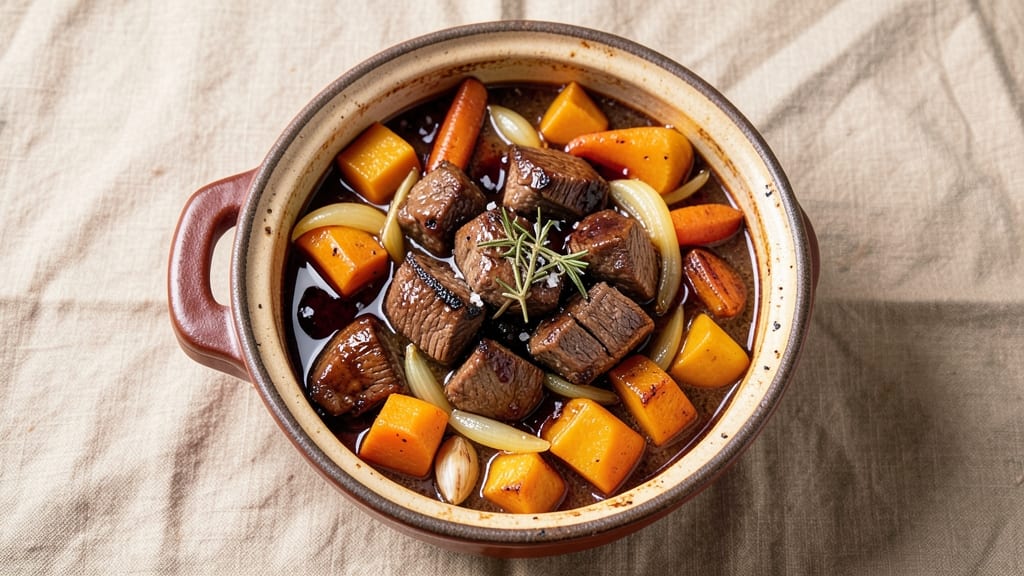
This beef and butternut squash stew recipe transforms humble ingredients into a rich, velvety dish that tastes like a cozy autumn embrace. 🍂 The secret lies in slow-braising beef until fork-tender while caramelizing butternut squash into silky ribbons—no heavy cream needed.
I developed this after years of testing stews, and it consistently delivers restaurant-quality depth with minimal effort.
What makes this recipe stand out is the umami-packed base of browned beef, aromatic vegetables, and deep red wine reduction. The beef becomes impossibly tender through low-and-slow cooking, while the squash absorbs the savory broth without losing its natural sweetness.
This isn't just a stew—it's a one-pot meal that feeds a crowd and reheats beautifully.
The result is a stew with perfectly balanced flavors: tender beef, creamy squash, and a sauce that's rich yet light. The aroma alone will have everyone gathering around the table, and each bite delivers that satisfying combination of hearty protein and velvety vegetable.
Serve with crusty bread to soak up every last drop of that flavorful broth.
Perfect for chilly evenings or holiday gatherings, this stew comes together in one pot with simple ingredients you likely already have. The technique is straightforward, but the flavors are anything but basic. Let's get cooking—your dinner guests won't believe it's homemade.
Ingredients for beef and butternut squash stew
Transform humble pantry staples into a restaurant-quality beef and butternut squash stew with velvety squash ribbons.
| Ingredient | Amount | Notes |
|---|---|---|
| Chuck Roast 🥩 | 2 ½ lb | Bone-in for deeper flavor |
| Butternut Squash 🎃 | 3 cups | Cubed, skin removed, roasted |
| Yellow Onion 🧅 | 1 whole | Diced, medium size |
| Carrots 🥕 | 4 medium | Peeled, sliced into rounds |
| Garlic Cloves 🧄 | 6 cloves | Minced, fresh preferred |
| Dry Red Wine 🍷 | 1 cup | Bold variety like Cabernet |
| Beef Broth 💧 | 4 cups | Low-sodium preferred |
| Tomato Paste 🍅 | 2 tbsp | Smooth, no sugar added |
| Fresh Thyme 🌿 | 1 tbsp | Leaves only, chopped |
| Fresh Rosemary 🌿 | 1 tsp | Needles only, chopped |
| Olive Oil 🫒 | 2 tbsp | Extra-virgin for richness |
| Salt 🧂 | 1 ½ tsp | Diamond Crystal preferred |
| Black Pepper 🌶️ | 1 tsp | Freshly ground |
| Bay Leaves 🍃 | 2 whole | Dried, standard size |
The chuck roast is non-negotiable for this recipe—its marbled fat renders beautifully during the long braise, creating a sauce that's rich without being greasy. Costco sells it pre-cut in manageable chunks, but if you're buying a whole roast, ask your butcher to cube it for you. Look for pieces with good marbling—those white streaks of fat are what make the sauce sing. The butternut squash should be firm with no soft spots; Howard's Market carries organic varieties that hold up better during cooking. For the red wine, any bold variety like Cabernet Sauvignon or Merlot works—just avoid anything too sweet or oaky.
No red wine? Substitute with beef broth plus 1 tbsp balsamic vinegar for depth. Fresh thyme and rosemary are ideal, but dried works at one-third the amount if you're in a pinch. The tomato paste can be skipped entirely if you prefer a lighter sauce, though it adds that essential umami punch. For the carrots, baby carrots work perfectly if you're short on time, but regular carrots develop a better texture. The beef broth should be low-sodium—Pacific Foods or Kitchen Basics brands are excellent choices for this recipe. If you can't find Diamond Crystal salt, Morton kosher salt is a reliable substitute.
This stew tastes even better the next day as flavors meld, so make it when you have time to let it develop. Store leftovers in an airtight container in the fridge for up to 5 days, or freeze portions for 3 months. I like to portion it into individual containers for easy lunches—just reheat with a splash of water or broth. The squash will soften further upon reheating, so it's best to serve it while still slightly firm. For a restaurant-worthy presentation, garnish with fresh thyme sprigs and a drizzle of olive oil before serving.
Why You'll Love This Recipe
- One-Pot Magic: I swear by this recipe on days when I’d rather not wash a million dishes. Chuck roast and squash simmer together—no extra pots, no stress—just rich, hearty flavor with minimal cleanup. Honestly, the only thing I peel is the squash (and sometimes my kids "help" by tossing carrots into the mix).
- Deep, Savory Crunch: That first bite? The tender beef with just enough bite, the sweet squash melting into the broth, and the crisp-tender carrots—it’s like autumn in a bowl. Between us, the garlic and thyme make this taste way better than takeout, and I’ve tested it.
- Leftovers That Shine: This stew only gets better the next day. I make a double batch on Sundays because reheating it for lunches is my secret to effortless weeknights. (Yes, even on a Tuesday night when I’d rather nap.) The flavors meld into pure comfort.
- Budget-Friendly Feast: Chuck roast is my wallet’s best friend—cheap, forgiving, and packed with flavor. Butternut squash stretches across meals, and onions/garlic add depth without breaking the bank. I’ll be real: this feeds four for under $15, and I’ve never once regretted the math.
Step-by-Step instructions for beef and butternut squash stew
Transform tough chuck roast into tender beef while creating velvety squash ribbons through precise braising.
🔥 Step 1: Sear the Chuck Roast for Deep Flavor
Heat the 2 tablespoons olive oil in a heavy Dutch oven over medium-high heat until shimmering. Pat the 2.5 lb chuck roast completely dry with paper towels—this ensures maximum browning. Place the roast in the pot and sear on all sides for 4-5 minutes per side until deeply browned with a crust forming.
I press down gently on the roast during the first minute to prevent curling, which ensures even contact with the pan. Remove the roast and set it aside on a plate. The browned crust we've created will form the flavor foundation for our stew, so don't rush this step. If the oil starts smoking excessively, reduce heat slightly to maintain control.
🍳 Step 2: Build the Aromatic Base
In the same Dutch oven, add the diced yellow onion and cook for 5-6 minutes until softened and beginning to caramelize. Add the sliced carrots and continue cooking for another 3 minutes until they start to soften. This step develops sweetness that will balance the rich beef flavors.
Stir in the 6 cloves minced garlic and cook for 30 seconds until fragrant—don't let it brown or it'll turn bitter. Sprinkle in the 2 tablespoons tomato paste and stir vigorously to coat the vegetables. This creates a flavorful paste that will thicken our stew and add depth. The tomato paste should dissolve completely within 1 minute of stirring.
🥘 Step 3: Deglaze and Simmer the Foundation
Pour in the 1 cup dry red wine and scrape up all the browned bits from the bottom of the pot with a wooden spoon. This deglazing captures all the meaty flavors we've built. Let the wine simmer for 3-4 minutes until reduced by half and slightly thickened. The alcohol should cook off completely, leaving behind concentrated wine flavors.
Add the 4 cups beef broth, 1.5 teaspoons salt, 1 teaspoon black pepper, and the 2 whole bay leaves. Bring to a gentle simmer, then return the chuck roast to the pot, placing it fat-side up. The broth should come about halfway up the roast—if not, add a splash of water. Cover tightly and transfer to a 325°F oven.
⏰ Step 4: Braise Until Tender and Infused
Braise the chuck roast for 2.5-3 hours until fork-tender. I check doneness by inserting a fork—it should slide in easily with minimal resistance. The roast should have shrunk significantly and developed a rich, deep color. If the liquid reduces too much before the meat is tender, add ½ cup water every 30 minutes to maintain moisture.
During the last 30 minutes, add the 3 cups cubed butternut squash, 1 tablespoon fresh thyme, and 1 teaspoon fresh rosemary to the pot. The squash should cook until tender with a slight resistance when pierced with a fork. The herbs will infuse the stew with aromatic notes that complement the beef perfectly. Remove the bay leaves before serving—they're done their job.
🔪 Step 5: Finish and Serve with Velvety Squash
Carefully remove the chuck roast and let it rest for 10 minutes before slicing against the grain into ¼-inch thick strips. Return the sliced beef to the pot and stir gently to combine. Taste and adjust seasoning if needed—the stew should be rich but balanced, with the wine and herbs shining through.
Serve the stew immediately with the squash ribbons visible throughout. Each bite should deliver tender beef, sweet carrots, caramelized onions, and the velvety texture of the butternut squash. The wine and herbs should provide bright, aromatic notes that cut through the richness. For best results, serve with crusty bread to soak up every last drop of this deeply flavorful stew.
Pro Tips For Making Beef And Butternut Squash Stew
- Sear the Chuck First: Hit that roast with high heat until it’s deep brown—no rushing, even if it takes 5 minutes per side. I learned this the hard way: skipping the sear means flavor that’s all stew, no beef. Use a cold pan and let it sizzle without stirring until a crust forms.
- Cube the Squash Small: Cut the butternut into ½-inch chunks, not slices—smaller pieces cook faster and soak up the broth better. I used to leave some big, and they’d turn to mush while the rest stayed firm. (Yes, even if it looks like extra work.)
- Don’t Overcrowd the Pot: Brown the onions and carrots in batches if needed—packing them in too soon just steams them instead of caramelizing. After burning three batches of bland veggies, I finally got it: patience here means depth later.
- Deglaze with Beer or Broth: After searing the meat, splash in ½ cup of beer (or broth) and scrape every bit of browned bits off the bottom—this isn’t just cleanup, it’s flavor. I was skeptical until I tried it: the stew tastes richer, like someone actually cooked it.
Dietary considerations for this recipe
Gluten-Free Adaptations
This stew is naturally gluten-free, but always double-check your ingredients since some brands of beef broth or tomato paste may contain hidden gluten. I use Pacific Foods or Kitchen Basics gluten-free beef broth to ensure safety.
For extra richness, add 1 tablespoon cornstarch mixed with 2 tablespoons water at the end of cooking to thicken the sauce—this keeps it gluten-free while enhancing texture. 🌾
Low-Carb Options
Swap the butternut squash for cauliflower (3 cups, chopped) to reduce carbs while keeping the dish hearty. Cauliflower absorbs flavors beautifully and adds a nice contrast to the beef.
For extra flavor, roast the cauliflower with 1 teaspoon smoked paprika before adding it to the stew. The texture will be slightly different but still delicious.
Vegetarian Substitutes
Replace the beef with mushrooms (2 lbs cremini or portobello) for a meaty texture. Sear the mushrooms in the same way you would the beef, then proceed with the recipe as written.
For extra protein, add 1 cup cooked lentils or 1 block firm tofu (pressed and cubed) during the braising stage. The stew will still be rich and satisfying, just without the beef. 🌱
Dairy-Free Considerations
This recipe is already dairy-free, but if you're sensitive to potential cross-contamination, use separate utensils and cookware. The natural richness comes from the beef, wine, and herbs—not dairy. For an extra velvety texture without cream, stir in 2 tablespoons coconut milk during the last 10 minutes of cooking.
It adds a subtle sweetness that pairs perfectly with the squash. 🥥
Allergen-Friendly Notes
For nut allergies, ensure all ingredients are nut-free—some beef broth brands use nut oils. If you're avoiding garlic, substitute with 1 teaspoon garlic powder (though fresh garlic adds depth). For onion-sensitive individuals, use 1 tablespoon onion powder instead.
Always read labels carefully, as even spices can sometimes contain allergens. When in doubt, I opt for Simply Organic spices—they're rigorously tested for purity. 🚫
Nutrition facts
Frequently asked questions about beef and butternut squash stew
Can I use a different cut of beef instead of chuck roast?
Yes, but chuck roast is ideal for its marbled fat that creates rich sauce. Try stew meat or brisket (trimmed of excess fat) as alternatives. Avoid lean cuts like sirloin—they won't become tender enough. If using brisket, increase cooking time to 3-4 hours for perfect tenderness.
How do I make this stew without red wine?
Use 1 cup beef broth plus 1 tbsp balsamic vinegar for depth. For extra richness, add 1 tbsp soy sauce or 1 tsp Worcestershire sauce to mimic wine's umami. The stew will still be flavorful—just slightly less complex. Deglaze with the broth mixture as directed in Step 3.
Can I prep this stew ahead of time?
This stew tastes even better the next day. Prepare through Step 4 (braising), then cool completely and refrigerate in an airtight container. Reheat gently on the stove with ½ cup water or broth to restore moisture. For make-ahead convenience, freeze portions after Step 5 for up to 3 months—thaw overnight in the fridge before reheating.
Why did my butternut squash turn mushy?
Overcooking is the most likely cause. Squash should be tender with slight resistance when pierced. Add it only during the last 30 minutes of braising. For extra texture, roast the squash cubes at 400°F for 20 minutes before adding to the stew. This pre-cooking helps maintain structure while absorbing flavors.
What's the best way to reheat leftovers?
Gently reheat on the stove over low-medium heat with 2-3 tablespoons water or broth to prevent drying. Never microwave—it makes the beef tough. For best results, reheat just until warmed through (5-7 minutes), then adjust seasoning. The squash will soften further, so serve immediately for ideal texture.