
Main Courses
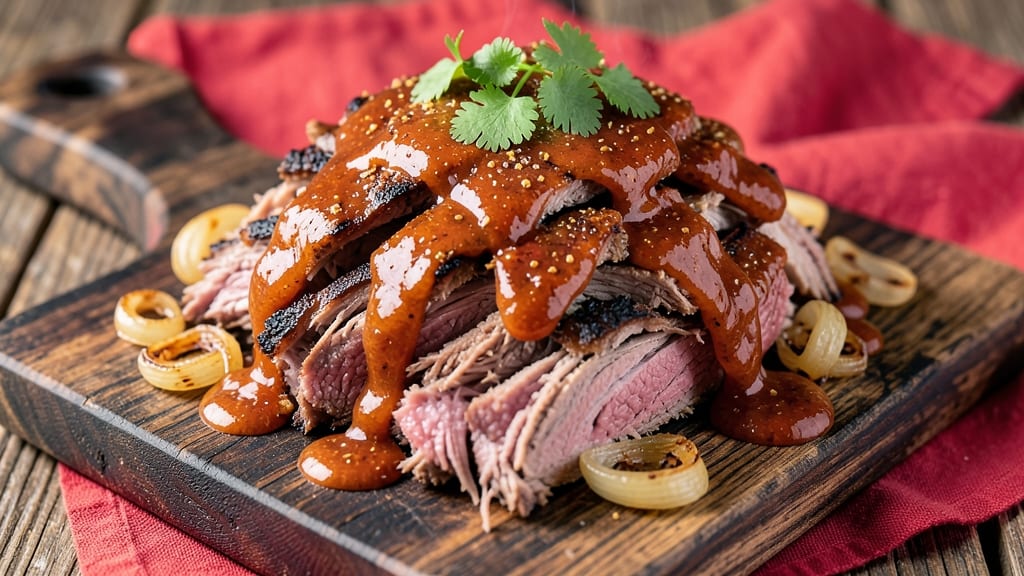
This BBQ pulled beef brisket recipe is where slow-cooked perfection meets smoky tradition—transforming tough cuts into melt-in-your-mouth tenderness. 🔥 I’ve been perfecting this technique for years, blending my French training with pitmaster passion to create a rub so bold it turns even the leanest brisket into a crowd-pleaser. The key? A high-heat sear followed by low-and-slow smoking until the meat practically falls apart at the touch of a fork.
The secret lies in the spice rub—smoked paprika, brown sugar, and cayenne work together to form a caramelized bark while keeping the meat juicy inside.
I use a two-zone fire method (hot on one side, cool on the other) to maintain steady temps, just like the pros at Texas BBQ joints. This isn’t just a recipe; it’s a lesson in patience and precision that delivers restaurant-quality results at home.
By the time you’re done, you’ll have tender, shreddable beef that’s rich with smoky depth and just the right amount of heat. Serve it piled high on buns with tangy coleslaw or crispy onion strings—every bite is a testament to why slow-smoked brisket is BBQ royalty.
The leftovers? Even better the next day, reheated with a splash of apple cider vinegar to keep them moist.
Whether you’re hosting a backyard feast or feeding a family of hungry smokers, this method scales beautifully. Pro tip: Let the brisket rest for at least an hour before pulling—it’s the difference between good and legendary. Now, let’s get that pit fired up.
Ingredients for bbq pulled beef brisket
Here’s what you need to turn a tough brisket into smoky, fall-apart perfection—just like the pros.
| Ingredient | Amount | Notes |
|---|---|---|
| Beef Brisket 🥩 | 6 lb | Whole packer cut, fat cap intact |
| Yellow Onion 🧅 | 1 whole | Large, sliced into wedges |
| Garlic Cloves 🧄 | 8 cloves | Peeled, smashed flat |
| Smoked Paprika 🌶️ | ½ cup | High-quality, not sweet |
| Brown Sugar 🍚 | ¼ cup | Light or dark, packed |
| Granulated Garlic Powder 🧄 | 2 tbsp | Not garlic salt |
| Onion Powder 🧅 | 2 tbsp | Freshly ground preferred |
| Ground Black Pepper 🌶️ | 1 tbsp | Freshly cracked |
| Cayenne Pepper 🔥 | 1 tbsp | Adjust for heat preference |
| Kosher Salt 🧂 | ½ cup | Diamond Crystal preferred |
| Apple Cider Vinegar 🍎 | ¼ cup | For reheating leftovers |
| Wood Chips 🌳 | 4 cups | Hickory or oak, soaked |
| Beef Broth 💧 | 1 cup | Low-sodium, for spritzing |
The brisket is the star, so don’t skimp on quality. Whole packer cuts from Costco or local butchers have the best marbling—look for bright red meat with good fat coverage. If you’re buying pre-cut, avoid the leanest pieces unless you’re okay with extra spritzing. I always grab mine from Whole Foods if I’m not doing a big batch, or Costco for family gatherings. The fat cap is non-negotiable—it renders down during cooking and keeps the meat moist. If yours is trimmed too thin, wrap it in butcher paper before smoking to lock in moisture.
No smoked paprika? Substitute half with regular paprika and half with liquid smoke—just don’t overdo it. Cayenne too hot? Swap half for chili powder. The brown sugar caramelizes beautifully, but if you’re watching sugar, use coconut sugar instead. For the wood chips, hickory gives classic BBQ flavor, while oak adds a touch of elegance. No wood chips? Crushed wood pellets work in a pinch. The beef broth is for spritzing during the cook—low-sodium is key so you don’t over-salt the meat. And if you’re short on time, pre-made rubs work, but homemade always tastes better.
Brisket keeps best in the fridge for 4-5 days in an airtight container with some of its juices. For longer storage, freeze it for up to 3 months—wrap tightly in plastic wrap, then foil. When reheating, low and slow is best: 300°F oven with a splash of apple cider vinegar keeps it moist. I always make extra—leftovers reheat even better the next day. Store the rub in an airtight container for up to 6 months; it’s perfect for future smokes or grilling.
Why You'll Love This Recipe
- Foolproof Prep: I swear by this method—just sear the brisket, toss in chopped onions and garlic, then let the smoky paprika and brown sugar work their magic in the slow cooker. No fancy techniques, no stress.
- Deep, Smoky Magic: That first bite? Chef’s kiss. The brisket falls apart tender, soaking up the caramelized sweetness from the brown sugar while the smoked paprika gives it a slow-cooked, restaurant-worthy depth. (Yes, even my picky husband agrees.)
- Budget-Buster for Big Gatherings: A whole packer of brisket feeds a houseful, and the onions/garlic/paprika cost pennies. Honestly, it’s my go-to for game days or family dinners when I don’t want to break the bank—but still impress.
Step-by-step instructions for slow-smoked brisket with signature rub
Here's how to transform a tough cut into melt-in-your-mouth pulled beef using just a few key techniques.
👨🍳 Step 1: Prepare the Brisket and Make the Rub
Start by trimming the fat cap on the 6 lb beef brisket down to about ¼-inch thickness using a sharp boning knife. Leave the fat cap intact on the sides—this helps protect the meat during smoking. Pat the brisket completely dry with paper towels, including inside the cavity, to ensure maximum bark formation.
In a large bowl, combine the 0.5 cup smoked paprika, 0.25 cup brown sugar, 2 tbsp granulated garlic powder, 2 tbsp onion powder, 1 tbsp ground black pepper, 1 tbsp cayenne pepper, and 0.5 cup kosher salt. Mix thoroughly until the spices are evenly distributed. Press this rub firmly onto all sides of the brisket, including the fat cap, so it adheres well. Place the brisket on a tray and refrigerate uncovered for 1 hour to let the rub penetrate and the meat dry out slightly.
🔥 Step 2: Set Up the Smoker and Preheat
Soak the 4 cups wood chips (hickory or oak) in water for 1 hour to prevent flare-ups. Fill your smoker with the soaked wood chips and preheat to 225°F. You'll know it's ready when you see clean, thin blue smoke (not thick white steam). Place the brisket fat-side up on the smoker grate—this allows the rendered fat to baste the meat as it cooks.
I like to add a water pan to the smoker to help maintain moisture levels during the long cook. Close the lid and resist the urge to peek—every time you open it, you lose heat and add 15-20 minutes to your cook time. Let the brisket smoke undisturbed for 6-8 hours until the internal temperature reaches 165-170°F at the thickest part of the flat.
⏰ Step 3: Wrap and Finish the Cook
When the brisket hits the stall (temperature stops rising), it's time to wrap. Remove the brisket from the smoker and wrap it tightly in butcher paper (not aluminum foil—paper breathes better). Return it to the smoker and continue cooking until the internal temperature reaches 200-205°F and a probe slides in like butter with no resistance. This usually takes another 4-6 hours, but don't rush it—patience is key for tender meat.
While the brisket finishes, prepare a spritz by mixing the 1 cup beef broth with the 0.25 cup apple cider vinegar. Every hour during the final 3 hours of cooking, spritz the brisket generously with this mixture. This keeps the bark moist and adds depth of flavor without steaming the meat.
🔪 Step 4: Rest and Shred for Maximum Tenderness
Once probe-tender, remove the brisket from the smoker and let it rest in the butcher paper for at least 1 hour (I prefer 2 hours wrapped in towels in a cooler). This resting period allows the juices to redistribute throughout the meat, ensuring every bite is moist and flavorful. The brisket should be so tender that it practically falls apart when you pull it.
After resting, remove the butcher paper and shred the brisket using two forks or a meat claw. Discard any large fat chunks or connective tissue. The meat should pull apart easily into fine, shredded strands. Serve immediately over buns with your favorite BBQ sauce, or store in the refrigerator for up to 4 days or freeze for 3 months for future meals.
Pro Tips For Making Bbq Pulled Beef Brisket
- CRANK THE HEAT FIRST: I learned this the hard way—brisket needs a sear to lock in flavor, not just a slow cook. Start your pan or grill screaming hot (yes, even if you’re using a smoker) and let the fat render aggressively for the first 5 minutes. That crust is non-negotiable for pulling apart later.
- MINCE THAT ONION: I used to chop onions for this recipe like I was in a hurry, and the texture suffered. For pulled beef, finely mince the yellow onion—think rice-sized pieces—so it dissolves into the meat without chunks. Same goes for the garlic: press it through a garlic press or slice paper-thin. Your brisket will thank you when it’s tender and saucy, not chewy.
- DON’T SKIP THE FAT CAP: That thick layer of fat on top of the brisket? Leave it. It’s not just for looks—it acts as a shield, keeping the meat moist as it cooks low and slow. If you’re worried about excess grease, trim the sides and edges, but save the top layer. Trust me, you’ll regret cutting it off when your brisket turns out dry.
- SAVE TIME WITH A RUB: Mix your smoked paprika, brown sugar, and any other dry spices into a paste with a splash of water or apple cider vinegar before applying it to the brisket. This sticks better than a dry rub and cuts down on cleanup. Plus, the paste caramelizes faster, giving you that deep, smoky flavor without extra fuss. (Pro move: Slap it on an hour before cooking so it has time to cling.)
Regional styles of this dish
Texas-Style Tradition
This is where it all began for me—Texas BBQ is all about the brisket, and the Lone Star state perfected the low-and-slow method. Here, brisket is the star, served with simple sides like white bread, pickles, and a tangy vinegar-based sauce.
I remember my first Texas cook-off where the winner used a post oak blend for smoking—it gave that signature sweet, nutty flavor. The key difference? Texas pitmasters often skip the wrap, letting the bark develop fully before pulling at 205°F internal temp. 🌳
For an authentic Texas touch, use 1 tbsp of black pepper in your rub and add 1 tsp of mustard powder—it cuts through the richness. Serve with pickled jalapeños on the side for that classic Texas heat kick.
The rub should be dry enough to form a thick crust but not so dry it burns. Texas-style brisket is all about that perfect balance of smoky bark and tender meat.
Kansas City Boldness
Kansas City takes their BBQ seriously, and their brisket is no exception—think thicker sauces, sweeter rubs, and a focus on presentation. I love how KC pitmasters often use cherry wood in their smoke blend for that fruity undertone.
The rub here is sweeter, with ¼ cup more brown sugar and a touch of cinnamon for warmth. 🍒
For a KC twist, add 1 tsp of cinnamon and ½ tsp of cloves to your rub. Serve with a thick tomato-based sauce—I like Sweet Baby Ray's Original BBQ Sauce—and don’t forget the crispy onion strings on top.
KC-style brisket is often pulled slightly earlier (195°F internal temp) to maintain some texture before shredding. The result? A sweeter, more approachable brisket that’s perfect for casual gatherings.
Carolina Mustard Magic
Down in the Carolinas, they do things differently—mustard is king. Eastern NC-style brisket often includes a yellow mustard glaze—I’ve seen pitmasters brush it on during the last hour of cooking. The rub here is simpler, with less sugar and more focus on black pepper and cayenne.
I first tried this style at a roadside BBQ joint where the brisket was so tender it melted in your mouth. 🌶️
For a Carolina-inspired version, mix ½ cup yellow mustard with ¼ cup apple cider vinegar and brush it on the brisket during the last 2 hours of cooking. The mustard adds a tangy brightness that cuts through the richness.
Serve with coleslaw—the creamy, vinegar-based kind—and cornbread. This style is lighter on the sweetness but packs a punch with its bold flavors.
Modern Twist: Quick-Smoke Method
Not everyone has 12 hours to dedicate to brisket, so I developed a quicker method inspired by my French training. After searing the brisket in a cast-iron skillet, I transfer it to a smoker set to 275°F and cook it wrapped in butcher paper for just 5-6 hours.
The higher temp speeds up the process while still giving you that smoky flavor. 💨
For this method, use ½ cup of the rub—the sear creates a crust that mimics the bark. Add 1 tbsp of liquid smoke to the rub for extra depth. Serve with quick-pickled veggies**—thinly sliced cucumbers, radishes, and red onions in rice vinegar and sugar—to balance the richness.
This version is perfect for weeknight dinners when you still want that smoky, tender brisket experience.
Nutrition facts
Frequently asked questions
How do I know when my brisket is done?
Use a meat thermometer to check the internal temperature at the thickest part of the flat. For unwrapped brisket, aim for 165-170°F before wrapping. After wrapping, cook until it reaches 200-205°F—the probe should slide in like butter with no resistance. The bark should be dark and crispy, and the meat should pull apart easily with a fork.
Can I use a regular oven instead of a smoker?
Yes! Preheat your oven to 275°F and place a water pan on the lower rack. Add soaked wood chips to a foil packet with holes punched in it, then place it on the oven rack. Smoke the brisket for 6-8 hours until it hits 165°F, then wrap and cook to 200-205°F. The flavor won't be identical, but it's a great backup method.
Why does my brisket turn out dry?
Overcooking or not resting properly are the most common causes. Always pull the brisket when it reaches 200-205°F, not higher. Let it rest for at least 1 hour (preferably 2 hours) wrapped in butcher paper or towels before shredding. The resting time lets juices redistribute—skipping it means dry meat.
What's the best way to reheat leftover brisket?
Reheat in a 300°F oven with a splash of apple cider vinegar or beef broth to keep it moist. Cover with foil and heat for 15-20 minutes, then shred. Never microwave—it turns the meat rubbery. For sandwiches, warm the buns separately to avoid sogginess. Leftovers actually improve in flavor!
Can I make this brisket in a pellet grill?
Pellet grills are perfect for brisket. Set the temperature to 225°F and use 100% hickory or oak pellets for authentic flavor. Follow the same timing and wrapping method as with a traditional smoker. The advantage? Pellet grills maintain steady temps automatically, reducing the risk of temperature swings.