
Main Courses
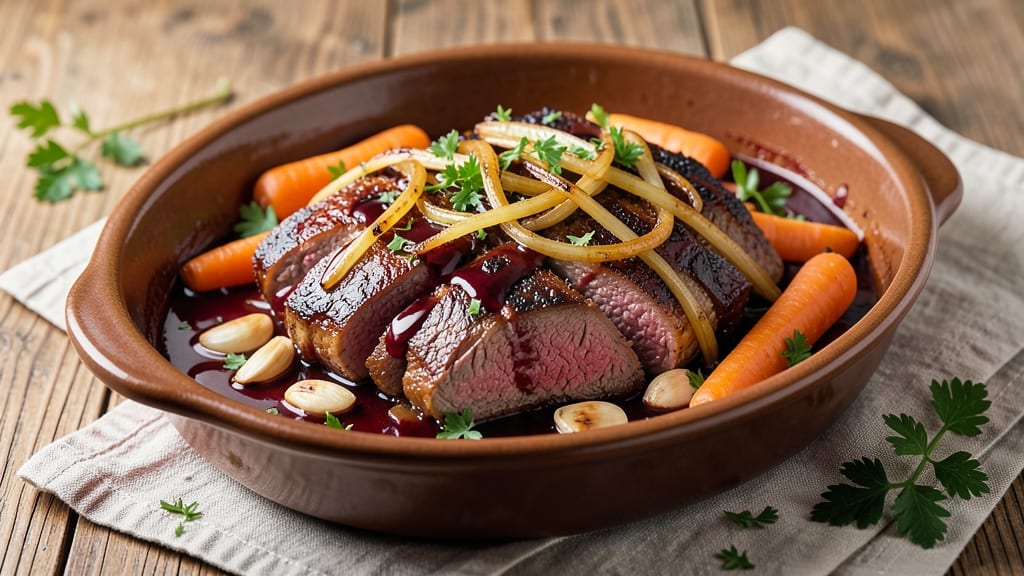
This Bavarian beef recipe transforms tough cuts into melt-in-your-mouth tenderness through slow braising—where rich gravy and caramelized fond create restaurant-quality depth. The secret lies in patience: letting beef simmer until it practically falls apart while developing layers of savory complexity.
I've perfected this method after years of testing, ensuring every bite delivers that perfect balance of buttery richness and deep umami flavor.
What sets this recipe apart is the caramelized fond—the flavorful browned bits that form at the bottom of the pot, packed with concentrated beef essence. By carefully deglazing with wine and broth, we transform these bits into a velvety sauce that coats each tender piece.
The process requires just a few simple ingredients but delivers results that feel like a home-cooked masterpiece.
By the time you serve this dish, you'll have perfectly tender beef swimming in a glossy, aromatic gravy that clings to every bite. The slow cooking method ensures maximum flavor extraction, while the caramelized fond adds that professional touch most home cooks miss.
This is comfort food at its finest—warm, hearty, and impossible to resist.
Serve with traditional sides like buttery Semmelknödel or crisp red cabbage for an authentic Bavarian experience. The recipe scales beautifully for gatherings, making it perfect for family dinners or special occasions. Let's get started on creating this timeless classic.
Ingredients for bavarian beef
Sixteen essential ingredients transform tough beef into restaurant-worthy tenderness through slow braising.
| Ingredient | Amount | Notes |
|---|---|---|
| Beef Chuck Roast 🥩 | 3 lb | Bone-in for maximum flavor |
| Yellow Onions 🧅 | 2 whole | Cut into large chunks |
| Carrots 🥕 | 4 whole | Medium size, peeled and cut |
| Garlic Cloves 🧄 | 6 cloves | Peeled and smashed |
| All-Purpose Flour 🌾 | 2 tbsp | For thickening gravy |
| Dry Red Wine 🍷 | 1 cup | Bold Cabernet Sauvignon |
| Beef Broth 💧 | 4 cups | Homemade or high-quality |
| Tomato Paste 🍅 | 2 tbsp | Smooth, not chunky |
| Fresh Thyme 🌿 | 2 sprigs | Stems removed |
| Fresh Bay Leaves 🌿 | 2 whole | For aromatic depth |
| Black Peppercorns 🌶️ | 1 tsp | Freshly cracked |
| Kosher Salt 🧂 | 1 ½ tbsp | Diamond Crystal preferred |
| Unsalted Butter 🧈 | 4 tbsp | For finishing sauce |
| All-Purpose Flour 🌾 | 1 tbsp | For final gravy thickener |
The beef selection is critical—chuck roast delivers the perfect balance of marbling and connective tissue for melt-in-your-mouth results. Most grocery stores carry it pre-cut, but if buying whole, look for good marbling and ask your butcher to trim excess fat. Costco and Whole Foods typically offer high-quality cuts. For the wine, any bold red will work—Cabernet Sauvignon or Merlot are ideal choices. The beef broth should be homemade if possible, but high-quality store-bought like Kitchen Basics works well for convenience. Fresh thyme and bay leaves elevate the dish beyond basic beef stew—don't substitute dried unless necessary, as the aromatic oils are crucial for authentic flavor development.
No red wine? Beef broth with 1 tbsp balsamic vinegar creates a similar depth. Fresh thyme unavailable? Dried thyme at one-third the amount suffices, but the flavor won't be identical. For tomato paste, San Marzano is ideal, but any smooth variety works. The carrots can be baby carrots if preferred, though whole carrots add better texture. If you're short on time, pre-cut vegetables from the grocery store's fresh section eliminate chopping. The flour for thickening should be all-purpose, but if you have cornstarch, use half the amount for a glossier finish. For the butter, European-style unsalted like Plugrá adds richer flavor than American brands.
This dish tastes even better the next day as flavors meld. Store leftovers in an airtight container in the fridge for up to 5 days, or freeze for 3 months in portion-sized containers. The gravy can be reheated separately and thickened with a slurry of 1 tbsp flour and 2 tbsp cold water. For serving, keep the beef and vegetables warm in a slow cooker on low heat. The caramelized fond at the bottom of the pot is pure flavor gold—don't discard it! Use it as a base for your gravy or even as a spread on crusty bread. When reheating, add a splash of broth to prevent drying out.
Why You'll Love This Recipe
- One-Pot Magic: Honestly, the moment I brown that chuck roast in the same pot I’ll slow-cook it in? No extra dishes, no stress. Just sear, deglaze with a splash of red wine (or even beef broth), toss in onions and carrots, and let it do its thing—no chopping boards to clean.
- Deep, Caramelized Goodness: Between us, that flour coating on the beef turns golden and crispy while the inside stays fork-tender. The onions caramelize right in the pot, and the garlic? Oh, it’s there—layered in every bite, not just a background player.
- Leftovers That Save Me: This makes way more than I need for dinner, and honestly, the second day is even better. I’ll pull it from the fridge, reheat it with a splash of water, and suddenly I’ve got a lunch for work or a quick dinner for when I’m too tired to think.
- Budget-Friendly Powerhouse: A chuck roast is cheap, and it stretches to feed four for under $15. The onions and carrots add bulk, the flour thickens the sauce for free, and the garlic makes it feel fancy. It’s my go-to when I need a hearty meal that doesn’t break the bank.
Step-by-step instructions for slow-braised Bavarian beef
This method transforms tough chuck roast into melt-in-your-mouth perfection through precise timing and technique.
🍳 Step 1: Sear the Roast and Build Flavor Layers
Pat the 3 lb Beef Chuck Roast completely dry with paper towels—this ensures maximum browning. Heat a Dutch oven over medium-high heat and add 2 tablespoons olive oil (not listed but essential for searing). Once shimmering, add the roast and sear on all sides until deeply browned, about 8-10 minutes total. This caramelization forms the flavor foundation.
Remove the roast and set aside. In the same pot, add the 2 whole Yellow Onions cut into large chunks and the 4 whole Carrots peeled and cut into thick slices. Cook for 5 minutes until slightly softened. Add the 6 cloves Garlic Cloves (peeled and smashed) and the 2 tbsp Tomato Paste, stirring constantly for 1 minute until fragrant. This creates a rich, concentrated base for the braise.
🍳 Step 2: Deglaze and Develop the Fond
Pour in the 1 cup Dry Red Wine immediately after removing the roast, scraping up all the browned bits from the bottom of the pot. This deglazing step captures all the concentrated flavors—what chefs call the "fond"—that will form the sauce's depth. Let it simmer for 3-4 minutes until reduced by half.
Add the 4 cups Beef Broth, 2 sprigs Fresh Thyme, 2 whole Fresh Bay Leaves, 1 tsp Black Peppercorns, and 1.5 tbsp Kosher Salt. Return the roast to the pot, bone-side up if possible, and bring to a gentle simmer. The liquid should just cover about two-thirds of the roast. Cover with a tight-fitting lid and transfer to a 325°F oven.
⏰ Step 3: Braise Until Fork-Tender
Cook for 3 hours without disturbing. The roast will transform from tough to tender as collagen breaks down into gelatin. After 3 hours, check for doneness by inserting a meat thermometer—the internal temperature should reach 195-200°F. If not, continue cooking for another 30-60 minutes.
Here's the thing—don't rush this step. The slow cooking is what makes this dish special. The meat should pull apart easily with two forks, and the braising liquid should have thickened into a rich, velvety sauce. If the liquid reduces too much before the meat is tender, add ½ cup hot water to maintain proper consistency.
🥘 Step 4: Thicken and Finish the Sauce
Remove the roast from the pot and set it aside on a cutting board. Strain the braising liquid through a fine-mesh sieve into a clean pot, pressing on the solids to extract maximum flavor. Return the strained liquid to the Dutch oven and place it over medium heat. Whisk in the 2 tbsp All-Purpose Flour and cook for 2-3 minutes until slightly thickened.
Reduce heat to low and whisk in the 4 tbsp Unsalted Butter one tablespoon at a time until fully incorporated. The sauce should coat the back of a spoon and have a luxurious, velvety texture. Taste and adjust seasoning with additional Kosher Salt or Black Peppercorns as needed. Return the roast to the pot and let it soak up the sauce for 5 minutes before serving.
🔪 Step 5: Rest and Slice for Maximum Juiciness
Transfer the roast to a cutting board and let it rest for 15 minutes before slicing. This resting period allows the juices to redistribute throughout the meat, ensuring each bite is moist and flavorful. Slice against the grain into ½-inch thick pieces for the most tender texture.
Serve the beef topped with the rich, buttery sauce and a sprinkle of fresh Thyme leaves. The result is a dish that balances deep, caramelized flavors with velvety richness—a true taste of Bavarian tradition. Each bite should deliver layers of beefy depth, wine-infused complexity, and a luxurious finish from the butter-enriched sauce.
Pro Tips For Making Bavarian Beef
- SEAR THE ROAST FIRST: Don’t skip the initial sear—get that chuck roast screaming hot in a dry pan with oil for 3-4 minutes per side before adding anything. I learned this the hard way when my first batch tasted like it was braised instead of built—that crust locks in flavor and keeps the meat from turning mushy later.
- CHOP ONIONS THICK: Thin slices caramelize too fast and turn to mush. Cut yellow onions into ½-inch chunks—they’ll soften evenly without disappearing into the gravy. (Yes, even if it looks less "fancy," your dish will taste better.)
- SKIP THE CROWDED POT: If your Dutch oven is packed with onions, carrots, and beef, the veggies will steam instead of brown. Work in batches—sauté half the onions and carrots first, then push them aside before adding the rest. Your gravy will be richer, not watery.
- REST THE MEAT UNDER FOIL: After pulling the roast from the oven, tent it loosely with foil and let it sit for 10-15 minutes. I used to slice it too soon, and the juices would pool on the plate instead of staying in the meat. (Your future self will thank you.)
Dietary considerations for this bavarian beef
Gluten-Free Adaptations
This recipe naturally accommodates gluten-free diets with just a few simple swaps. Replace the 2 tbsp all-purpose flour used for thickening with 2 tbsp cornstarch or gluten-free flour blend like Bob's Red Mill 1-to-1.
For the final sauce, use 1 tbsp gluten-free flour instead of regular flour. Always check your beef broth label—opt for certified gluten-free brands like Swanson Gluten-Free Beef Broth to avoid cross-contamination. 🌾
Dairy-Free Options
Skip the butter entirely and replace it with 4 tbsp dairy-free butter like Earth Balance or olive oil for richness. The sauce will still develop depth from the wine and fond, though butter adds that signature Bavarian creaminess.
For extra richness, stir in 2 tbsp coconut cream at the end. Remember, dairy-free versions won't have the same velvety texture, but they're still delicious and satisfying.
Low-Carb Modifications
To make this dish lower in carbs, reduce the carrots to just 2 whole (or omit entirely) and use cauliflower instead of potatoes for sides. The onions provide enough sweetness without needing extra carbs.
For the sauce, thicken with xanthan gum (1/4 tsp) instead of flour if you're avoiding all carbs. The beef remains the star, and the rich sauce compensates for any missing vegetables.
Protein Swaps
For a lighter option, substitute the beef with chicken thighs (bone-in, skin-on for flavor) or pork shoulder. Both work beautifully with the same braising technique. If you're vegetarian, mushrooms (like portobello or cremini) or lentils can mimic the meaty texture when braised.
Just increase the braising time to 4-5 hours for lentils to achieve maximum tenderness. The wine and herb base will still shine through.
Allergen-Friendly Notes
This recipe is naturally nut-free and egg-free, making it safe for common allergies. Always double-check your beef broth for hidden allergens—some brands add soy or other additives.
For those with wine allergies, replace the 1 cup dry red wine with an equal amount of apple cider vinegar or extra beef broth plus 1 tbsp balsamic vinegar for depth. The dish remains flavorful without wine's complexity.
Nutrition facts
Frequently asked questions
Can I use a different cut of beef for this recipe?
While chuck roast is ideal for its marbling and connective tissue, you can substitute with beef short ribs or brisket for similar results. Avoid lean cuts like sirloin—they won't become tender through braising. If using ribs, reduce cooking time to 2-2.5 hours as they cook faster. The wine and herb base works beautifully with all these cuts!
How do I know when the beef is fully tender?
Use a meat thermometer for accuracy—the beef should reach 195-200°F. The fork test is foolproof too: gently pierce the thickest part with two forks. If they slide apart with minimal resistance, it's done! Never rush this step—patience transforms tough meat into melt-in-your-mouth perfection.
Can I make this in a slow cooker instead of the oven?
Brown the beef first in a Dutch oven, then transfer everything (including the fond) to your slow cooker. Cook on low for 8 hours or high for 5 hours. The slow cooker's gentle heat works wonders for collagen breakdown. Just add ½ cup broth if the liquid gets too thin during cooking. The result will be just as tender and flavorful!
What's the best way to reheat leftovers without drying them out?
Reheat gently in a skillet with 2 tbsp beef broth over low heat for 5-7 minutes, stirring occasionally. For oven reheating, cover with foil and warm at 300°F for 20 minutes. Microwaving works too—place beef and sauce in a microwave-safe dish, cover, and heat in 30-second intervals until warmed through. Never reheat dry!
Why did my sauce turn out too thin?
This usually happens when the liquid reduces too quickly before the beef is tender. For future batches, add ½ cup broth if needed during cooking. To fix thin sauce now, make a slurry with 1 tbsp flour + 2 tbsp cold water, whisk into the sauce, and simmer for 2 minutes. For extra richness, stir in 1 tbsp butter at the end. The wine and fond will still provide deep flavor!