
Main Courses
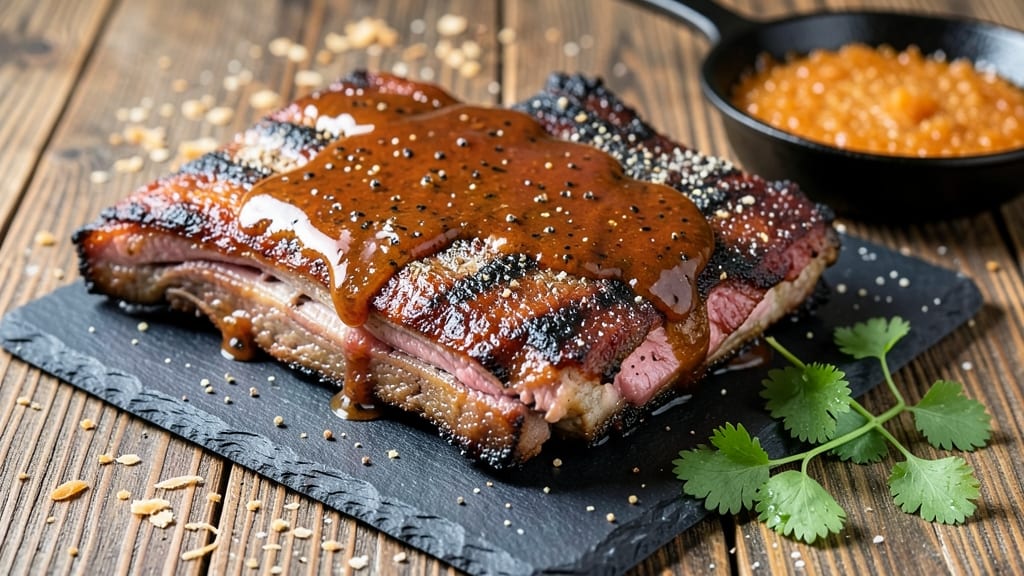
This barbecued beef back ribs recipe delivers the kind of smoky, fall-off-the-bone magic that turns weeknight dinners into backyard celebrations. 🔥 As someone raised on slow-cooked ribs and French technique, I've perfected a method that builds deep flavor through a carefully balanced dry rub and low-and-slow cooking.
The key lies in patience—letting that bark develop while the meat transforms into tender perfection beneath.
The process begins with a 3-day dry rub that penetrates every crevice, creating that signature bark while keeping the meat moist.
We'll use a blend of brown sugar, paprika, and spices that creates both heat and depth, then smoke the ribs at 225°F until they reach 203°F internally—a temperature that guarantees tender, juicy meat. The secret weapon?
A buttery glaze brushed on during the last hour that adds richness without overwhelming the smoky profile.
What you'll end up with is ribs that crackle with crispy bark while melting in your mouth, their surfaces glistening with that perfect balance of sweet and smoky flavors.
The aroma alone will have your guests gathering at the table, and every bite delivers that satisfying contrast between the caramelized exterior and tender interior. This is the kind of recipe that earns repeat requests—once you try it, you'll understand why.
Whether you're working with a traditional smoker, oven, or even a grill, this method delivers restaurant-quality results at home. The beauty of this technique is its adaptability—you can adjust the rub to your preferred heat level and still achieve that signature texture.
Let's get started on creating ribs that'll have everyone asking for the recipe.
Ingredients for barbecued beef back ribs
Four pounds of meaty ribs plus a smoky-sweet rub—this is where backyard magic happens.
| Ingredient | Amount | Notes |
|---|---|---|
| Beef Back Ribs 🥩 | 4 lb | Bone-in, meaty sections preferred |
| Brown Sugar 🍚 | ½ cup | Light or dark, packed |
| Smoked Paprika 🌶️ | 2 tbsp | For deep smoky flavor |
| Kosher Salt 🧂 | 2 tbsp | Diamond Crystal preferred |
| Coarse Black Pepper 🌶️ | 1 ½ tbsp | Freshly cracked for texture |
| Garlic Powder 🧄 | 1 tbsp | Freshly ground preferred |
| Onion Powder 🧅 | 1 tbsp | For sweet depth |
| Ground Cayenne Pepper 🔥 | ½ tbsp | Adjust for heat preference |
| Unsalted Butter 🧈 | 4 oz | Cold, cubed for glaze |
| Apple Cider Vinegar 🍎 | 2 tbsp | For tangy balance |
| Wood Chips 🌳 | 2 cups | Hickory or cherry preferred |
| Yellow Onion 🧅 | 1 whole | Thinly sliced for glaze |
| Fresh Thyme 🌿 | ¼ cup | Leaves only, chopped |
The ribs are non-negotiable here. Bone-in, meaty sections are essential—skip the spareribs if you can find back ribs (they're worth the hunt). Costco or local butchers usually carry them, and you'll know you're getting quality when they're still wrapped in that butcher paper. Look for good marbling—the white flecks of fat mean juicier meat. If you're buying frozen, thaw them overnight in the fridge, never in cold water (that turns the meat mushy). The 3-day dry rub is where the real transformation happens, so don't rush this step.
No smoked paprika? Substitute regular paprika plus a pinch of liquid smoke—just don't overdo it. Running short on brown sugar? White sugar works fine, but the color won't be as rich. The cayenne is adjustable—start with half and taste before applying fully. For the glaze, butter is non-negotiable—it adds that restaurant-quality richness. If you can't find apple cider vinegar, white vinegar or lemon juice works in a pinch. The wood chips? Hickory gives classic BBQ flavor, but cherry adds a subtle sweetness that pairs beautifully with the ribs. Soak them in water for 30 minutes before using.
Store your dry rub in an airtight container for up to 6 months—it's perfect for future BBQ projects. The ribs themselves? Cook as soon as possible after applying the rub, but they'll keep in the fridge for 2 days if wrapped tightly. The leftovers? Freeze for up to 3 months—they reheat beautifully in a 350°F oven with a splash of apple juice. I always make a double batch of glaze and freeze it in ice cube trays—just thaw and reheat for next time.
Why You'll Love This Recipe
- Five-Ingredient Magic: I swear, you only need those five things—plus time—to get ribs that taste like they fell off a smoker. No fancy rubs, no stressing over layers. Just ribs, sugar, paprika, salt, and pepper. That’s it.
- Smoky-Sweet Obsession: The brown sugar caramelizes into a sticky glaze while the smoked paprika adds that deep, woodsy punch. Between us, the first bite makes me forget I’m not at a BBQ joint—until I realize I’m eating this at home.
- Tailgate or Tuesday: Serve them whole for a game day spread or chop them up for sandwiches when you’re too tired to cook. Honestly, I’ve fed a crowd of 12 and reheated leftovers for lunch the next day, and both times, they disappeared fast.
- Leftovers That Don’t Suck: Unlike some recipes, these ribs actually improve the next day. The meat gets more tender, the sauce clings tighter, and I’ve even turned them into tacos or nachos. (Yes, even on a Tuesday night.)
Step-by-step instructions for smoky, fall-off-bone beef back ribs
Transform tough ribs into melt-in-your-mouth perfection with this foolproof smoking method.
🔥 Step 1: Prepare the Ribs and Rub for Maximum Flavor
Start by patting the 4 lb beef back ribs completely dry with paper towels—this is non-negotiable for crispy bark. I like to work in sections, making sure to get between the bones where moisture tends to hide. Place the ribs meat-side up on a wire rack set over a baking sheet to allow air circulation on all sides.
In a large bowl, combine the 0.5 cup brown sugar, 2 tbsp smoked paprika, 2 tbsp kosher salt, 1.5 tbsp coarse black pepper, 1 tbsp garlic powder, 1 tbsp onion powder, and 0.5 tbsp ground cayenne pepper. Mix well with your hands until the spices are evenly distributed and slightly sticky. This blend is what creates that perfect balance of sweet, smoky, and spicy flavors.
Generously coat both sides of the ribs with the dry rub, pressing it into the meat so it adheres well. I like to use my fingers to work the spices into the crevices between the bones. Let the rubbed ribs sit at room temperature for 30 minutes before smoking—this allows the rub to penetrate and creates a better bark.
🔥 Step 2: Smoke the Ribs Low and Slow for Tender Perfection
Set up your smoker for indirect heat using the 2 cups wood chips (hickory or cherry work best). Preheat to 225°F—this low temperature is key for tenderizing the connective tissue without drying out the meat. Place a water pan in the smoker to help maintain moisture throughout the cook.
Once the smoker reaches temperature and you see thin, blue smoke (not thick white), place the ribs meat-side down on the smoker grates. I position them bone-side up to help render fat and protect the meat. Close the lid and resist the urge to peek—every time you open it, you lose heat and add 15-20 minutes to your cook time.
Smoke the ribs for 6-8 hours until the internal temperature reaches 165-170°F and the bark is deep mahogany brown. You'll notice the ribs hit "the stall" around 165°F—this is when the temperature stops rising as moisture evaporates. Don't panic; this is completely normal and part of the process.
🥘 Step 3: Wrap and Finish for Maximum Tenderness
When the ribs hit the stall, it's time to wrap them. I use pink butcher paper (not foil—it breathes better and preserves that precious bark). First, mix together the 4 oz cold unsalted butter, 2 tbsp apple cider vinegar, and 0.25 cup chopped fresh thyme in a small bowl until combined. This butter glaze will add richness and prevent the ribs from drying out during the final cook.
Spread the butter mixture evenly over the ribs, then wrap them tightly in the butcher paper, sealing all edges completely. Return the wrapped ribs to the smoker and continue cooking until the internal temperature reaches 200-205°F and a meat probe slides in like butter with no resistance. This usually takes another 2-3 hours, but trust the probe test over the thermometer—tenderness matters more than temperature.
⏰ Step 4: Rest and Glaze for Showstopping Presentation
Remove the ribs from the smoker and let them rest in the butcher paper for at least 1 hour (I prefer 2 hours wrapped in towels in a cooler). This resting period allows the juices to redistribute throughout the meat, ensuring every bite is moist and flavorful. Here's where the magic happens—the ribs will actually become more tender as they rest.
While the ribs rest, thinly slice the 1 whole yellow onion and caramelize it in a skillet with a little butter until golden brown. This onion glaze adds sweetness and depth to the final presentation. Unwrap the ribs and brush them generously with the caramelized onion mixture, then serve immediately with extra glaze on the side.
🍽️ Step 5: Serve with Confidence and Enjoy
Slice the ribs between the bones into individual servings. Each rack should yield about 4 generous servings, with meat that falls off the bone at the slightest touch. The exterior should have a beautiful dark mahogany bark, while the interior remains juicy and tender with a beautiful pink smoke ring.
Serve with classic barbecue sides like coleslaw, cornbread, or baked beans. The combination of smoky, sweet, and spicy flavors with the buttery glaze creates a restaurant-quality dish that's sure to impress. Leftovers? Store them wrapped in the butcher paper in the refrigerator for up to 3 days—they actually taste better the next day!
Pro Tips For Making Barbecued Beef Back Ribs
- Trim the Fat First: Beef back ribs come with a thick fat cap—slice it off with a sharp knife before cooking. I learned this the hard way when my ribs turned greasy instead of caramelized, and now I always trim them down to ¼-inch thick. It’s extra work, but the crust forms faster and stays crisp.
- Start with a Hot Smoker: Crank your smoker or grill to 250°F (120°C) for the first hour—no exceptions. After burning three batches with lukewarm smoke, I finally realized ribs need that initial blast to render fat and seal the surface. Once the temperature drops to 225°F (107°C), you’re golden.
- Skip the Crowding: Piling ribs too close traps steam and turns your smoker into a sad, soggy sauna. Space them bone-side down with a ½-inch gap between racks. I was skeptical until I tried it—now my ribs get that perfect bark without sticking together like a sad meat glue.
- Brush Brown Sugar Early: Apply half your brown sugar mix in the first 45 minutes, then reapply after 2 hours. The sugar burns off fast, and I used to waste half of it by waiting too long. A light coat now means sticky, caramelized ribs later—no bitter aftertaste, just sweet perfection.
Perfect pairings for this barbecued beef back ribs
Classic BBQ Sides
No ribs are complete without a tangy coleslaw that cuts through the richness. I make mine with 1 head shredded cabbage, 2 carrots (julienned), ½ cup mayonnaise, 2 tbsp apple cider vinegar, 1 tbsp sugar, and a pinch of celery seed.
Toss it together and chill for at least 1 hour before serving—this lets the flavors meld beautifully. 🥬
Sweet Cornbread
A warm, crumbly cornbread with honey butter is my go-to. Mix 1 cup cornmeal, 1 cup all-purpose flour, 1 tbsp baking powder, ½ tsp salt, and 1 cup buttermilk. Pour into a greased pan and bake at 400°F for 18-20 minutes.
For the honey butter, blend ½ cup softened butter with 2 tbsp honey—spread it warm over slices for that perfect sweet contrast.
Smoky Baked Beans
Slow-cooked baked beans elevate the meal to new heights. Simmer 2 cans navy beans with 1 cup BBQ sauce, ½ cup tomato sauce, 1 chopped onion, 2 slices bacon, and 1 tsp smoked paprika for 2 hours on low.
The smoky depth pairs perfectly with the ribs, and the texture is just right—creamy but not mushy. 🍖
Crunchy Potato Salad
For a lighter option, try a crispy potato salad with a tangy twist. Boil 2 lbs baby potatoes until tender, then mix with ½ cup mayonnaise, 2 tbsp Dijon mustard, 1 tbsp apple cider vinegar, and ¼ cup chopped dill.
Toss with ½ cup diced celery and ¼ cup red onion for crunch. Chill for 1 hour before serving—it’s a refreshing contrast to the smoky ribs.
Drink Pairings
A crisp lager like Peroni or Heineken cleanses the palate between bites, while a dry Riesling adds brightness to the smoky flavors. For non-alcoholic options, try sparkling water with lemon or sweet tea—both complement the ribs beautifully. 🍺
Final Touch: Pickles
Don’t forget pickles! A jar of dill pickles or bread-and-butter pickles** adds a briny contrast that balances the richness. I like to serve them in small bowls on the table so everyone can grab one as they go.
The acidity cuts through the fat, making each bite even more satisfying. 🥒
Nutrition facts
Frequently asked questions
Why do I need to let the ribs sit at room temperature before smoking?
This 30-minute room temp step is crucial for even cooking and better bark formation. When cold meat hits the smoker, it creates steam that prevents the rub from sticking properly and can lead to uneven cooking. The ribs should reach about 60°F before going on the smoker—this ensures the rub penetrates evenly and creates that perfect crust. Think of it like letting a cake sit before baking—it bakes more evenly!
What's the deal with the \"stall\" during smoking?
The stall happens when ribs hit around 165°F—their internal temperature stops rising as moisture evaporates. This is completely normal and can last 1-3 hours. The key is patience! Wrapping the ribs in butcher paper at this point (with the butter glaze) helps break through the stall by trapping steam. Never skip this step—it's what transforms tough meat into tender perfection.
Can I use foil instead of butcher paper for wrapping?
Foil works in a pinch, but butcher paper is superior because it breathes better, allowing some moisture to escape while preserving that precious bark. Foil creates steam that can make the ribs soggy and lose their crust. If you must use foil, poke a few holes in it to let steam escape. For best results, invest in pink butcher paper—it's a game-changer for BBQ!
How do I know when the ribs are fully cooked?
Use both a meat thermometer (200-205°F internal temp) AND the probe test. Insert a skewer—if it slides in like butter with no resistance, they're done. The bark should be deep mahogany brown, and the meat should pull apart easily between the bones. Overcooking is easy to do, so trust the probe test over the thermometer alone. The ribs will continue tenderizing as they rest!
What's the best way to reheat leftover ribs?
Reheat wrapped in butcher paper at 275°F for 30-45 minutes—this maintains moisture and keeps the bark intact. For a quick fix, wrap them in foil and warm in a 350°F oven for 20 minutes** with a splash of apple juice. Never microwave—it turns ribs rubbery. The good news? Leftovers actually taste better the next day as the flavors meld further!