
Main Courses
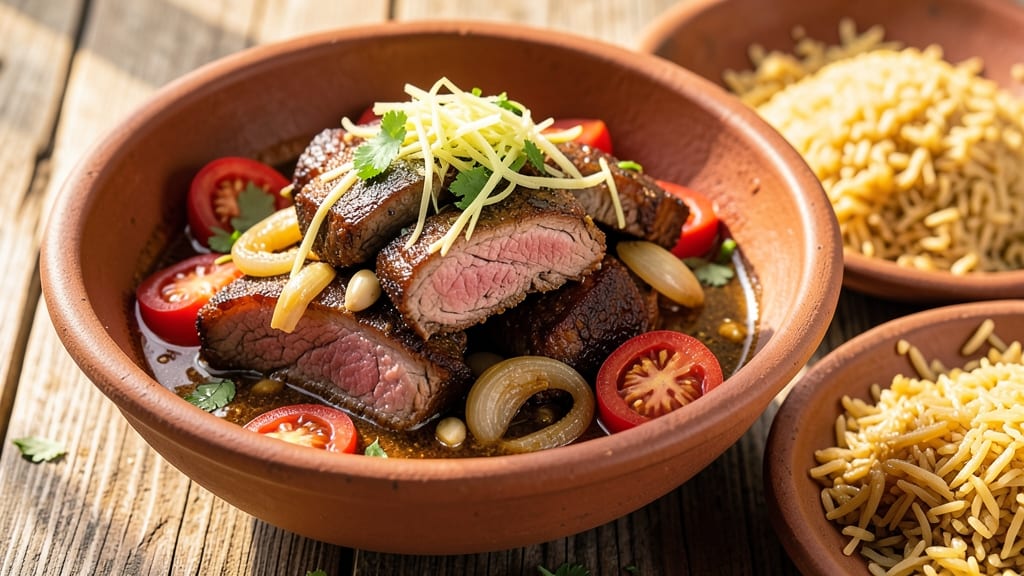
This Bangladeshi beef tehari recipe delivers the rich, aromatic flavors of home-cooked comfort food that's been passed down through generations. The secret lies in slow-cooking tender beef with a blend of whole spices—garam masala, cinnamon, and cloves—that infuse every bite with warmth and depth.
I first tasted this dish at a family gathering in Dhaka, where the aroma alone filled the house and had everyone gathering around the pot.
The dish begins with a marinade that transforms tough cuts of beef into melt-in-your-mouth pieces through gentle simmering. Whole spices like bay leaves, cardamom, and star anise create layers of flavor that build as the stew cooks, while tomatoes and onions form the base of a thick, fragrant gravy.
The key to perfect tehari is patience—letting the beef cook low and slow until it's so tender it practically falls apart at the touch of a fork.
What you'll end up with is a hearty stew that's rich, spiced, and deeply satisfying—each spoonful packed with tender beef swimming in a fragrant gravy. The spices mellow as they cook, creating a balance of warmth and complexity that's both comforting and exciting.
This dish pairs beautifully with steamed basmati rice or warm roti, making it perfect for family dinners or special occasions.
Traditionally served at celebrations and gatherings, this beef tehari is more than just a meal—it's a taste of home and tradition. The recipe can be adjusted to suit your spice preferences, but the slow-cooking method ensures the meat stays tender and the flavors meld perfectly.
Let's bring this classic Bangladeshi dish to your kitchen.
Ingredients for bangladeshi beef tehari
Rich spices and tender beef—this is where home cooking gets magical.
| Ingredient | Amount | Notes |
|---|---|---|
| Beef Chuck Roast 🥩 | 2 lb | Cut into 1.5-inch cubes |
| Yellow Onions 🧅 | 2 whole | Chopped into large chunks |
| Tomatoes 🍅 | 4 whole | Large, ripe, chopped |
| Fresh Ginger 🌿 | 1 ½ oz | Peeled, grated finely |
| Garlic Cloves 🧄 | 6 cloves | Crushed with skin on |
| Garam Masala 🌶️ | 1 ½ tbsp | Store-bought or homemade |
| Ground Cumin 🌿 | 1 tsp | Toasted for deeper flavor |
| Ground Coriander 🌿 | 1 tsp | Freshly ground preferred |
| Bay Leaves 🍃 | 2 whole | Fresh or dried |
| Cardamom Pods 🌿 | 4 whole | Lightly crushed |
| Cinnamon Sticks 🌿 | 2 whole | 2-inch pieces |
| Cloves 🌿 | 4 whole | Lightly crushed |
| Star Anise 🌿 | 2 whole | Lightly crushed |
| Tomato Paste 🍅 | ¼ cup | Squeeze tube preferred |
| Olive Oil 🫒 | ½ cup | Extra-virgin for richness |
| Salt 🧂 | 1 ½ tsp | Kosher or sea salt |
| Black Pepper 🌶️ | ½ tsp | Freshly ground preferred |
The beef is non-negotiable here. Chuck roast is your best bet—it's tougher but breaks down beautifully when slow-cooked. Indian or Middle Eastern grocery stores usually carry it pre-cut into cubes, which saves time. If you're buying a whole roast, ask the butcher to cut it into 1.5-inch chunks. The spices? Whole is better—bay leaves, cardamom, cinnamon, and cloves all infuse flavor differently than ground versions. Penzeys or local Indian markets have great whole spice selections if you want to splurge. For the ginger, fresh is a must—the dried stuff just doesn't cut it in this dish.
No garam masala? Mix 1 tsp each cumin, coriander, turmeric, and black pepper—it's not identical but gets you close. Short on whole spices? Ground versions work at half the amount, but the texture won't be the same. The tomatoes can be canned (San Marzano if you can find them) or fresh—just make sure they're ripe. For the ginger, if you're only using dried, reduce to 1 tsp and add a pinch of black pepper to mimic fresh ginger's bite. The olive oil matters here—use something you'd drizzle on bread, not the cheap stuff. And if you're worried about the cinnamon sticks or star anise being too strong, remove them after 45 minutes of cooking.
This stew only gets better with time—3-4 days in the fridge is perfect, and it freezes beautifully for up to 3 months. I always make a double batch because the flavors deepen overnight. For serving, keep the spices whole when possible—they can be removed before eating. The gravy thickens as it cools, so add a splash of water or broth if it's too thick when reheating. Leftovers reheat best in a pot over medium-low heat, stirring occasionally to prevent sticking.
Why You'll Love This Recipe
- One-Pot Magic: I swear by this recipe because it’s actually one-pot—no skillet, no saucepan juggling. The onions caramelize right in the same pot where the beef slow-cooks, and by the end, your kitchen smells like a Dhaka restaurant. (Yes, even if you burn the garlic a little—it still works.)
- Deep Umami Bomb: That beef chuck? It turns so tender, it practically melts. The ginger and garlic aren’t just background players—they sear into the meat, while the tomatoes add this tangy richness. Honestly, the first bite makes me forget I’m not at my mom’s table.
- Leftovers That Beg for More: Tehari gets better the next day. Seriously. The flavors meld into this perfect balance of spice and richness, and it reheats like a dream. I’ve packed it for lunches, served it at potlucks, and even frozen portions—no one ever complains.
- Budget-Friendly Feast: Beef chuck is cheaper than steak, and this recipe stretches it far. A single roast feeds my family for days, and the onions/tomatoes/ginger are pantry staples. Between us, this is how I feed a house without breaking the bank—plus, it’s the kind of dish that makes people ask for seconds.
Step-by-step instructions for Bangladeshi beef tehari
Here's how to create this aromatic, melt-in-your-mouth beef stew that's the heart of Bangladeshi cuisine.
🍳 Step 1: Sear the Beef for Deep Flavor
Heat the 0.5 cup olive oil in a heavy-bottomed Dutch oven over medium-high heat until shimmering. Working in batches, add the 2 lb beef chuck roast cut into 1.5-inch cubes, letting them sear undisturbed for 3-4 minutes until deeply browned on all sides. This step develops the rich, caramelized foundation for your tehari.
Don't overcrowd the pan—sear in batches if needed. Once all beef is browned, transfer it to a plate and set aside. You'll know it's ready when the edges are deep golden brown and the meat releases easily from the pan. This creates the Maillard reaction that gives tehari its signature depth of flavor.
👨🍳 Step 2: Build the Spice Base
In the same Dutch oven, reduce heat to medium and add 1 whole yellow onion chopped into large chunks. Cook for 5-6 minutes until softened and beginning to caramelize. Add the remaining 1 whole yellow onion along with the 4 whole tomatoes chopped, stirring occasionally for another 5 minutes until the tomatoes break down into a thick sauce.
Here's where the magic begins: Add the 1.5 oz fresh ginger (finely grated), 6 cloves garlic cloves (crushed with skin on), 2 whole bay leaves, 4 whole cardamom pods (lightly crushed), 2 whole cinnamon sticks (cut into 2-inch pieces), 4 whole cloves (lightly crushed), and 2 whole star anise (lightly crushed). Stir for 1 minute until the spices release their aromatic oils and the mixture smells intensely fragrant.
🍳 Step 3: Develop the Spiced Tomato Gravy
Stir in the 0.25 cup tomato paste and cook for 2 minutes until it darkens slightly. Add 1.5 tbsp garam masala, 1 tsp ground cumin, 1 tsp ground coriander, 1.5 tsp salt, and 0.5 tsp black pepper. Cook for 3-4 minutes until the spices are fully toasted and the mixture smells like a spice market in Dhaka.
Slowly pour in 1 cup water (just enough to deglaze the pan) and scrape up all the browned bits from the bottom. This step captures all the flavor that would otherwise burn. The sauce should reduce to a thick, glossy consistency—about 5 minutes of simmering on medium-low heat. You're building the aromatic base that will infuse the beef with its signature flavor.
⏰ Step 4: Simmer for Tender Perfection
Return the browned beef to the Dutch oven and add enough water to cover the meat by about 1 inch (approximately 2 cups total). Bring to a gentle simmer, then reduce heat to low and cover with a tight-fitting lid. Let it cook for 1 hour 30 minutes, stirring occasionally, until the beef is fork-tender and falls apart easily.
The key to perfect tehari is patience. The beef should be so tender it nearly melts in your mouth but still holds together when served. If the liquid reduces too much before the beef is tender, add ½ cup water at a time as needed. The sauce should coat the back of a spoon but still be thick enough to cling to the beef. You'll know it's ready when the meat releases from the bone with just a gentle prod.
🥘 Step 5: Finish and Serve
Remove the lid and increase heat to medium to reduce the sauce slightly, about 5-7 minutes, until it reaches your desired consistency. The spices should be fully infused, creating a rich, aromatic broth that coats every bite of beef. Taste and adjust seasoning if needed—you might want to add a pinch more salt or garam masala to deepen the flavors.
Serve the tehari hot with steamed basmati rice and a side of raita or fresh naan. The beef should be falling-apart tender with a sauce that's rich, aromatic, and perfectly balanced between spicy, sweet, and savory notes. Each bite should deliver that signature Bangladeshi comfort—warm, spiced, and deeply satisfying. The spices should be present but not overpowering, allowing the tender beef to shine through.
Pro Tips For Making Bangladeshi Beef Tehari
- BLISTER ONIONS FIRST: I used to sauté onions with everything else, but they never got that deep caramel color. Now I fry them in 2 tablespoons of oil on medium-high heat until they’re dark golden—almost burnt-looking—before adding anything. This builds the base flavor for the tehari’s rich sauce.
- GRILL THE GINGER: Skip the mincing—rub the whole ginger knob with a pinch of salt, then sear it in oil for 2 minutes per side until fragrant and slightly charred. Grating it raw leaches flavor; this method unlocks its heat and aroma without bitterness.
- DON’T SKIP THE SECOND BOIL: After simmering the beef with tomatoes and spices, lift the pot off heat and let it sit for 5 minutes. Then bring it to a full boil again for 30 seconds. This tightens the meat and prevents a greasy sauce—trust me, it makes a real difference.
- USE TOMATO PASTE: I was skeptical until I tried it—swap half the fresh tomatoes for 2 tablespoons of tomato paste. It thickens the sauce faster, cuts down on watery consistency, and gives that signature concentrated flavor without extra prep. (Yes, even if you’re impatient like me.)
Essential equipment for great bangladeshi beef tehari
Dutch Oven Essentials
A heavy-bottomed Dutch oven like the Le Creuset Signature or All-Clad Stainless Steel is non-negotiable for this recipe. These pots distribute heat evenly, preventing hot spots that can burn your spices or create uneven cooking.
I’ve made tehari in my 5.5-quart Dutch oven—it’s the perfect size for this batch, giving enough room for the beef to move around while still allowing the sauce to develop properly. 🔥
If you don’t own a Dutch oven, a large, heavy pot with a tight-fitting lid (like a Calphalon or Lodge cast iron) will work in a pinch. Just be prepared for slightly less even cooking.
Avoid thin, lightweight pots—they’ll cause your sauce to stick or burn while the beef cooks unevenly. Pro tip: Preheat your Dutch oven for 5 minutes before adding oil to ensure even searing.
Spice Grinders & Mortars
For whole spices like cardamom, cinnamon, and cloves, a handheld spice grinder (like the Penzeys Spice Grinder) or a traditional mortar and pestle is ideal. Lightly crushing these spices releases their aromatic oils without turning them into powder, which is key for authentic flavor.
I keep a small marble mortar and pestle on my counter—it’s perfect for crushing just enough spices for this recipe. 🌿
If you’re short on time, a rolling pin or the bottom of a heavy pan can work in a pinch, but you’ll need to crush the spices more aggressively. Just don’t pulverize them into a fine powder—whole spices should remain intact but slightly broken to release flavor gradually during cooking.
Measuring Tools
Precision matters with spices, so invest in a small, accurate measuring spoon set (like OXO Good Grips). For this recipe, you’ll need to measure 1.5 teaspoons of salt and 1 teaspoon of ground cumin—even small variations can throw off the balance of flavors.
A digital kitchen scale (like the OXO Good Grips) is even better for spices, as volume measurements can vary wildly. 🧂
For liquids like olive oil and tomato paste, a liquid measuring cup with clear markings ensures you add the exact 0.5 cup of oil and 0.25 cup of paste called for.
I use a transparent plastic measuring cup because it’s easy to read against the stove’s glare. Avoid metal cups—they can react with acidic ingredients like tomatoes over time.
Tongs & Slotted Spoons
A pair of long-handled tongs (like Mercer Culinary Genius) is essential for searing the beef without overcrowding the pan. I use mine to flip the beef cubes, ensuring they brown evenly on all sides.
A slotted spoon (preferably with a stainless steel head) helps remove the beef from the pot without dragging up the sauce, which is crucial when returning it to the pot later. 🥩
If you don’t have tongs, a spatula with a high arch (like the OXO Good Grips) can work, but it’s trickier to maneuver. Avoid wooden spoons—they can’t handle the high heat of searing and may char.
For the slotted spoon, look for one with holes large enough to drain sauce but small enough to grip the beef pieces securely.
Instant-Read Thermometer
While tehari doesn’t require precise temperature monitoring, an instant-read thermometer (like the ThermoWorks Thermapen) helps ensure the beef reaches fork-tender perfection. Insert the probe into the thickest piece of beef—it should register around 195–205°F when ready.
This is especially useful if you’re cooking for a crowd and want to avoid overcooking. ⏱️
If you don’t have a thermometer, rely on the fork test: Gently prod a beef piece with a fork. If it separates easily but still holds its shape, it’s ready. Overcooking can turn the beef mushy, so err on the side of slightly underdone—it’ll continue cooking off the heat.
Storage Containers
For leftovers, glass airtight containers (like Pyrex or Le Parfait) are ideal—they preserve flavors better than plastic and reheat evenly. I store tehari in quart-sized containers and refrigerate for up to 4 days. The flavors actually deepen overnight, making it even more delicious the next day. 💫
For freezing, use freezer-safe glass jars or heavy-duty zip-top bags (like Stasher bags). Leave 1 inch of headspace to account for expansion, and label with the date. Thaw overnight in the fridge before reheating—never microwave directly from frozen, as it can make the sauce watery.
Nutrition facts
Frequently asked questions
Can I use a different cut of beef for this recipe?
While chuck roast is ideal for its marbling and tenderness, you can substitute brisket or short ribs for similar results. Avoid lean cuts like sirloin—they'll dry out during the long cooking time. If using brisket, cut it into 1.5-inch cubes and increase cooking time by 30-45 minutes to ensure tenderness.
How can I make this dish less spicy?
Reduce the garam masala to 1 teaspoon and omit the black pepper entirely. For extra mildness, remove the whole spices (cinnamon, cardamom, cloves) after 30 minutes of cooking. If you prefer no heat at all, substitute 1 teaspoon mild paprika for the garam masala and skip the black pepper.
What's the best way to reheat leftovers?
Reheat in a pot over medium-low heat with 2-3 tablespoons of water to prevent drying. Stir occasionally and cook for 8-10 minutes until heated through. Avoid microwaving—it can make the sauce watery. For extra richness, add a splash of beef broth while reheating.
Can I prepare this recipe in an Instant Pot?
Yes! Sear the beef first in a skillet, then transfer to the Instant Pot with all ingredients except water. Cook on high pressure for 30 minutes, then quick-release. The sauce will be thinner—reduce it on the stovetop afterward. For best results, use 1 cup water instead of 2 to maintain thickness.
Why does my tehari taste bitter?
Bitterness usually comes from overcooked spices or tomatoes. Remove whole spices after 30 minutes of cooking, and avoid burning the tomatoes by cooking them at medium heat. If the sauce tastes bitter, balance it with 1 teaspoon sugar or ½ teaspoon lemon juice at the end of cooking.