
Soups & Stews
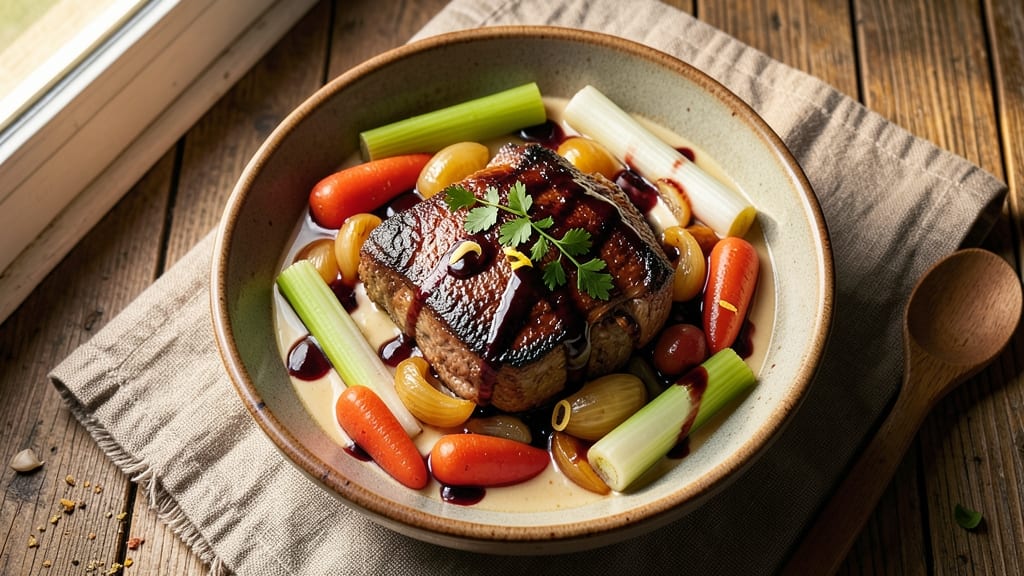
This balsamic beef stew slow cooker recipe transforms tough cuts of beef into melt-in-your-mouth perfection with just a few simple steps. The key? A slow simmer that develops deep, rich flavors—sweet balsamic caramelizing into the broth while the beef becomes fork-tender.
I’ve perfected this version over years of testing, ensuring every bite delivers that perfect balance of tangy, savory, and slightly sweet notes.
The beauty of this recipe lies in its simplicity: dump everything into the slow cooker, let it work its magic for 6-8 hours on low, and you’ll return to a kitchen filled with an aroma that’s impossible to resist.
The balsamic reduction adds a glossy sheen and a depth of flavor that elevates the dish from ordinary to extraordinary. No need for constant stirring or monitoring—just set it and let the slow cooker do the work.
By the time it’s done, you’ll have a stew so rich and flavorful that it practically serves itself. The beef will pull apart easily, the vegetables will be tender yet still hold their shape, and the broth will be thickened just enough to coat every spoonful.
This is the kind of meal that feels like a hug on a cold day—comforting, satisfying, and worth every minute of waiting.
Serve it with crusty bread to soak up every last drop of that balsamic-infused broth, or pair it with roasted potatoes for a heartier meal. The possibilities are endless, but the result is always the same: a slow-cooked masterpiece that tastes even better the next day.
Let’s get started on creating this flavor-packed stew.
Ingredients for balsamic beef stew slow cooker
Six hearty ingredients transform tough beef into melt-in-your-mouth perfection in your slow cooker.
| Ingredient | Amount | Notes |
|---|---|---|
| Chuck Roast 🥩 | 2 ½ lb | Tough cut for slow cooking |
| Yellow Onion 🧅 | 1 whole | Diced into small pieces |
| Carrots 🥕 | 4 medium | Peeled and cut into chunks |
| Celery Stalks 🌿 | 3 whole | Diced with onion and carrots |
| Garlic Cloves 🧄 | 4 cloves | Minced for rich flavor |
| Balsamic Vinegar 🍷 | ½ cup | High-quality for depth |
| Beef Broth 💧 | 2 cups | Low-sodium preferred |
| Tomato Paste 🍅 | 2 tbsp | Smooth texture preferred |
| Dried Thyme 🌿 | 1 tsp | Or 1 tbsp fresh thyme |
| Bay Leaves 🍃 | 2 whole | Removed before serving |
| Salt 🧂 | 1 ½ tsp | Kosher or sea salt |
| Black Pepper 🌶️ | ½ tsp | Freshly ground preferred |
| Olive Oil 🫒 | 1 tbsp | For searing beef |
| Red Wine 🍷 | ½ cup | Dry red like Cabernet |
The chuck roast is your secret weapon here—it's designed to get tender with slow cooking. Look for good marbling at the grocery store, especially if you're buying a whole roast to cube yourself. Costco or Whole Foods usually have the best quality, but any reputable supermarket works. The balsamic vinegar should be aged and thick—the good stuff, not the cheap stuff—for that deep, caramelized flavor. I always grab a small bottle from Trader Joe's because it's perfect for this recipe and keeps for ages.
No red wine? Substitute beef broth with a splash of balsamic—it won't be identical, but it'll work. Fresh thyme is ideal, but dried works at one-third the amount. If you're using tomato paste from a squeeze tube, that's perfect—no waste, and it keeps for months. The carrots can be baby carrots if that's what you've got, but whole carrots cut into chunks give a better texture. For the beef broth, low-sodium is key—you're adding plenty of salt already. If you're feeling fancy, add a splash of Worcestershire sauce for umami depth, but it's not required.
This stew tastes even better the next day once everything melds together. Keeps 4-5 days in the fridge, or 3 months frozen. I always make a double batch—one for dinner, one for lunches. Portion it into containers so you can grab and go. The balsamic reduction gets thicker as it sits, so if it's too thick after reheating, just add a splash of water or broth. Trust me on this—it's worth the extra minute.
Why You'll Love This Recipe
- Dump-and-Walk Away: The chuck roast goes in raw, the veggies get a quick chop, and the slow cooker does all the heavy lifting. Between us, I’ve made this on days when I forgot to thaw the meat—it still turns out tender.
- Balsamic Magic: That tangy reduction clings to every bite, cutting through the richness of the beef while the garlic and carrots caramelize into something dangerously addictive. Honestly, the first time I tasted it, I nearly licked the pot.
- Leftovers That Beg for More: This stew actually improves overnight—better than day-old takeout, better than my attempt at homemade soup. I freeze portions all winter because my kids fight over who gets the next bowl.
- Budget Buster: A single chuck roast feeds six, and the veggies stretch across multiple meals. I’ll be real: this is how I feed my family for under $15 while still feeling like I’m serving something special.
Step-by-step instructions for balsamic beef stew in the slow cooker
This method transforms tough chuck roast into melt-in-your-mouth beef with rich, tangy depth.
Sear the Chuck Roast for Maximum Flavor
Heat a large skillet over medium-high heat and add the 1 tablespoon olive oil. Once shimmering, place the 2.5 lb chuck roast in the pan and sear on all sides until deeply browned—about 4-5 minutes per side. This step creates a flavorful crust that won't dissolve during cooking.
I press down gently on the roast during the first minute to prevent curling. If the pan gets too crowded, work in batches. Transfer the seared roast to your slow cooker and set it aside for now. The caramelized surface will infuse the stew with deep, meaty flavor as it cooks slowly.
Sauté the Vegetable Base
In the same skillet (no need to clean it—the browned bits are pure flavor), add the 1 whole yellow onion, 4 medium carrots, and 3 whole celery stalks, all cut into small pieces. Cook over medium heat for 8-10 minutes until the vegetables soften and begin to brown.
Here's the thing—don't rush this step. You want the vegetables to develop some color and caramelization before they hit the slow cooker. After about 5 minutes, add the 4 cloves garlic cloves (minced) and cook for another 30 seconds until fragrant. Transfer everything to the slow cooker with the roast.
Build the Rich Balsamic Base
Return the skillet to the heat and add the 2 tablespoons tomato paste. Stir for 1 minute until it darkens slightly, then pour in the 0.5 cup red wine. Let it simmer for 2-3 minutes until reduced by half. This creates a concentrated flavor base that'll form the stew's foundation.
Scrape the bottom of the pan to release any stuck bits, then pour this mixture into the slow cooker. Add the 0.5 cup balsamic vinegar, 2 cups beef broth, 1.5 teaspoons salt, 0.5 teaspoon black pepper, 1 teaspoon dried thyme, and 2 whole bay leaves. Give everything a gentle stir to combine.
Slow Cook to Tender Perfection
Place the lid on the slow cooker and cook on low heat for 8-10 hours or on high heat for 5-6 hours. The longer cooking time breaks down the tough muscle fibers, creating fork-tender beef. I prefer low heat for maximum tenderness and flavor development.
About 1 hour before serving, check the stew. It should be thick and rich, with the beef easily pulling apart with a fork. If it's too thin, remove the lid and cook on high for 30-60 minutes to thicken. The balsamic vinegar will mellow out and blend beautifully with the other flavors as it cooks.
Finish and Serve with Confidence
Remove the 2 whole bay leaves before serving—they're done their job. Taste the stew and adjust seasoning if needed. I usually add a pinch more salt or a splash of balsamic vinegar if it needs more tang.
Serve immediately with crusty bread or over mashed potatoes. The stew should be rich and velvety, with tender beef that falls apart at the touch. Each bite delivers layers of balsamic sweetness, caramelized vegetables, and deep beef flavor that only slow cooking can achieve.
Pro Tips For Making Balsamic Beef Stew Slow Cooker
- SEAR THE ROAST FIRST: Chuck roast needs a head start—pat it dry, then brown it in a hot skillet with oil before dumping it into the slow cooker. The crust locks in flavor and keeps the meat from turning mushy later. (Yes, even if you’re impatient like me, resist the urge to skip this.)
- CHOP VEGETABLES UNIFORM: Carrots and celery should be cut into 1-inch chunks, onions into wedges—no tiny bits, no giant hunks. Even cooking matters, and you don’t want crunchy celery stalks after 8 hours. (I learned this the hard way with a forkful of undercooked celery.)
- DILUTE THE BALSAMIC: Pure balsamic vinegar is too harsh—mix ½ cup with ¼ cup beef broth before adding it to the slow cooker. This balances the sweetness and acidity so the stew doesn’t taste like a salad dressing. (Your future self will thank you.)
- SALT THE MEAT BEFORE SEARING: Generously season the chuck roast with salt and pepper before browning—it crisps better and penetrates deeper. Skip this, and you’ll end up with bland beef that needs extra seasoning at the end. (I was skeptical until I tried it.)
Storing and reheating your balsamic beef stew slow cooker
Fridge Storage Secrets
Let your stew cool completely before transferring to an airtight container—I use glass Pyrex with snap-on lids for best results. Store at 40°F or below for up to 4-5 days, though I find the flavors actually deepen overnight as the balsamic reduction thickens.
The key is to press plastic wrap directly on the surface before sealing to prevent a skin from forming. 💡
When reheating from the fridge, I always add ¼ cup beef broth to prevent drying out. Warm over low heat for 10-15 minutes, stirring occasionally, until bubbly. If it's too thick after reheating, a splash of water or extra broth brings it back to perfection.
Trust me, the second day is often even better than the first!
Freezer-Friendly Tips
This stew freezes beautifully for up to 3 months—just portion into quart-sized freezer bags with 1-inch headspace for expansion. I like to freeze it in single-serving portions so I can grab exactly what I need.
When ready to eat, thaw overnight in the fridge, then reheat on the stovetop as described above. The texture remains rich and velvety, with no freezer burn. ❄️
For a quick meal, you can also reheat directly from frozen using the slow cooker on low for 4-6 hours—just add ½ cup extra broth to compensate for the ice crystals. The slow cooker's gentle heat prevents the stew from becoming gluey or losing its depth of flavor.
Reheating Perfection
My go-to method is stovetop reheating because it gives me complete control over the texture. Use a heavy-bottomed pot to prevent scorching, and keep the heat at medium-low to avoid boiling off the balsamic reduction.
Stir frequently to distribute the heat evenly—this helps prevent any separation of the broth from the beef. A sprinkle of fresh thyme while reheating adds a bright note that makes it taste fresh again. 🌿
For microwave reheating, I recommend 50% power in 2-minute intervals, stirring between each interval. Cover loosely with a damp paper towel to retain moisture. The microwave can make stews taste flat, so I always finish with a splash of balsamic vinegar or a pat of butter to restore richness.
It's not ideal, but it works in a pinch!
Nutrition facts
Frequently asked questions
Can I use a different cut of beef for this slow cooker stew?
Yes! While chuck roast is ideal for its marbling and tenderness, you can substitute with brisket (add 1 extra hour of cooking) or stew meat (pre-cut for convenience). Avoid lean cuts like sirloin—they won't become tender enough. For best results, choose a cut with some fat for flavor and moisture during slow cooking.
How do I know when the beef is tender enough?
Test the beef with a fork after 6 hours on low—it should pierce easily with minimal resistance. If not, cook 2 more hours. The beef should pull apart cleanly, not require much force. Overcooking won't ruin it, but the broth may thicken too much. A gentle squeeze with tongs is another good test!
What if I don't have red wine? Can I make this vegetarian?
For wine-free: Replace it with ½ cup extra beef broth + 1 tbsp balsamic vinegar. For vegetarian: Swap beef for mushrooms or lentils (use 1.5 cups each) and reduce broth to 1.5 cups. Add 1 tsp soy sauce for umami depth. The balsamic still shines—just adjust cooking time to 4-5 hours for softer veggies.
Why does my stew look too thin after cooking?
This happens when the balsamic doesn't reduce enough. Remove the lid and cook on high for 30-60 minutes to thicken naturally. For instant fixes: Mix 1 tbsp cornstarch with 2 tbsp cold water, stir into the stew, and simmer 5 minutes until thickened. Alternatively, mash a few cooked carrots or potatoes into the broth—they'll dissolve and add body.
Can I make this in an Instant Pot instead?
Sear the beef as directed, then sauté veggies. Add all ingredients except broth (use 1.5 cups instead) and cook on high pressure for 45 minutes, then natural release 10 minutes. The balsamic will reduce faster, so add ¼ cup extra at the end. For extra richness, finish with 1 tbsp butter stirred in.