
Soups & Stews
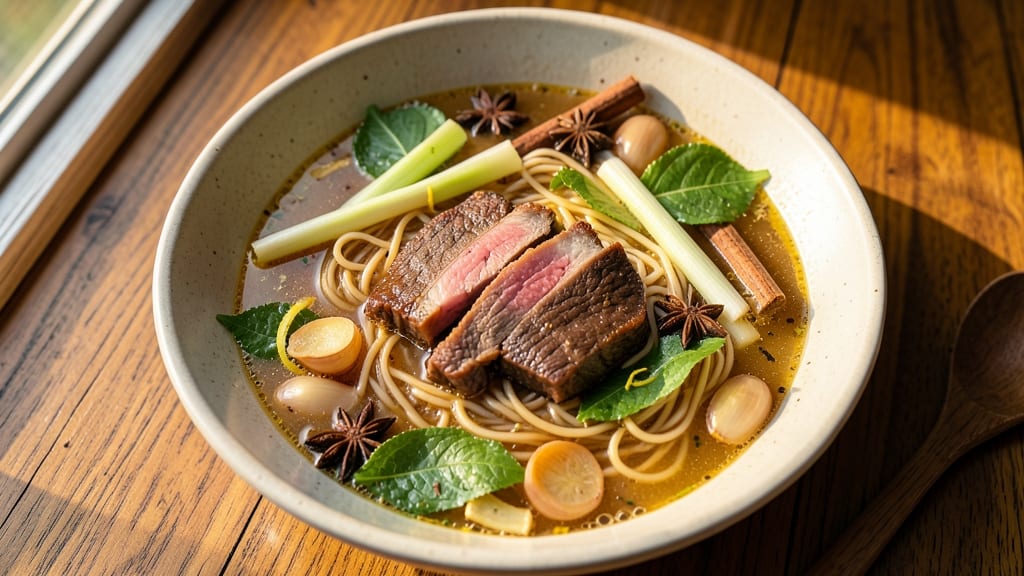
This authentic Thai beef noodle soup recipe brings the aromatic soul of Bangkok to your kitchen with its signature fragrant broth infused with lemongrass, galangal, and kaffir lime leaves.
The secret lies in slow-braising tender beef and rice noodles until they absorb the complex, balanced flavors—salty, sour, sweet, and umami—that define this beloved dish. I've perfected the technique over years of testing, ensuring every spoonful delivers restaurant-quality depth without shortcuts.
The foundation of an authentic Thai beef noodle soup is its aromatic broth, where galangal and lemongrass form the backbone of flavor. Thinly sliced beef cooks until fork-tender, while star anise and cinnamon add subtle warmth.
The rice noodles—soaking just before serving—absorb the rich broth perfectly, creating a harmonious bite that's both comforting and vibrant. This isn't just a soup; it's a flavor experience that transports you to Thailand with every spoonful.
What sets this recipe apart is the careful balance of flavors—salty fish sauce, sour lime, sweet palm sugar, and umami from soy sauce—all coming together in the broth. The beef remains tender and flavorful, while the noodles achieve that signature al dente texture.
Garnishes of fresh cilantro, Thai basil, lime wedges, and chili flakes elevate each bowl, allowing you to customize the heat and freshness to your preference.
Perfect for weeknight dinners or special occasions, this soup is as nourishing as it is delicious. The broth can be made ahead and reheated, while the noodles and garnishes come together in minutes.
Serve with a side of steamed jasmine rice to soak up every last drop of that fragrant, complex broth. Let's create this authentic Thai masterpiece together.
Ingredients for authentic thai beef noodle soup
Authentic Thai flavors start with these aromatic ingredients that transform simple beef and noodles into a fragrant masterpiece.
| Ingredient | Amount | Notes |
|---|---|---|
| Thinly Sliced Beef Chuck Roast 🥩 | 1 ½ lb | Cut against the grain for tenderness |
| Fresh Lemongrass Stalks 🌿 | 4 whole | Bruised and cut into 2-inch pieces |
| Galangal Root 🌿 | 1 piece | Peeled and sliced into 1-inch chunks |
| Kaffir Lime Leaves 🍋 | 4 whole | Bruised and torn into strips |
| Star Anise Pods 🌶️ | 2 whole | Lightly crushed |
| Cinnamon Sticks 🌿 | 1 whole | 2-inch length |
| Shallots 🧅 | 6 whole | Peeled and thinly sliced |
| Garlic Cloves 🧄 | 8 cloves | Peeled and smashed |
| Palm Sugar 🍯 | ¼ cup | Lightly packed |
| Fish Sauce 💧 | 2 tbsp | Red Boat preferred |
| Soy Sauce 🍶 | 1 tbsp | Light soy preferred |
| Rice Noodles 🍜 | 8 oz | Flat or round rice noodles |
| Fresh Thai Basil Leaves 🌿 | ½ cup | For garnish |
| Fresh Cilantro Leaves 🌿 | ¼ cup | For garnish |
| Lime Wedges 🍋 | 4 whole | For serving |
| Red Chili Flakes 🌶️ | 1 tsp | Adjust to taste |
| Vegetable Oil 🫒 | 2 tbsp | For high-heat searing |
The galangal and lemongrass are non-negotiable for authentic flavor—Asian markets carry fresh roots, but if you can't find them, substitute ginger at half the amount (though it won't be quite the same). Look for vibrant galangal with tight, unbroken skin—no mold or soft spots. The kaffir lime leaves should be fragrant and bright green; store them wrapped in paper towels in the fridge for up to 2 weeks. For the beef, chuck roast stays tender when sliced thin, but sirloin works if you cut it against the grain. I always buy mine from Whole Foods or my local Thai market where they cut it fresh for me.
No fish sauce? Soy sauce plus a dash of Worcestershire gets you close, though it'll lack that deep umami punch. The palm sugar can be swapped for brown sugar or coconut sugar, but it has a more complex caramel flavor. Short on Thai basil? Regular basil or cilantro works in a pinch, though Thai basil's anise-like flavor is key. For the noodles, rice noodles are essential—they absorb the broth perfectly, but if you can't find them, egg noodles will work in a bind. The broth is where the magic happens, so don't rush the simmering—at least 45 minutes lets those aromatics meld properly.
Broth keeps beautifully for 5 days in the fridge or 3 months frozen—make extra! Store it in airtight containers with the aromatics removed (or freeze them in first). The noodles are best served fresh, but you can pre-soak them and store separately for 2 days. Garnishes like Thai basil and lime should be added just before serving to keep their freshness. For a restaurant-quality touch, serve with steamed jasmine rice on the side—it soaks up all that fragrant broth like a dream.
Why You'll Love This Recipe
- No Knife Skills Needed: I swear, that beef chuck just begs to be thinly sliced—so I grab my sharpest knife, freeze the meat for 20 minutes, and slice it paper-thin while watching a single YouTube video. No butchering, no stress. (Honestly, the first time I tried this, my husband laughed—now he’s the one asking for seconds.)
- Herbs Do the Work: Between us, lemongrass and galangal might sound fancy, but they’re the secret flavor bombs here. Bruise the lemongrass, smash the galangal—no peeling, no fuss—and suddenly your broth tastes like a Bangkok street cart. That star anise? One pod, simmered right in, adds warmth without effort.
- Leftover Magic: This soup only gets better the next day. The beef stays tender, the broth deepens, and I’ve turned last night’s dinner into tomorrow’s lunch—no reheating drama, just rich, comforting bites. (Yes, even on a Tuesday night.)
- Budget-Friendly Feast: Thinly sliced beef chuck stretches far, and the aromatic ingredients—like kaffir lime leaves—aren’t just for show. They make the broth taste luxurious while keeping costs low. I’ve fed four people for under $15, and no one’s complained. (My daughter picks out the lime leaves, but still asks for seconds.)
Step-by-step instructions for authentic Thai beef noodle soup
Here's how to build this fragrant, aromatic soup with layers of complex flavor—just like street vendors make it.
Build the Aromatic Base
Heat the 2 tablespoons vegetable oil in a large pot over medium heat. Add the 6 whole shallots and 8 cloves garlic cloves, cooking until the shallots soften and turn golden—about 3-4 minutes. This is where the foundation happens, so don't rush it.
Add the 4 whole lemongrass stalks (cut into 2-inch pieces), 1 piece galangal root (sliced), 4 whole kaffir lime leaves (torn), 2 whole star anise pods, and 1 whole cinnamon stick. Stir for 1 minute until fragrant—you should smell that bright, citrusy lemongrass and earthy galangal. Pour in 6 cups water and bring to a gentle simmer.
Sear the Beef for Rich Flavor
In a separate skillet, heat 1 tablespoon vegetable oil over high heat. Working in batches if needed, sear the 1.5 lb thinly sliced beef chuck roast for 1-2 minutes per side until deeply browned—this creates the Maillard reaction that gives the soup its depth. Transfer the beef to the simmering pot.
Return the pot to a simmer and cook the beef for 20 minutes, partially covered. The broth should develop a deep, aromatic hue. Here's the thing—don't skip the searing. Raw beef in broth makes watery soup; browned beef makes rich, flavorful soup.
Balance the Broth with Sweet and Salty
Add the 0.25 cup palm sugar, 2 tablespoons fish sauce, and 1 tablespoon soy sauce to the pot. Stir well and simmer uncovered for 10-15 minutes until the broth reduces slightly and the flavors meld. Taste and adjust—you want sweet, salty, and umami in perfect harmony. The broth should coat the back of a spoon with a velvety texture.
Strain the broth through a fine-mesh sieve into a clean pot, pressing gently on the aromatics to extract every last bit of flavor. Discard the solids—you've extracted all the magic you need. Return the beef to the strained broth and keep it warm over low heat.
Cook the Noodles Perfectly
Bring a separate pot of water to a rolling boil and add the 8 oz rice noodles. Cook according to package instructions—usually 2-3 minutes—until just tender but still slightly firm. Drain and rinse briefly under cold water to stop the cooking process immediately. This prevents mushy noodles that turn to paste in the soup.
Divide the noodles among four bowls. Ladle the hot beef broth over the noodles, ensuring each serving gets an even distribution of beef slices. The noodles should absorb the broth beautifully, creating that signature silky texture we all love.
Finish with Fresh Herbs and Lime
Top each bowl with 2 tablespoons fresh Thai basil leaves and 1 tablespoon fresh cilantro leaves, then sprinkle with ¼ teaspoon red chili flakes. Squeeze 1 lime wedge over each serving—this brightens the dish and cuts through the richness. Serve immediately with extra lime wedges on the side.
Here's the key to serving: the soup should be piping hot, with the noodles just tender enough to bite through slightly. The broth should coat your spoon with a glossy sheen, carrying all those layers of lemongrass, galangal, and fish sauce. Each bite should deliver tender beef, aromatic broth, and that perfect balance of sweet, salty, and spicy.
Pro Tips For Making Authentic Thai Beef Noodle Soup
- CHAR THE BEEF IN BATCHES: I learned this the hard way—trying to sear all the beef at once in a crowded pan just makes it steam instead of develop that deep, caramelized crust. Work in small batches (about ¼ lb at a time) over medium-high heat for 1-2 minutes per side until the edges turn golden brown. That’s when the flavor starts building.
- SLICE GALANGAL THINLY: Sounds obvious, but I used to just chop galangal into rough chunks and wonder why my broth lacked that sharp, citrusy kick. Thinly slice it—almost like you’re shaving it—so it infuses properly without turning the broth bitter. (Yes, even if you’re impatient like me.)
- DON’T BOIL THE STAR ANISE: Star anise is delicate—toss it in too early or let the broth boil hard, and it’ll release all its flavor at once, making the soup taste medicinal. Add it with the lemongrass and galangal in the last 10 minutes of simmering, and keep the heat low. That way, it just whispers its anise notes into the broth instead of screaming.
- SAVE TIME WITH FROZEN LEMONGRASS: I skip this when I’m lazy, but the dish is noticeably better when I don’t: Buy lemongrass stalks, trim the woody ends, and freeze them whole in a bag. When you need them, just slice off a few inches—no chopping, no waste. (Your future self will thank you, especially on a Tuesday night.)
Best sauces and condiments for this recipe
Fish Sauce Magic
The soul of this soup lies in Red Boat fish sauce—never substitute with regular soy sauce. Use 2 tablespoons for that deep umami punch, but taste as you go.
Too much? Add a pinch of palm sugar to balance. I keep a small bottle on my stove at all times for quick flavor adjustments. 💛
Sweet-Salty Balance
Palm sugar (¼ cup) caramelizes beautifully during simmering, adding natural sweetness without overpowering. For extra depth, stir in 1 teaspoon grated ginger with the sugar. If your broth tastes flat, a splash of rice vinegar (½ teaspoon) brightens it instantly. Trust your taste buds—this is where the magic happens.
Spicy Kick
Fresh Thai bird's eye chili (2-3 chopped) adds authentic heat, but I often use red chili flakes (½ teaspoon) for convenience. For a smoky twist, stir in ½ teaspoon toasted coriander seeds with the aromatics. Serve with extra chili flakes on the side so everyone can adjust to their preference.
Herb Finishes
Fresh Thai basil and cilantro should be added just before serving—their bright flavors wilt in hot broth. Tear leaves by hand for maximum aroma. For a restaurant-quality touch, sprinkle with toasted sesame seeds (1 teaspoon) and a drizzle of chili oil (½ teaspoon).
The contrast of textures makes every bite exciting.
Acid Brightness
Lime wedges are non-negotiable—they cut through the richness and add that signature Thai tang. Squeeze fresh lime over each bowl right before eating. For extra zing, add 1 tablespoon lime juice directly to the broth during the final 5 minutes of simmering. The acidity makes all the other flavors sing.
Umami Boosters
For an extra layer of depth, stir in 1 tablespoon oyster sauce with the fish sauce. Or try 1 teaspoon miso paste for a fermented richness. Both work beautifully but require careful balancing—start with half the amount and adjust. The goal is to enhance, not overpower, the beef's natural flavor.
Nutrition facts
Frequently asked questions
What makes this Thai beef noodle soup recipe authentic?
The secret lies in the aromatic base of lemongrass, galangal, and kaffir lime leaves—these ingredients create the signature Thai fragrance. The broth is built with fish sauce for umami, palm sugar for sweetness, and a delicate balance of spices like star anise and cinnamon. Unlike Western beef soups, this recipe relies on these fresh herbs and proper simmering techniques to achieve authentic depth.
Can I substitute beef with another protein?
For authenticity, beef chuck is ideal, but you can use thinly sliced pork shoulder or chicken thighs as alternatives. Avoid lean cuts like breast—they dry out in broth. If using chicken, reduce cooking time to 15 minutes after searing. Never substitute with ground meat, as it releases too much fat and changes the texture.
Why do my noodles turn mushy in the soup?
Overcooking is the most common mistake! Cook rice noodles just until they're al dente (about 2-3 minutes), then rinse briefly in cold water to stop cooking. Adding them directly to hot broth will always make them soft. For extra insurance, divide the noodles among bowls before ladling the broth over them. This keeps their texture perfect.
How can I make the broth more flavorful?
Simmer the broth longer (45-60 minutes) to develop deeper flavor. For extra richness, sear the beef until deeply browned before adding to the pot. If your broth tastes flat, add 1 tablespoon oyster sauce or ½ teaspoon miso paste during the final 10 minutes. The key is patience—authentic Thai broths are never rushed.
Can I prepare this soup ahead of time?
Make the broth up to 3 days ahead and store it in the fridge. Reheat gently over low heat, skimming off any fat that rises to the surface. For the noodles, cook them fresh just before serving. Garnishes like Thai basil and lime should be added immediately before eating to preserve their freshness and vibrant flavors.