
Soups & Stews
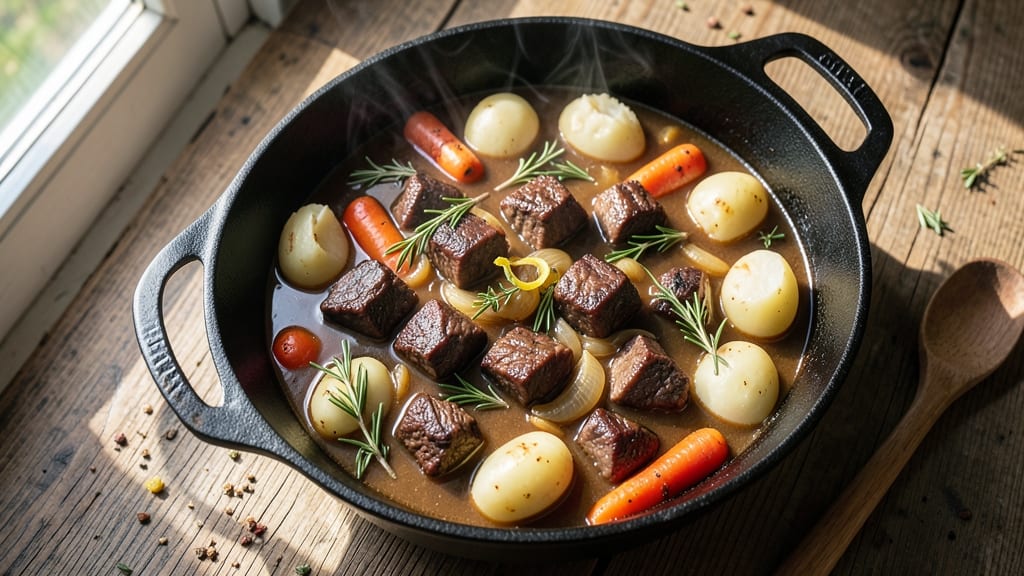
This authentic Irish beef stew brings the heart of Dublin to your kitchen with deep Guinness flavors and tender beef that melts at the touch of a spoon. The secret lies in slow-simmering—transforming tough cuts into fork-tender perfection while layering vegetables in the traditional way.
I’ve perfected this recipe over years, ensuring every bite delivers the rich, smoky essence of Irish pubs without shortcuts.
The foundation starts with properly browning the beef—this step unlocks the deep, caramelized flavors that define authentic Irish stew. Guinness isn’t just an ingredient; it’s the soul of the dish, adding a malty sweetness that balances the savory depth.
Thyme, bay leaves, and onions build the aromatic base, while potatoes and carrots soften into sweet, velvety perfection. The result? A stew so hearty it feels like a hug in a bowl.
What makes this recipe stand out is its authentic approach—no substitutions for traditional ingredients, no rushed cooking methods. The slow simmer (3-4 hours) ensures the beef becomes tender enough to pull apart, while the vegetables absorb the rich, Guinness-infused broth.
Serve it with a slice of warm soda bread or buttery mashed potatoes to complete the Irish meal experience.
This isn’t just a stew; it’s a taste of Ireland’s culinary heritage, made simple enough for weeknight dinners but impressive enough for gatherings. The aroma alone will have everyone gathering around the table, and the first bite will confirm why this recipe has been passed down for generations.
Let’s get cooking.
Ingredients for authentic irish beef stew
The heart of an Irish pub in your pot—just these 15 ingredients transform tough beef into melt-in-your-mouth perfection.
| Ingredient | Amount | Notes |
|---|---|---|
| Beef Chuck Roast 🥩 | 3 lb | Cut into 1.5-inch cubes |
| Yellow Onions 🧅 | 2 whole | Medium, chopped into wedges |
| Carrots 🥕 | 4 whole | Medium, peeled and cut into chunks |
| Russet Potatoes 🥔 | 2 lb | Cut into 1-inch chunks |
| Fresh Thyme 🌿 | 2 tbsp | Leaves only, chopped |
| Fresh Rosemary 🌿 | 1 tbsp | Leaves only, chopped |
| Bay Leaves 🍃 | 2 whole | Dried, standard size |
| Garlic Cloves 🧄 | 6 cloves | Peeled and smashed |
| Guinness Stout 🍺 | 1 ½ cups | Draught or extra stout |
| Beef Broth 💧 | 4 cups | Homemade or quality store-bought |
| Olive Oil 🫒 | 2 tbsp | Extra-virgin for browning |
| All-Purpose Flour 🌾 | 2 tbsp | For dredging beef |
| Salt 🧂 | 1 ½ tsp | Kosher or sea salt |
| Ground Black Pepper 🌶️ | 1 tsp | Freshly ground preferred |
| Worcestershire Sauce 🍶 | 1 tbsp | Vegetarian version if needed |
The beef is non-negotiable for authentic flavor. Chuck roast from the butcher counter delivers that signature fall-apart texture—sirloin or ribeye won’t cut it. Look for good marbling, and if you can’t find pre-cubed, ask your butcher to do it for you. For the best Guinness, grab Guinness Draught from the international beer aisle—it’s worth the extra few bucks over the canned version. Fresh thyme and rosemary? Penzeys or local farmers markets have the best quality, but even the grocery store stuff works if it smells vibrant. Bay leaves should be whole and flexible, not brittle.
No Guinness? Substitute with equal parts beef broth and a splash of balsamic vinegar—it won’t be identical, but it’ll get you close. Worcestershire sauce missing? Soy sauce at half the amount adds umami depth. The flour is just for dredging the beef to help it brown properly—don’t skip it unless you’re comfortable with a less caramelized crust. For the broth, homemade is ideal, but even the Kraft or Swanson brands work in a pinch. The Worcestershire sauce should be the vegetarian version if you’re avoiding anchovies, which some traditional recipes contain.
This stew tastes even better the next day, so make a double batch if you’ve got room in your fridge. Store in an airtight container with the lid slightly ajar to prevent condensation buildup. Keeps for 5-6 days in the fridge or 3 months frozen. For freezing, portion into individual containers so you can thaw just what you need. The potatoes will absorb more liquid when reheated, so add a splash of broth when warming. Leftovers reheat beautifully on the stove over medium-low heat—never microwave, or the texture suffers.
Why You'll Love This Recipe
- One-Pot Magic: I swear by this—no extra bowls, no fuss. Just chunk the beef, toss in onions and carrots, cover with broth, and let it melt down. The potatoes soften right in the pot, so cleanup’s basically a walk in the park.
- Deep, Rich Taste: That slow-braised chuck roast? It practically falls apart, so tender it’s almost sinful. The thyme and onions caramelize into something earthy and warm—like a hug in a bowl, but way more delicious.
- Leftovers That Win: Honestly, I make this on Sundays just to have it for the week. The flavor only gets better as it sits, and reheating it? Zero effort. My kids grab it straight from the fridge—no complaints, ever.
- Budget-Friendly Feast: A single chuck roast feeds six, and the veggies stretch it further. It’s the kind of meal where you’re not stressing over grocery bills, but everyone still feels like they’re eating something special. (Yes, even on a Tuesday night.)
Step-by-step instructions for authentic Irish beef stew
Here's the traditional method that delivers deep, rich flavors and tender beef every time.
Prepare and Sear the Beef
Pat the 3 lb beef chuck roast dry with paper towels—this ensures a better sear. Cut it into 1.5-inch cubes, discarding any large pieces of fat. In a large Dutch oven, heat 2 tbsp olive oil over medium-high heat until shimmering. Working in batches, add the beef cubes and sear for 2-3 minutes per side until deeply browned. This step builds the foundation of flavor through the Maillard reaction.
Remove the browned beef and set aside. Don't clean the Dutch oven—those flavorful browned bits will create a rich sauce later. Here's the thing—if you rush this step, you'll end up with pale beef that lacks depth. Patience at this stage makes all the difference in the final result.
Sauté Vegetables and Deglaze
In the same Dutch oven, add the chopped 2 whole yellow onions and cook for 5 minutes until softened. Add the peeled and chunked 4 whole carrots, and cook for another 3 minutes until they begin to caramelize slightly. Stir in the 6 smashed garlic cloves and cook for 30 seconds until fragrant.
Now it's time to deglaze. Sprinkle the 2 tbsp all-purpose flour over the vegetables and stir vigorously for 1 minute to coat everything evenly. This creates a roux that will thicken our stew. Pour in the 1.5 cups Guinness stout, scraping up all those delicious browned bits from the bottom of the pot. Let it simmer for 3 minutes until slightly reduced.
Build the Stew Base
Return the browned beef to the Dutch oven. Add the 4 cups beef broth, 1.5 tsp salt, 1 tsp ground black pepper, 1 tbsp Worcestershire sauce, 2 whole bay leaves, 2 tbsp chopped fresh thyme, and 1 tbsp chopped fresh rosemary. Stir everything together until the beef is well-coated in the liquid. Bring to a gentle boil, then reduce heat to low.
This is where the magic happens. Let the stew simmer uncovered for 1 hour 30 minutes, stirring occasionally. You want to maintain a gentle simmer—not a rolling boil—that keeps the beef tender and the flavors developing. The beef should be fork-tender at this stage, and the liquid should have reduced slightly but still coat the beef.
Add Potatoes and Finish
Add the 2 lb russet potatoes cut into 1-inch chunks to the stew. The potatoes should be fully submerged in the liquid. If they're not, add a little water or broth to cover them. Return to a simmer and cook for another 30-45 minutes until the potatoes are tender when pierced with a fork.
Taste the stew and adjust seasoning if needed. Remove the bay leaves before serving. The potatoes should be tender with a slight bite, and the beef should be falling apart with just a gentle fork pressure. The stew should have a rich, velvety texture with deep, complex flavors from the Guinness and slow cooking process.
Rest and Serve
Let the stew rest for 10 minutes before serving. This allows the flavors to meld together and the potatoes to absorb any remaining liquid. Ladle the stew into bowls, making sure each serving has a good portion of potatoes and beef. The aroma alone should make your mouth water—this is what authentic Irish beef stew is all about.
Serve with crusty Irish soda bread or buttered dinner rolls to soak up that delicious broth. The stew will continue to improve as it sits, so don't be surprised if you find yourself going back for seconds. This is the kind of comforting, hearty meal that's perfect for cold days or family gatherings.
Pro Tips For Making Authentic Irish Beef Stew
- Sear the Chuck Hard: Irish stew needs that deep, caramelized crust to carry flavor. After patting the beef chuck dry, hit it with a heavy pan—cast iron works best—over medium-high heat for 4-5 minutes per side until it’s a rich, dark brown. I used to rush this, and the stew always tasted flat afterward. Don’t skip the oil; use enough to coat the bottom (about 2 tablespoons), or the meat will steam instead of sear.
- Cut Potatoes Uniformly: Big, uneven chunks turn mushy while smaller ones stay firm. Aim for 1.5-inch cubes—big enough to hold shape but small enough to cook through in the same time as the beef. Russets are your best bet here; their starch keeps the stew thick and hearty. (Yes, even if you’re impatient like me, resist the urge to chop them smaller.)
- Deglaze with Stout First: After browning the onions and carrots, pour in a splash of dark Irish stout (or Guinness if you’re lazy) before adding liquid. The bitterness and maltiness cut through the richness of the beef and add depth. I was skeptical until I tried it—now it’s non-negotiable. Let it bubble for 2 minutes before adding broth to pull up all those flavorful bits.
- Add Potatoes Late: Tossing them in at the start turns them to mush. Instead, add the potatoes in the last 30 minutes of cooking, when the beef is already tender. This keeps them creamy but still with a bite. If you’re short on time, parboil them for 5 minutes first, but drain well—no one wants a watery stew.
Perfect pairings for these flavors
Irish Bread Pairings
No Irish stew is complete without crusty soda bread—its slightly tangy, dense texture contrasts beautifully with the rich stew. I recommend Ballymaloe Irish Farmhouse Soda Bread from the international aisle, or make your own with buttermilk and whole wheat flour.
For a lighter option, serve with warm, buttery dinner rolls from a local bakery—they soak up the Guinness-infused broth perfectly. 🍞
Classic Potato Sides
Creamy mashed potatoes elevate the stew by adding a velvety contrast to the hearty beef. Use Yukon Gold potatoes for their natural sweetness and buttery texture. For an Irish twist, stir in sour cream and chives after mashing. Alternatively, roasted baby potatoes with rosemary and garlic create a crispy, aromatic side that balances the stew’s richness.
Vegetable Accompaniments
Add a simple green salad with arugula, radishes, and a lemon vinaigrette to cut through the richness. The peppery bite of arugula and the crunch of radishes provide a refreshing contrast.
For a more substantial side, steamed green beans with a splash of Dijon mustard and toasted almonds add texture and brightness to the meal.
Irish Cheese Platter
Set out a small cheese board with Irish cheddar, Dubliner blue cheese, and cashew-based vegan cheese (for dietary flexibility). Pair with sliced apples and walnuts for a sweet-savory contrast. The sharpness of the cheese complements the stew’s deep flavors, while the fruit adds a touch of freshness. 🧀
Beverage Pairings
Guinness Draught is the obvious choice—its malty sweetness mirrors the stew’s depth. For a non-alcoholic option, Irish breakfast tea with a splash of honey enhances the meal’s cozy vibe. If you prefer wine, a medium-bodied red like Pinot Noir or a dry Irish cider balances the richness without overpowering the stew’s flavors.
Nutrition facts
Frequently asked questions
Can I use a slow cooker for this Irish beef stew?
The slow cooker is perfect for this dish. Brown the beef first in a skillet, then transfer everything to your slow cooker. Cook on low for 7-8 hours or high for 4-5 hours. The potatoes may need an extra 30-60 minutes on high to soften properly. The slow cooker method actually enhances the stew's tenderness and flavor development.
What cut of beef works best for authentic Irish stew?
Chuck roast is non-negotiable for authentic Irish beef stew. Its high fat content and connective tissue break down beautifully during slow cooking, creating that signature melt-in-your-mouth texture. Brisket is another excellent choice, though it has a slightly different flavor profile. Avoid lean cuts like sirloin—they won't become tender enough.
Can I make this stew in a regular pot instead of a Dutch oven?
Yes, but with some adjustments. Use a heavy-bottomed pot with a lid to prevent boiling over. The stew will require more attention to prevent sticking, and you may need to add a little extra broth if it reduces too quickly. A Dutch oven is ideal because it distributes heat evenly and handles the long cooking time better.
Why does my stew taste too salty?
This usually happens when using store-bought broths that are already heavily salted. Taste your broth before adding it to the stew, and adjust the salt accordingly. For homemade broth, use 1 tsp salt per 4 cups as a guideline. If you've already added too much, you can try balancing it with a splash of Guinness or a pat of butter, which adds richness without adding more salt.
How do I know when the beef is done?
The beef should be fork-tender, meaning it should easily pull apart with just a gentle fork pressure. If you're unsure, cut into a small piece—it should be soft inside with no pink center. The stew will continue to cook as it sits, so it's better to pull it slightly before it reaches this stage. The potatoes should also be tender when pierced with a fork.