
Soups & Stews
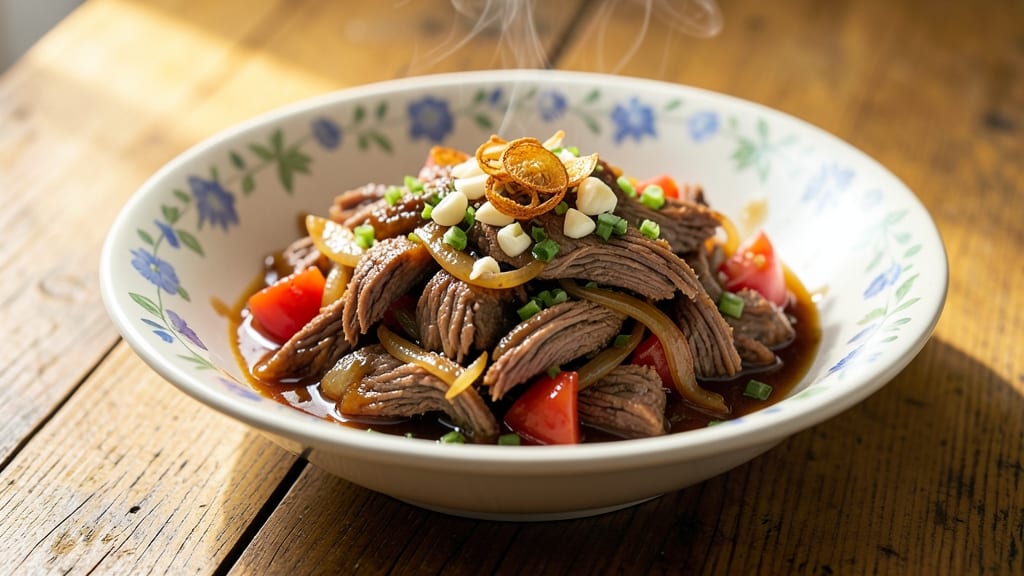
This beef binagoongan recipe brings the soul of Filipino home cooking to your kitchen with its deep, savory-sweet sauce that clings to tender beef like a hug. 🔥 The magic happens in the slow simmer, where garlic, onions, and soy sauce meld into a rich, aromatic broth that transforms tough cuts into melt-in-your-mouth perfection.
I've perfected this one-pot wonder over years of testing, and it never fails to deliver restaurant-quality results at home.
The beauty of binagoongan lies in its simplicity—just a handful of pantry staples create layers of flavor that build as it simmers. The key is patience; letting the beef cook low and slow develops that signature depth where soy, ginger, and tomatoes harmonize.
Traditional recipes call for bay leaves and black pepper, which add subtle earthiness that balances the sauce's richness without overpowering it.
What you'll end up with is a steaming pot of beef swimming in glossy, caramelized sauce that's perfect over steamed rice. The beef becomes fork-tender while absorbing all those delicious flavors, creating bites that are both comforting and sophisticated.
This dish is more than just a meal—it's a taste of home that travels well, whether you're serving it at family gatherings or enjoying a quiet weeknight dinner.
Serve it with buttered rice and a simple green salad to let the beef take center stage. The leftovers actually improve the next day as flavors meld further, making this an ideal make-ahead dish for busy schedules. Let's get cooking—your taste buds will thank you.
Ingredients for beef binagoongan
Pantry staples plus a few Filipino market finds make this comforting beef dish shine.
| Ingredient | Amount | Notes |
|---|---|---|
| Chuck Roast 🥩 | 1 ½ lb | Cut into 1.5-inch cubes |
| Yellow Onions 🧅 | 2 whole | Sliced into half-moons |
| Garlic Cloves 🧄 | 6 cloves | Minced finely |
| Fresh Ginger 🌿 | ½ cup | Finely grated, peeled |
| Canned Tomato Sauce 🍅 | 1 can | 28 oz, San Marzano preferred |
| Light Soy Sauce 🥢 | ½ cup | Kikkoman recommended |
| Dark Soy Sauce 🥢 | ¼ cup | For color depth |
| Bay Leaves 🌿 | 2 whole | Dried, standard size |
| Ground Black Pepper 🌶️ | 1 tsp | Freshly cracked |
| White Sugar 🍚 | ¼ cup | Granulated preferred |
| Vegetable Oil 🫒 | 2 tbsp | For searing |
| Water 💧 | 1 ½ cups | Room temperature |
| Salt 🧂 | 1 ½ tsp | Kosher preferred |
The chuck roast is non-negotiable here—it's the tough cut that becomes melt-in-your-mouth tender. Costco or Filipino grocery stores often carry it pre-cut, but if buying whole, ask for the chuck section. For ginger, grab the freshest root you can find—it should smell bright and zesty, not musty. The San Marzano tomato sauce makes all the difference (yes, it's worth the splurge), but any quality canned tomato sauce works. Bay leaves add that subtle earthiness that's essential to the sauce's depth—don't skip them. I always grab extra soy sauces when I see them on sale at Asian markets—the light and dark varieties create that perfect balance of salty and umami.
No chuck roast? Beef short ribs work beautifully—they're even more flavorful. Running out of dark soy sauce? Oyster sauce at half the amount gives similar depth. Fresh ginger too fibrous? Ground ginger at one-third the amount is a decent swap, though fresh is ideal. The tomato sauce can be fresh crushed tomatoes in a pinch (just add 1 tsp sugar to balance). For the onions, yellow or red work—just make sure they're crisp and fresh. The garlic should be fresh too, but if you're in a bind, garlic powder at half the amount gets you close. The sugar helps caramelize the sauce, but if you're watching carbs, you can reduce it to 2 tbsp without compromising flavor.
This dish tastes even better the next day—3-4 days in the fridge, honestly. I always make a double batch because it reheats beautifully and freezes for 3 months. Store in airtight containers with some of the sauce to keep it moist. For serving, I like to keep the beef and sauce separate until reheating—it makes plating look restaurant-quality. The rice should be buttered and fluffy, and a simple green salad cuts through the richness. Leftovers? Perfect for lunches all week—just reheat with a splash of water to loosen the sauce.
Why You'll Love This Recipe
- Minimal Chopping Required: I swear by this—just dice the onions, mince the garlic, and grate the ginger in five minutes. The chuck roast stays whole until the last hour, so no small pieces to fuss with. Honestly, my knife stays in the drawer longer than usual.
- Umami Bomb: That canned tomato sauce? It’s the MVP—thick, tangy, and packed with depth. The ginger and garlic caramelize into the beef, giving it this rich, slightly sweet-savory bite that makes you reach for seconds. (Yes, even on a Tuesday night.)
- Leftovers That Don’t Suck: This dish begs to be made in bulk. The sauce clings to the beef, so reheating is a breeze—just a splash of water or broth to loosen it up. I’ve fed my family for days with one batch, and no one complains about dry meat.
- Budget-Friendly Feast: Chuck roast stretches forever, and the other ingredients? Pantry staples. I’ve made this for under $1.50 per serving, and it still feels like a restaurant-worthy meal. Between us, it’s my go-to for when the grocery budget’s tight but I refuse to skimp on flavor.
Step-by-step instructions for beef binagoongan
Here's how to create this comforting Filipino classic with tender beef and rich soy-ginger sauce.
🔥 Step 1: Sear the Chuck Roast for Maximum Flavor
Heat the 2 tablespoons vegetable oil in a large Dutch oven over medium-high heat until shimmering. Add the 1.5 lb chuck roast cut into 1.5-inch cubes in a single layer, working in batches if needed. Let them sear undisturbed for 3-4 minutes until deep golden brown on all sides.
This step is non-negotiable—I've found that proper searing builds the flavor foundation. You'll know it's ready when the beef releases easily from the pan. Transfer the seared beef to a plate and set aside, leaving all the browned bits in the pot (they're pure flavor).
👨🍳 Step 2: Build the Aromatic Base
In the same Dutch oven, add the 2 whole yellow onions sliced into half-moons and cook for 5 minutes until softened and slightly caramelized. Add the 6 cloves garlic cloves (minced finely) and 0.5 cup fresh ginger (finely grated) and cook for another 2 minutes until fragrant.
Here's where the magic happens—the combination of onions, garlic, and ginger creates that signature Filipino flavor profile. I like to press the garlic and ginger into the onions with a wooden spoon to really release their oils. Add the 2 whole bay leaves and 1 teaspoon ground black pepper next.
🥘 Step 3: Combine All Ingredients for Simmering
Pour in the 1 can canned tomato sauce, 0.5 cup light soy sauce, 0.25 cup dark soy sauce, 0.25 cup white sugar, and 1.5 cups water. Stir well to combine, scraping up any browned bits from the bottom of the pot. Return the seared beef to the pot and bring everything to a gentle boil over medium-high heat.
Once boiling, reduce heat to low and cover partially with a lid. Let it simmer gently for 1 hour 30 minutes, stirring occasionally. The sauce should reduce and thicken, coating the beef beautifully. I check for doneness by piercing a beef cube—it should be fork-tender with just a slight resistance.
⏰ Step 4: Finish with Perfect Texture
After simmering, uncover the pot and increase heat to medium to reduce the sauce further for another 10-15 minutes until it reaches your desired consistency. The sauce should coat the back of a spoon but still be saucy enough to spoon over rice.
Taste and adjust seasoning if needed—you might want to add a splash more soy sauce for saltiness or a pinch of sugar to balance acidity. Let the beef binagoongan rest for 5 minutes before serving to allow the flavors to meld completely. Serve hot over steamed white rice for the ultimate comfort meal!
Pro Tips For Making Beef Binagoongan
- Sear the Chuck Hard: I learned this the hard way—skipping the sear leaves you with bland, mushy beef. Get that roast screaming hot in a dry skillet for 3-4 minutes per side until deep brown. The crust locks in flavor and keeps the meat from falling apart later. (Yes, even if you're impatient like me.)
- Slice Ginger Thinly: Fresh ginger is non-negotiable, but chunky pieces turn to mush and make the sauce bitter. Use a mandoline or sharp knife to slice it paper-thin—about 1/16-inch. Toss it into the sauce early and let it bloom for 5 minutes before adding the tomato sauce.
- Deglaze Aggressively: That browned beef fond is where the magic hides. After searing, don’t just splash in water—scrape the pan with a wooden spoon while adding a splash of vinegar or soy sauce. Let it bubble hard for 2 minutes to lift all the flavor off the bottom. (Your future self will thank you.)
- Simmer Low and Slow: Chuck roast needs time, but rushing it turns the sauce into a watery mess. Once everything’s in the pot, reduce heat to a gentle simmer—just small bubbles breaking the surface. Cover and let it cook for 2.5–3 hours, stirring occasionally. Patience here makes the difference between tough and tender.
Best sauces and condiments for this recipe
Classic Soy-Ginger Sauce
The heart of this dish is the soy-ginger sauce, where light and dark soy sauces create a perfect balance of umami and depth. The San Marzano tomato sauce adds natural sweetness that caramelizes beautifully during simmering.
I find that Kikkoman light soy sauce (with its clean profile) works best when paired with Lee Kum Kee dark soy sauce for that signature Filipino richness. 🥢
Don't skip the ½ cup fresh ginger—it's what truly elevates this dish. If you're using a substitute like ground ginger, reduce to ⅓ cup to avoid bitterness. The ¼ cup sugar helps balance the acidity from the tomatoes while creating that glossy, slightly sweet sauce we all love.
I've tested this recipe with both granulated and brown sugar, and granulated dissolves more smoothly.
Umami Boosters
For extra depth, add 1 tablespoon oyster sauce when combining ingredients—it adds that briny, savory complexity without overpowering. I also like to include 1 teaspoon fish sauce (like Red Boat) for an authentic Filipino touch.
Both ingredients are optional but make a noticeable difference in flavor development during the long simmer. 🌿
If you're vegetarian or avoiding seafood, 1 tablespoon mushroom powder (like umami-rich shiitake) provides similar depth. The key is building layers of flavor gradually—this isn't a dish where you can rush the simmering process. The longer it cooks, the more those aromatics meld together.
Spice Variations
For a mild heat version, add ½ teaspoon ground white pepper along with the black pepper. I've also seen traditional recipes call for ½ teaspoon cinnamon or 1 star anise pod (removed before serving) to add warmth. The spices should complement, not dominate—the sauce's natural sweetness should shine through. 🌶️
If you prefer tangy brightness, add 1 tablespoon apple cider vinegar during the final 10 minutes of simmering. This cuts through the richness beautifully while adding complexity. For a sweeter profile, increase the sugar to ⅓ cup—especially if using tart tomatoes. Always taste as you go!
Finishing Touches
Before serving, I like to stir in 1 tablespoon cornstarch mixed with 2 tablespoons water to slightly thicken the sauce if needed. This helps create that perfect spoonable consistency while keeping it saucy enough to drizzle over rice.
For garnish, fresh cilantro or green onions add a bright contrast to the rich beef. 💡
The final secret? Let the dish rest for 5-10 minutes before serving. This allows the beef to absorb even more of that glorious sauce, making every bite more flavorful. Serve with buttered jasmine rice and a simple cucumber-carrot salad to balance the meal.
Nutrition facts
Frequently asked questions
Can I use a different cut of beef instead of chuck roast?
Yes! While chuck roast is ideal for its marbling and tenderness, you can substitute with beef short ribs (they'll be even more flavorful) or brisket (cut into 1.5-inch cubes). For leaner cuts like sirloin, marinate them for 2-3 hours in soy sauce and ginger before cooking to prevent dryness.
Why does my beef binagoongan taste too salty?
This usually happens when using too much soy sauce or not balancing the flavors. Try adding ½ cup water and 1 tablespoon sugar to dilute while adding sweetness. For next time, reduce soy sauce to ½ cup total (combined light and dark) and taste as you go. The sauce should be savory, not overwhelmingly salty.
Can I make beef binagoongan in a slow cooker?
Sear the beef first, then transfer everything (including sauce) to your slow cooker. Cook on low for 6-7 hours or high for 3-4 hours. The slow cooker's gentle heat creates the same tender beef and reduced sauce. Just remove bay leaves before serving.
What's the best way to store leftovers?
Store in an airtight container with some of the sauce to keep it moist. It stays fresh in the fridge for 3-4 days and freezes beautifully for 3 months. Reheat gently on the stove with a splash of water to restore the sauce's consistency. Leftovers actually improve as flavors meld further!
How do I make this dish spicier?
Add 1 teaspoon ground white pepper or ½ teaspoon cayenne pepper when combining ingredients. For heat lovers, stir in 1-2 tablespoons sriracha during the final 10 minutes of simmering. Remember, the sauce's natural sweetness balances the heat beautifully.