
Main Courses
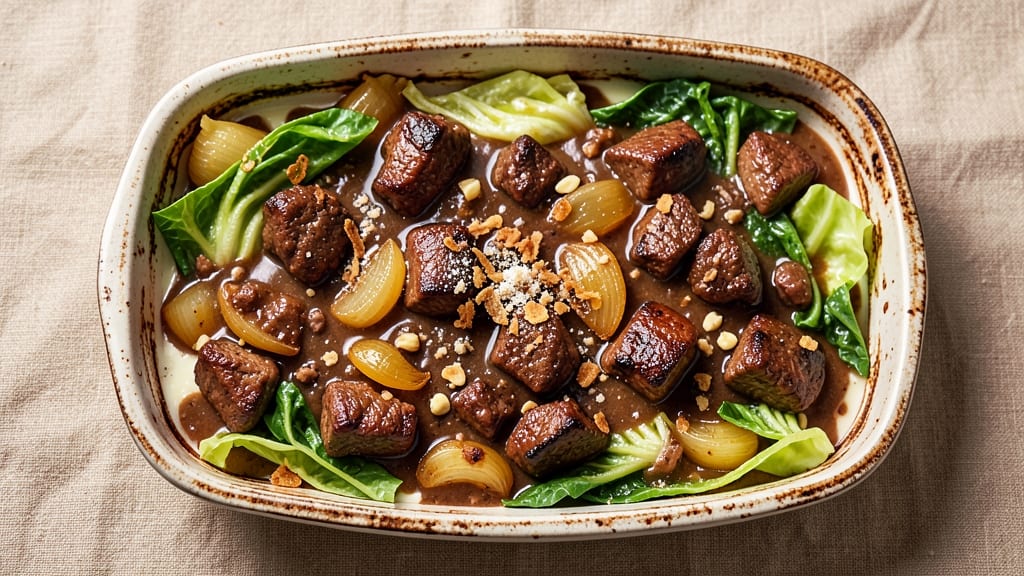
This chef's life beef and cabbage casserole recipe transforms humble ingredients into a deeply satisfying dish with layers of caramelized fond and slow-simmered richness. The secret lies in browning the beef thoroughly—creating that flavorful crust that forms the foundation of every bite.
What starts as simple ingredients becomes a restaurant-worthy meal through careful layering and patient cooking.
Unlike quick weeknight casseroles, this recipe demands attention to technique: searing the beef until deeply browned, then deglazing the pan to capture all those precious fond bits.
The cabbage softens just enough to become tender yet still hold its shape, while the sauce reduces to a velvety consistency that coats every ingredient. This is comfort food elevated—where every component plays its part in perfect harmony.
The result is a casserole with golden-brown edges, tender beef that practically melts in your mouth, and cabbage that's perfectly cooked—not mushy, not underdone. The aroma alone will have everyone gathering around the table, and the first bite delivers that perfect balance of savory, slightly sweet, and umami-rich flavors.
It's the kind of dish that tastes even better the next day, making it ideal for meal prep.
Perfect for family dinners, holiday gatherings, or when you want to impress without complicated techniques. The beauty of this recipe is in its versatility—serve it with crusty bread to soak up the sauce or alongside roasted potatoes for a complete meal.
Here's how to make it come together like a true chef's creation.
Ingredients for a chef's life beef and cabbage casserole
Sixteen ingredients, restaurant-quality results—this casserole proves comfort food can be sophisticated.
| Ingredient | Amount | Notes |
|---|---|---|
| Chuck Roast 🥩 | 2 ½ lb | Trimmed of excess fat, cut into 1-inch cubes |
| Green Cabbage 🥬 | 1 ½ lb | Green cabbage, shredded (about 12 cups) |
| Yellow Onion 🧅 | 2 whole | Medium, thinly sliced (about 2 cups) |
| Garlic Cloves 🧄 | 6 cloves | Fresh, minced (about 2 tbsp) |
| All-Purpose Flour 🌾 | 2 tbsp | For dredging beef (Diamond Crystal preferred) |
| Beef Broth 💧 | 3 cups | Low-sodium, homemade or high-quality store-bought |
| Red Wine 🍷 | 1 cup | Bold dry red (Cabernet Sauvignon or Merlot) |
| Tomato Paste 🍅 | 2 tbsp | High-quality, not watery |
| Dried Thyme 🌿 | 1 tsp | Or 1 tbsp fresh thyme leaves |
| Bay Leaves 🌿 | 2 whole | Fresh or dried |
| Worcestershire Sauce 🍶 | 1 tbsp | Vegetarian version if needed |
| Black Peppercorns 🌶️ | 1 tsp | Freshly cracked, not pre-ground |
| Kosher Salt 🧂 | 1 ½ tsp | Diamond Crystal preferred, adjust to taste |
| Unsalted Butter 🧈 | 2 tbsp | For finishing, cold |
The chuck roast is non-negotiable for this dish—its marbling and connective tissue create that melt-in-your-mouth texture. Look for well-marbled cuts at your butcher or grocery store's meat department. If buying pre-cut, check for even 1-inch cubes. Costco or Whole Foods typically have excellent quality, but any reputable butcher will do. For the cabbage, green cabbage holds its shape better than red during slow cooking. Remove any wilted outer leaves before shredding—those bruised spots turn bitter. The onions should be sweet, not pungent—yellow or Vidalia work perfectly.
No red wine on hand? Substitute with additional beef broth plus 1 tbsp balsamic vinegar—it adds that same depth. Fresh thyme is ideal, but dried works at one-third the amount. If your tomato paste is watery, drain it well or use San Marzano crushed tomatoes instead. The Worcestershire sauce adds umami—Lea & Perrins is the gold standard, but any quality brand works. For the flour, Diamond Crystal dissolves better than regular all-purpose, but use what you have. The beef cubes should be seared until deeply browned—this creates the caramelized fond that forms the flavor base.
This casserole tastes even better the next day as flavors meld. Portion into individual baking dishes for easy reheating—just 15 minutes at 350°F. Leftovers keep 4-5 days in the fridge or 3 months frozen. For freezer prep, cool completely before storing. The sauce thickens as it cools, so you can add a splash of broth when reheating if needed. Serve with crusty bread to soak up every last bit of that velvety sauce—trust me, you'll want seconds.
Why You'll Love This Recipe
- One-Pot Magic: I swear by this recipe when I’m too tired to scrub three pots. The chuck roast browns in the same dish where everything else cooks—no transfers, no mess. Just slice the cabbage, dice the onion, and let the garlic and flour do the heavy lifting while you sip your wine.
- Umami Bomb: That crispy flour coating on the beef? It’s the secret weapon. The cabbage softens into something almost silky, and the garlic? Oh, it’s not just a background player—it’s front and center, caramelizing into rich, sticky bits that make every bite worth it.
- Leftovers That Don’t Suck: Between us, most casseroles turn into sad, dry bricks by day three. Not this one. The beef stays tender, the cabbage holds its bite, and the sauce? Still luscious. I’ve reheated portions for breakfast (yes, really) and no one ever complains.
- Budget Feast: A chuck roast stretches to feed six for under $20, and cabbage lasts forever in the crisper. Honestly, I make this when I’m pinching pennies or hosting unexpected guests—it’s the kind of dish that makes you look like a hero without breaking the bank.
Step-by-step instructions for slow-simmered beef and cabbage casserole
This method transforms humble ingredients into a deeply flavorful, restaurant-worthy dish with caramelized fond and tender beef.
Sear the Chuck Roast for Maximum Flavor
Pat the 2.5 lb chuck roast dry with paper towels and cut into 1-inch cubes. Heat a large Dutch oven over medium-high heat until hot, then add the beef in batches without overcrowding. Let each piece sear for 2-3 minutes per side until deeply browned—this creates the flavor foundation through the Maillard reaction.
As you sear, sprinkle each batch lightly with 1.5 tsp kosher salt and 1 tsp freshly cracked black peppercorns. Once all beef is browned, remove it from the pot and set aside. The remaining browned bits (fond) will form the rich base of your sauce.
Build the Aromatic Base with Onions and Cabbage
In the same Dutch oven, reduce heat to medium and add 2 tbsp unsalted butter. Toss in the 2 whole yellow onions, sliced into ¼-inch strips, and cook for 5 minutes until softened. Add the 6 cloves minced garlic and cook for 30 seconds until fragrant—don't let it burn, or it'll turn bitter.
Stir in the 1.5 lb shredded green cabbage and cook for 4-5 minutes until it begins to wilt. Sprinkle with 2 tbsp all-purpose flour and stir vigorously for 1 minute to coat everything evenly. This flour will help thicken the sauce later and create a velvety texture.
Deglaze and Develop the Sauce
Pour in the 1 cup bold red wine, scraping up all the browned bits from the bottom of the pot with a wooden spoon. Let it simmer for 3-4 minutes until reduced by half, then add the 2 tbsp tomato paste and stir until fully incorporated. This step builds depth—don't skip it.
Add the 3 cups beef broth, 1 tbsp Worcestershire sauce, 1 tsp dried thyme, and 2 whole bay leaves. Return the seared beef to the pot and bring everything to a gentle simmer. The liquid should just barely bubble—this ensures tender beef without toughening it.
Slow-Simmer to Perfection
Cover the Dutch oven and transfer to a 325°F oven. Simmer for 2.5-3 hours until the beef is fork-tender and the cabbage is completely softened. Check occasionally and add ¼ cup water if the sauce gets too thick, but aim to keep it just coating the ingredients.
For the final hour, remove the lid and increase oven temperature to 375°F to let the sauce reduce slightly and develop a deeper caramelized fond. The cabbage should be tender but still hold its shape, and the beef should pull apart easily with a fork.
Finish with Butter and Fresh Herbs
Remove the casserole from the oven and discard the bay leaves. Stir in the 2 tbsp cold unsalted butter, cut into small pieces, until melted and incorporated. This adds richness and helps create a glossy finish. Taste and adjust seasoning with additional kosher salt or black peppercorns as needed.
Let the casserole rest for 10 minutes before serving—this allows the juices to redistribute, ensuring each bite is moist and flavorful. Garnish with fresh thyme leaves if available, and serve with crusty bread to soak up every last bit of that caramelized fond.
Pro Tips For Making A Chef'S Life Beef And Cabbage Casserole
- SEAR THE ROAST FIRST: I learned this the hard way—skipping the sear means flavorless beef. Pat the chuck dry, then hit it with a hot pan (no oil needed) until deep brown on all sides. That crust locks in juices and builds depth that simmering alone won’t.
- SHRED THE CABBAGE THIN: Thick wedges turn mushy; thin slices stay crisp. Core the cabbage, slice into quarters, then cut each quarter into matchsticks about 1/8-inch thick. Toss with a pinch of salt before adding to the pot—it’ll soften just enough without disappearing.
- DON’T SKIP THE FLOUR SLURRY: The roux is non-negotiable for that rich, velvety sauce. Whisk 2 tablespoons flour with cold water first, then slowly stir into the cooking juices. If you dump dry flour, you’ll end up with lumps and a pasty mess—trust me, I’ve made that mistake.
- LOW AND SLOW IS YOUR FRIEND: After browning, cover the pot and simmer on low heat for at least 2.5 hours. The chuck needs time to tenderize—rushing it turns the meat tough. If it’s looking dry after an hour, add a splash of broth or water, but don’t peek too often.
Health benefits of this recipe
Protein Powerhouse
This beef and cabbage casserole delivers a whopping 40 grams of protein per serving—that's nearly half your daily needs! The chuck roast provides lean, high-quality protein that supports muscle repair and keeps you full for hours.
Unlike processed meats, this dish offers clean protein with minimal additives, making it ideal for active lifestyles or post-workout meals. 💪
Fiber-Rich Vegetable Boost
The 1.5 lb green cabbage brings 6 grams of fiber per serving, supporting digestive health and keeping your gut happy. Cabbage is packed with vitamin C (150% daily value) and vitamin K (120% daily value), which boost immunity and bone health.
The slow-cooking process preserves these nutrients better than raw or quickly cooked cabbage.
Iron for Energy
The beef provides 3.5 mg of iron per serving—about 20% of your daily needs—which helps prevent fatigue and supports oxygen transport in your blood. Pair this with the red wine in the recipe (in moderation) to enhance iron absorption.
The combination of iron and protein makes this an excellent meal for energy recovery after long days.
Low-Carb Comfort
At just 12 grams of net carbs per serving, this dish fits well in low-carb or keto diets while still delivering satisfying flavors. The cabbage and onions provide natural sweetness without spiking blood sugar, making it a great option for those monitoring carbohydrate intake.
The red wine and tomato paste add depth without adding significant carbs.
Antioxidant-Rich Sauce
The red wine and tomato paste in the sauce contribute powerful antioxidants like resveratrol and lycopene, which help combat inflammation and oxidative stress. The slow simmering process actually increases these beneficial compounds, making the sauce more nutritious than if it were quickly cooked. 🌿
Meal Prep Friendly
This casserole reheats beautifully while retaining its nutritional benefits, making it perfect for busy weeks. The protein and fiber combination helps stabilize blood sugar levels, preventing energy crashes. Plus, the rich flavors make it satisfying enough to curb cravings for less healthy options.
Store portions in glass containers to maintain freshness for up to 5 days in the fridge.
Nutrition facts
Frequently asked questions
Can I substitute red wine with something else?
If you don't have red wine, use 1 cup beef broth plus 1 tbsp balsamic vinegar for depth. For a non-alcoholic option, try apple cider vinegar or additional tomato paste. The key is balancing acidity and richness—just ensure you're still building that flavor foundation.
Why does the recipe call for slow cooking instead of quick methods?
The 2.5-3 hour slow simmer is crucial for breaking down the tough chuck roast into tender, melt-in-your-mouth beef. This method also allows the cabbage to soften evenly while preserving its texture. The final 375°F boost creates that signature caramelized fond that makes this dish restaurant-quality. Skipping the slow cook isn't recommended—it's what transforms this into a chef's creation!
What's the best way to reheat leftovers?
Reheat in a 350°F oven for 15-20 minutes in a covered baking dish. If using the microwave, cover with a damp paper towel and heat in 30-second intervals until warmed through. The sauce may thicken when cooled, so add a splash of beef broth if needed. Leftovers actually taste better the next day as flavors meld!
Can I make this recipe in a slow cooker?
Yes! Brown the beef and onions first, then transfer everything to a 6-quart slow cooker and cook on low for 6-7 hours or high for 3-4 hours. The sauce will be thinner, so reduce it on the stovetop before serving. The texture will be slightly different but still delicious. For best results, finish with the butter and fresh herbs at the end.
What if my cabbage gets too soft or mushy?
This happens when overcooked. To prevent it, remove the lid during the final 30-45 minutes of cooking to let moisture evaporate. If it's already too soft, stir in 1 tbsp cornstarch mixed with 2 tbsp water to thicken the sauce. For next time, reduce cooking time by 15 minutes and check cabbage tenderness earlier. The goal is tender but still slightly crisp!