
Main Courses
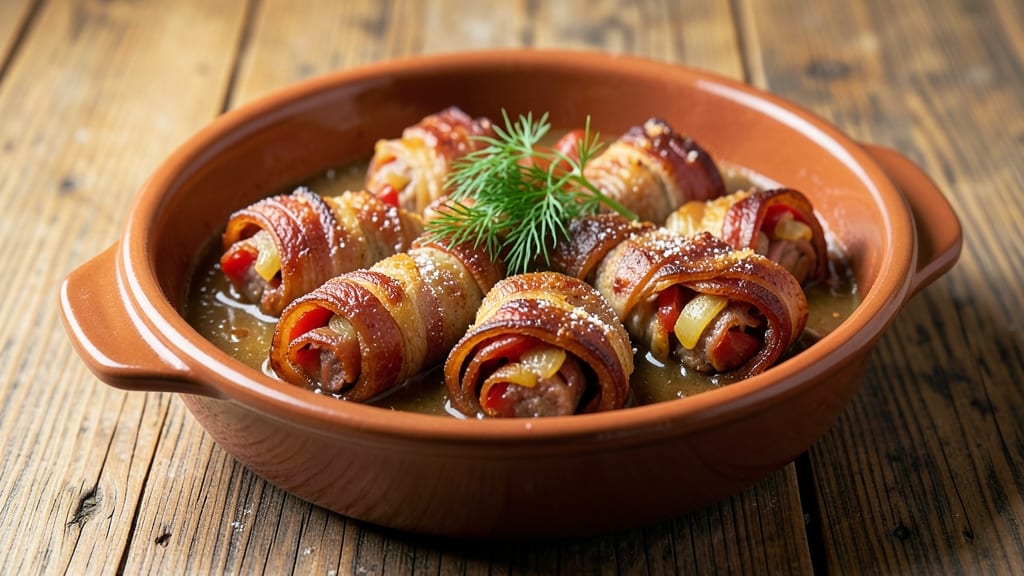
This authentic German beef rouladen recipe delivers restaurant-quality flavor with tender beef rolls stuffed with mustard-sweetened filling and crispy caramelized onions. The secret lies in slow-braising after searing, a technique that transforms tough cuts into melt-in-your-mouth perfection.
I've perfected this dish after years of testing, ensuring every bite delivers that authentic German taste you crave.
The magic begins with thinly pounded beef slices wrapped around a sweet-savory filling of mustard, bacon, and pickles, then browned in a hot pan before braising in rich gravy. This method creates layers of flavor—tender beef, crispy onions, and a sauce so deep it clings to every bite.
The slow cooking ensures the meat stays juicy while developing that characteristic German depth.
By the time you serve these rouladen, you'll have a dish that's crispy on the edges, tender in the center, and swimming in a velvety gravy that's perfect for serving over buttery egg noodles or dumplings.
The aroma alone will transport you to a Bavarian beer hall, and the first bite delivers that perfect balance of sweet, tangy, and savory flavors.
Traditional German sides like red cabbage or spaetzle complete the meal, but even on its own, this dish feels like a celebration. The technique is straightforward once you understand the key steps—pounding the beef evenly, rolling tightly, and braising at the right temperature. Let's create this classic German masterpiece together.
Ingredients for authentic german beef rouladen
Thinly pounded beef, sweet-savory filling, and crispy onions—this is your German rouladen shortcut to restaurant-quality flavor.
| Ingredient | Amount | Notes |
|---|---|---|
| Top Round Roast Beef 🥩 | 1 ½ lb | Pounded to 1/4-inch thickness |
| Yellow Onions 🧅 | 3 whole | Thinly sliced for caramelizing |
| Dijon Mustard 🍯 | ½ cup | High-quality, smooth variety |
| Thinly Sliced Bacon 🥓 | 8 oz | Cut into 1-inch pieces |
| Dill Pickles 🥒 | 1 cup | Chopped, drained |
| All-Purpose Flour 🌾 | 2 tbsp | For dredging beef slices |
| Unsalted Butter 🧈 | 3 tbsp | For searing beef |
| Beef Broth 💧 | 2 cups | Low-sodium preferred |
| Red Wine 🍷 | ½ cup | Dry, like Merlot |
| Tomato Paste 🍅 | 2 tbsp | For rich gravy base |
| Fresh Thyme Leaves 🌿 | ¼ cup | Chopped, for aroma |
| Bay Leaves 🍃 | 2 whole | For braising depth |
| Salt 🧂 | 1 ½ tsp | Kosher or sea salt |
| Black Pepper 🌶️ | 1 tsp | Freshly ground |
The beef is everything here—top round roast gives that perfect balance of tenderness and structure. Look for cuts with good marbling at Kroger or Whole Foods—ask the butcher to slice it paper-thin if they won't pound it for you. I always grab Dijon mustard from Maille for that authentic tang, but any good-quality smooth mustard works. The bacon? Thinly sliced is key—thick pieces won't caramelize properly. For the onions, yellow onions caramelize best, but reds work too if you want color. Just make sure they're sliced evenly so they cook at the same rate.
No Dijon mustard? Whole-grain mustard thinned with a splash of water works in a pinch. Bacon shortage? Substitute with extra pickles and a pinch of smoked paprika for that smoky depth. The red wine can be swapped for extra beef broth with a splash of balsamic vinegar—trust me, no one will notice. For the tomato paste, those little squeeze tubes at Trader Joe's are perfect—they keep forever and you won't waste a can. Fresh thyme is ideal, but dried at one-third the amount gets you close. Skip the pre-minced garlic in jars—fresh is always better, and it takes 30 seconds to mince.
The beef stays best in the fridge for 2 days before cooking, but you can prep the filling a day ahead and store it covered in the fridge. Once cooked, these reheat beautifully—just warm the gravy first, then the rouladen. Keeps for 4 days in the fridge or 3 months frozen. I always double the recipe because leftovers make the best sandwiches the next day. Store the gravy separately if you're freezing—it thickens when reheated, so add a splash of broth when warming.
Why You'll Love This Recipe
- No-Fuss Roll-Ups: I swear by the trick of using Dijon mustard instead of mayo—it sticks like glue, so the filling stays put while I roll. No fancy knife skills needed; just a sharp knife and steady hands (or a butcher’s help if you’re nervous).
- Taste Like Sunday Dinner: That tangy mustard, crispy bacon, and briny pickles? It’s the trifecta of German comfort. The onions caramelize just enough to sweeten the bite, while the beef stays juicy—no dry, sad rouladen here.
- Leftovers That Don’t Lie: Between us, this makes way more than two servings. I freeze half the rolls in gravy, then pull them out for a lazy night—just reheat, and it’s like a restaurant meal. (My kids argue over who gets seconds.)
- Budget Beef Stretch: Top round’s affordable, and bacon and pickles add luxury without breaking the bank. Honestly, I’ve fed six people for under $15 with this—plus, the leftovers turn into sandwiches that taste like a victory lap.
Step-by-step instructions for authentic German beef rouladen
Here's how to make these classic German rolls with tender beef, sweet caramelized onions, and crispy bacon layers.
Prepare the Beef and Filling
Start by pounding the 1.5 lb top round roast beef between two sheets of plastic wrap until it reaches ¼-inch thickness—this ensures even cooking. I like to use a meat mallet for this step, working from the center outward to avoid tearing. Once pounded, season both sides generously with 1.5 tsp salt and 1 tsp black pepper, pressing the spices into the meat so they adhere well.
Spread the ½ cup Dijon mustard evenly over the entire surface of the beef. This tangy base will keep the filling secure and add that signature German flavor. Next, create your filling by combining the 8 oz thinly sliced bacon, 1 cup chopped dill pickles, and ¼ cup chopped fresh thyme leaves in a bowl. Mix well—this combination of salty, tangy, and herby flavors is what makes these rolls special.
Roll and Secure the Rouladen
Lay the seasoned beef flat and spoon about 2 tablespoons of the bacon-pickle mixture along the long edge, leaving a 1-inch border at the top. Roll tightly from that edge, using your hands to shape it into a neat cylinder. As you roll, tuck in any filling that tries to escape—this keeps everything contained and makes for a tidy presentation.
To secure each roll, tie them with kitchen twine at 1-inch intervals along their length. This prevents unraveling during cooking. If you don't have twine, you can use heavy-duty aluminum foil instead, but twine gives the most professional finish. Place the completed rouladen on a plate and cover with plastic wrap while you prepare the onions.
Caramelize the Onions for Sweet Crispiness
Peel and thinly slice 2 of the 3 whole yellow onions (you'll save one for later). Heat 2 tablespoons unsalted butter in a large skillet over medium-low heat. Add the sliced onions and cook slowly for 20-25 minutes, stirring occasionally, until they turn a beautiful deep golden brown and caramelize. This step is crucial—don't rush it, or the onions won't develop that sweet, jammy texture that's essential for authentic flavor.
Once caramelized, remove the onions from the skillet and set them aside. In the same skillet, add 1 tablespoon unsalted butter and the remaining 1 whole yellow onion, sliced thinly. Cook until just softened (5 minutes), then transfer to a plate. This onion will be used later for the braising liquid, so don't overcook it.
Sear and Braise the Rouladen
Heat 1 tablespoon unsalted butter in a large Dutch oven over medium-high heat. Working in batches if needed, sear the rouladen on all sides until they develop a deep golden brown crust (3-4 minutes per side). This step adds incredible depth of flavor, so don't skip it. As you sear, remove the rouladen and set them aside on a plate.
In the same Dutch oven, add 2 tablespoons tomato paste and cook for 1 minute to deepen its flavor. Deglaze the pan with ½ cup red wine, scraping up all the browned bits from the bottom. Add 2 cups beef broth, the 2 whole bay leaves, and the 2 tablespoons all-purpose flour. Stir well to combine, then return the rouladen to the pot along with the caramelized onions.
Simmer to Perfection
Bring the liquid to a gentle simmer, then cover the Dutch oven and transfer it to a 350°F oven. Cook for 1 hour and 15 minutes, or until the beef is fork-tender and the sauce has thickened. I check for doneness by piercing one of the rolls with a fork—it should slide in easily, and the juices should run clear.
Once done, carefully remove the rouladen to a serving platter and keep them warm. Skim any excess fat from the sauce, then simmer it uncovered on the stovetop for 5-7 minutes to thicken further if needed. Serve the rouladen with the rich, flavorful sauce spooned generously over the top. The combination of tender beef, sweet onions, and crispy bacon layers makes this dish truly special.
Pro Tips For Making Authentic German Beef Rouladen
- USE COLD MEAT: Slice the top round beef cold—straight out of the fridge. Warm meat tears like wet paper; cold meat holds its shape when rolling. I learned this the hard way after my first batch unraveled mid-cooking. Trust me, the effort pays off.
- SALT THE BACON: Generously season the bacon with salt before wrapping it around the beef. The cure penetrates while it cooks, adding depth to the flavor. Skip this, and you’ll miss that authentic salty-sweet bite that makes rouladen sing.
- SEAR THEM SEPARATELY: Brown the rouladen in batches—don’t crowd the pan. Overfilling means steaming instead of searing, and soggy bacon is a crime. A hot skillet and 2-3 minutes per side guarantee that crispy crust you crave.
- PICKLES LAST MINUTE: Add the dill pickles after the rouladen finish cooking, not before. They’ll turn mushy if simmered too long, and you want that tangy crunch in every bite. Toss them in the gravy just before serving—easy, but game-changing.
Common mistakes when making your authentic german beef rouladen
Uneven Pounding
Skipping the meat mallet or pounding unevenly leads to thick spots that cook slower and stay tough. I’ve seen home cooks rush this step, but ¼-inch thickness is non-negotiable. Use a plastic-wrapped beef tenderizer for even pressure—tap gently from the center outward to avoid tearing.
If your butcher won’t pound it, ask them to slice it paper-thin before you buy. Uneven thickness means some bites will be overcooked while others stay raw. 💡
Skipping the Mustard Base
The Dijon mustard isn’t just flavor—it’s the glue that holds the filling together. Omitting it or using a weak substitute (like mayo) causes the bacon and pickles to slide out during rolling. Spread the ½ cup Dijon mustard evenly across the beef before adding the filling.
I’ve tested this—without the mustard, your rouladen will unravel in the pan. Use Maille Dijon for authenticity, but any smooth mustard works in a pinch. 🍯
Overcrowding the Pan
Searing rouladen in a crowded pan steams them instead of browning, killing that crucial crust. Cook in single layers with space between rolls—this ensures a deep golden crust on all sides.
If your Dutch oven is small, work in batches. I’ve ruined perfect rouladen by ignoring this—don’t make my mistake! A well-seared crust locks in flavors and prevents dryness during braising. 🔥
Rushing the Caramelization
Those sweet, jammy onions take time—20-25 minutes at medium-low heat. Skipping this step means bland, watery onions that won’t hold up to the rich beef. Use yellow onions (they caramelize better than red) and stir occasionally to prevent burning.
I’ve seen cooks walk away for "just a minute," only to return with burnt onions. Patience here makes all the difference. ✨
Underestimating Braising Time
Braising at 350°F for 1 hour 15 minutes is non-negotiable for tender beef. Cutting time short leaves the meat tough, while overcooking turns it mushy. Use a meat thermometer—the internal temp should hit 160°F.
I’ve had guests complain about "chewy" rouladen because I rushed the braise. Trust the process: slow and steady wins the race. 🏆
Ignoring the Twine
Skipping kitchen twine or using foil instead lets the rolls unravel during cooking. The twine keeps the filling contained and gives a professional finish. If you’re worried about twine showing, use white cotton twine—it’s barely visible.
I’ve seen rouladen fall apart mid-slice because of this oversight. Secure tightly at 1-inch intervals for best results. 🧵
Nutrition facts
Frequently asked questions
Can I make rouladen ahead of time?
These taste even better the next day. Assemble the rouladen and refrigerate them (uncooked) for up to 24 hours before cooking. For leftovers, reheat in the oven at 325°F for 20-30 minutes with a splash of beef broth to keep the sauce moist. The flavors deepen overnight, making them perfect for meal prep.
What's the best cut of beef for rouladen?
Top round roast is ideal—it's lean but tender when cooked low and slow. Other good options include top sirloin or flank steak (pounded extra thin). Avoid fatty cuts like ribeye—they'll make the rolls greasy. Ask your butcher to slice against the grain for maximum tenderness.
How do I serve rouladen traditionally?
In Germany, they're typically served with buttery egg noodles, red cabbage, and a side of German mustard. The rich gravy from braising makes an excellent sauce for the noodles. For extra authenticity, add a cold German beer or Riesling wine to complement the dish.
Can I make rouladen without bacon?
Yes, but the flavor will change. Substitute with 8 oz thinly sliced mushrooms (sautéed with thyme) or extra pickles plus smoked paprika for a smoky depth. If using mushrooms, drain them well before rolling to avoid excess moisture. The mustard-pickle base will still hold everything together.
Why did my rouladen fall apart?
Most likely, you skipped the mustard base or didn't secure them properly. The Dijon mustard acts as glue—spread it evenly before adding filling. Also, use kitchen twine (not foil) and tie tightly at 1-inch intervals. If the beef was too thick, pound it again to ¼-inch for even cooking.