
Main Courses
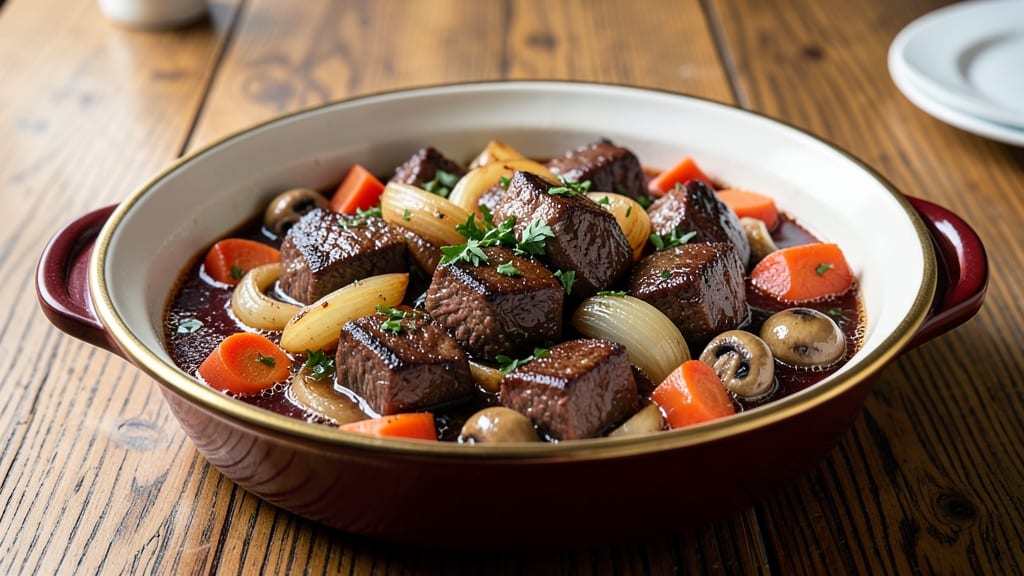
Auguste Escoffier's beef bourguignon transforms simple ingredients into a restaurant-worthy masterpiece—rich, wine-braised beef with tender vegetables and a deep, caramelized fond.
This classic French technique relies on slow cooking to develop layers of flavor, where seared beef releases its juices into the wine, creating a sauce so velvety it clings to every bite. The key?
High heat for the sear, patience for the braise, and a proper reduction to concentrate those flavors into something extraordinary.
What sets this recipe apart is Escoffier’s method for building depth: starting with a dry sear to develop the fond, then deglazing with wine to dissolve those flavorful browned bits. The beef cooks low and slow until fork-tender, while onions, mushrooms, and garlic infuse the liquid with aromatic complexity.
This isn’t just a stew—it’s a culinary experience, where every spoonful delivers the essence of French bistro tradition.
The result is a dish that’s luxurious yet approachable, with beef that falls apart at the touch of a fork and a sauce so rich it deserves crusty bread to soak up every last drop.
The caramelized fond adds a subtle sweetness that balances the acidity of the wine, creating harmony in every bite. Whether you’re hosting dinner guests or treating yourself to a Sunday feast, this recipe delivers the kind of comfort that feels like a hug from a Parisian chef.
Serve with crusty baguette or buttery mashed potatoes to complete the meal—because in Escoffier’s world, even the simplest sides elevate the dish. The secret to success lies in the technique, not the ingredients. Let’s get started.
Ingredients for auguste escoffier beef bourguignon
French bistro tradition meets home kitchen with these essential ingredients for Escoffier's signature dish.
| Ingredient | Amount | Notes |
|---|---|---|
| Beef Chuck Roast 🥩 | 2 lb | Cut into 1.5-inch cubes |
| Yellow Onions 🧅 | 2 whole | Chopped into 1/2-inch pieces |
| Carrots 🥕 | 4 whole | Cut into 1-inch chunks |
| Garlic Cloves 🧄 | 6 cloves | Smashed with side of knife |
| White Button Mushrooms 🍄 | 16 oz | Trimmed and halved |
| All-Purpose Flour 🌾 | 2 tbsp | For dredging beef |
| Dry Red Wine 🍷 | 2 cups | Bold Cabernet Sauvignon preferred |
| Beef Stock 💧 | 2 cups | Homemade or high-quality jarred |
| Fresh Thyme 🌿 | 2 sprigs | Or 1 tsp dried thyme |
| Fresh Parsley 🌿 | ¼ cup | Chopped for garnish |
| Olive Oil 🫒 | ½ cup | For searing beef |
| Tomato Paste 🍅 | 2 tbsp | For depth of flavor |
| Salt 🧂 | 1 ½ tsp | Kosher or sea salt |
| Black Pepper 🌶️ | 1 tsp | Freshly ground preferred |
| Bay Leaves 🍃 | 2 whole | For aromatic depth |
The beef selection is critical—chuck roast delivers the perfect balance of tenderness and flavor. Look for cuts with good marbling at Whole Foods or your local butcher shop. The wine should be dry and bold; Cabernet Sauvignon or Merlot from a reputable producer works best. For the mushrooms, cremini or baby bella add extra richness, but white buttons will suffice. Fresh thyme and parsley elevate the dish, so if using dried herbs, measure sparingly—one-third the amount of fresh. The beef stock should be rich and homemade if possible, but quality jarred brands like Knudsen work in a pinch.
No red wine? Beef stock with a splash of balsamic vinegar mimics the acidity beautifully. Substitute dried thyme at one-third the amount of fresh, but fresh is always preferred. The tomato paste can be omitted if you dislike its intensity, though it adds a subtle sweetness that balances the wine's acidity. For the mushrooms, shiitake or oyster mushrooms provide a meatier texture. If you can't find chuck roast, chuck shoulder or short ribs work well—just adjust cooking time accordingly. The flour for dredging can be swapped for cornstarch if you're avoiding gluten, though traditionalists will insist on flour for that classic crust.
The beef can be prepped ahead—pat dry and season with salt and pepper up to 24 hours before cooking. Store the chopped vegetables in airtight containers in the fridge for 3 days maximum. The wine and stock can be measured and combined in a pitcher, refrigerated for 1 week. This dish tastes even better the next day as flavors meld, so consider making a double batch. Leftovers keep well for 5 days in the fridge or 3 months frozen. Reheat gently on the stove with a splash of water or stock to restore moisture.
Why You'll Love This Recipe
- One-Pot Magic: I swear by this recipe—just sear the beef, toss in the onions and carrots, then let the red wine and mushrooms work their magic. No extra pots, no fuss, and the house smells like a Parisian bistro by the end.
- Deep Umami Bomb: That slow simmer? It turns tough chuck roast into melt-in-your-mouth perfection, while the mushrooms and garlic steep into the sauce like a rich, earthy hug. Honestly, the first bite makes me close my eyes.
- Weeknight to Dinner Party: Same recipe, different vibes—throw it together for a lazy Tuesday or dress it up with fresh thyme and crusty bread for guests. The rich sauce and tender beef always impress, even if you’re winging it.
- Budget-Friendly Luxury: A whole roast feeds six for under $20, and leftovers reheat like a dream. Between us, this is the dish I make when I want to feel fancy without breaking the bank—or my willpower.
Step-by-step instructions for auguste Escoffier's beef bourguignon
Master this classic French technique for tender beef and rich wine reduction.
Sear the Beef Chuck Roast to Build Deep Flavor
Pat the beef chuck roast dry with paper towels—this ensures maximum browning. Cut the roast into 1.5-inch cubes as specified, then season each piece generously with 1.5 teaspoons salt and 1 teaspoon black pepper. Let the seasoned beef sit at room temperature for 15 minutes while you prepare your equipment.
Heat 0.5 cup olive oil in a heavy Dutch oven over medium-high heat until shimmering. Working in batches to avoid crowding, add the beef cubes and sear for 3-4 minutes per side until deeply browned. The goal is to develop a rich, caramelized crust that will form the foundation of your sauce. Transfer the seared beef to a plate and set aside.
Develop the Fond with Onions, Carrots, and Garlic
In the same Dutch oven, reduce heat to medium and add the 2 whole yellow onions, 4 whole carrots, and 6 cloves garlic. Cook for 8-10 minutes, stirring occasionally, until the vegetables soften and begin to caramelize. This step creates the fond—the flavorful browned bits that dissolve in the wine to create depth.
Sprinkle the 2 tablespoons all-purpose flour over the vegetables and stir vigorously for 1-2 minutes until the flour coats everything evenly. This creates a roux that will thicken your sauce later. Immediately pour in the 2 cups dry red wine, scraping up any browned bits from the bottom of the pot with a wooden spoon.
Simmer the Wine Reduction to Concentrate Flavors
Bring the wine mixture to a gentle simmer and cook for 10-12 minutes until reduced by half. You'll notice the liquid darkens and thickens, developing a rich, complex flavor. Add the 2 cups beef stock, 2 sprigs fresh thyme, 2 whole bay leaves, and 2 tablespoons tomato paste, stirring to combine. Return the seared beef to the pot, along with any accumulated juices.
Bring the mixture to a simmer, then cover and transfer to a 325°F oven for 2-2.5 hours. The beef should become fork-tender, and the sauce should reduce to a velvety consistency. Check periodically and add 1-2 tablespoons water if the sauce becomes too thick. This slow cooking transforms tough beef into melt-in-your-mouth tenderness.
Finish with Mushrooms and Fresh Herbs
Remove the beef from the oven and increase heat to medium-high. Add the 16 oz white button mushrooms (trimmed and halved) and cook for 5-6 minutes until they release their moisture and begin to brown. Stir in the 0.25 cup chopped fresh parsley and adjust seasoning if needed.
Return the beef and sauce to the oven for an additional 15-20 minutes to allow the flavors to meld. The mushrooms should absorb the rich sauce, adding earthy depth. Remove the thyme sprigs and bay leaves before serving. This final step ensures every bite delivers the perfect balance of wine, beef, and aromatic herbs.
Pro Tips For Making Auguste Escoffier Beef Bourguignon
- Sear the Chuck Hard: The beef won’t tenderize itself—get that roast deep brown in a screaming-hot pan with just a thin layer of oil. I used to rush this, and the sauce always tasted flat. Take your time, even if it means working in batches. A proper crust locks in flavor and keeps the meat juicy.
- Slice Onions Thinly: No one likes mushy onions in bourguignon. Cut them paper-thin (about 1/8-inch) so they soften evenly without turning to sludge. I learned this the hard way—my first attempt used thick slices, and they just sat there like rubber. A sharp knife and a steady hand make all the difference.
- Deglaze with Wine Immediately: Don’t let those browned bits cool—they’re the soul of the sauce. Pour in the burgundy (or red wine) right after searing, scraping every last bit from the pan. I once waited 10 minutes, and half the flavor disappeared. The sauce will thank you.
- Use Mushrooms Last: Add the mushrooms after the beef has braised for at least 2 hours. They’ll soak up liquid like sponges if you toss them in early. Save them for the final 20 minutes—this keeps them tender and prevents a watery sauce. (Yes, even if you’re impatient like me.)
Wine and beer pairings for this dish
Classic Red Wine
The dish practically begs for a bold Burgundy red wine—specifically a Pinot Noir from the Côte de Nuits or Gevrey-Chambertin. These wines mirror the dish’s depth with their earthy cherry, blackberry, and subtle oak notes.
I love Domaine de la Romanée-Conti for special occasions, but Louis Jadot offers excellent value for everyday enjoyment. The wine’s acidity cuts through the richness while its tannins complement the beef beautifully. 🍷
Cabernet Sauvignon
For a bolder pairing, a California Cabernet Sauvignon—like Caymus Vineyards or Opus One—brings structure and dark fruit flavors that stand up to the dish’s intensity. The wine’s higher tannins and blackcurrant notes harmonize with the beef’s caramelization, while its acidity balances the sauce’s richness.
Opt for a vintage from Napa Valley or Sonoma for the best results.
Beer Pairings
If wine isn’t your preference, a Belgian-style Dubbel—like Westmalle Trappist or Chimay Red—works surprisingly well. The beer’s malty sweetness and dark fruit flavors complement the dish’s depth, while its effervescence cleanses the palate.
For a lighter option, a German Dunkel—such as Paulaner Dunkel—adds a roasted maltiness that pairs beautifully with the caramelized fond.
Non-Alcoholic Options
Craft a sparkling hibiscus tea with a splash of pomegranate juice for a refreshing alternative. The tea’s floral notes contrast the dish’s richness, while the tartness of pomegranate mirrors the wine’s acidity.
For a richer option, try a non-alcoholic red wine like Freixenet 0.0%—it captures the depth of traditional wine without the alcohol. 💛
Serving Temperature
Serve both wine and beer at room temperature (around 65-70°F) to enhance their aromatic qualities. Chilling red wine dulls its flavors, while warming beer emphasizes its maltiness.
If using beer, ensure it’s freshly poured to maintain its carbonation and crispness. The ideal serving temperature ensures every sip complements the dish’s complexity without overpowering it.
Nutrition facts
Frequently asked questions
Why does Escoffier's recipe use chuck roast instead of tenderloin?
Chuck roast delivers the perfect balance of flavor and texture for this dish. Its marbling and connective tissue break down during slow cooking, creating melt-in-your-mouth tenderness. Tenderloin would become dry—this cut's natural fat keeps the beef juicy while developing rich, caramelized flavors. The technique relies on tougher cuts that transform through slow braising.
Can I substitute red wine with something else if I don't drink alcohol?
Use 2 cups beef stock plus 1 tablespoon balsamic vinegar for acidity. For depth, add 1 teaspoon soy sauce or 1/2 teaspoon smoked paprika. The key is maintaining the wine's acidity and umami—these substitutes replicate that perfectly while keeping the dish flavorful. The reduction process will concentrate these flavors just like with wine.
How do I know when the beef is fully tender?
Use two methods: fork test and visual check. The beef should easily shred with a fork—no resistance. Also look for clear separation between the meat fibers when you lift a piece. If it still feels firm after 2.5 hours, extend cooking by 30 minutes and add 2 tablespoons water to prevent drying. The sauce should coat the back of a spoon.
What's the best way to reheat leftovers?
Gently reheat on the stove over low heat with 1-2 tablespoons water or stock to restore moisture. Never microwave—it makes the sauce watery. Cover the pot and heat just until warmed through (5-7 minutes). For extra richness, add a splash of red wine or beef stock during reheating. The dish actually improves the next day as flavors meld!
Can I make this in a slow cooker instead of an oven?
Yes, but with adjustments. Sear the beef and vegetables as directed, then transfer everything to a slow cooker. Cook on Low for 7-8 hours or High for 4-5 hours. The sauce may be thinner—reduce it on the stove after cooking by simmering uncovered for 10-15 minutes. Add mushrooms at the end and cook for 5 minutes to prevent mushiness. The slow cooker method works well but lacks the fond development from oven braising.