
Main Courses
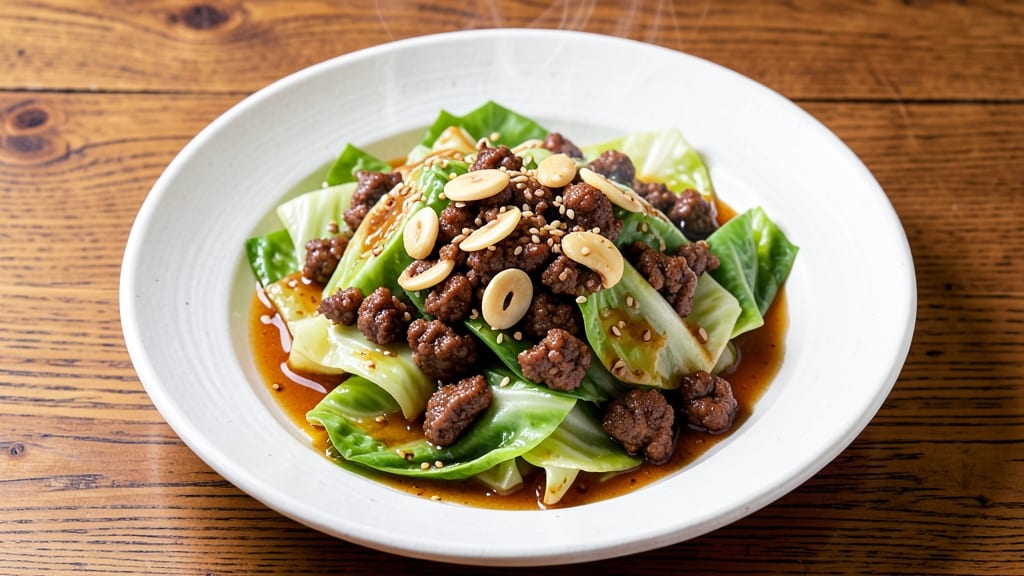
This Asian cabbage and ground beef recipe delivers the perfect balance of savory, sweet, and umami flavors in every bite. The secret lies in wok-searing the beef until caramelized, then combining it with crisp cabbage and a fragrant sauce of soy, garlic, and ginger.
I developed this dish after years of experimenting with stir-fry techniques, and it never fails to impress—whether for a quick weeknight dinner or a weekend meal with friends.
The beauty of this recipe is its simplicity and versatility. You’ll start with tender ground beef cooked until slightly crispy, then toss it with thinly sliced cabbage that softens just enough to hold up to the bold flavors.
A quick sauce made from soy sauce, rice vinegar, and a touch of brown sugar ties everything together, creating a dish that’s both comforting and exciting. The aroma alone will have everyone at the table asking what’s for dinner.
What makes this recipe stand out is how it transforms humble ingredients into something restaurant-worthy. The cabbage adds a satisfying crunch, while the beef absorbs the rich, aromatic sauce perfectly. Serve it over steamed rice for a classic Asian meal, or pair it with noodles for a heartier dish.
The possibilities are endless, but the technique remains foolproof—just follow the steps, and you’ll achieve that perfect wok-seared balance every time.
This dish also works beautifully as leftovers, making it ideal for meal prep. The flavors deepen as it sits, and the cabbage holds its texture remarkably well.
Whether you’re feeding a family or cooking for one, this recipe delivers on both taste and convenience. Let’s get started—your taste buds will thank you.
Ingredients for asian cabbage and ground beef
Simple ingredients that transform into restaurant-quality Asian cabbage and ground beef.
| Ingredient | Amount | Notes |
|---|---|---|
| Ground Beef 🥩 | 1 lb | Lean or 80/20 for flavor |
| Green Cabbage 🥬 | 1 small head | Thinly sliced, core removed |
| Soy Sauce 🥄 | ⅓ cup | Use high-quality, low-sodium |
| Rice Vinegar 🍶 | 0.06 cup | Seasoned preferred for depth |
| Brown Sugar 🍯 | 2 tbsp | Light or dark works fine |
| Garlic Cloves 🧄 | 4 cloves | Minced for sauce |
| Fresh Ginger 🌿 | 1 tbsp | Grated, fresh preferred |
| Vegetable Oil 🫒 | 2 tbsp | High smoke point for wok-searing |
| Sesame Oil 🫒 | 1 tsp | Toasted, for finishing |
| Toasted Sesame Seeds 🌾 | 1 tbsp | For garnish |
| Salt 🧂 | ½ tsp | Kosher or sea salt |
| Black Pepper 🌶️ | ¼ tsp | Freshly ground preferred |
| Green Onions 🧅 | 3 whole | Sliced, for garnish |
The ground beef is where the magic starts—80/20 fat ratio gives you that perfect caramelized crust. Costco or Walmart usually have it pre-packaged in 1-lb bags, but if you're buying from the butcher, ask for 'chuck' or 'round' blends. The cabbage? Green or napa both work, but green holds its crunch better. Look for heads with crisp, vibrant leaves—no yellowing or wilted spots. If you're short on time, pre-sliced coleslaw mix is a lifesaver (just rinse it well).
No soy sauce? Coconut aminos or tamari work in a pinch, though the flavor won't be identical. Fresh ginger giving you trouble? Powdered ginger at half the amount gets you close, but it lacks that bright zing. Subbing brown sugar? Maple syrup or agave in equal measure, but the caramelization won't be as rich. The sesame oil is non-negotiable for that authentic aroma—Trader Joe's has the best toasted variety at a reasonable price. And if you're out of sesame seeds, toasted peanuts add a nice crunch instead.
The beef keeps best in the fridge for 3 days if pre-cooked, but raw ground beef should be used within 2 days. Cabbage stays crisp for 5 days wrapped in a damp towel. For meal prep, store components separately—combine only when ready to eat. This reheats beautifully, but microwave in 30-second bursts to avoid soggy cabbage. Leftovers taste even better the next day as flavors meld together.
Why You'll Love This Recipe
- Here’s what sold me: the cabbage stays crisp, the beef gets sticky and tender, and that little hit of rice vinegar cuts through the richness like a cool breeze. It’s not too heavy, not too bland—just ridiculously satisfying, especially when the edges get that golden, jammy spot.
- One-Pot Magic: I swear by this recipe—just brown the beef, shred the cabbage, and toss everything in one pan. No chopping boards, no extra dishes, and honestly? That salty-sweet glaze from the soy, vinegar, and brown sugar caramelizes right into the beef while you’re still stirring.
- Sweet-Savory Balance: Here’s what sold me: the cabbage stays crisp, the beef gets sticky and tender, and that little hit of rice vinegar cuts through the richness like a cool breeze. It’s not too heavy, not too bland—just ridiculously satisfying, especially when the edges get that golden, jammy spot.
- Lunchbox Hero: Between us, this is my go-to for meal prep. Pack it in containers for work lunches—cold or reheated, it holds up perfectly. My kid brings it to school in a thermos, and my husband sneaks seconds from the fridge. (Yes, even on a Tuesday night.)
Step-by-Step instructions for wok-seared cabbage and ground beef
This method delivers a perfect balance of caramelized cabbage and savory-sweet beef in minutes.
Prep the Vegetables and Season the Beef
Start by cutting the small head of green cabbage into thin wedges, removing the core. I like to slice the cabbage into quarters first, then cut each quarter into thin strips—about ¼-inch thick. This ensures even cooking and maximum tenderness. Transfer the sliced cabbage to a large bowl.
In the same bowl, add the 1 lb ground beef (I prefer 80/20 for better flavor). Sprinkle over the 0.5 tsp salt, 0.25 tsp black pepper, and 2 tbsp brown sugar. Toss everything together with your hands until the beef is evenly coated. The sugar will help caramelize the beef as it cooks, adding depth to the dish.
Sear the Beef and Cabbage in Stages
Heat a large wok or skillet over medium-high heat until it's very hot. Add the 2 tbsp vegetable oil and swirl to coat the pan evenly. Add half of the beef-cabbage mixture and spread it out in a single layer. Let it cook undisturbed for 3-4 minutes until the beef begins to brown and the cabbage edges start to soften.
Stir gently with a spatula, breaking up the beef into small, even pieces. Cook for another 2-3 minutes until the beef is no longer pink in the center. Remove the mixture to a clean plate and set aside. Repeat the process with the remaining beef-cabbage mixture, ensuring the pan is hot before adding the second batch. This two-stage approach prevents overcrowding, which can lead to steaming instead of searing.
Build the Flavorful Sauce
With the beef and cabbage set aside, reduce the heat to medium in the same wok. Add the 4 cloves minced garlic and 1 tbsp grated fresh ginger, cooking for 30 seconds until fragrant. Be careful not to let the garlic burn—it should just sizzle and release its aroma.
Pour in the 0.33 cup soy sauce and 0.0625 cup rice vinegar, scraping up any browned bits from the bottom of the pan. These bits are packed with flavor, so don't skip this step. Let the sauce simmer for 1-2 minutes until it slightly thickens. If the sauce reduces too quickly, add a splash of water to help balance the consistency.
Combine and Finish with Sesame Oil
Return the seared beef and cabbage to the wok, stirring everything together to coat evenly with the sauce. Cook for another 2-3 minutes until the cabbage is tender but still holds its shape, and the beef is fully coated in the glossy sauce. The dish should smell rich and aromatic—like a perfect blend of umami and sweetness.
Remove the wok from heat and stir in the 1 tsp sesame oil. This adds a nutty depth and ties all the flavors together. Taste and adjust seasoning if needed—you might want to add a touch more soy sauce for saltiness or a splash of rice vinegar for brightness. Garnish with the 3 sliced green onions and 1 tbsp toasted sesame seeds for texture and visual appeal.
Serve Immediately for Maximum Freshness
Transfer the cabbage and ground beef to a serving platter or directly to bowls. Serve while still hot, as the flavors meld best when the dish is fresh. This recipe serves 4 people, making it perfect for a quick weeknight dinner or a light lunch. The combination of tender cabbage, savory beef, and that perfect balance of sweet and tangy sauce is sure to impress.
Pro Tips For Making Asian Cabbage And Ground Beef
- CRANK THE HEAT FIRST: I learned this the hard way—ground beef releases fat like a fountain, and if you start low, you’ll end up with a greasy, soggy mess. Sear the beef on high heat for 2-3 minutes until it’s deeply browned before touching it with anything else. That crust locks in flavor and keeps the cabbage from turning into a sad, waterlogged side.
- SHRED CABBAGE SMALLER: Thin strips look pretty, but they cook unevenly and stay crunchy. Cut the cabbage into ½-inch-wide shreds—small enough to soften quickly but still hold shape. If you’re impatient like me, give them a quick blanch in boiling water for 30 seconds before adding to the pan. That guarantees they’ll finish tender without turning to mush.
- SAVE THE VINEGAR LAST: Rice vinegar’s job is to brighten the dish, not cook off. Add it in the final 2 minutes of cooking—right after the brown sugar and soy sauce—so it doesn’t evaporate into oblivion. If you toss it in too early, the acidity will make the cabbage bitter and the beef taste flat. Trust me, the last splash makes all the difference.
- SWEAT THE BEAN FIRST: I skip this when I’m lazy, but the dish is noticeably better when I don’t. Before adding the cabbage, cook the ground beef until it’s fully browned, then remove it to a plate. In the same pan, add a splash of water and scrape up all the browned bits—this is the flavor base. Return the beef to the pan and add the cabbage. That deep, meaty taste? That’s what you’re missing if you skip it.
Creative variations of this dish
Korean-Inspired Kimchi Twist
Transform this dish into a Korean-inspired kimchi beef bowl by adding ½ cup chopped kimchi (store-bought or homemade) to the sauce during Step 3. The tangy, spicy kimchi cuts through the richness of the beef while adding layers of umami.
For extra authenticity, top with 1 tbsp gochujang (Korean chili paste) and 1 tsp toasted sesame seeds before serving. Serve over steamed white rice for a comforting, spicy-sweet bowl that’s perfect for a quick lunch. 🌶️
Thai-Inspired Peanut Sauce
Replace the soy sauce with a Thai peanut sauce by blending ¼ cup smooth peanut butter, 2 tbsp rice vinegar, 1 tbsp soy sauce, 1 tbsp brown sugar, 1 tsp sriracha, and 1 tsp grated ginger.
Simmer this sauce in the wok for 2 minutes after removing the beef and cabbage, then toss everything together. Garnish with crushed peanuts and fresh cilantro for a dish that’s creamy, nutty, and slightly spicy. This version pairs beautifully with jasmine rice or rice noodles. 🥜
Japanese Teriyaki Glaze
Swap out the rice vinegar for a Japanese teriyaki glaze by mixing ⅓ cup soy sauce, 2 tbsp mirin, 1 tbsp brown sugar, and 1 tsp grated ginger.
Simmer this glaze in the wok until it thickens slightly, then toss the seared beef and cabbage in it. Finish with a drizzle of teriyaki sauce and a sprinkle of furikake (Japanese seasoning) for a dish that’s sweet, glossy, and packed with umami.
Serve with steamed rice and a side of miso soup for a full Japanese-inspired meal. 🍶
Spicy Szechuan Fusion
For a Szechuan-inspired kick, add 1 tbsp Szechuan chili paste (like Lao Gan Ma) and 1 tsp doubanjiang (fermented chili bean paste) to the sauce during Step 3. Stir in 1 tsp Sichuan peppercorns (lightly toasted and crushed) for a numbing, tingling heat.
Garnish with chopped scallions and a sprinkle of crushed peanuts for texture. This version is bold, spicy, and deeply aromatic—perfect for those who love heat with their Asian flavors. 🔥
Vegetarian Swap
Make this dish vegetarian by replacing the ground beef with 1 lb crumbled firm tofu or 1 lb extra-firm tofu pressed and cubed. Toss the tofu in 1 tbsp cornstarch and 1 tsp soy sauce before searing to achieve a crispy texture.
Cook in batches just like the beef, then proceed with the sauce as directed. For extra protein, add 1 cup cooked chickpeas or 1 cup shredded king oyster mushrooms to the wok during Step 2. 🌱
Slow-Cooker Adaptation
For a hands-off version, combine all ingredients (except sesame oil and garnishes) in a slow cooker and cook on LOW for 4-5 hours or HIGH for 2-3 hours. Stir occasionally to ensure even cooking.
Before serving, sear the mixture in a hot wok or skillet for 3-4 minutes** to crisp up the cabbage and beef. Finish with sesame oil and garnishes as directed. This method is perfect for busy weeknights or meal prep. ⏰
Nutrition facts
Frequently asked questions
Can I use napa cabbage instead of green cabbage?
Yes! Napa cabbage works beautifully and adds a slightly sweeter, more delicate flavor. Just slice it thinner than green cabbage (about ⅛-inch thick) since it's more tender. The key is to cook it just until it softens—overcooking will make it mushy. For extra flavor, add a pinch of sugar to the sauce to complement the natural sweetness.
How do I prevent the cabbage from getting mushy?
Slice the cabbage thinly and cook it in batches to avoid overcrowding. Stir-fry over medium-high heat for only 2-3 minutes after adding it back to the wok. The cabbage should be tender but still hold its shape. If it starts to wilt too quickly, reduce the heat slightly and cook for less time.
Can I make this dish ahead of time?
This recipe actually tastes better the next day as the flavors meld together. Store the cooked mixture in an airtight container in the fridge for up to 3 days. Reheat gently in a skillet over medium heat with a splash of water to prevent drying. For best texture, add fresh sesame seeds and green onions when reheating.
What's the best way to cook the beef for maximum flavor?
Use 80/20 ground beef for the best flavor and texture. Cook it in batches over medium-high heat until well-browned on the outside but still juicy inside. The sugar in the seasoning mix helps create a caramelized crust, so don't rush this step. For extra depth, add a splash of soy sauce to the pan after removing the first batch of beef.
Can I make this dish spicier?
Add ½ tsp red pepper flakes or 1 tsp gochujang to the sauce for heat. For a smoky kick, include ½ tsp smoked paprika in the beef seasoning. If you like it extra spicy, serve with sliced jalapeños or a side of sriracha. Always adjust to taste—start with less and add more if needed.