
Soups & Stews
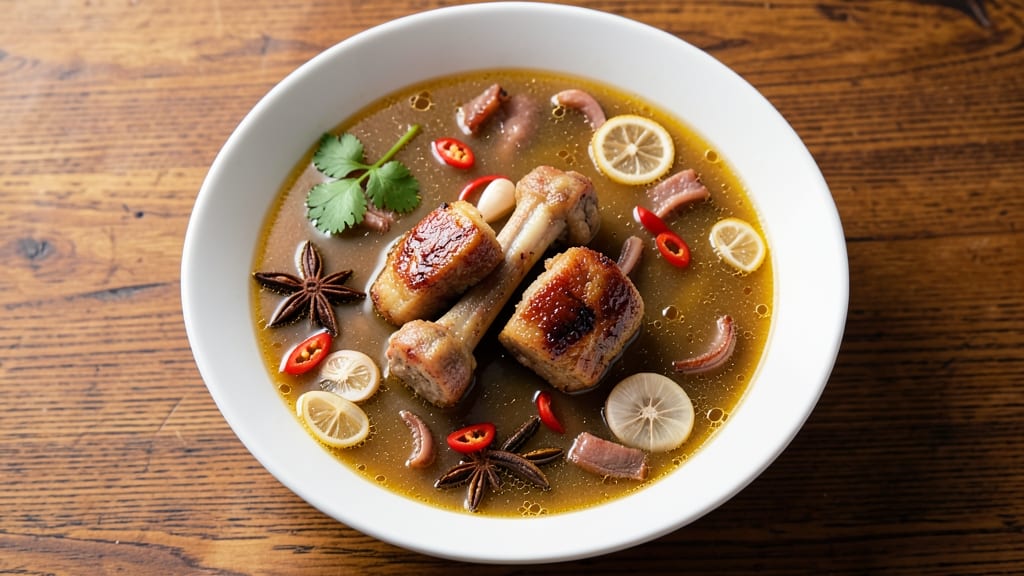
This Asian beef bone soup recipe transforms tough beef bones into a rich, fragrant broth that captures the essence of traditional East Asian cooking. 🌟 The secret lies in a slow simmer with five-spice powder, star anise, and ginger—building layers of warmth and depth that turn simple ingredients into something extraordinary.
Unlike quick broths, this requires patience, but the result is a velvety liquid that clings to every bite of tender beef and silky egg slip.
The foundation begins with beef bones—marrow-rich knuckle bones or oxtail—simmered for hours to extract collagen and gelatin, creating a naturally thick, cloudless broth. Five-spice powder and star anise infuse the liquid with aromatic complexity, while soy sauce and rice wine add umami balance.
This isn’t just soup; it’s a flavor experience that pairs beautifully with steamed rice, fresh herbs, and a delicate egg slip that melts into the broth.
What sets this recipe apart is the attention to texture and presentation. The broth should be crystal-clear, with just enough body to coat noodles or rice, while the beef remains fork-tender and infused with the spices.
Served with a silky egg slip—created by whisking eggs into the hot broth—each spoonful delivers a harmonious blend of savory, aromatic, and creamy elements. This is comfort food elevated to an art form.
The beauty of this dish lies in its versatility. Use it as a base for noodle bowls, serve it alongside dumplings, or enjoy it as-is with a sprinkle of scallions and sesame oil.
The leftovers only improve, deepening in flavor as the broth continues to develop. Perfect for family gatherings or a cozy night in, this recipe proves that slow cooking yields the most rewarding results.
Ingredients for asian beef bone soup
Transform tough bones into fragrant broth using aromatic spices and slow simmering techniques.
| Ingredient | Amount | Notes |
|---|---|---|
| Beef Bones (Knuckle or Oxtail) 🦴 | 4 lb | Marrow-rich, cut into chunks |
| Fresh Ginger 🧄 | ½ cup | Peeled, sliced into thick coins |
| Five-Spice Powder 🌶️ | 2 tbsp | Authentic Chinese blend preferred |
| Star Anise 🌟 | 4 whole | Lightly crushed for aroma |
| Garlic Cloves 🧄 | 8 cloves | Smashed, not minced |
| Soy Sauce 🍶 | ½ cup | Dark or light, to taste |
| Rice Wine 🍷 | ½ cup | Dry sherry substitute works |
| Large Eggs 🥚 | 4 whole | Fresh, room temperature |
| Green Onions 🧅 | ¼ cup | Sliced, for garnish |
| Sesame Oil 🫒 | 1 tbsp | Toasted, for finishing |
| Salt 🧂 | 1 ½ tsp | Adjust to taste |
| Black Peppercorns 🌶️ | 1 tsp | Crushed, for depth |
| Dried Shiitake Mushrooms 🍄 | 4 whole | Rehydrated, sliced |
| Cinnamon Sticks 🌿 | 2 whole | For subtle warmth |
| Water 💧 | 12 cups | Filtered preferred |
The bones are the heart of this soup—knuckle bones or oxtail from Costco or local butchers yield the richest marrow. Look for bones with visible marrow channels; these release collagen during simmering. Penzeys Spices carries excellent five-spice powder if you want to splurge, but the grocery store blend works fine. Star anise and cinnamon sticks should be whole and aromatic—if they smell stale, replace them. Fresh ginger is non-negotiable here; dried lacks the bright punch. For the mushrooms, dried shiitake from Asian markets adds umami depth without overpowering.
No five-spice powder? Mix 1 tsp cinnamon, 1 tsp fennel seeds, 1 tsp cloves, 1 tsp star anise, and 0.5 tsp peppercorns for a DIY version. Running low on rice wine? Dry sherry or mirin work equally well. The soy sauce can be reduced if you prefer less saltiness—start with half the amount and adjust. For the egg slip, room-temperature eggs whisk best; cold eggs create lumps. The green onions should be fresh—wilted stems add subtle bitterness that balances the richness. Sesame oil should be toasted, not the cheap flavored kind from the international aisle.
Simmered broth keeps for 5 days in the fridge, with flavor deepening over time. Portion into containers for easy reheating—add a splash of water before microwaving to prevent skin formation. The egg slip must be made fresh; it doesn't reheat well. Store dried spices in airtight containers away from light, and the ginger will last 3 weeks in the fridge wrapped in damp paper towels. Freeze extra broth in ice cube trays for quick future use.
Why You'll Love This Recipe
- One-Pot Magic: I swear by this—just dump the bones, ginger, and spices in a pot, cover with water, and walk away. The star anise and five-spice powder do all the heavy lifting while you chop veggies for the side.
- Rich Without Effort: That deep, savory broth? It’s not from some fancy technique—it’s the knuckle bones and slow simmer. The garlic and ginger mingle with the five-spice until the whole kitchen smells like a street-side stall.
- Leftover Luxury: Make a big batch on Sunday, and you’ve got hearty lunches all week. The broth gets even better the next day—my kids beg for it, and I secretly love the leftovers more than the first serving.
- Budget-Boosting Powerhouse: Cheap bones stretch into gallons of soup, and the spices cost pennies. Honestly, it’s the kind of meal that makes grocery day feel like a win—filling, flavorful, and still leaves room for rice.
Step-by-step instructions for Asian beef bone soup
Here's the method for a deeply aromatic broth with melt-in-your-mouth egg slip and rich marrow flavors.
🔥 Step 1: Char and Prepare the Beef Bones
Preheat your oven to 450°F. Place the 4 lb beef bones (knuckle or oxtail) on a baking sheet and roast for 20-25 minutes until deeply browned and slightly charred. This step develops intense flavor through the Maillard reaction—don't skip it.
While the bones roast, prepare the aromatic bundle by combining 4 whole star anise, 2 whole cinnamon sticks, and 8 smashed garlic cloves in a small piece of cheesecloth. Tie it securely with kitchen twine so it can steep in the broth without falling apart.
🍳 Step 2: Build the Fragrant Broth Base
Transfer the charred bones to a large stockpot. Add the 12 cups water, 0.5 cup sliced fresh ginger, and the aromatic bundle. Bring to a boil over medium-high heat, then reduce to a gentle simmer. Skim off any foam that rises to the surface during the first 10 minutes—this ensures a clear broth.
Simmer uncovered for 30 minutes to extract initial flavors. Add the 2 tbsp five-spice powder, 1.5 tsp salt, and 1 tsp crushed black peppercorns. The broth should smell rich and complex—like warm spices mingling with umami from the bones.
🍳 Step 3: Enhance with Shiitake and Seasonings
Rehydrate the 4 whole dried shiitake mushrooms by soaking them in hot water for 20 minutes until pliable. Drain and slice them, then add to the simmering broth along with the 0.5 cup soy sauce and 0.5 cup rice wine. Simmer for another 1 hour until the broth reduces slightly and develops a deep, caramelized color.
After 1 hour, remove the aromatic bundle. Add the sliced mushrooms back in and continue simmering for 30 more minutes to infuse their earthy flavor. The broth should now have a rich, slightly sweet aroma with layers of spice and umami—this is your foundation.
⏰ Step 4: Create the Signature Egg Slip
While the broth simmers, prepare the egg slip by whisking the 4 whole large eggs in a bowl until frothy. Just before serving, ladle 2 cups of the hot broth into the egg mixture, whisking constantly to create a silky, custard-like consistency. The heat will gently cook the eggs without scrambling them.
Return the egg mixture to the pot and stir gently for 30 seconds until the eggs form delicate ribbons in the broth. The result should be a glossy, silky egg slip that coats the back of a spoon—this is the signature element that makes this soup extraordinary.
🍽️ Step 5: Finish and Serve
Remove the pot from heat and stir in the 1 tbsp toasted sesame oil. Ladle the soup into bowls, garnishing each serving with 2 tbsp sliced green onions. The contrast of fresh green onions against the rich broth creates a perfect balance of flavors.
Serve immediately while the egg slip remains silky. Each spoonful should deliver a harmonious blend of deep umami from the bones, aromatic spices, earthy mushrooms, and the delicate sweetness of the egg slip. The soup continues to improve as it sits, so prepare it just before serving for the best texture.
Pro Tips For Making Asian Beef Bone Soup
- BLISTER THE BONES FIRST: Toss your knuckle bones or oxtail in a screaming-hot pot for 3-4 minutes before adding water. I learned this the hard way—skipping it means you’re missing that deep, caramelized flavor that makes the broth sing. (Yes, even if you’re impatient like me.)
- PEEL THAT GINGER THIN: Use a mandoline or sharp knife to slice ginger paper-thin—no need to julienne. It infuses faster and dissolves cleanly, leaving behind just the aromatic oils. Thick slices? They’ll linger like a stubborn guest at a party.
- STAR ANISE IN A BAG: Toss whole star anise and five-spice powder into a cheesecloth pouch before dropping it in the pot. No more fishing for spices later, and you control the infusion perfectly—no bitter over-extraction. (Your future self will thank you.)
- LOW AND SLOW AFTER BOIL: Once the broth reaches a rolling boil, turn the heat to lowest possible and let it simmer uncovered. I used to rush it, and the broth turned cloudy. Patience here means a clear, rich broth—no shortcuts.
Common mistakes when making your asian beef bone soup
Overcooking the Bones
Beef bones need gentle simmering, not boiling—aggressive heat breaks down collagen too quickly, turning your broth cloudy and losing that prized silky texture. I’ve seen beginners crank the heat to high and end up with a murky, bitter liquid.
Keep your broth at a gentle simmer (180-190°F)—you should see tiny bubbles, not rolling boils. If you’re unsure, use a thermometer to monitor temperature. 🌡️
Skipping the Char
Charred bones add depth that raw bones can’t match—it’s the Maillard reaction doing its magic. I once made this soup without charring, and while it was still good, it lacked that smoky, caramelized complexity.
Roast your bones at 450°F for 20-25 minutes until deeply browned. If you’re short on time, sear them in a hot pan for 5-7 minutes per side instead.
Ignoring Skimming
The first 10 minutes of simmering produce foam—this is impurities rising to the surface. Skim it off with a ladle or fine-mesh strainer to keep your broth crystal clear.
I’ve made this mistake, and the result was a broth that looked murky, even after straining. Don’t rush this step—patience here pays off with a silky, restaurant-quality finish. 🥄
Rushing the Egg Slip
The egg slip is the soul of this soup, and rushing it ruins everything. Cold eggs or adding them too quickly to hot broth creates lumps instead of silky ribbons. Whisk your 4 eggs until frothy, then slowly ladle in 2 cups of hot broth while whisking constantly.
Return the mixture to the pot and stir gently for 30 seconds max—any longer, and you’ll scramble the eggs. Trust me, this step makes or breaks the dish.
Over-Spicing Early
Adding all your spices at once can make the broth taste harsh or bitter. Start with just the five-spice powder, ginger, and garlic during the initial 30-minute simmer. Hold off on soy sauce, rice wine, and mushrooms until the broth has developed a base flavor.
This gradual approach lets each spice shine without overpowering the others. I’ve learned this the hard way—over-spiced broth is hard to fix!
Using Low-Quality Bones
Not all beef bones are created equal. For the best results, use marrow-rich knuckle bones or oxtail from a trusted butcher or Costco. Cheap, fatty bones or those with too much meat can make your broth greasy or rank.
Look for bones with visible marrow channels—they’re the gold standard for rich, gelatinous broths. If you can’t find them, soak the bones in cold water for 30 minutes before cooking to draw out impurities.
Nutrition facts
Frequently asked questions
Can I substitute chicken or pork bones for beef?
While beef bones are traditional for their rich marrow and collagen, you can use chicken or pork bones—but expect a lighter broth. Chicken bones work well for a quicker version (simmer 2-3 hours), while pork bones require 4-5 hours for maximum gelatin. The flavor profile will shift toward lighter, sweeter notes rather than beef's deep umami. For best results, blend beef with chicken bones (50/50 ratio) to balance richness and cooking time.
How do I make the broth clearer without straining?
For a naturally clear broth, skim foam vigorously during the first 10 minutes of simmering, then add 1 tbsp apple cider vinegar after 1 hour of cooking. The acid helps coagulate proteins that cause cloudiness. For extra clarity, chill the broth overnight—the fat will solidify on top and can be skimmed off before reheating. This method preserves the broth's depth while improving texture.
What’s the best way to store leftovers?
Store the broth (without egg slip) in airtight containers for up to 5 days in the fridge, or freeze for 3 months. Reheat gently to 165°F—never microwave directly from frozen. The egg slip must be made fresh; save it for the next serving. For quick reheating, add a splash of water to prevent skin formation. The flavors actually deepen over time, making leftovers even more comforting.
Can I make this soup in a slow cooker?
Yes, but with adjustments: char the bones first, then transfer to a slow cooker with all ingredients except the egg slip. Cook on low for 8-10 hours (not high—gentle heat is key). The broth may need reducing later to concentrate flavors. For the egg slip, heat a portion of broth separately to 160°F before adding eggs. Slow cookers work well for hands-off prep, though stovetop gives you better control over simmering.
What sides pair best with this soup?
Steamed jasmine rice is classic, but you can also serve with chewy noodles (udon or rice sticks), mandarin greens (blanched for 30 seconds), or pan-fried dumplings. For a complete meal, add a side of quick-pickled cucumbers to cut the richness. Garnish with toasted sesame seeds or chili oil for extra texture. The soup's depth stands up to bold sides, so don’t be afraid to experiment!