
Main Courses
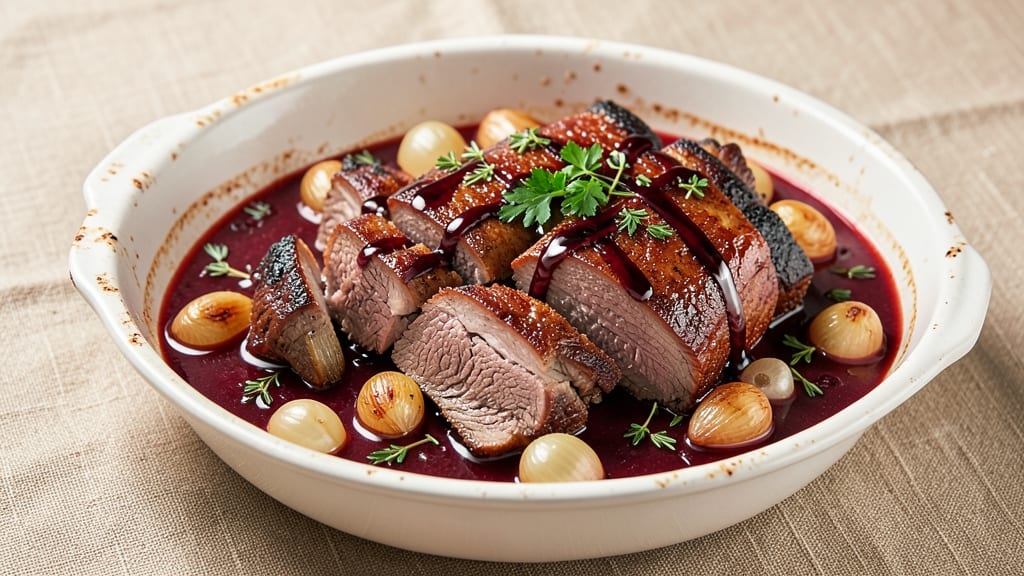
Anne Burrell’s beef bourguignon transforms simple beef chuck into restaurant-worthy luxury with just three hours of hands-off braising. 🔥 The secret lies in slow-cooked wine reduction and caramelized fond—a deep, rich sauce that develops as the meat tenderizes.
This isn’t just dinner; it’s a Sunday supper experience you’ll crave all week.
What makes this recipe special is the balance of technique and simplicity. You’ll sear beef to lock in juices, deglaze the pan with red wine to capture every flavorful bit, and let the aromatics—garlic, shallots, and thyme—infuse the sauce over time.
The result? Fall-apart beef swimming in a velvety, wine-infused gravy that clings to every bite.
By the time you serve this dish, your kitchen will smell like a Parisian bistro, and your table will be set for a meal that feels indulgent yet effortless.
The beef becomes fork-tender, the sauce thickens into perfection, and the crusty bread soaks up every last drop. This is comfort food at its finest—warm, rich, and deeply satisfying.
Perfect for feeding a crowd or a cozy weeknight dinner, this bourguignon pairs beautifully with mashed potatoes, crusty baguette, or even roasted vegetables. The best part? The longer it sits, the better it tastes—ideal for making ahead and letting flavors meld. Let’s get cooking!
Ingredients for anne burrell beef bourguignon
Sixteen ingredients, three hours, one unforgettable dinner. The secret? Patience and bold flavors.
| Ingredient | Amount | Notes |
|---|---|---|
| Beef Chuck Roast 🥩 | 3 lb | 2-2.5 inch cubes, trimmed of fat |
| Dry Red Wine 🍷 | 2 cups | Bold variety like Cabernet Sauvignon |
| Beef Broth 💧 | 2 cups | Low-sodium preferred |
| Shallots 🧅 | 6 whole | Minced, about 0.5 cup |
| Garlic Cloves 🧄 | 8 cloves | Minced, about 2 tbsp |
| Fresh Thyme 🌿 | 2 tbsp | Leaves only, chopped |
| Fresh Rosemary 🌿 | 1 tbsp | Leaves only, chopped |
| Carrots 🥕 | 4 whole | Cut into 1-inch chunks |
| Celery Stalks 🥬 | 4 whole | Cut into 1-inch chunks |
| Pearl Onions 🧅 | 12 whole | Peeled, halved |
| All-Purpose Flour 🌾 | 2 tbsp | For thickening sauce |
| Cold Butter 🧈 | 2 tbsp | For finishing sauce |
| Olive Oil 🫒 | ½ cup | For searing |
| Kosher Salt 🧂 | 2 tsp | Diamond Crystal preferred |
| Freshly Ground Black Pepper 🌶️ | 1 tsp | Coarsely ground |
The beef is where it all begins. Chuck roast—not sirloin or ribeye—gives you that melt-in-your-mouth texture. Look for cuts with good marbling at Whole Foods or your local butcher shop, and ask for it trimmed but not pre-cubed (you'll get more even pieces). I always buy mine the day of cooking—it's fresher and less likely to dry out. For the wine, Cabernet Sauvignon or Merlot are classic choices, but whatever bold red you have open works. Just avoid anything too sweet—this isn't a dessert sauce. The aromatics—shallots, garlic, thyme, and rosemary—are non-negotiable. Fresh thyme and rosemary from the grocery store's produce section (not the dried spices aisle) make all the difference—they're brighter and more fragrant.
No dry red wine? Substitute beef broth with a splash of balsamic vinegar—it adds depth without overpowering. Running short on shallots? Two extra yellow onions work in a pinch, but you'll need to adjust the mincing to get the same texture. The carrots and celery are just for flavor, so baby carrots or pre-cut veggie mixes save time. For the flour, all-purpose works fine, but if you're feeling fancy, a mix of half all-purpose and half cornstarch gives a silkier sauce. The butter at the end? Use cold butter—it emulsifies beautifully into the sauce when added off the heat. And if you're worried about the wine taste being too strong, don't be—the long braising time mellows it perfectly. Trust the process.
This dish tastes even better the next day, so make it ahead if possible. Store in an airtight container in the fridge for up to 4 days, or freeze for 3 months (the sauce gets richer over time). For serving, I like to reheat it gently on the stove with a splash of water or broth to loosen the sauce. The crusty bread? Baguette slices toasted in the oven with garlic butter are ideal—soak up every last drop. Leftovers reheat beautifully, and the sauce actually improves as it sits. Portion into containers for easy lunches, or freeze individual servings for quick meals. The fond—the caramelized bits at the bottom of the pan—is pure magic. Don't scrape it out; it's the flavor bomb that makes this dish legendary.
Why You'll Love This Recipe
- One-Pot Magic: I swear by this recipe because it’s actually one-pan—no chopping mountains of veggies, just a handful of shallots and garlic. The beef chuck roast practically cooks itself while you sip that rich red wine, and by the end, your kitchen smells like a Parisian bistro.
- Deep Umami Bomb: That slow simmer in red wine and beef broth? It’s where the magic happens—tender beef with a sauce so flavorful it’ll make you forget takeout exists. The shallots caramelize into sweet little nuggets, and the garlic? It’s just the right amount—no overpowering, just pure, savory perfection.
- Leftovers That Win: Between us, this dish begs to be made in bulk. The flavors only get better the next day, and reheating it? A 30-second microwave job turns it into a hearty lunch or dinner. I’ve fed a crowd with half a recipe and still had leftovers for days—no waste, just happy taste buds.
- Budget-Friendly Luxury: You’re getting restaurant-quality comfort for a fraction of the cost. A chuck roast stretches far, the wine adds depth without breaking the bank, and the broth keeps it rich. Honestly, it’s the kind of meal that makes you feel fancy without the fancy price tag.
Step-by-step instructions for anne Burrell's beef bourguignon
Here's how to create that legendary deep wine braise with caramelized fond magic.
🔥 Step 1: Sear the Beef Chuck Roast to Perfection
Pat the 3 lb Beef Chuck Roast dry with paper towels—this ensures maximum browning. Heat 0.5 cup Olive Oil in a large Dutch oven over medium-high heat until shimmering. Working in batches (to avoid crowding), sear the beef cubes on all sides for 2-3 minutes per side until deeply browned and caramelized.
Here's the thing—those browned bits are pure flavor gold. Don't rush this step. You want each piece to develop a rich crust before it goes into the braise. I press down gently on the cubes during the first minute to prevent them from curling and ensure even contact with the pan. Transfer the seared beef to a plate and set aside.
🍳 Step 2: Build the Aromatic Vegetable Base
In the same Dutch oven (no need to wipe it clean—those browned bits are your fond), reduce heat to medium. Add 6 whole Shallots and 8 cloves Garlic Cloves, cooking for 3-4 minutes until softened and fragrant. Add 4 whole Carrots and 4 whole Celery Stalks, cut into chunks, along with 12 whole Pearl Onions (peeled and halved), and cook for another 5 minutes until the vegetables begin to soften.
The vegetables should be tender but not mushy—you want them to hold their shape while adding sweetness to the braise. Sprinkle with 2 tbsp Fresh Thyme and 1 tbsp Fresh Rosemary, stirring to combine. Season with 2 tsp Kosher Salt and 1 tsp Freshly Ground Black Pepper. This aromatic base is where all the magic begins.
🍳 Step 3: Deglaze and Develop the Wine Reduction
Pour in the 2 cups Dry Red Wine and scrape up all those browned bits from the bottom of the pan with a wooden spoon. This deglazing step is critical—it captures all that concentrated beef flavor. Let the wine simmer for 5-7 minutes until reduced by half, until it coats the back of a spoon and has thickened slightly.
Here's where it gets fun—toss in the 2 tbsp All-Purpose Flour and stir vigorously for 1-2 minutes until the mixture forms a smooth paste. This creates a light roux that will thicken your sauce beautifully. Pour in the 2 cups Beef Broth and stir well to combine. Return the beef and vegetables to the pot, ensuring everything is well-coated in the sauce.
⏰ Step 4: Braise Until Tender and Flavor-Infused
Bring the mixture to a gentle simmer, then reduce heat to low. Cover the Dutch oven and let it cook for 2.5-3 hours, until the beef is fork-tender and the flavors have melded into a rich, velvety sauce. I like to check the beef at the 2-hour mark—it should be almost falling apart but still have a slight resistance.
Real talk: Don't peek too often. Every time you lift the lid, you're letting heat escape and extending the cooking time. Trust the process and let those flavors develop undisturbed. The sauce should have thickened into a glossy, wine-infused reduction that clings beautifully to the beef.
🥘 Step 5: Finish with Butter and Garnish
Remove the beef and vegetables from the braising liquid and transfer them to a serving platter. Strain the sauce through a fine-mesh sieve into a clean saucepan and skim off any excess fat that has risen to the surface. Return the sauce to medium heat and stir in the 2 tbsp Cold Butter, one tablespoon at a time, until incorporated and the sauce is silky smooth.
Taste and adjust seasoning if needed—sometimes the beef absorbs more salt than others. Spoon the finished sauce over the beef and vegetables, garnish with fresh thyme sprigs, and serve immediately with crusty bread or mashed potatoes. Each bite should deliver tender beef, caramelized onions, and a rich, wine-infused sauce that's pure comfort food luxury.
Pro Tips For Making Anne Burrell Beef Bourguignon
- SEAR THE CHUCK LONG: The beef chuck needs a deep, dark crust—don’t rush this. Work in batches if needed, and resist the urge to move it around the pan. I’ve learned the hard way that pale, uneven searing means bland, rubbery beef later.
- MINCE THOSE SHALLOTS: Fine dice those shallots—like, confetti fine. Anne Burrell’s recipe relies on their sweetness melting into the sauce, and chunky bits just sit there looking sad. Take the extra 2 minutes now to save yourself from a flavorless fond later.
- DEGLAZE WITH WINE IMMEDIATELY: As soon as you remove the beef, pour that red wine right into the hot pan—no waiting. The caramelized bits (fond) dissolve into the wine, building the sauce’s depth. Skipping this step means a thinner, weaker sauce, and no one wants that.
- SIMMER LOW AND COVERED: After adding the broth, drop the heat to a gentle simmer and keep the lid on. The beef needs time to tenderize, and a rolling boil will turn it tough. I used to walk away and forget, only to come back to a stew-like mess—now I set a timer for 2.5 hours and let it do its thing.
Storing and reheating this anne burrell beef bourguignon
Refrigerator Storage
Let your bourguignon cool completely before transferring to an airtight container—I use glass Pyrex with snap-on lids for best results. Store at 40°F or below for up to 4 days, but honestly?
It tastes even better the next day as the flavors meld. The sauce thickens slightly overnight, making it even more luxurious. Just give it a quick stir and warm through before serving. ❄️
Freezer Magic
For long-term storage, freeze your bourguignon in quart-sized freezer bags (leave 1 inch headspace for expansion). It keeps beautifully for 3 months, and the sauce actually becomes richer as it thaws.
When ready to eat, transfer frozen portions to a pot and reheat on low heat with ¼ cup beef broth to loosen the sauce. Stir occasionally—patience prevents scorching. 💫
Stovetop Reheating
My preferred method: Place the entire dish (beef, sauce, and veggies) in a Dutch oven and heat on low-medium for 15-20 minutes. Add 2-3 tablespoons of water or broth if the sauce looks too thick.
The gentle heat ensures the beef stays tender and the sauce remains velvety. Taste and adjust seasoning—sometimes a pinch of salt or black pepper brings it back to perfection. 🔥
Microwave Shortcut
For quick lunches, transfer portions to a microwave-safe dish and cover loosely with a paper towel. Heat on 50% power in 2-minute intervals, stirring between each, until reaching 165°F internal temperature.
Add a splash of beef broth if the sauce seems dry. It won’t be as rich as stovetop reheating, but it’s a lifesaver for busy days. ✨
Reviving the Fond
That precious caramelized fond at the bottom of your pot? Don’t waste it! After reheating, scrape up any leftover bits with a wooden spoon and stir into the sauce. It’s packed with concentrated flavor and will elevate your reheated dish to near-original glory.
If you’re reheating from frozen, add the fond directly to the pot before heating—it’ll dissolve right into the sauce. 💡
Serving Leftovers
Leftovers reheat beautifully for 2-3 days, but for the best experience, serve within 48 hours of reheating. Pair with crusty baguette or creamy mashed potatoes to soak up every last drop.
Garnish with fresh thyme sprigs right before serving—it adds a bright, herbal finish that makes the dish feel fresh again. The secret? Always reheat gently and never rush it. 🍽️
Nutrition facts
Frequently asked questions
Can I use a different cut of beef for this recipe?
While chuck roast is ideal for its marbling and tenderness, you can substitute with stew beef or brisket in a pinch. Avoid lean cuts like sirloin—they won't become tender enough during braising. If using brisket, cut it against the grain for easier chewing. The key is choosing a cut with enough fat to stay moist during the long cook.
What if I don't have red wine? Can I substitute?
Yes! Use 2 cups beef broth plus ¼ cup balsamic vinegar for depth. For extra richness, add 1 teaspoon soy sauce or 1 tablespoon tomato paste to mimic wine's umami. Avoid sweet wines—they'll make the sauce taste off. The braising time will still work, though the sauce will be slightly less complex.
Why did my sauce turn out too thin?
This usually happens when the sauce wasn't reduced enough during braising. For next time, simmer uncovered for the last 15-20 minutes to thicken naturally. If it's already too thin, mix 1 tablespoon cornstarch with 2 tablespoons cold water, stir into the sauce, and simmer until thickened. The butter at the end also helps emulsify—make sure it's cold when adding.
Can I make this in a slow cooker?
Sear the beef first, then transfer everything to a 6-quart slow cooker. Cook on low for 7-8 hours or high for 4-5 hours. The slow cooker's gentle heat works perfectly, though the sauce may need reducing on the stovetop at the end. The beef will be even more tender, but you'll lose some of the caramelized fond's depth.
How do I know when the beef is fully cooked?
The beef should be fork-tender with no pink center—it should fall apart easily when pierced. For perfect doneness, check at 2 hours (it should be almost there) and again at 2.5 hours. If using a meat thermometer, aim for 205°F internal temperature. Overcooking can make the beef dry, so remove it from the sauce when it's just barely tender and let it rest in the residual heat.