
Main Courses
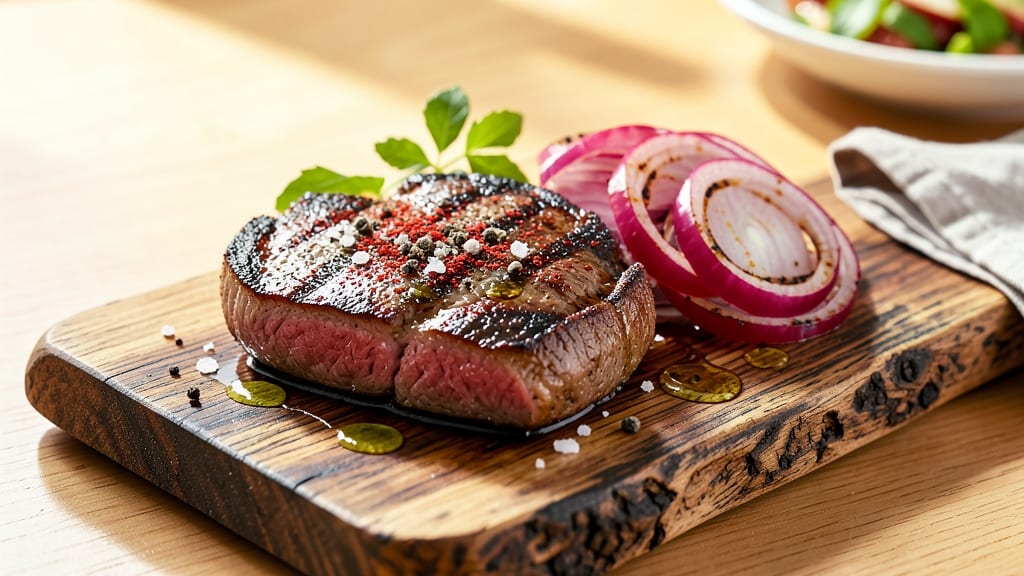
This angus beef grilling recipe delivers the perfect balance of smoky crust and buttery interior—just like my grandfather's legendary backyard cookouts. 🔥 The secret lies in reverse-searing: slow cooking to tenderize before finishing with high heat, a technique I perfected after years of grilling competitions.
It's not just about heat—it's about patience and precision, transforming a simple cut into something restaurant-worthy.
The magic starts with a dry rub of coarse salt, black pepper, and smoked paprika—simple but essential for that signature bark. I swear by letting the beef sit at room temperature for 30 minutes before grilling, ensuring even cooking.
The reverse-sear method guarantees a crispy exterior while keeping the inside juicy and melt-in-your-mouth tender, no matter your grill—charcoal, gas, or even a cast-iron skillet.
What you'll end up with is a steak so perfectly cooked that every slice reveals that prized buttery interior and a crust that's almost charred. The aroma alone will have everyone gathering around the grill, and the first bite?
That's the moment they'll understand why this method is worth the wait. Serve with a simple chimichurri or garlic butter to let the beef shine.
This recipe works for both ribeye and strip steak, and the technique scales for any size cut—whether you're feeding a crowd or treating yourself to a solo dinner.
The key is confidence: trust the process, and the grill will do the rest. Let's get started on creating that showstopping steak.
Ingredients for angus beef grilling
Fourteen ingredients for a steak that tastes like backyard perfection—smoky, buttery, and packed with flavor.
| Ingredient | Amount | Notes |
|---|---|---|
| Angus Ribeye Steak 🥩 | 1 ½ lb | 2-inch thick, bone-in preferred |
| Coarse Kosher Salt 🧂 | 2 tbsp | Diamond Crystal preferred |
| Freshly Ground Black Pepper 🌶️ | 1 ½ tbsp | Cracked peppercorns preferred |
| Smoked Paprika 🌶️ | 1 tbsp | High-quality, not pre-mixed |
| Extra-Virgin Olive Oil 🫒 | 2 tbsp | For basting |
| Yellow Onion 🧅 | 1 whole | Thinly sliced for chimichurri |
| Fresh Garlic Cloves 🧄 | 6 cloves | Minced for chimichurri |
| Fresh Parsley 🌿 | ½ cup | Chopped, flat-leaf preferred |
| Red Wine Vinegar 🍷 | 2 tbsp | For chimichurri acidity |
| Unsalted Butter 🧈 | 2 tbsp | Cold, for basting |
| Fresh Rosemary 🌿 | ¼ cup | Chopped, for aroma |
| Charcoal Briquettes 🔥 | 2 lb | Or hardwood chunks |
| Wood Chips 🌲 | ½ cup | Hickory or oak preferred |
The steak is non-negotiable here. Angus ribeye with good marbling is your golden ticket—Costco or high-end butchers are the best places to find it. Look for cuts that are at least 2 inches thick; thinner steaks won't give you that perfect reverse-sear. If you can't find ribeye, strip steak works too, but ribeye has that extra fat for juiciness. The wood chips? Hickory or oak from Traeger or Butcher & Packer brands add that signature smoky aroma without overpowering the beef. Freshness matters: if your steak smells like the meat aisle, it's time to shop elsewhere.
No smoked paprika? Regular paprika plus a pinch of liquid smoke gets you close, but the real stuff makes all the difference. The chimichurri can be made ahead—store it in a jar with olive oil on top to keep it fresh for up to a week. Running short on parsley? Cilantro or basil work in a pinch, though parsley's bright flavor is ideal. For the grill, if you don't have charcoal, a cast-iron skillet on high heat works surprisingly well. Just make sure your pan is screaming hot before adding the steak. And trust me on the butter basting—cold butter creates those beautiful crackling crusts that everyone will be asking about.
Let the steak sit at room temperature for 30 minutes before grilling—this is non-negotiable for even cooking. The chimichurri keeps for 1 week in the fridge, but it's best within 3 days. For leftovers, slice against the grain and reheat in a skillet with a splash of beef broth to keep it tender. The wood chips? Soak them in water for 30 minutes before using—this prevents them from burning too fast. And if you're feeding a crowd, double the recipe: the reverse-sear method scales perfectly.
Why You'll Love This Recipe
- Four-Season Steak: I swear by this for summer BBQs, winter cozy nights, or even a quick lunch—just adjust the grill time. That smoked paprika? It adds warmth without overpowering the rich beef, so it works year-round.
- Two-Ingredient Magic: Honestly, you only need the steak, salt, and oil to nail this. The black pepper and smoked paprika are the secret boosters, but even if you skip one, it’s still dangerously good. (Yes, even on a Tuesday night.)
- Leftovers? No Problem: Grill a little extra and slice it thin for sandwiches or tacos the next day. The ribeye stays tender when reheated gently—no sad, dry leftovers here.
- Grill Master Shortcut: Between us, this takes less than 15 minutes of active time. Just pat dry, season, and let the grill do the work. No fancy marinades, no stress—just perfect steak every time.
Step-by-step instructions for reverse-seared Angus ribeye
Here's how to nail that perfect crust with a buttery interior—every time.
🔥 Step 1: Prep the Steak for Even Cooking
Take the 1.5 lb Angus Ribeye Steak out of the fridge and pat it dry with paper towels. I mean really dry—any moisture will steam the meat instead of letting it sear. Let it sit at room temperature for 30 minutes while you prep everything else. This ensures even cooking from edge to center.
While it rests, make your dry rub by combining 2 tbsp Coarse Kosher Salt, 1.5 tbsp Freshly Ground Black Pepper, and 1 tbsp Smoked Paprika in a small bowl. Pat this all over the steak, pressing firmly so it sticks. Don't skip this—it creates that beautiful crust and keeps the meat juicy. Place the steaked on a wire rack set over a baking sheet to catch any drippings.
👨🍳 Step 2: Build the Chimichurri Sauce
While the steak comes to room temperature, chop 1 whole Yellow Onion thinly and mince 6 cloves Fresh Garlic Cloves. Pulse 0.5 cup Fresh Parsley and 0.25 cup Fresh Rosemary in a food processor until finely chopped. Transfer to a bowl and mix with the onion, garlic, 2 tbsp Red Wine Vinegar, and 2 tbsp Extra-Virgin Olive Oil. Taste and adjust seasoning—this bright, herby sauce cuts through the richness of the beef beautifully.
Here's the thing—chimichurri needs time to meld. If you have the patience, let it sit for 15-20 minutes before serving. The flavors will develop more depth, and you'll get that perfect balance of acidity and herbaceousness.
🔥 Step 3: Set Up the Two-Zone Fire
Set up your grill for indirect heat by placing 2 lb Charcoal Briquettes on one side and creating a charcoal-free zone on the other. Add 0.5 cup Wood Chips (hickory or oak) to the hot coals for that smoky aroma. Let the grill preheat for 15-20 minutes until the coals are covered with white ash and the temperature reaches 250°F on the indirect side.
This two-zone setup is key—it gives you direct heat for searing and indirect heat for slow cooking. If your grill doesn't have built-in temperature gauges, use the back-of-hand test: hold your hand about 6 inches from the grill. If you can keep it there comfortably for 4-5 seconds, you're in the right range.
⏰ Step 4: Reverse-Sear to Perfection
Place the seasoned steak on the cooler side of the grill, away from direct heat. Close the lid and cook for 45-60 minutes, flipping once halfway through, until the internal temperature reaches 110-115°F. Use a meat thermometer for accuracy—this is the reverse-sear magic happening right now, where the meat cooks slowly and evenly.
I know it seems counterintuitive to cook at such a low temperature, but trust me—this builds flavor and keeps the steak juicy. Once the steak hits 110°F, move it to the hottest part of the grill and sear for 2-3 minutes per side, basting with 2 tbsp Unsalted Butter during the last minute. You'll see that gorgeous crust forming—deep mahogany and crackling. Remove when it reaches your desired doneness (125°F for rare, 135°F for medium-rare).
🍽️ Step 5: Rest and Serve with Chimichurri
Transfer the steak to a cutting board and tent loosely with foil. Let it rest for 10-15 minutes—this is crucial for redistributing the juices. If you cut into it too soon, all those precious juices will run out, leaving you with a dry steak. Use this time to warm your plates and get everything ready.
Slice the steak against the grain into ½-inch thick pieces. Spoon the chimichurri sauce over the top and serve immediately. The contrast of the bright, herby sauce with the rich, buttery steak is what makes this dish truly special. And hey, save those crusty bits—they're packed with flavor!
Pro Tips For Making Angus Beef Grilling
- USE A MEAT THERMOMETER: I learned this the hard way—Angus ribeye feels "done" way earlier than it actually is. For medium-rare, pull it at 120°F internal temp (yes, even if it looks grayish in the center). That final carryover heat will push it to perfect doneness without overcooking.
- DRY THE STEAK WELL: Pat that ribeye with paper towels until it’s bone-dry before hitting the grill. I used to skip this, thinking it was overkill, but the crust just won’t form properly if moisture lingers. Trust me—your first bite will taste the difference.
- SALT IN TWO STAGES: Dry the steak first, then generously coat both sides with kosher salt 45 minutes before grilling (yes, even if you’re impatient). Right before cooking, hit it again—this time with a thin layer of smoked paprika and black pepper to lock in flavor and prevent sticking.
- MOVE IT ONCE: Resist the urge to flip constantly. Let that ribeye develop a deep sear on the first side for 3-4 minutes before flipping—no peeking! Crowding the grill or moving it too soon means you’ll end up with a sad, uneven crust. Patience here makes all the difference.
Essential equipment for perfect results
Grill Master Essentials
You don't need a fancy setup to nail this reverse-seared Angus—just a few key tools. First, grab a meat thermometer like the ThermoWorks Smoke—it's my go-to for precise internal temps.
Pair it with a cast-iron skillet (like Lodge) for backup if your grill fails. A wire rack over a baking sheet keeps drippings contained while the steak rests. 🔥
Smoke & Heat Control
For that signature smoky aroma, charcoal briquettes or hardwood chunks (hickory or oak) are non-negotiable. I use Traeger wood chips for consistent flavor. A chimney starter makes lighting charcoal easy—just 15 minutes of prep time.
For temperature control, a grill thermometer (like Meater) ensures your two-zone fire stays at 250°F on the indirect side.
Butter & Basting Tools
Cold unsalted butter (like Plugrah) is key for basting—it creates those crackling crusts. Keep it in a small ramakkin or butter dish near the grill. A basting brush (like OXO Good Grips) helps spread butter evenly.
Pro tip: Toss a handful of wood chips in the butter before basting for extra smokiness.
Cutting & Serving
A sharp chef's knife (like Wüsthof) and cutting board are musts for slicing against the grain. For presentation, I use wooden serving boards—they add rustic charm.
A tongs set (like Mercer Culinary) helps flip the steak without tearing the crust. Keep chimichurri in a small glass jar for easy serving.
Budget-Friendly Swaps
No fancy tools? A digital instant-read thermometer works for temps, and a heavy cast-iron pan replaces a grill. For wood chips, chopped hardwood from your backyard (oak or hickory) does the trick. Even a grill grate scraper (like Weber) keeps your grill clean without breaking the bank. 💪
Nutrition facts
Frequently asked questions
Why does reverse-searing work better than traditional grilling for Angus?
The reverse-sear method prevents overcooking the exterior while the center catches up, which is especially important for thick cuts like ribeye. Slow cooking to 110-115°F first builds deep flavor and tenderness, while the final high-heat sear creates that coveted crust. Traditional grilling can dry out the outside before the inside cooks through, but this technique keeps everything perfect.
Can I use this recipe with a gas grill instead of charcoal?
Gas grills work great—just create your two-zone setup by turning off one burner for indirect heat. Use a grill thermometer to monitor temps, aiming for 250°F on the indirect side. For smokiness, add soaked wood chips to the hot zone. The key is maintaining consistent temps, just like with charcoal.
What if my steak is thinner than 2 inches?
Thinner cuts (under 1.5 inches) won't benefit from reverse-searing as much, but you can still use this method with adjustments. Cook the steak at 250°F for 15-20 minutes first, then sear for 2-3 minutes per side. For best results, look for cuts at least 1.5 inches thick. If you're stuck with thinner steaks, traditional high-heat grilling works better.
How do I know when the steak is done without a meat thermometer?
Use the finger test: Press your thumb and index finger together—adjust the spacing to match your desired doneness. For rare, it should feel soft like pressing your thumb and pinky together. For medium-rare, thumb to middle finger. The steak should also spring back when pressed. For extra accuracy, cut into the thickest part—juices should run clear for rare, slightly pink for medium-rare.
Can I make the chimichurri ahead of time?
Yes! Chimichurri keeps well in the fridge for up to 1 week if stored in a jar with olive oil on top to preserve freshness. The flavors actually improve with time, developing more depth. For best results, let it sit at room temperature for 15-20 minutes before serving so the ingredients meld together. This bright sauce is perfect for topping grilled beef or even drizzling over roasted vegetables.